
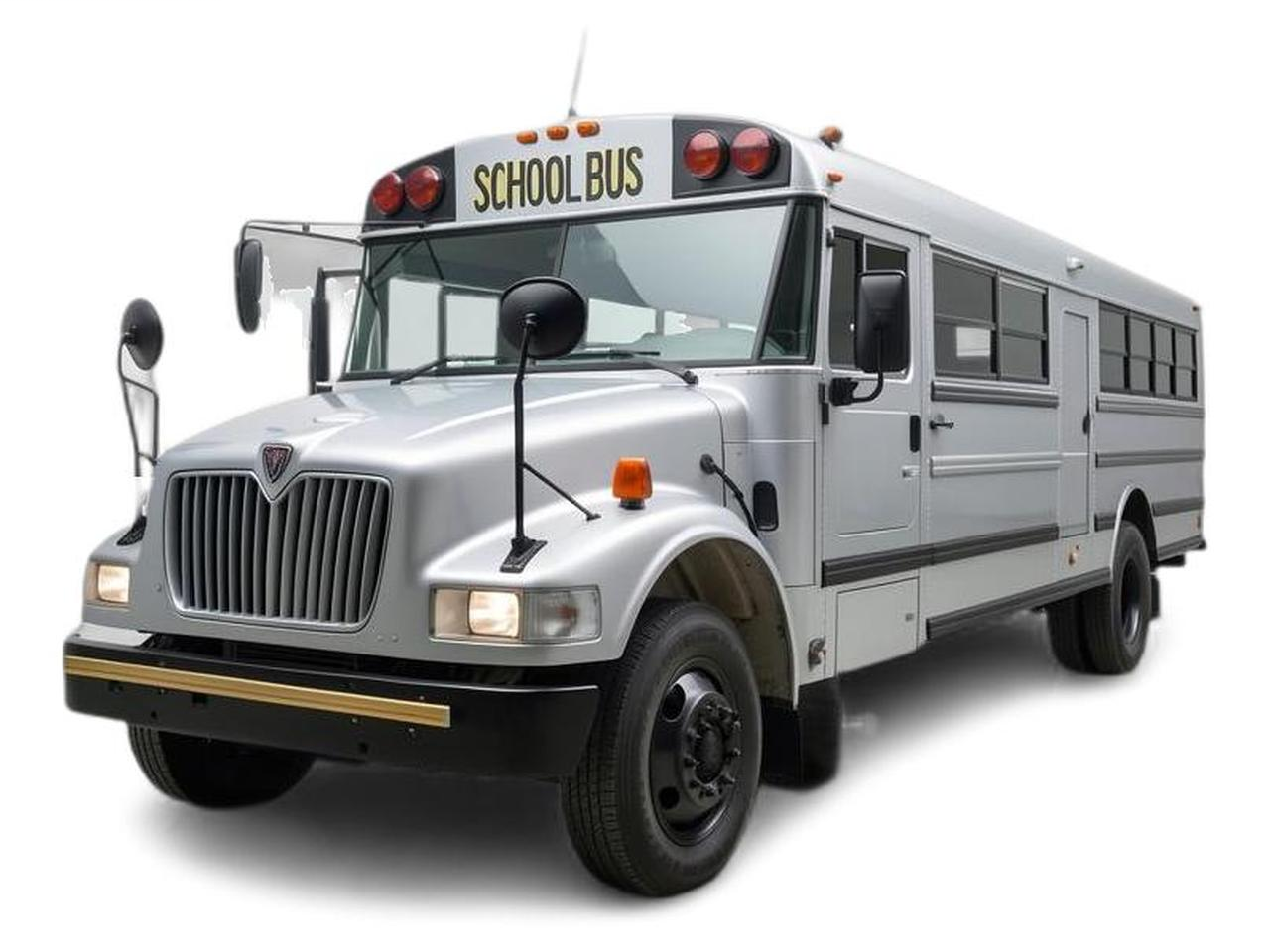
The Good
The 2004 International 3000 offers exceptional reliability and rugged performance, appealing to practical buyers focused on long-term operation. Its utilitarian design prioritizes function, while its robust build provides peace of mind and a sense of dependable strength for any task.
The Bad
Potential weaknesses for the 2004 International 3000 often revolve around its commercial-duty nature, meaning comfort and refinement can be basic. Older models may exhibit wear on specialized components, and fuel efficiency is typically not a strong suit compared to lighter vehicles.
2004 International 3000: Quick Overview
The 2004 International 3000 is a versatile chassis platform, and its specifications can vary significantly based on its intended application. Here's a general overview:
- Engine Options: Primarily featured International's own DT series diesel engines. Common options included the DT 466E and DT 530E.
- Horsepower: Output typically ranged from approximately 170 horsepower to over 250 horsepower, depending on the specific engine and configuration.
- Fuel Economy: Fuel economy is highly dependent on the powertrain, vehicle weight, and operational use (e.g., loaded vs. unloaded, city vs. highway). For its class and intended purpose, expect mileage to be considerably lower than passenger vehicles, often in the single digits for larger configurations.
- 0-60 Times: Not a primary metric for this type of vehicle. Performance is geared towards torque and hauling capacity, not rapid acceleration.
- Towing Capacity: This is highly variable and depends entirely on the chassis, axle ratings, and specific build. As a base chassis, it can be configured for substantial towing and hauling duties, often in the tens of thousands of pounds.
- Trim-Level Features: The concept of "trims" as found in consumer vehicles doesn't directly apply. Instead, features are dictated by the vocational body installed. For school bus applications, this could include seating for passengers, emergency exits, stop signs, and robust HVAC systems. Commercial truck versions would have specific cab configurations and payload-oriented features.
- Transmission: Common transmission options included Allison automatic transmissions (e.g., 2000, 3000 series) and sometimes manual transmissions.
- Chassis Configurations: Available in various wheelbases and configurations to accommodate different body types, from cutaway vans to full-size buses and medium-duty trucks.
- Brakes: Typically equipped with heavy-duty hydraulic or air brakes depending on the GVWR.
2004 International 3000 Specifications
Vehicle Information
| Year | 2004 |
| Make | International |
| Model | 3000 |
| Trim | - |
| Style | - |
| Type | Bus |
| Category | International Bus |
Manufacturing Details
| Made In | United States |
| Manufacturing City | TULSA |
Dimensions
| Doors | - |
| Curb Weight | - |
| Gross Vehicle Weight Rating | 33000 pounds |
| Overall Height | - |
| Overall Length | - |
| Overall Width | - |
| Wheelbase Length | - |
| Standard Seating | - |
Engine & Performance
| Engine | 7.3L V8 |
| Engine Size | 7.3L |
| Engine Cylinders | 8 |
| Transmission | - |
| Transmission Type | - |
| Transmission Speeds | - |
| Drivetrain | Rear-Wheel Drive |
Additional Features
| Anti-Brake System | - |
| Steering Type | - |
Pricing
| Manufacturer Suggested Retail Price (MSRP) | - |
| Invoice Price | - |
| Delivery Charges | - |
Vehicle History Report
Specifications
History
Events
History Check
Check
Check
Check
Check
Listings
Recalls
Check
Analysis
What Problems Does the 2004 International 3000 Have?
Another area to monitor is the cooling system. Overheating can be a concern if radiators become clogged or if coolant leaks occur. Hoses and clamps should be inspected regularly for signs of degradation. The transmission, often an Allison automatic, is generally robust but can experience wear over many miles. Fluid changes and proper operation are key to longevity.
Electrical systems, while not as complex as modern passenger cars, can still develop issues. Alternator failures, battery problems, and issues with wiring harnesses are not uncommon on older vehicles, especially those exposed to harsh operating conditions. The chassis itself is built for durability, but rust can be a significant issue in regions with heavy road salt usage, particularly around frame rails, suspension components, and body mounts.
Specific recalls for the 2004 model year are less commonly documented in general consumer databases due to its commercial nature. However, manufacturers do issue recalls for safety-related defects. Owners should always check with International Truck (now Navistar) for any outstanding recalls pertinent to their specific vehicle configuration.
Long-term reliability is heavily contingent on the specific application and maintenance history. A school bus used daily in a large fleet might experience different wear patterns than a less frequently used utility truck. Overall, the 2004 International 3000 is known for its robust construction, and many units continue to serve effectively for hundreds of thousands of miles with diligent care.
How long will the 2004 International 3000 last?
What Technology & Safety Features are Included?
Built-in Tech & Entertainment: Standard equipment would typically include a basic AM/FM radio, possibly with a cassette player or a single-disc CD player in some configurations. Climate control would be a simple heater and fan system, with air conditioning often being an optional extra, particularly in the base chassis configurations. Gauges and indicators are functional and straightforward, focusing on critical operational data like engine temperature, oil pressure, fuel level, and voltmeter.
Driver-Assistance Features: Driver-assistance technologies as we know them today (e.g., lane keeping assist, adaptive cruise control, blind-spot monitoring) were virtually non-existent on this platform in 2004. The primary "assistance" would come from features like power steering, power brakes, and perhaps cruise control as an option. For school bus applications, features like flashing warning lights and an extended stop sign are critical safety-related operational aids.
Safety Features: Safety in the 2004 International 3000 is primarily derived from its robust construction. Features include:
- Heavy-duty frame and chassis designed to withstand significant stress.
- Seat belts for all occupants (mandated by regulations for its specific use).
- Durable body construction, especially in school bus variants, with features like reinforced side walls and rollover protection standards.
- Large, unobstructed visibility through the windshield and side windows.
- Anti-lock Braking System (ABS) was often available or standard, depending on the specific model and GVWR.
- Emergency exits (standard on buses).
Optional Features: Depending on the original configuration and body builder, optional features could include air conditioning, upgraded radio systems, power mirrors, and additional auxiliary lighting. In specialized commercial truck versions, PTO (power take-off) capabilities could be fitted.
Crash-Test Ratings: Dedicated crash-test ratings for commercial chassis like the 2004 International 3000 are not typically published in the same way as for consumer vehicles by organizations like the NHTSA or IIHS. Its safety performance is judged by industry-specific standards and regulations pertinent to its intended use, such as Federal Motor Vehicle Safety Standards (FMVSS) for school buses. These standards focus on structural integrity, occupant protection, and fire safety.
What Colors Options are Available?
2004 International 3000 Prices and Market Value
Currently, the used market prices for a 2004 International 3000 are heavily influenced by its condition, mileage, and intended application. Expect prices to range from $5,000 to $20,000 for functional units, with well-maintained or specialty-equipped versions commanding higher prices.
Depreciation is significant for these vehicles, especially as they age and accumulate miles. However, their inherent durability means they retain a functional value for a long time. Resale value is primarily driven by mechanical condition, the state of the body and chassis (especially concerning rust), and the presence of any specialized equipment. A well-documented maintenance history significantly boosts resale value.
2004 International 3000 Cost of Ownership
2004 International 3000 Fuel Efficiency
2004 International 3000 Recalls & Defects
Service Brakes, Air:antilock:wheel Speed Sensor
Electrical System
2004 International 3000 Warranty
Basic
Powertrain
Rust
2004 International 3000 Insurance
reasonable repair costs.
How Does the 2004 International 3000 Compare to Other Bus?
Performance: Performance across these rivals is generally comparable, focusing on torque and hauling capability rather than speed. International's DT series diesel engines are known for their stout build and longevity, often matching or exceeding the performance of comparable engines from Cummins (used in some Ford and Freightliner applications) or Caterpillar.
Features: In terms of features, the 2004 International 3000 would likely be on par with its contemporaries. As discussed, these vehicles are basic by design, prioritizing functionality over luxury or advanced tech. Any differences would be minor, depending on specific engine options or available factory add-ons. Rivals might offer slightly different cabin designs or ergonomic layouts, but the core utilitarian nature remains consistent.
Reliability: Reliability is a strong suit for most vehicles in this class when properly maintained. International has a reputation for building durable powertrains and chassis. Freightliner chassis are also well-regarded for their robust construction. Ford and GM offerings in this heavy-duty segment were also generally dependable, though sometimes had different strengths and weaknesses regarding specific engine or transmission pairings.
Price: New pricing was competitive within the segment. On the used market, the value proposition of a 2004 International 3000 is excellent for buyers seeking a durable workhorse. Prices will fluctuate based on condition and specific application.
Alternatives:
- Similar: A 2004 Freightliner FL series chassis (e.g., FL60, FL70) offers a very similar utilitarian platform and reliability.
- Similar: Chevrolet Kodiak or GMC TopKick models from the same era provide comparable capabilities, often with slightly different styling and engine options (sometimes featuring Duramax diesels).
- Similar: Ford F-650/F-750 trucks are also direct competitors, offering robust diesel powertrains and chassis versatility.
Choosing between them often comes down to local service availability, specific engine preferences, and the best available deal on a well-maintained unit. For sheer workhorse capability and proven longevity, the 2004 International 3000 remains a strong contender.
Final Verdict: Is the 2004 International 3000 a Good Bus?
It is **not** suitable for daily commuting or for buyers seeking a comfortable, refined ride. When considering a purchase, focus exclusively on used examples. The key condition is a thorough mechanical inspection and a clear understanding of its maintenance history. Prioritize well-maintained units with lower mileage for their age, as this will directly impact long-term ownership costs and reliability. Specific 'trims' are less relevant than the quality of the body and chassis installed on the base International 3000 platform.

Eugene S
Eugene is an automotive enthusiast with over 15 years of experience in the used car market. As a writer at VINCheck.info, he brings deep industry insight and a passion for cars, helping readers make smart, informed decisions. Eugene has written hundreds of used car reviews and is known for breaking down complex automotive topics into clear, actionable advice. Over the years, he has driven and worked on a wide range of vehicles—starting with tuning street cars in his early days and eventually focusing on performance upgrades and reliability improvements. Today, he specializes in evaluating used vehicles through the lens of real-world ownership and enthusiast needs. A longtime fan of Porsche, Eugene especially appreciates vehicles that blend durability with driving enjoyment.