
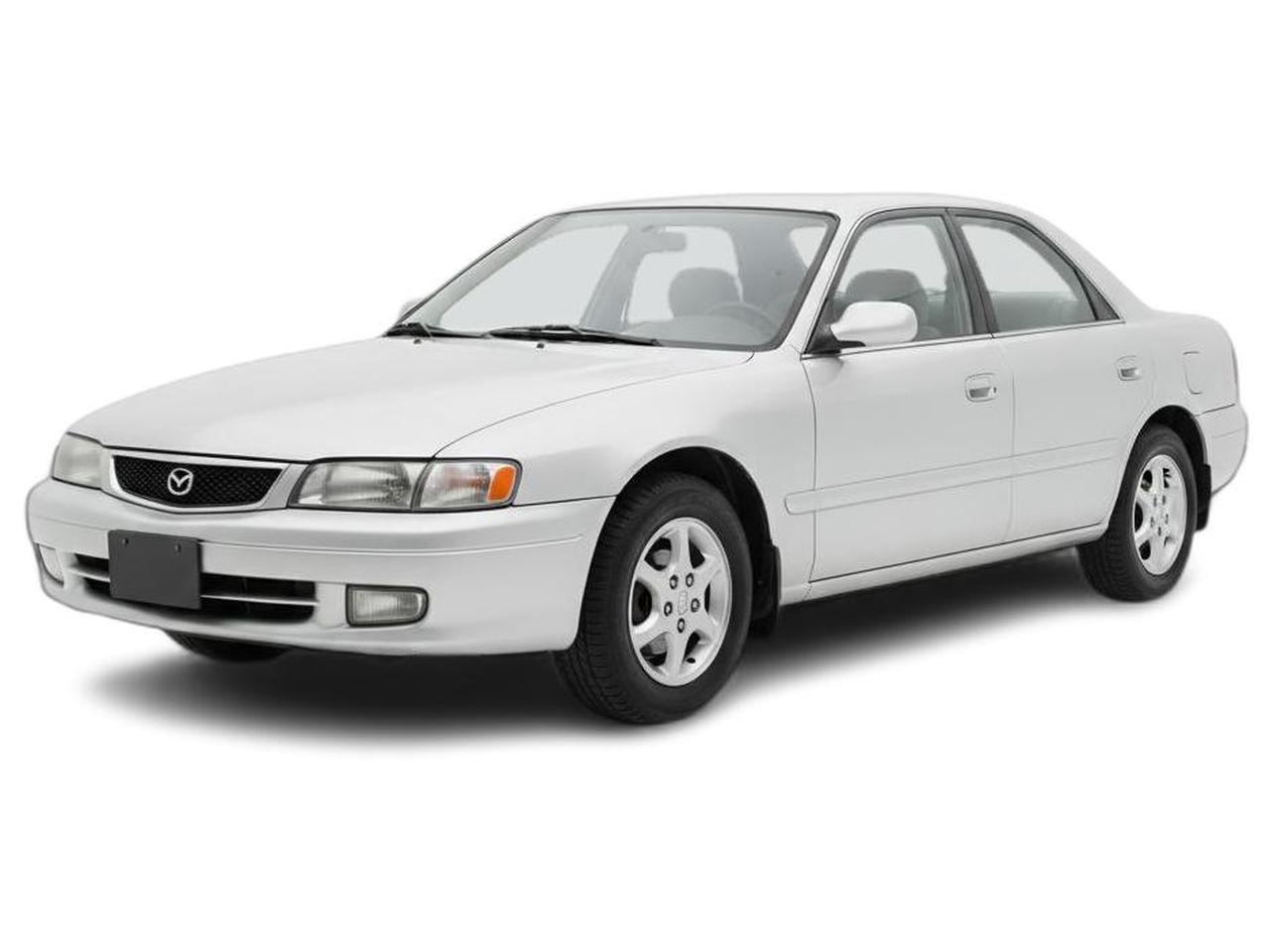
The 1995 Mazda 626, part of the GF/GD generation, was a popular compact car produced from 1978 to 2002. For 1995, it was available as a 4-door sedan and a 5-door hatchback. Key trims included the LX, ES, and the sportier GT. Known for its blend of sporty handling and everyday practicality, the 626 offered a compelling package for its era, often at a competitive price point, making it a sensible choice for many buyers.
The Good
The 1995 Mazda 626 boasted a reputation for engaging handling, reliable operation, and a comfortable ride. Its stylish design appealed to the eye, while its fuel efficiency offered practical savings. This combination of driving enjoyment and sensible ownership made it a strong contender for those seeking a well-rounded vehicle.
The Bad
Potential buyers of the 1995 Mazda 626 should be aware of common issues such as rust, particularly around the wheel wells and rocker panels. Premature wear on suspension components and occasional electrical gremlins can also arise. Checking the transmission for smooth operation is advisable.
1995 Mazda 626: Quick Overview
- Engine Options: The 1995 Mazda 626 typically offered two main engine choices:
- 2.0L Inline-4: This was the base engine, providing adequate power for daily driving.
- 2.5L V6: Found in higher trims like the GT, this engine offered a significant performance boost. - Horsepower:
- 2.0L I4: Approximately 110-125 horsepower.
- 2.5L V6: Around 164-170 horsepower. - Fuel Economy:
- For the 2.0L engine, expect combined EPA estimates in the range of 23-26 MPG.
- The 2.5L V6 would typically see slightly lower figures, around 21-23 MPG combined. These figures can vary based on driving conditions and transmission type (manual vs. automatic). - 0-60 Times:
- With the 2.0L engine, 0-60 MPH times were generally in the 9-11 second range.
- The more potent 2.5L V6 could achieve 0-60 MPH in approximately 7.5-8.5 seconds, offering a sportier acceleration. - Towing Capacity: The Mazda 626 was not designed for towing, and thus, towing capacity is not a relevant specification for this vehicle.
- Trim-Level Features:
- LX: Typically featured power windows, power locks, air conditioning, and a standard stereo system.
- ES (Executive/Sport): Often added alloy wheels, cruise control, a better sound system, and improved interior trim. It might have also been available with the V6 engine.
- GT (Grand Touring): This was the sport-oriented trim, almost always equipped with the 2.5L V6 engine, sport-tuned suspension, larger wheels, fog lights, and more aggressive styling cues. It would also include most features from the ES trim.
1995 Mazda 626 Specifications
Vehicle Information
| Year | 1995 |
| Make | Mazda |
| Model | 626 |
| Trim | - |
| Style | - |
| Type | Sedan |
| Category | Compact Car |
Manufacturing Details
| Made In | Japan |
| Manufacturing City | - |
Dimensions
| Doors | - |
| Curb Weight | - |
| Gross Vehicle Weight Rating | - |
| Overall Height | - |
| Overall Length | - |
| Overall Width | - |
| Wheelbase Length | - |
| Standard Seating | - |
Engine & Performance
| Engine | 2.0 L 4-Cyl. |
| Engine Size | 2L |
| Engine Cylinders | 4 |
| Transmission | - |
| Transmission Type | - |
| Transmission Speeds | - |
| Drivetrain | Front-Wheel Drive |
Additional Features
| Anti-Brake System | - |
| Steering Type | - |
Pricing
| Manufacturer Suggested Retail Price (MSRP) | - |
| Invoice Price | - |
| Delivery Charges | - |
Vehicle History Report
Vehicle
Specifications
Specifications
Ownership
History
History
All History
Events
Events
NMVTIS Title
History Check
History Check
Salvage/Rebuilt
Check
Check
Accident
Check
Check
Theft
Check
Check
Open Lien
Check
Check
Past Sale
Listings
Listings
Safety
Recalls
Recalls
Odometer
Check
Check
Market Price
Analysis
Analysis
What Problems Does the 1995 Mazda 626 Have?
The 1995 Mazda 626, while generally considered reliable for its era, does have some commonly reported issues that owners should be aware of. One of the most prevalent concerns is rust. Due to its age and the materials used, corrosion can appear on the body panels, particularly around the wheel wells, rocker panels, and the subframes. This is especially true for vehicles that have been exposed to harsh winter climates or have not been properly maintained and protected.
Another area to watch is the suspension system. Components like ball joints, tie rod ends, and strut mounts can wear out over time, leading to clunking noises, sloppy steering, and uneven tire wear. Regular inspections and replacement of these parts are crucial for maintaining safe handling and ride quality.
The automatic transmission can also be a point of concern. While not universally problematic, some owners have reported issues with rough shifting or failure to engage gears, especially on higher-mileage vehicles. Proper fluid maintenance is key to prolonging the life of the transmission.
Electrical issues, though not rampant, can sometimes surface. This might include problems with power windows, door locks, or the instrument cluster. These are often due to aging wiring harnesses or faulty components.
In terms of recalls, specific to the 1995 model year, it's essential to check the National Highway Traffic Safety Administration (NHTSA) database for any relevant campaigns. Recalls are typically issued for safety-related defects, and while widespread issues weren't a hallmark of this generation, individual components might have been subject to service bulletins or recalls. Long-term reliability is generally good if the vehicle has been consistently maintained with regular oil changes, fluid flushes, and timely repairs. However, as with any vehicle approaching 30 years old, the potential for wear and tear on various systems increases.
Another area to watch is the suspension system. Components like ball joints, tie rod ends, and strut mounts can wear out over time, leading to clunking noises, sloppy steering, and uneven tire wear. Regular inspections and replacement of these parts are crucial for maintaining safe handling and ride quality.
The automatic transmission can also be a point of concern. While not universally problematic, some owners have reported issues with rough shifting or failure to engage gears, especially on higher-mileage vehicles. Proper fluid maintenance is key to prolonging the life of the transmission.
Electrical issues, though not rampant, can sometimes surface. This might include problems with power windows, door locks, or the instrument cluster. These are often due to aging wiring harnesses or faulty components.
In terms of recalls, specific to the 1995 model year, it's essential to check the National Highway Traffic Safety Administration (NHTSA) database for any relevant campaigns. Recalls are typically issued for safety-related defects, and while widespread issues weren't a hallmark of this generation, individual components might have been subject to service bulletins or recalls. Long-term reliability is generally good if the vehicle has been consistently maintained with regular oil changes, fluid flushes, and timely repairs. However, as with any vehicle approaching 30 years old, the potential for wear and tear on various systems increases.
How long will the 1995 Mazda 626 last?
With diligent maintenance, a 1995 Mazda 626 can reasonably reach or exceed 200,000 miles, with some owners reporting well over 250,000 miles. The long-term durability is often a testament to the robust engineering of the Japanese automakers during this period. Key to this longevity is consistent attention to maintenance, particularly oil changes, coolant flushes, and timely replacement of wear items like timing belts and brake components. The V6 engine generally holds up well. However, the primary weaknesses that emerge over time are the susceptibility to rust and the eventual wear on suspension and exhaust systems. These areas often require the most attention to keep the vehicle on the road for extended periods.
What Technology & Safety Features are Included?
The 1995 Mazda 626, being a vehicle of its time, offered a moderate array of technology and safety features, focused more on fundamental comfort and security rather than advanced electronic aids. Standard equipment generally included a basic AM/FM stereo system with cassette player, and air conditioning. Optional upgrades could have included a more sophisticated sound system, potentially with a CD player, which was becoming more common in the mid-'90s. Power windows and door locks were also frequently included, especially on mid-to-upper trim levels like the ES and GT.
Driver-assistance features were virtually non-existent by today's standards. Cruise control was available on some models, offering a degree of convenience on longer journeys. Anti-lock braking system (ABS) was often an optional feature, particularly on the V6-powered GT models, providing enhanced braking control in slippery conditions.
Safety features were primarily passive. Standard equipment typically included front airbags for the driver and passenger. Seat belts were, of course, mandatory. Some models might have offered side-impact door beams for increased structural integrity in a collision.
Crash-test ratings for the 1995 Mazda 626 are available from the National Highway Traffic Safety Administration (NHTSA) and the Insurance Institute for Highway Safety (IIHS). For the 1995 model year, the 626 generally performed reasonably well for its class and time. NHTSA tests typically awarded it 3-star or 4-star ratings in frontal impact tests for both driver and passenger, indicating a fair to good level of protection. Side-impact testing results varied but were generally in line with its competitors. It's important to remember that safety standards and testing methodologies have evolved significantly since 1995, so direct comparisons to modern vehicles should be made with caution.
Driver-assistance features were virtually non-existent by today's standards. Cruise control was available on some models, offering a degree of convenience on longer journeys. Anti-lock braking system (ABS) was often an optional feature, particularly on the V6-powered GT models, providing enhanced braking control in slippery conditions.
Safety features were primarily passive. Standard equipment typically included front airbags for the driver and passenger. Seat belts were, of course, mandatory. Some models might have offered side-impact door beams for increased structural integrity in a collision.
Crash-test ratings for the 1995 Mazda 626 are available from the National Highway Traffic Safety Administration (NHTSA) and the Insurance Institute for Highway Safety (IIHS). For the 1995 model year, the 626 generally performed reasonably well for its class and time. NHTSA tests typically awarded it 3-star or 4-star ratings in frontal impact tests for both driver and passenger, indicating a fair to good level of protection. Side-impact testing results varied but were generally in line with its competitors. It's important to remember that safety standards and testing methodologies have evolved significantly since 1995, so direct comparisons to modern vehicles should be made with caution.
What Colors Options are Available?
1995 Mazda 626 Prices and Market Value
In 1995, the Mazda 626 carried a manufacturer's suggested retail price (MSRP) that typically ranged from approximately $16,000 for base LX models to upwards of $22,000 for well-equipped GT V6 versions. As is typical for vehicles of this age, the 626 has experienced significant depreciation. Current used market prices for a 1995 Mazda 626 in good condition typically range from $2,000 to $5,000, with exceptionally clean or low-mileage examples potentially fetching a bit more. Factors significantly affecting resale value include the vehicle's overall condition (mechanical and cosmetic), maintenance history, mileage, and the presence of rust. A well-maintained, rust-free example with service records will always command a higher price than a neglected one.
1995 Mazda 626 Cost of Ownership
The 1995 Mazda 626 is generally considered economical to own. Insurance costs are typically low due to its age and value. Fuel costs are moderate, with the 2.0L engine offering good MPG. Maintenance costs are reasonable, as parts are readily available and not overly expensive. Routine maintenance like oil changes and fluid checks are straightforward. Repair costs can be manageable, though significant issues like transmission problems or extensive rust repair could become costly. Overall, its affordability in purchase price and generally modest running costs make it an economical choice for budget-conscious owners, provided it's in good mechanical condition.
1995 Mazda 626 Fuel Efficiency
Fuel Type
Gasoline
Fuel Capacity
-
City Mileage
-
Highway Mileage
-
1995 Mazda 626 Safety Rating
NHTSA
1995 Mazda 626 Recalls & Defects
Electrical System:ignition:switch
Recall date
2015-10-19
Recall no.
15v674000
Source
NHTSA
Summary
Mazda North American Operations (Mazda) IS Recalling Certain Model Year 1989-1998 Mpv, 1990-1995 323, 1990-1998 Protege, 1992-1993 Mx-3, 1993-1995 929, 1993-1997 Mx-6, and 1993-1998 626 Vehicles. IN THE Affected Vehicles, Grease Applied TO THE Contact Points Inside THE Ignition Switch MAY Become Conductive and Overheat.
Consequence
IF THE Ignition Switch Overheats There Would BE AN Increased Risk OF A Fire.
Remedy
Mazda Will Notify Owners, and Dealers Will Replace THE Ignition Switch, Free OF Charge. THE Recall Began ON December 17, 2015. Owners MAY Contact Mazda Customer Experience Center AT 1-800-222-5500, Option#6. Mazda's Number FOR This Recall IS 8715j.
Notes
Owners MAY Also Contact THE National Highway Traffic Safety Administration Vehicle Safety Hotline AT 1-888-327-4236 (Tty 1-800-424-9153), or GO TO Www.safercar.gov.
AIR Bags:frontal
Recall date
1995-02-21
Recall no.
95e006001
Source
NHTSA
Summary
THE Passenger Side AIR BAG HAS AN Inflator Body That Cracked During Forming OF THE Curl That Retains THE Igniter Plug IN THE END OF THE Inflator. Also, THE Igniter END CAP CAN Separate From THE Inflator.
Consequence
THE Passenger Side AIR BAG MAY NOT Inflate Properly Resulting IN Reduced Occupant Protection IN A Vehicle Accident. IF THE Igniter END CAP Separates IN A Frontal Collision, HOT Gases CAN BE Released and Ignite Flammable Material or Cause Burn Injuries.
Remedy
Dealers Will Remove and Replace THE Passenger Side AIR BAG Module.
Notes
System: Interior; Passive Restraint; AIR Bag; Passenger. Vehicle Description: Passenger Side AIR BAG IN Passenger Vehicles. Note: IF Your Vehicle IS Presented TO AN Authorized Dealer ON AN Agreed Uponservice Date and THE Remedy IS NOT Provided Free OF Charge Within A Reasonable Time, Contact Mazda AT 1-800-222-5500. Also Contact THE National Highway Traffic Safety Administration's Auto Safety Hotline AT 1-800-424-9393.
AIR Bags:frontal:sensor/Control Module-Inactive
Recall date
1998-10-08
Recall no.
98v249000
Source
NHTSA
Summary
Vehicle Description: Passenger Vehicles Equipped With THE SAS Sensor Unit. These Vehicles CAN Experience AIR BAG Deployments IN Minor Undercarriage Impacts.
Consequence
Unexpected AIR BAG Deployment CAN Result IN Occupant Injury.
Remedy
Dealers Will Reprogram THE SAS Unit TO Reduce THE Probability OF Unnecessary Deployments IN Low Speed Undercarriage Impacts.
Notes
Owner Notification IS Expected TO Begin During January 1999.owners WHO Take Their Vehicles TO AN Authorized Dealer ON AN Agreed Upon Service Date and DO NOT Receive THE Free Remedy Within A Reasonable Time Should Contactmazda AT 1-800-222-5500. Also Contact THE National Highway Traffic Safety Administration's Auto Safety Hotline AT 1-888-dash-2-dot (1-888-327-4236).
Fuel System, Gasoline
Recall date
2005-10-05
Recall no.
05e065000
Source
NHTSA
Summary
Certain SPX Filtran Fuel Filters With A 45-Degree Angle Inlet Tube, Model 800f350-S1, Sold AS Replacement Filters FOR 1993-1997 Ford Probe,1993-2001 Mazda 626 and Mx-6, and 1983-1994 Loyal, 3-door Coupe, Hatchback, Sedan, Wagon, Brat, DL, GL, Gl-10, RX, XT, and XT6 Passenger Vehicles With EFI or Turbo Engines. These Filters ARE Packaged AS Wix, Napa, and Carquest Brand Fuel Filters. Certain SPX Filtran Fuel Filters With A 90-degree Angle Inlet Tube, Model 800f300-s2, Sold AS Replacement Filters FOR 19983-1994 Subaru Vehicles With EFI or Turbo Engines. These Filters ARE Packaged AS Wix, Napa, and Carquest Brand Fuel Filters. Fuel MAY Leak From THE Filter DUE TO Non-conforming Brazing Welds Where THE Inlet Tube IS Connected TO THE Filter Can.
Consequence
IN THE Presence OF AN Ignition Source, A Vehicle Fire CAN Occur.
Remedy
SPX Will Notify ITS Customers and Provide A Full Refund. THE Recall Began September 27, 2005. Owners MAY Contact MR. Chris Greeson AT 704-869-3733 or Contact THE WIX Information Hotline AT 800-949-6698.
Notes
Customers MAY Contact THE National Highway Traffic Safety Administration's Vehicle Safety Hotline AT 1-888-327-4236; (Tty:1-800-424-9153); or GO TO Http://Www.safercar.gov.
1995 Mazda 626 Insurance
Insurance for a 1995 Mazda 626 is moderately priced, reflecting its status as a Sedan with strong safety ratings and
reasonable repair costs.
How Does the 1995 Mazda 626 Compare to Other Sedan?
The 1995 Mazda 626 competed in a crowded segment of compact sedans and coupes, facing stiff competition from vehicles like the Toyota Camry, Honda Accord, Nissan Altima, and Ford Contour. In terms of performance, the 626, especially with the optional 2.5L V6, offered a more engaging and sportier driving experience than some of its more comfort-oriented rivals like the Camry. The Honda Accord was a strong contender, often praised for its similar blend of reliability and performance. The Nissan Altima offered a good balance of space and spirited driving.
When it comes to features, the 1995 626 was competitive, offering power amenities and optional ABS and better audio systems, matching many of its peers. Reliability was generally a strong suit for Japanese manufacturers of this era, and the 626 held its own, though perhaps not quite reaching the legendary status of the Accord or Camry for sheer long-term, trouble-free ownership. However, its reliability was certainly better than some American or European offerings of the time.
Price-wise, the 626 was often positioned slightly below or on par with its Japanese competitors, offering good value for the money.
Alternatives:
The 1995 Mazda 626 remains a solid choice if you appreciate a more engaging driving feel and sportier styling than some of its more sedate rivals, while still benefiting from good overall reliability and a competitive price point.
When it comes to features, the 1995 626 was competitive, offering power amenities and optional ABS and better audio systems, matching many of its peers. Reliability was generally a strong suit for Japanese manufacturers of this era, and the 626 held its own, though perhaps not quite reaching the legendary status of the Accord or Camry for sheer long-term, trouble-free ownership. However, its reliability was certainly better than some American or European offerings of the time.
Price-wise, the 626 was often positioned slightly below or on par with its Japanese competitors, offering good value for the money.
Alternatives:
- Honda Accord (1994-1997): Often considered the benchmark for reliability and a great all-around performer. If absolute long-term reliability is the top priority, the Accord might be a slightly safer bet.
- Toyota Camry (1992-1996): Known for its exceptional reliability and comfortable ride, though it typically offered a less sporty driving experience than the 626.
- Nissan Altima (1993-1997): A strong competitor offering a good blend of performance and practicality, often with competitive pricing.
The 1995 Mazda 626 remains a solid choice if you appreciate a more engaging driving feel and sportier styling than some of its more sedate rivals, while still benefiting from good overall reliability and a competitive price point.
Final Verdict: Is the 1995 Mazda 626 a Good Sedan?
The 1995 Mazda 626 is ideal for budget-conscious buyers seeking a reliable and engaging compact car that offers a bit more driving excitement than many of its contemporaries. It's a good fit for first-time car buyers, students, or anyone looking for an affordable daily driver with decent fuel economy and a comfortable interior.
Whether it's worth buying hinges heavily on its condition. Absolutely avoid models with significant rust or evidence of major mechanical neglect. Focusing on well-maintained examples, particularly those with the 2.5L V6 engine (GT trim) if performance is a priority, is recommended. Given its age, buying used is the only option. It's a sensible purchase for someone who prioritizes value and a more spirited driving experience over cutting-edge technology, provided a thorough pre-purchase inspection is conducted.