
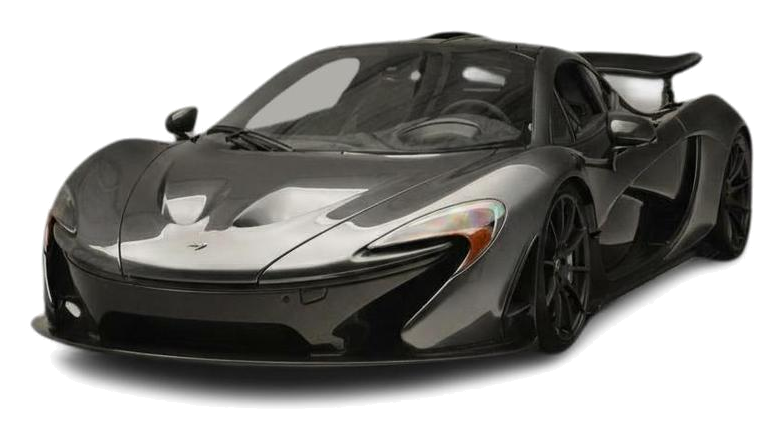
The Good
The 2014 McLaren P1's key advantages lie in its unparalleled hybrid performance, striking aerodynamic design, and cutting-edge technology. Emotionally, it offers an extreme driving thrill. Practically, its hybrid system offers a degree of efficiency not seen in its non-hybrid hypercar peers.
The Bad
Potential weaknesses for the 2014 McLaren P1 primarily revolve around its extreme performance and specialized nature. Owners should be aware of the high cost of maintenance and repairs due to its exotic components and limited production. The complex hybrid system may also require specialized servicing.
2014 McLaren P1: Quick Overview
- Engine Options: A single, highly potent powertrain was offered for the 2014 McLaren P1.
- Engine Type: 3.8-liter twin-turbocharged V8 engine paired with an electric motor (hybrid system).
- Total System Horsepower: 903 horsepower (727 hp from the V8 + 176 hp from the electric motor).
- Total System Torque: 664 lb-ft.
- Fuel Economy: While official EPA ratings are not standard for such hypercars, it is estimated to be in the low teens for combined MPG in typical driving, with significantly lower figures during spirited performance driving. The electric-only range is limited.
- 0-60 mph: Approximately 2.8 seconds.
- Top Speed: Electronically limited to 217 mph.
- Transmission: 7-speed dual-clutch automatic.
- Drivetrain: Rear-wheel drive.
- Towing Capacity: Not applicable. This is a performance-focused supercar, not designed for towing.
- Key Trim-Level Features (Single Trim):
- Carbon fiber monocoque chassis
- Active aerodynamics (e.g., deployable rear wing)
- KERS (Kinetic Energy Recovery System) for a boost of power
- Adaptive suspension
- High-performance carbon-ceramic brakes
- Dihedral doors
- Lightweight interior construction
- Advanced infotainment system (for its time)
- Optional track tires
- Customizable interior options (within McLaren's bespoke program)
- LED lighting
- Integrated climate control
- Premium sound system
2014 McLaren P1 Specifications
Vehicle Information
| Year | 2014 |
| Make | McLaren |
| Model | P1 |
| Trim | - |
| Style | Base Coupe RWD 7AT 3.8L V8 |
| Type | Coupe |
| Category | passenger |
Manufacturing Details
| Made In | United Kingdom |
| Manufacturing City | WOKING |
Dimensions
| Doors | 2-Door |
| Curb Weight | 3300 pounds |
| Gross Vehicle Weight Rating | - |
| Overall Height | 44.5 inches |
| Overall Length | 182.3 inches |
| Overall Width | 75.7 inches |
| Wheelbase Length | 105.1 inches |
| Standard Seating | 2 |
Engine & Performance
| Engine | 3.8L V8 |
| Engine Size | 3.8L |
| Engine Cylinders | 8 |
| Transmission | 7-Speed Automatic |
| Transmission Type | Automatic |
| Transmission Speeds | 7-Speed |
| Drivetrain | Rear-Wheel Drive |
Additional Features
| Anti-Brake System | 4-Wheel ABS |
| Steering Type | Rack & Pinion |
Pricing
| Manufacturer Suggested Retail Price (MSRP) | - |
| Invoice Price | - |
| Delivery Charges | - |
Vehicle History Report
Specifications
History
Events
History Check
Check
Check
Check
Check
Listings
Recalls
Check
Analysis
What Problems Does the 2014 McLaren P1 Have?
While there are no widespread, frequently reported mechanical problems that plague the P1 across the board, owners have noted potential concerns typical of such exotic vehicles. These can include the occasional gremlin with the sophisticated electronics and hybrid system, which require specialized knowledge to diagnose and repair. The sheer complexity of integrating a powerful V8 engine with an electric motor and KERS system means that any malfunctions, while rare, can be intricate to resolve.
Long-term reliability is inherently tied to meticulous maintenance. Because of the P1's exclusivity, finding qualified technicians and genuine McLaren parts can be challenging and expensive. Owners who adhere to McLaren's stringent maintenance schedules and use authorized service centers generally report high satisfaction. However, the cost of these specialized services is significant.
Recalls are not as common for such limited-run vehicles as they are for mass-produced cars. However, manufacturers do issue recalls for safety-related issues. For the P1, any such recalls would likely be addressed by McLaren directly to its limited owner base.
Regarding specific model years, the 2014 model represents the initial production run. Early examples of any complex vehicle can sometimes reveal unforeseen issues as they enter more extensive real-world use. However, McLaren's rigorous development process suggests that major flaws were unlikely. The primary long-term concern remains the potential for high repair costs should any of its advanced systems require attention outside of routine servicing. The value of a well-maintained P1 is immense, but its mechanical complexity demands expert care.
How long will the 2014 McLaren P1 last?
Long-term durability for the P1 is largely dependent on meticulous, specialized maintenance. Its carbon fiber monocoque and advanced hybrid powertrain are engineered for extreme performance, not necessarily for longevity in the same way a standard car is. While the core components are robust, the complexity of the hybrid system means that component wear and tear, especially on batteries or the electric motor, could become a factor over extended periods or high mileage (which is unlikely). Weaknesses over time are more likely to be related to the cost and availability of specialized parts and servicing rather than fundamental design flaws. Owners who properly maintain their P1 can expect it to retain its performance capabilities for a considerable time, provided they invest in the necessary expert care.
What Technology & Safety Features are Included?
Built-in Tech & Entertainment: The P1 features a driver-focused digital instrument cluster that reconfigures based on the driving mode selected. It includes a multimedia system with a central touchscreen display for navigation, audio, and vehicle settings. Connectivity options were cutting-edge for its time, supporting Bluetooth and USB inputs. The audio system is designed for clarity and lightness, prioritizing sound quality without adding unnecessary weight. The climate control system is integrated and advanced, ensuring driver comfort despite the car's extreme performance capabilities.
Driver-Assistance Features: As a pure performance machine, the P1 does not emphasize traditional driver-assistance features like adaptive cruise control or lane keeping assist. Its focus is on the driver's direct engagement with the vehicle. However, it does feature advanced electronic stability control (ESC) and traction control systems that can be adjusted or even partially deactivated for track use. The active aerodynamics, including the deployable rear wing and front splitter, contribute to dynamic stability at high speeds.
Safety Features: Safety in the P1 is primarily engineered through its robust construction and advanced dynamics. The carbon fiber monocoque chassis provides exceptional structural integrity and occupant protection. It is equipped with front and side airbags designed for performance driving environments. The powerful carbon-ceramic braking system offers immense stopping power, a critical safety feature. Advanced tire-pressure monitoring systems are also standard.
Optional Features: While the P1 was highly customizable, options were more focused on enhancing performance and personalization rather than adding more tech. These could include bespoke interior finishes, special paint colors, and potentially track-focused tire options.
Crash-Test Ratings: Due to its extremely limited production and specialized nature, the McLaren P1 has not undergone standard consumer crash-test ratings from organizations like NHTSA or IIHS. Such testing is not typically performed on hypercars as they are not intended for mass-market use and their construction methods differ significantly.
What Colors Options are Available?
2014 McLaren P1 Prices and Market Value
Current used market prices for a 2014 McLaren P1 typically range from $1.5 million to well over $2 million, depending heavily on mileage, condition, provenance, and any specific factory options or customizations.
Depreciation is not a concept that applies to the P1 in the traditional sense. Instead, it has experienced significant appreciation. Factors affecting its resale value include its rarity, its status as a technological marvel and successor to the F1, meticulous maintenance records, low mileage, and desirability among collectors. Cars with documented ownership history from notable figures or with unique factory specifications often command a premium. Unlike most vehicles, the P1's value is expected to continue to be strong or even increase over time, driven by its limited production and iconic status.
2014 McLaren P1 Cost of Ownership
2014 McLaren P1 Fuel Efficiency
2014 McLaren P1 Recalls & Defects
2014 McLaren P1 Insurance
reasonable repair costs.
How Does the 2014 McLaren P1 Compare to Other Coupe?
Performance: The P1 excels with its explosive acceleration and incredibly responsive handling. Its hybrid system provides instant torque and a significant power boost. The LaFerrari offers a more traditional V12 naturally aspirated experience with incredible high-end power, while the 918 Spyder is lauded for its track-focused dynamics and all-wheel-drive grip. All three offer mind-bending performance, with the P1 often cited for its raw, almost brutal, acceleration.
Features: All three hypercars boast cutting-edge technology for their time. The P1's active aerodynamics and KERS system are defining features. The LaFerrari emphasizes its V12 engine sound and advanced hybrid integration. The 918 Spyder is known for its sophisticated chassis and driver-selectable modes. Features are subjective here, as each car offers a unique technological statement.
Reliability: As limited-production hypercars with complex hybrid powertrains, none of these vehicles are considered 'reliable' in the same vein as a Toyota Camry. They all require meticulous, specialized maintenance, and repairs are extremely expensive. McLaren, Ferrari, and Porsche all have reputations for building incredibly capable machines, but the longevity of their hybrid systems is a long-term consideration for all. Issues are rare but costly to resolve for any of them.
Price: All three launched with similar price tags in the low to mid-$1 million range. However, current used market values vary, with all having appreciated significantly. The P1, LaFerrari, and 918 Spyder are all incredibly sought after and command prices well over their original MSRP.
Alternatives: If the P1's specific blend of hybrid tech and raw power is desired, there are no direct 'better' alternatives from that era, only siblings in the hybrid hypercar trinity. For those seeking ultimate performance but perhaps with a different flavor, a Bugatti Veyron (though not hybrid) offers immense straight-line speed and luxury. Alternatively, looking at slightly more accessible, though still exclusive, performance cars like a McLaren 720S or a Ferrari 488 Pista would offer incredible speed but without the hybrid innovation or extreme rarity of the P1.
Final Verdict: Is the 2014 McLaren P1 a Good Coupe?
Given its limited production, buying one would exclusively be in the used market. The conditions for purchase should involve thorough due diligence: ensuring meticulous maintenance history from authorized McLaren service centers, low mileage, and ideally, a comprehensive inspection by a McLaren specialist. It is not a car for daily driving or for someone concerned with practicality or affordability. For the right buyer, it is an unparalleled, appreciating asset and an exhilarating driving machine.

Eugene S
Eugene is an automotive enthusiast with over 15 years of experience in the used car market. As a writer at VINCheck.info, he brings deep industry insight and a passion for cars, helping readers make smart, informed decisions. Eugene has written hundreds of used car reviews and is known for breaking down complex automotive topics into clear, actionable advice. Over the years, he has driven and worked on a wide range of vehicles—starting with tuning street cars in his early days and eventually focusing on performance upgrades and reliability improvements. Today, he specializes in evaluating used vehicles through the lens of real-world ownership and enthusiast needs. A longtime fan of Porsche, Eugene especially appreciates vehicles that blend durability with driving enjoyment.