
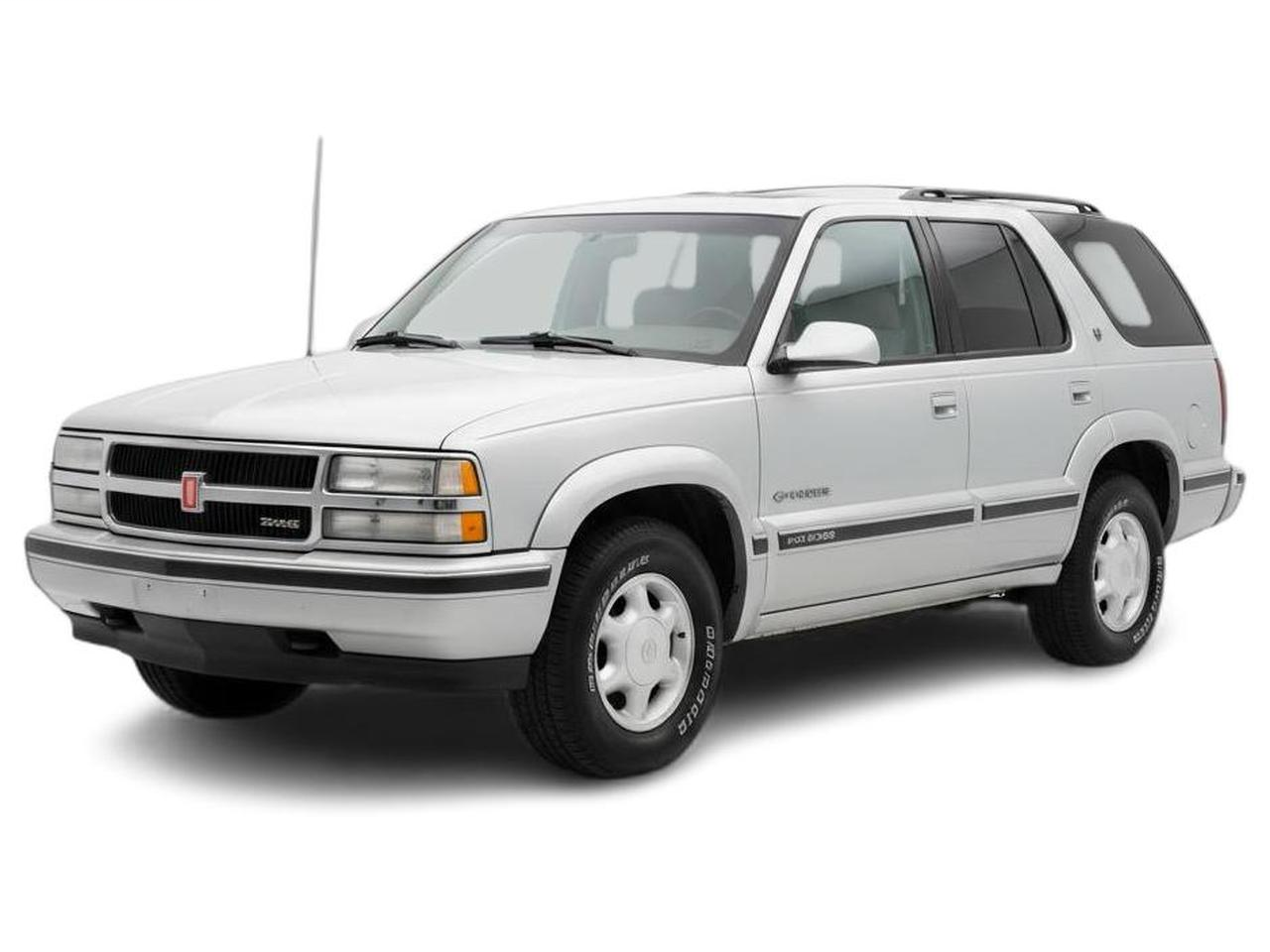
The 1993 Oldsmobile Bravada, produced from 1991 to 2001, was a luxurious take on the Chevrolet S-10 Blazer platform. As a compact luxury SUV, it offered a more upscale experience than its GM siblings. Key trims were generally limited, with the Bravada often being a single, well-appointed trim level. Its popularity stemmed from its blend of SUV capability with car-like comfort and distinctive Oldsmobile styling, making it a sophisticated choice for its era. Pricing when new ranged from the high $20,000s to the low $30,000s.
The Good
The 1993 Bravada offered a refined ride and comfortable interior, appealing to those seeking a smooth daily driver. Its upscale design and available all-wheel-drive provided a sense of security and premium feel. For practical buyers, its robust construction and ample cargo space were significant advantages, offering good value for a luxury-oriented SUV.
The Bad
Potential buyers should be aware of common issues like aging suspension components, particularly the self-leveling rear suspension, which can become costly to repair. Electrical gremlins, especially with power accessories and the climate control system, are also frequent concerns. Rust, particularly in the undercarriage and wheel wells, can be a significant problem for older models.
1993 Oldsmobile Bravada: Quick Overview
- Engine Options: The 1993 Oldsmobile Bravada came standard with a 4.3L V6 engine.
- Horsepower: This 4.3L V6 produced approximately 160 horsepower.
- Torque: Torque figures were around 230 lb-ft.
- Fuel Economy: EPA estimates for the 1993 Bravada were generally in the range of 15 mpg city and 19 mpg highway.
- 0-60 Times: Acceleration from 0 to 60 mph typically fell in the 9-10 second range, depending on conditions and load.
- Towing Capacity: The Bravada had a towing capacity of approximately 5,000 lbs when properly equipped with a towing package.
- Transmission: It was paired with a 4-speed automatic transmission.
- Drivetrain: Available in both rear-wheel drive (RWD) and all-wheel drive (AWD). The AWD system was a significant feature, providing enhanced traction.
- Trim-Level Features (Standard for Bravada):
- Leather seating surfaces
- Power adjustable front seats
- Power windows, door locks, and mirrors
- Automatic climate control
- AM/FM stereo with cassette player and optional CD player
- Cruise control
- Tilt steering wheel
- Roof rack
- Fog lights
- Braking system: Anti-lock braking system (ABS) was standard.
- Suspension: The Bravada featured a distinctive rear self-leveling suspension system, designed to maintain a level ride height regardless of load.
- Wheels: Typically equipped with 15-inch alloy wheels.
- Other: Tinted rear windows, intermittent wipers, and a rear wiper/washer were also standard.
1993 Oldsmobile Bravada Specifications
Vehicle Information
| Year | 1993 |
| Make | Oldsmobile |
| Model | Bravada |
| Trim | - |
| Style | - |
| Type | Sport Utility Vehicle |
| Category | Standard Sport Utility Vehicle |
Manufacturing Details
| Made In | United States |
| Manufacturing City | MORAINE |
Dimensions
| Doors | 2-Door |
| Curb Weight | 4002 pounds |
| Gross Vehicle Weight Rating | 6000 pounds |
| Overall Height | 65.50 inches |
| Overall Length | 178.90 inches |
| Overall Width | 65.20 inches |
| Wheelbase Length | 107.00 inches |
| Standard Seating | 5 |
Engine & Performance
| Engine | 4.3L V6 |
| Engine Size | 4.3L |
| Engine Cylinders | 6 |
| Transmission | 4-Speed Automatic |
| Transmission Type | Automatic |
| Transmission Speeds | 4-Speed |
| Drivetrain | Rear-Wheel Drive |
Additional Features
| Anti-Brake System | 4-Wheel ABS |
| Steering Type | Recirculating |
Pricing
| Manufacturer Suggested Retail Price (MSRP) | $25,349 |
| Invoice Price | - |
| Delivery Charges | - |
Vehicle History Report
Vehicle
Specifications
Specifications
Ownership
History
History
All History
Events
Events
NMVTIS Title
History Check
History Check
Salvage/Rebuilt
Check
Check
Accident
Check
Check
Theft
Check
Check
Open Lien
Check
Check
Past Sale
Listings
Listings
Safety
Recalls
Recalls
Odometer
Check
Check
Market Price
Analysis
Analysis
What Problems Does the 1993 Oldsmobile Bravada Have?
The 1993 Oldsmobile Bravada, like many vehicles of its era, has a set of commonly reported issues that owners and mechanics should be aware of. One of the most frequently cited problems revolves around the rear self-leveling suspension system. This complex system, designed to maintain ride height under load, can become a significant maintenance headache and expense as the vehicle ages. Leaking air lines, pump failures, and worn-out shocks are common culprits. When this system fails, it can lead to a sagging rear end and a rougher ride, often prompting owners to convert to a standard suspension setup, which can be a more reliable long-term solution.
Electrical issues are another recurring theme. Owners have reported problems with power windows, door locks, and mirrors failing to operate correctly. The climate control system, particularly the electronic modules and actuators, can also be prone to malfunctions, leading to issues with temperature regulation and airflow. In some cases, dashboard warning lights might illuminate without a clear cause, indicating a potential electrical gremlin.
Rust is a significant concern for any 1993 vehicle, and the Bravada is no exception. Areas prone to corrosion include the rocker panels, wheel wells, rear quarters, and the undercarriage. Thorough inspection for rust is crucial, especially in regions where road salt is used during winter. Frame rust can be particularly dangerous and expensive to repair.
While specific recalls for the 1993 model year might be limited, it's always advisable to check the National Highway Traffic Safety Administration (NHTSA) database for any outstanding recalls related to this vehicle or its platform. Long-term reliability can be moderate, but it heavily depends on consistent and proactive maintenance. Neglected maintenance, especially concerning the drivetrain and suspension, can lead to accelerated wear and more costly repairs down the line. The 4.3L V6 engine itself is generally considered robust, but its supporting systems are where most issues tend to arise.
Electrical issues are another recurring theme. Owners have reported problems with power windows, door locks, and mirrors failing to operate correctly. The climate control system, particularly the electronic modules and actuators, can also be prone to malfunctions, leading to issues with temperature regulation and airflow. In some cases, dashboard warning lights might illuminate without a clear cause, indicating a potential electrical gremlin.
Rust is a significant concern for any 1993 vehicle, and the Bravada is no exception. Areas prone to corrosion include the rocker panels, wheel wells, rear quarters, and the undercarriage. Thorough inspection for rust is crucial, especially in regions where road salt is used during winter. Frame rust can be particularly dangerous and expensive to repair.
While specific recalls for the 1993 model year might be limited, it's always advisable to check the National Highway Traffic Safety Administration (NHTSA) database for any outstanding recalls related to this vehicle or its platform. Long-term reliability can be moderate, but it heavily depends on consistent and proactive maintenance. Neglected maintenance, especially concerning the drivetrain and suspension, can lead to accelerated wear and more costly repairs down the line. The 4.3L V6 engine itself is generally considered robust, but its supporting systems are where most issues tend to arise.
How long will the 1993 Oldsmobile Bravada last?
Based on owner data and typical maintenance habits for a 1993 vehicle, a well-maintained Oldsmobile Bravada can realistically achieve 200,000 to 250,000 miles or more. The 4.3L V6 engine is known for its durability and longevity when properly cared for with regular oil changes and tune-ups. However, the long-term durability is significantly influenced by the maintenance of its other systems. Weaknesses that emerge over time often relate to the complex rear self-leveling suspension, which can require expensive repairs or replacement. Electrical components and the onset of rust can also limit its service life. Owners who address these issues proactively can enjoy many years and miles of service.
What Technology & Safety Features are Included?
The 1993 Oldsmobile Bravada offered a respectable suite of technology and safety features for its time, aiming to provide a comfortable and secure driving experience. Standard entertainment included an AM/FM stereo system with a cassette player. An optional CD player was available, which was a premium feature in the early 90s. The climate control system was automatic, allowing occupants to set a desired temperature, and it featured dual-zone functionality for the driver and front passenger.
In terms of driver-assistance features, the Bravada came standard with an Anti-lock Braking System (ABS), which was crucial for improving stability and control during emergency braking situations. The available all-wheel-drive (AWD) system was a significant technological advantage, enhancing traction and stability in various road conditions, from rain to light snow.
Safety features were also emphasized. The vehicle was equipped with front airbags for the driver and front passenger. Seat belts were standard, and the design of the SUV offered a commanding view of the road. The body-on-frame construction provided a robust structure. However, specific crash-test ratings for the 1993 model year might be limited or not directly comparable to modern standards. NHTSA ratings from that era often provided a less detailed assessment than current tests. Based on the technology and safety features available, the Bravada was positioned as a capable and relatively safe option for a compact luxury SUV of its time. Features like power windows, power door locks, and power mirrors were standard, contributing to overall convenience and perceived luxury.
In terms of driver-assistance features, the Bravada came standard with an Anti-lock Braking System (ABS), which was crucial for improving stability and control during emergency braking situations. The available all-wheel-drive (AWD) system was a significant technological advantage, enhancing traction and stability in various road conditions, from rain to light snow.
Safety features were also emphasized. The vehicle was equipped with front airbags for the driver and front passenger. Seat belts were standard, and the design of the SUV offered a commanding view of the road. The body-on-frame construction provided a robust structure. However, specific crash-test ratings for the 1993 model year might be limited or not directly comparable to modern standards. NHTSA ratings from that era often provided a less detailed assessment than current tests. Based on the technology and safety features available, the Bravada was positioned as a capable and relatively safe option for a compact luxury SUV of its time. Features like power windows, power door locks, and power mirrors were standard, contributing to overall convenience and perceived luxury.
What Colors Options are Available?
1993 Oldsmobile Bravada Prices and Market Value
When new, the 1993 Oldsmobile Bravada typically had an MSRP ranging from approximately $27,000 to $32,000, positioning it as a premium compact SUV. Like most vehicles, the Bravada experienced significant depreciation in its initial years. Currently, on the used market, prices for a 1993 Bravada vary widely based on condition, mileage, and maintenance history. Expect prices to range from as low as $1,000-$2,000 for vehicles needing substantial work, to $4,000-$6,000 or more for exceptionally well-maintained examples. Factors affecting resale value include the presence of rust, the operational status of the self-leveling suspension, and overall mechanical soundness. Rare, pristine examples might command a slight premium among collectors or enthusiasts of the Oldsmobile brand.
1993 Oldsmobile Bravada Cost of Ownership
Owning a 1993 Oldsmobile Bravada can present a mixed bag regarding costs. Insurance premiums will be moderate, comparable to other SUVs of its age and class. Fuel economy is not its strong suit, with the 4.3L V6 typically returning around 15-19 mpg, making fuel a significant ongoing expense. Maintenance costs can be average for basic services, but repairs, especially for the self-leveling suspension and potential electrical gremlins, can become costly. Parts availability for some unique Bravada features might also add to repair expenses. Overall, it's not the most economical vehicle to own long-term, particularly if major repairs are needed.
1993 Oldsmobile Bravada Fuel Efficiency
Fuel Type
Gasoline
Fuel Capacity
20.00 gallons
City Mileage
16 miles/gallon
Highway Mileage
21 miles/gallon
1993 Oldsmobile Bravada Safety Rating
NHTSA
IIHS
1993 Oldsmobile Bravada Recalls & Defects
Fuel System, Gasoline
Recall date
2006-05-19
Recall no.
06e043000
Source
NHTSA
Summary
Certain Replacement Fuel Filters, Fram Brand Name P/N G3727, With Date Codes X52911 Through X60801 Sequentially or X600141 and A Mexico Country or Origin Marking ON THE Fuel Filter Housing Manufactured From October 18, 2005, Through March 21, 2006, Sold FOR USE ON THE Vehicles Listed Above and ON Certain School Buses. (TO SEE THE School Bus Engine Sizes, Click ON "document Search" and Then "bus Applications"). THE Connector ON THE Fuel Filter WAS NOT Manufactured TO Honeywell's Specification. AS A Result, THE O-Ring MAY NOT Seat Correctly ON THE Fuel Line.
Consequence
This Condition MAY Cause AN Inadequate Seal AT THE Connection, Potentially Leading TO A Fuel Leak. IN THE Presence OF AN Ignition Source, A Fire Could Occur.
Remedy
Honeywell Will Notify Owners and Replace THE Fuel Filters Free OF Charge. THE Recall Began ON October 18, 2006. Owners MAY Contact Fram Customer Service AT 1-800-890-2075 (Option 1).
Notes
This Recall Only Pertains TO Aftermarket Fram Fuel Filters and HAS NO Relation TO ANY Original Equipment Installed ON THE Vehicles Listed.customers MAY Contact THE National Highway Traffic Safety Administration's Vehicle Safety Hotline AT 1-888-327-4236 (Tty: 1-800-424-9153); or GO TO Http://Www.safercar.gov.
Fuel System, Gasoline:delivery:hoses, Lines/Piping, and Fittings
Recall date
2006-05-18
Recall no.
06e041000
Source
NHTSA
Summary
Certain R&b, Inc. Central Multiport Fuel Injection (Cmfi) Fuel Return Lines, Models Help 55163, Napa Balkamp 700-3270, and THE Connection 2560001, Sold FOR USE AS Replacement Equipment FOR THE Vehicles Listed Above. THE Fuel Return Line HAS A Mechanical Bleed Valve Which WAS NOT Installed AT THE Proper Torque.
Consequence
A Fuel Leak CAN Occur AT THE Valve, Possibly Resulting IN A Fire.
Remedy
R&b, Inc. Will Notify Owners and AT THE Customers Request, Either Replace THE Fuel Line or Offer A Full Refund. THE Recall Began ON MAY 4, 2006. Owners MAY Contact R&b, Inc. AT 215-712-5330.
Notes
This Recall Only Pertains TO R&b, Inc. Aftermarket Cmfi Return Fuel Lines and HAS NO Relation TO ANY Original Equipment Installed ON THE Listed Passenger Vehicles.customers MAY Contact THE National Highway Traffic Safety Administration's Vehicle Safety Hotline AT 1-888-327-4236 (Tty: 1-800-424-9153); or GO TO Http://Www.safercar.gov.
1993 Oldsmobile Bravada Warranty
Basic
Original warranty
0 months / No data
Estimated remaining
Expired
Powertrain
Original warranty
0 months / No data
Estimated remaining
Expired
Rust
Original warranty
0 months / No data
Estimated remaining
Expired
1993 Oldsmobile Bravada Insurance
Insurance for a 1993 Oldsmobile Bravada is moderately priced, reflecting its status as a Sport Utility Vehicle with strong safety ratings and
reasonable repair costs.
How Does the 1993 Oldsmobile Bravada Compare to Other Sport Utility Vehicle?
The 1993 Oldsmobile Bravada competed in the burgeoning compact luxury SUV segment against rivals like the Acura SLX, Lexus LX 450 (though larger), Jeep Grand Cherokee, and Ford Explorer. In terms of performance, its 4.3L V6 offered adequate power, comparable to the Grand Cherokee and Explorer, but often lagged behind more potent engine options available in some competitors. The Bravada's strength lay in its comfortable ride and sophisticated styling, appealing to buyers seeking luxury over ruggedness. Features like standard leather and automatic climate control were competitive, while the self-leveling suspension was a unique differentiator.
Reliability is a mixed bag. While the 4.3L V6 engine is robust, the complex rear suspension and various electrical components were known to be problematic and expensive to repair, often making it less reliable than simpler, more mainstream offerings. The Jeep Grand Cherokee, for instance, offered more off-road capability and simpler mechanics, though its interior might have been less luxurious. The Ford Explorer, while popular and offering more trim options, often had its own set of reliability concerns, particularly with certain drivetrain components.
Price-wise, the Bravada was positioned at the higher end of the compact SUV market, reflecting its luxury aspirations. If prioritizing outright reliability and lower long-term running costs, a well-maintained, slightly older Jeep Grand Cherokee or a Ford Explorer might be more practical choices, though with a compromise on luxury. For those seeking a more refined and comfortable experience with a touch of luxury, and willing to accept potential maintenance costs, the Bravada remains a distinct option. A similar alternative could be a first-generation Lexus RX (introduced in 1998), which offered a more car-like driving experience and superior reliability, but is from a later model year. If brand prestige is key, an Acura SLX or Lexus LX, though typically larger and more expensive, offered greater reliability and refinement.
Reliability is a mixed bag. While the 4.3L V6 engine is robust, the complex rear suspension and various electrical components were known to be problematic and expensive to repair, often making it less reliable than simpler, more mainstream offerings. The Jeep Grand Cherokee, for instance, offered more off-road capability and simpler mechanics, though its interior might have been less luxurious. The Ford Explorer, while popular and offering more trim options, often had its own set of reliability concerns, particularly with certain drivetrain components.
Price-wise, the Bravada was positioned at the higher end of the compact SUV market, reflecting its luxury aspirations. If prioritizing outright reliability and lower long-term running costs, a well-maintained, slightly older Jeep Grand Cherokee or a Ford Explorer might be more practical choices, though with a compromise on luxury. For those seeking a more refined and comfortable experience with a touch of luxury, and willing to accept potential maintenance costs, the Bravada remains a distinct option. A similar alternative could be a first-generation Lexus RX (introduced in 1998), which offered a more car-like driving experience and superior reliability, but is from a later model year. If brand prestige is key, an Acura SLX or Lexus LX, though typically larger and more expensive, offered greater reliability and refinement.
Final Verdict: Is the 1993 Oldsmobile Bravada a Good Sport Utility Vehicle?

The 1993 Oldsmobile Bravada is ideal for individuals who appreciate classic 90s SUV styling and desire a comfortable, car-like ride with a touch of luxury, without the high cost of a contemporary luxury vehicle. It's a suitable choice for those who prioritize a refined interior and a smooth on-road experience over extreme off-road prowess or cutting-edge technology. Buying one today is only recommended if it's a low-mileage, exceptionally well-maintained example with all major systems, especially the rear suspension, in good working order, or if the buyer is prepared for potential maintenance expenses. It's certainly worth considering for a casual cruiser or a collector of unique American vehicles, but less so for a daily driver demanding absolute reliability and low running costs.