
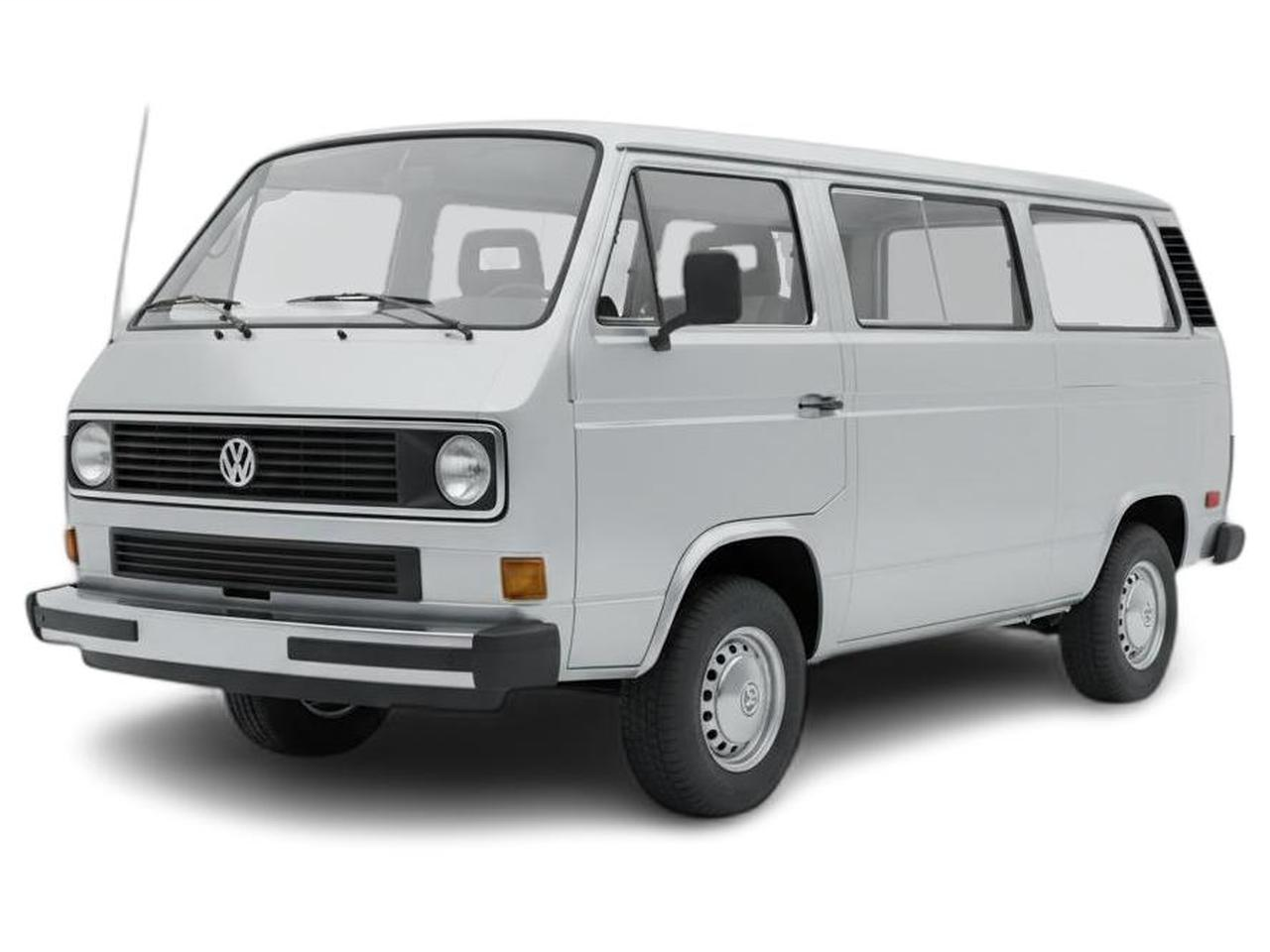
The 1983 Volkswagen Vanagon, also known as the T3 or Type 2 (T3) generation, continued the legacy of Volkswagen's iconic microbus. Produced from 1979 to 1992 globally, this rear-engine, rear-wheel-drive vehicle offered a versatile van body style. Popular trims included the basic Van, the Caravelle (more luxurious), and the more utilitarian models. Its enduring popularity stems from its unique, boxy design, spacious interior, and capability as a camper or people mover.
The Good
The 1983 Vanagon offers a nostalgic, upright driving position and immense interior space, appealing to adventure seekers. Its robust, simple engineering and potential for camper conversions provide practical utility and a sense of freedom. While not powerful, its unique design and community support offer significant value.
The Bad
Key weaknesses of the 1983 Vanagon include its modest engine power, making highway merging challenging. Rust is a significant concern, especially around wheel arches, sills, and the engine bay. Cooling system issues and oil leaks are also common, requiring diligent maintenance.
1983 Volkswagen Vanagon: Quick Overview
- Engine Options: The 1983 Vanagon primarily featured Volkswagen's air-cooled or water-cooled inline-four engines. The most common engine for this model year was likely the 1.9L (DG) water-cooled diesel engine, or a gasoline variant such as the 2.0L (CU) air-cooled or the 2.1L (DJ) water-cooled engine in later models of the generation, though 1983 was largely before the 2.1L became widespread. Earlier gasoline options included the 1.9L (CV) engine.
- Horsepower: Horsepower varied significantly based on engine choice. The 1.9L diesel engine typically produced around 50-55 horsepower. Gasoline engines like the 2.0L might have offered around 70-75 horsepower. The later 2.1L Wasserboxer engines (less common in '83) produced closer to 90-95 horsepower.
- Fuel Economy: Fuel economy was not a strong suit of the Vanagon, especially by modern standards. Expect figures in the range of 18-22 MPG combined for gasoline engines, and potentially slightly better for the diesel variant, around 20-25 MPG.
- 0-60 Times: Performance was leisurely. 0-60 MPH times were generally in the 15-20 second range, and often longer, particularly for diesel models or when the vehicle was heavily loaded.
- Towing Capacity: The towing capacity was generally limited, typically around 1,000 to 1,500 lbs, depending on the specific configuration and engine. It was not designed for heavy-duty towing.
- Trim-Level Features:
- Van: Basic transportation, often with vinyl or cloth upholstery, minimal amenities, and intended for cargo or utility use.
- Caravelle/Wagenbus: Offered more comfort and passenger-oriented features, including upgraded seating, interior trim, and potentially tinted windows.
- Westfalia Camper: This was a highly popular option, turning the Vanagon into a self-contained camper. Features included a pop-top roof for standing room and sleeping, a small kitchenette with a sink and stove, a refrigerator, a fold-out bed, and storage cabinets. These trims offered significant customization and utility for travel and camping.
1983 Volkswagen Vanagon Specifications
Vehicle Information
| Year | 1983 |
| Make | Volkswagen |
| Model | Vanagon |
| Trim | - |
| Style | Camper Van RWD 4MT 1.9L I4 |
| Type | Van |
| Category | passenger |
Manufacturing Details
| Made In | Germany |
| Manufacturing City | HANNOVER |
Dimensions
| Doors | 3-Door |
| Curb Weight | - |
| Gross Vehicle Weight Rating | - |
| Overall Height | - |
| Overall Length | - |
| Overall Width | - |
| Wheelbase Length | - |
| Standard Seating | - |
Engine & Performance
| Engine | 1.9L I4 |
| Engine Size | 1.9L |
| Engine Cylinders | 4 |
| Transmission | 4-Speed Manual |
| Transmission Type | Manual |
| Transmission Speeds | 4-Speed |
| Drivetrain | Rear-Wheel Drive |
Additional Features
| Anti-Brake System | - |
| Steering Type | - |
Pricing
| Manufacturer Suggested Retail Price (MSRP) | - |
| Invoice Price | - |
| Delivery Charges | - |
Vehicle History Report
Vehicle
Specifications
Specifications
Ownership
History
History
All History
Events
Events
NMVTIS Title
History Check
History Check
Salvage/Rebuilt
Check
Check
Accident
Check
Check
Theft
Check
Check
Open Lien
Check
Check
Past Sale
Listings
Listings
Safety
Recalls
Recalls
Odometer
Check
Check
Market Price
Analysis
Analysis
What Problems Does the 1983 Volkswagen Vanagon Have?
The 1983 Volkswagen Vanagon, like many vehicles of its era, has a list of known issues and long-term reliability concerns that prospective owners should be aware of. One of the most pervasive problems is rust. The unibody construction is susceptible to corrosion, particularly in areas like the wheel arches, rocker panels, door sills, and around the rear engine bay. Thorough inspection for rust is paramount before purchasing.
Cooling system issues are also frequently reported. The rear-mounted engine can be prone to overheating if the cooling system is not meticulously maintained. This includes checking and replacing coolant hoses, the radiator, water pump, and thermostat regularly. A clogged radiator or a failing fan can quickly lead to significant engine damage. Leaks from the cooling system are also common.
Engine reliability can be a mixed bag. The air-cooled engines, while simpler, can suffer from uneven cooling and require careful monitoring of oil levels. The water-cooled engines (which were becoming more common by 1983, especially the 2.1L Wasserboxer) introduced the possibility of head gasket failures, coolant leaks into the oil, or vice versa. Oil leaks are also a common complaint across various engine types, often stemming from seals and gaskets.
The transmission, particularly older automatic transmissions, can be a point of failure, often developing leaks or exhibiting rough shifting. Manual transmissions are generally more robust but can still develop clutch wear or synchro issues.
Regarding recalls, specific recalls for the 1983 model year would need to be checked against Volkswagen's official databases. However, common areas of concern for this generation have historically included braking systems, fuel system components, and potential exhaust leaks. Long-term reliability hinges heavily on the previous owner's maintenance habits. A well-maintained Vanagon can still be a reliable vehicle, but one that has been neglected will likely require significant investment in repairs. The availability of parts, while generally good within the enthusiast community, can sometimes be a challenge for less common components.
Cooling system issues are also frequently reported. The rear-mounted engine can be prone to overheating if the cooling system is not meticulously maintained. This includes checking and replacing coolant hoses, the radiator, water pump, and thermostat regularly. A clogged radiator or a failing fan can quickly lead to significant engine damage. Leaks from the cooling system are also common.
Engine reliability can be a mixed bag. The air-cooled engines, while simpler, can suffer from uneven cooling and require careful monitoring of oil levels. The water-cooled engines (which were becoming more common by 1983, especially the 2.1L Wasserboxer) introduced the possibility of head gasket failures, coolant leaks into the oil, or vice versa. Oil leaks are also a common complaint across various engine types, often stemming from seals and gaskets.
The transmission, particularly older automatic transmissions, can be a point of failure, often developing leaks or exhibiting rough shifting. Manual transmissions are generally more robust but can still develop clutch wear or synchro issues.
Regarding recalls, specific recalls for the 1983 model year would need to be checked against Volkswagen's official databases. However, common areas of concern for this generation have historically included braking systems, fuel system components, and potential exhaust leaks. Long-term reliability hinges heavily on the previous owner's maintenance habits. A well-maintained Vanagon can still be a reliable vehicle, but one that has been neglected will likely require significant investment in repairs. The availability of parts, while generally good within the enthusiast community, can sometimes be a challenge for less common components.
How long will the 1983 Volkswagen Vanagon last?
Based on owner data and typical maintenance, a 1983 Volkswagen Vanagon can achieve an impressive lifespan, often exceeding 200,000 miles, and sometimes reaching 300,000 miles or more. The long-term durability is a testament to its robust, albeit simple, engineering. However, this longevity is critically dependent on consistent and thorough maintenance. Weaknesses that emerge over time include the susceptibility to rust, which can compromise structural integrity if not addressed proactively. Engine and cooling system components, due to their age and exposure, often require periodic refurbishment or replacement. The transmission and drivetrain components also see wear but are generally considered durable if properly serviced. Regular fluid changes, attention to cooling system integrity, and rust prevention are key to maximizing its service life.
What Technology & Safety Features are Included?
The 1983 Volkswagen Vanagon is a product of its time, meaning its technology, entertainment, and safety features are quite basic by modern standards. Built-in tech was minimal; the focus was on mechanical simplicity and functionality. Entertainment typically consisted of an AM/FM radio, possibly with a cassette player as an optional upgrade. More advanced audio systems were not a feature of this era for this vehicle. There were no integrated navigation systems, Bluetooth connectivity, or sophisticated digital displays. The instrument cluster was analog, displaying speed, RPM, fuel level, and engine temperature.
Driver-assistance features were virtually non-existent. Features like cruise control might have been available on higher trims or as an optional accessory, but modern systems like lane departure warning, adaptive cruise control, or blind-spot monitoring were not part of the Vanagon's offerings. The upright seating position and large windows provided good outward visibility, which was a form of passive assistance.
Safety features were also rudimentary. Standard safety equipment likely included three-point seatbelts in the front (lap belts in the rear for some configurations), a sturdy metal body structure, and basic crumple zones. The rear engine placement offered some protection to occupants in a frontal impact. Airbags were not a feature in 1983. Anti-lock braking systems (ABS) were also not standard or widely available on vehicles of this type and year. Due to its age, standardized crash-test ratings in the manner of modern NHTSA or IIHS tests are not readily available for the 1983 Vanagon. However, it's important to note that vehicles from this period generally performed less favorably in impact tests compared to contemporary vehicles, which have significantly advanced safety engineering.
Driver-assistance features were virtually non-existent. Features like cruise control might have been available on higher trims or as an optional accessory, but modern systems like lane departure warning, adaptive cruise control, or blind-spot monitoring were not part of the Vanagon's offerings. The upright seating position and large windows provided good outward visibility, which was a form of passive assistance.
Safety features were also rudimentary. Standard safety equipment likely included three-point seatbelts in the front (lap belts in the rear for some configurations), a sturdy metal body structure, and basic crumple zones. The rear engine placement offered some protection to occupants in a frontal impact. Airbags were not a feature in 1983. Anti-lock braking systems (ABS) were also not standard or widely available on vehicles of this type and year. Due to its age, standardized crash-test ratings in the manner of modern NHTSA or IIHS tests are not readily available for the 1983 Vanagon. However, it's important to note that vehicles from this period generally performed less favorably in impact tests compared to contemporary vehicles, which have significantly advanced safety engineering.
What Colors Options are Available?
1983 Volkswagen Vanagon Prices and Market Value
When new, the 1983 Volkswagen Vanagon carried a price tag that varied significantly based on trim and options, but generally ranged from approximately $10,000 for a base model to upwards of $20,000-$25,000 for a fully equipped Westfalia camper. In the current used market, prices for a 1983 Vanagon can range widely, from as low as $3,000-$5,000 for projects needing significant work, to $15,000-$30,000 or even higher for well-maintained or restored examples, especially Westfalia models. Depreciation has been minimal for well-cared-for models, with many appreciating in value due to their classic status and popularity for van life. Factors affecting resale value include condition (rust, mechanical), original mileage, trim level (Westfalia being highly desirable), originality, and any recent maintenance or upgrades.
1983 Volkswagen Vanagon Cost of Ownership
Owning a 1983 Vanagon can be a mixed bag economically. Fuel costs are moderate, typically 18-22 MPG, with diesel variants offering slightly better economy. Insurance rates are generally reasonable, especially for collector or classic car policies, if eligible. However, maintenance and repair costs can be significant. Parts availability can sometimes be an issue, and specialized knowledge is often required for repairs. While not inherently expensive to fuel or insure, the potential for costly repairs due to age and known issues means the Vanagon can become costly to own if not meticulously maintained or if major components fail. It's more of a labor of love than an economical daily driver for many.
1983 Volkswagen Vanagon Fuel Efficiency
Fuel Type
Gasoline
Fuel Capacity
-
City Mileage
-
Highway Mileage
-
1983 Volkswagen Vanagon Insurance
Insurance for a 1983 Volkswagen Vanagon is moderately priced, reflecting its status as a Van with strong safety ratings and
reasonable repair costs.
How Does the 1983 Volkswagen Vanagon Compare to Other Van?
In the early 1980s, the Volkswagen Vanagon occupied a unique niche, blurring the lines between passenger van, cargo van, and camper. Its primary rivals in terms of size and utility were often minivans and larger vans, though the Vanagon stood out with its rear-engine configuration and distinct European styling. Competitors included models like the Ford Econoline, Chevrolet Van, and Dodge Ram Van, which were typically larger, more powerful, and often rear-wheel drive but lacked the Vanagon's specific charm and camper integration (unless heavily modified).
Performance: The Vanagon lagged significantly behind its American rivals in terms of power and acceleration. Its engines were designed for efficiency and durability over outright speed. Ford and Chevy vans of the era offered much more powerful V6 and V8 engine options, making them superior for towing and highway cruising.
Features: While base Vanagons were spartan, higher trims like the Caravelle and especially the Westfalia camper offered impressive functionality for their size. The Westfalia, in particular, was a self-contained living space unmatched by most competitors unless custom-built. American vans offered more creature comforts and options for their time in terms of audio systems and interior amenities.
Reliability: This is where the Vanagon presents a mixed bag compared to American counterparts. While the underlying mechanicals are often robust and simpler, they are prone to specific issues like rust and cooling system problems. American vans, while often less refined, could be very reliable with regular maintenance, and parts were generally more abundant and cheaper.
Price: New, the Vanagon was often priced competitively, especially considering its versatility as a camper. Used, well-maintained Vanagons, particularly Westfalias, have held their value remarkably well and can even appreciate, often commanding higher prices than comparable American vans from the same era due to their cult status.
Alternatives: For those seeking a similar utilitarian and camping experience, the Toyota Van (precursor to the Sienna) offered a more modern and often more reliable package, though less of a camping focus. Later, the Ford E-Series and Chevrolet Express vans, especially when converted by aftermarket companies, provided more modern performance and features. For a pure people-mover, contemporary minivans from Chrysler or the Japanese brands might offer better daily driving characteristics and fuel economy. However, for the unique blend of adventure, compact camper utility, and iconic style, the Vanagon remains in a class of its own.
Performance: The Vanagon lagged significantly behind its American rivals in terms of power and acceleration. Its engines were designed for efficiency and durability over outright speed. Ford and Chevy vans of the era offered much more powerful V6 and V8 engine options, making them superior for towing and highway cruising.
Features: While base Vanagons were spartan, higher trims like the Caravelle and especially the Westfalia camper offered impressive functionality for their size. The Westfalia, in particular, was a self-contained living space unmatched by most competitors unless custom-built. American vans offered more creature comforts and options for their time in terms of audio systems and interior amenities.
Reliability: This is where the Vanagon presents a mixed bag compared to American counterparts. While the underlying mechanicals are often robust and simpler, they are prone to specific issues like rust and cooling system problems. American vans, while often less refined, could be very reliable with regular maintenance, and parts were generally more abundant and cheaper.
Price: New, the Vanagon was often priced competitively, especially considering its versatility as a camper. Used, well-maintained Vanagons, particularly Westfalias, have held their value remarkably well and can even appreciate, often commanding higher prices than comparable American vans from the same era due to their cult status.
Alternatives: For those seeking a similar utilitarian and camping experience, the Toyota Van (precursor to the Sienna) offered a more modern and often more reliable package, though less of a camping focus. Later, the Ford E-Series and Chevrolet Express vans, especially when converted by aftermarket companies, provided more modern performance and features. For a pure people-mover, contemporary minivans from Chrysler or the Japanese brands might offer better daily driving characteristics and fuel economy. However, for the unique blend of adventure, compact camper utility, and iconic style, the Vanagon remains in a class of its own.
Final Verdict: Is the 1983 Volkswagen Vanagon a Good Van?
The 1983 Volkswagen Vanagon is ideal for adventurers, DIY mechanics, and those seeking a unique vehicle for road trips, camping, or a mobile workspace. It's best suited for individuals who appreciate its iconic design and versatility over raw performance or modern amenities. Buying one is worthwhile if you are prepared for potential maintenance, especially if you have some mechanical inclination or a trusted specialist. It is definitely a used vehicle purchase, as new ones are long gone. The Westfalia camper trim is highly desirable for those wanting a ready-to-go adventure vehicle. A thorough pre-purchase inspection, focusing on rust and the condition of the engine and cooling system, is crucial. It's a purchase for enthusiasts who value character and utility, understanding that it requires dedication and ongoing care.