
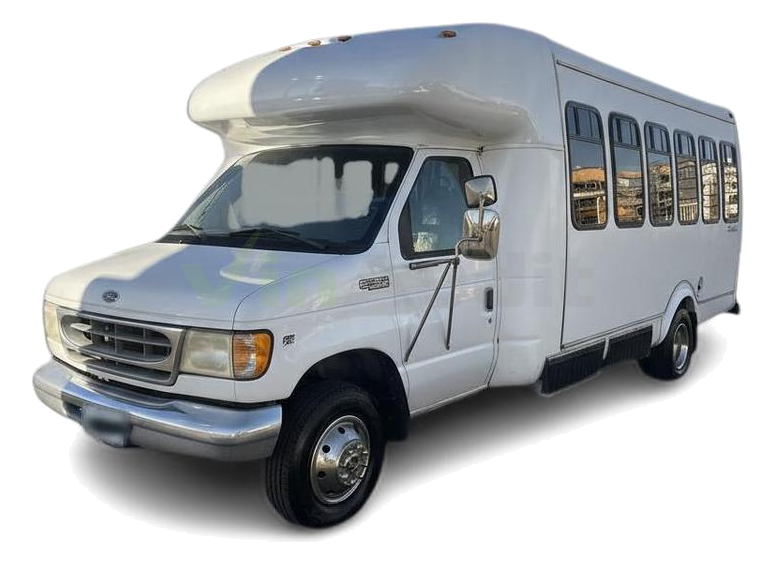
The Good
The 2001 Ford E-450 excels in raw capability and unwavering reliability, offering a dependable foundation for demanding tasks. Its spacious interior provides ample room for passengers or cargo, appealing to practical needs. Emotionally, its sheer presence and the confidence it instills for heavy-duty work contribute to its appeal.
The Bad
When considering the 2001 Ford E-450, be aware of potential issues like rust, particularly in the undercarriage and body panels, and the possibility of transmission wear with high mileage. Fuel economy is generally not a strong suit, and some older models might exhibit aging interior components.
2001 Ford E-450: Quick Overview
- Engine Options: The 2001 Ford E-450 was primarily offered with two robust engine choices:
- 4.6L Triton V8
- 5.4L Triton V8
- Horsepower:
- 4.6L V8: Approximately 215 horsepower
- 5.4L V8: Approximately 235 horsepower
- Fuel Economy: Official EPA ratings are not readily available for these commercial vehicles, as they were not typically tested in the same manner as passenger cars. However, expect low figures, generally in the single digits for city driving and low double digits for highway driving, with the V8 engines consuming significant fuel. Real-world MPG could range from 8-12 MPG depending on load and driving conditions.
- 0-60 Times: Not a primary metric for this vehicle. Performance is geared towards hauling and towing, not acceleration. Expect slow acceleration times, likely in the 15-20+ second range depending on configuration and load.
- Towing Capacity: The towing capacity of the E-450 is substantial and depends heavily on the specific configuration, axle ratios, and optional towing packages. Ford typically rated these vans for towing capabilities ranging from 7,000 lbs to over 10,000 lbs. This makes it suitable for towing heavy trailers for commercial purposes or recreational use like fifth-wheel campers.
- Trim-Level Features:
- Base Model: Focused on essential functionality, typically featuring durable vinyl flooring, basic seating, manual windows and locks, and a simple AM/FM radio.
- XL Trim: Offered a slight upgrade with features like cloth seating, a more comprehensive gauge cluster, and possibly a tilt steering wheel.
- XLT Trim: The most equipped trim, often including features like air conditioning, cruise control, power windows and locks, upgraded interior trim, and potentially an improved audio system. Many E-450s were also sold as chassis cabs, meaning they came without a finished body, allowing for custom upfitting (e.g., box trucks, RVs, ambulances).
2001 Ford E-450 Specifications
Vehicle Information
| Year | 2001 |
| Make | Ford |
| Model | E-450 |
| Trim | - |
| Style | Chateau Cutaway RWD 4AT 7.3L V8 |
| Type | Cutaway |
| Category | commercial |
Manufacturing Details
| Made In | United States |
| Manufacturing City | LORAIN |
Dimensions
| Doors | 4-Door |
| Curb Weight | 8000 pounds |
| Gross Vehicle Weight Rating | 14000 pounds |
| Overall Height | 100 inches |
| Overall Length | 240 inches |
| Overall Width | 96 inches |
| Wheelbase Length | 138 inches |
| Standard Seating | 2 |
Engine & Performance
| Engine | 7.3L V8 |
| Engine Size | 7.3L |
| Engine Cylinders | 8 |
| Transmission | 4-Speed Automatic |
| Transmission Type | Automatic |
| Transmission Speeds | 4-Speed |
| Drivetrain | Rear-Wheel Drive |
Additional Features
| Anti-Brake System | 4-Wheel ABS |
| Steering Type | Recirculating Ball |
Pricing
| Manufacturer Suggested Retail Price (MSRP) | $35,000 |
| Invoice Price | - |
| Delivery Charges | - |
Vehicle History Report
Specifications
History
Events
History Check
Check
Check
Check
Check
Listings
Recalls
Check
Analysis
What Problems Does the 2001 Ford E-450 Have?
Another area that can cause concern is the transmission. With heavy use and high mileage, the automatic transmission (typically a 4R70W or 4R100) can experience wear. Symptoms might include slipping gears, delayed engagement, or harsh shifting. Regular fluid changes and proper maintenance are crucial to prolonging its life. Some reports also indicate potential issues with the rear axle seals leaking or bearing wear over time.
Engine-related problems, while less common than body or transmission issues, can include intake manifold gasket leaks on the Triton V8 engines, which can lead to coolant loss and overheating. Spark plug blowouts were an issue on earlier Triton engines, but by 2001, Ford had largely addressed this with improved spark plug designs. Ignition coil failures can also occur, leading to misfires and rough running.
Electrical gremlins can surface in older vehicles. This might manifest as issues with power windows, door locks, the instrument cluster, or the radio. Battery drain or alternator problems are also possible. The suspension and steering components, such as ball joints, tie rods, and bushings, will naturally wear over time due to the vehicle's weight and intended use, leading to imprecise steering and potential noises.
Regarding recalls for the 2001 model year, specific recall information would need to be checked against the vehicle's VIN. However, for the E-Series in general around this period, recalls often pertained to various safety components, including airbags, brake systems, or fuel system components. Long-term reliability is generally considered good if the vehicle has been well-maintained. These vans are built for durability, but consistent, preventative maintenance is key to avoiding major costly repairs and ensuring longevity.
How long will the 2001 Ford E-450 last?
What Technology & Safety Features are Included?
Driver-assistance features were virtually nonexistent in the modern sense. There were no advanced driver-assistance systems (ADAS) like adaptive cruise control, lane departure warning, or automatic emergency braking. The focus was on providing a straightforward driving experience. Features like cruise control were available as options on higher trims.
In terms of safety features, the 2001 E-450 came equipped with standard safety equipment for its time. This included front airbags for the driver and front passenger. Antilock Braking System (ABS) was generally standard on all models, enhancing braking stability, especially under heavy loads or during emergency stops. Seat belts for all occupants were, of course, a mandatory feature. Some models might have had optional features like daytime running lights. Due to its classification as a heavy-duty van, comprehensive crash-test ratings from organizations like the NHTSA or IIHS in the same format as passenger cars are not readily available or applicable. These vehicles were designed with a focus on structural integrity for hauling and towing rather than crash energy absorption in the same manner as smaller vehicles. The robust construction itself contributes to a sense of safety when carrying valuable cargo or passengers.
What Colors Options are Available?
2001 Ford E-450 Prices and Market Value
2001 Ford E-450 Cost of Ownership
2001 Ford E-450 Fuel Efficiency
2001 Ford E-450 Recalls & Defects
2001 Ford E-450 Warranty
Basic
Powertrain
Rust
2001 Ford E-450 Insurance
reasonable repair costs.
How Does the 2001 Ford E-450 Compare to Other Cutaway?
Performance: The E-450 generally offered comparable V8 engine power to its competitors, focused on torque for towing and hauling rather than outright speed. All three offered capable powertrains for their class.
Features: In 2001, feature sets across these vans were quite basic, prioritizing functionality. The E-450, particularly in its higher trims like XLT, offered features comparable to the Express and Ram Van, with options like air conditioning and power accessories. Customization was a key strength for all, especially for the E-450 and Express when purchased as chassis cabs.
Reliability: Ford's E-Series has a long-standing reputation for robustness and longevity, often considered a benchmark in reliability for heavy-duty vans. While all these vans could be reliable with proper maintenance, the E-450 often benefits from simpler mechanicals and a proven platform. However, common issues like rust can affect all models in this age bracket.
Price: When new, prices were competitive within the segment. In the used market, the 2001 E-450 typically offers strong value due to its widespread availability and reputation. The Chevrolet Express 4500 is a very similar alternative, offering comparable capability and often a slightly more modern feel in some aspects. The Dodge Ram Van, though less common in heavy-duty configurations, is another option, but parts availability might be more challenging for some specific components.
Recommendations: If pure utility and a proven track record are paramount, the Ford E-450 is an excellent choice. The Chevrolet Express 4500 is a very close competitor and might be preferred if specific Chevrolet dealer networks or slightly different interior ergonomics are desired. For those seeking a slightly more modern feel, looking at later model years of either the E-450 or Express would be advisable. For tasks where extreme payload or towing is required, ensuring the specific E-450 chosen has the appropriate axle ratios and towing packages is key.
Final Verdict: Is the 2001 Ford E-450 a Good Cutaway?
Whether it's worth buying hinges heavily on its condition and intended use. As a used vehicle, it offers exceptional value for its capability, provided it has been well-maintained and rust is not a major concern. It is generally worth buying for its durability and cost-effectiveness in the secondary market, especially if purchased by someone familiar with basic maintenance or willing to invest in it. Opting for a lower-mileage example or one with a documented service history significantly improves the purchase decision. The passenger van trims are suitable for shuttle services, while chassis cab versions are best for commercial upfitting. It is not recommended for those prioritizing fuel efficiency or modern technology.

Jovan
Jovan specializes in interpreting vehicle records and making sense of VIN data. With over 10 years of experience in the automotive data industry, his work ensures that every report is clear, accurate, and useful for car buyers.