
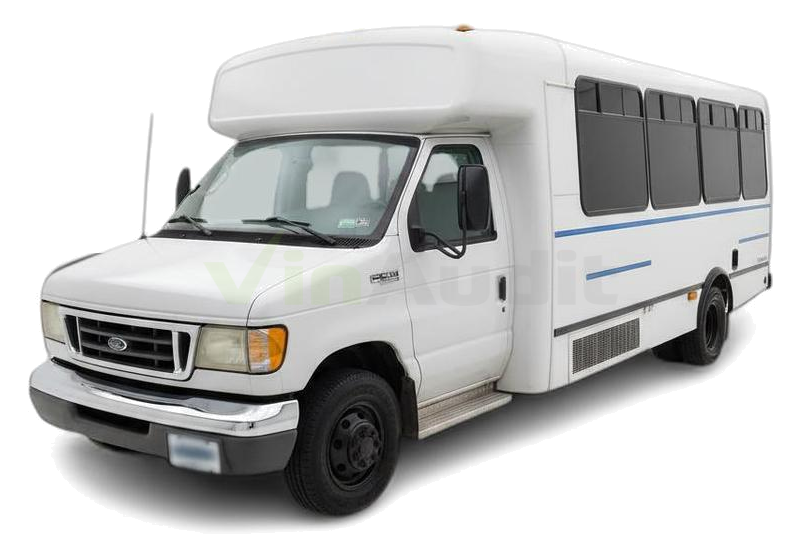
The Good
The 2003 Ford E-450 offers exceptional towing and hauling prowess, providing practical peace of mind for demanding tasks. Its legendary Ford reliability ensures long-term service, while its spacious interior can be configured for comfort and utility, appealing to both the sensible need for capability and the emotional desire for a dependable workhorse or adventure vehicle.
The Bad
Potential buyers of the 2003 Ford E-450 should be aware of common issues like transmission problems, especially with higher mileage. Rust accumulation, particularly on the frame and body panels in rust-belt regions, is a significant concern. Also, monitor for exhaust leaks and potential cooling system weaknesses.
2003 Ford E-450: Quick Overview
- Engine Options: The 2003 Ford E-450 was primarily offered with two robust V8 engine options:
- 4.6L Triton V8
- 5.4L Triton V8
- 6.8L Triton V10 (often found in heavier duty applications)
- Horsepower:
- 4.6L V8: Approximately 215 hp
- 5.4L V8: Approximately 235 hp
- 6.8L V10: Approximately 255 hp
- Fuel Economy:
Fuel economy for the E-450 is not a strong suit and varies greatly depending on load, terrain, and specific engine. Expect figures in the range of 10-14 MPG combined. Official EPA ratings were not typically provided for these commercial vehicles as they were often used for work purposes where fuel efficiency was secondary to capability. - 0-60 Times:
0-60 mph times are not a relevant metric for the E-450 due to its design and intended use as a work vehicle. When loaded, acceleration is significantly slower. - Towing Capacity:
Towing capacity is a major strength of the E-450. Depending on the configuration (e.g., wheelbase, axle ratio, trailer package), towing capacities could range from approximately 7,000 lbs up to over 10,000 lbs. This made it suitable for towing large trailers, RVs, or heavy equipment. - Trim-Level Features:
The E-450 was less about traditional trim levels (like XLT, Lariat) found in passenger vehicles and more about its configuration and intended use. Key features would be dictated by whether it was a:- Cargo Van: Primarily focused on utility, offering a spacious, unadorned cargo area with various shelving and organizational options. Standard features would include basic amenities, power steering, and brakes.
- Passenger Van: Configured with multiple rows of seating, often with options for air conditioning, tinted windows, and basic audio systems.
- Cutaway Chassis: This was the most versatile configuration, providing a chassis with a front-end structure, allowing custom bodies to be mounted. This was common for RV conversions, shuttle buses, or specialized vocational vehicles. Features would depend entirely on the custom build.
2003 Ford E-450 Specifications
Vehicle Information
| Year | 2003 |
| Make | Ford |
| Model | E-450 |
| Trim | - |
| Style | Chateau Cutaway RWD 4AT 7.3L V8 |
| Type | Cutaway |
| Category | commercial |
Manufacturing Details
| Made In | United States |
| Manufacturing City | LORAIN |
Dimensions
| Doors | 4-Door |
| Curb Weight | 10000 pounds |
| Gross Vehicle Weight Rating | 14000 pounds |
| Overall Height | 81 inches |
| Overall Length | 240 inches |
| Overall Width | 96 inches |
| Wheelbase Length | 138 inches |
| Standard Seating | 2 |
Engine & Performance
| Engine | 7.3L V8 |
| Engine Size | 7.3L |
| Engine Cylinders | 8 |
| Transmission | 4-Speed Automatic |
| Transmission Type | Automatic |
| Transmission Speeds | 4-Speed |
| Drivetrain | Rear-Wheel Drive |
Additional Features
| Anti-Brake System | 4-Wheel ABS |
| Steering Type | Recirculating Ball |
Pricing
| Manufacturer Suggested Retail Price (MSRP) | $35,000 |
| Invoice Price | - |
| Delivery Charges | - |
Vehicle History Report
Specifications
History
Events
History Check
Check
Check
Check
Check
Listings
Recalls
Check
Analysis
What Problems Does the 2003 Ford E-450 Have?
Cooling system issues are also prevalent. Radiator leaks, failing water pumps, and thermostat problems can lead to overheating, which is particularly detrimental to these large engines. Overheating can cause significant engine damage, so vigilance in monitoring coolant levels and the overall health of the cooling system is crucial.
Rust and corrosion are significant long-term concerns, especially for E-450s operating in regions with harsh winters or coastal environments. Frame rust can compromise structural integrity, while body panels, wheel wells, and rocker panels are susceptible to significant decay. This often requires extensive and expensive repairs.
While specific recalls for the 2003 model year might be limited and model-year specific, it's always advisable to check the National Highway Traffic Safety Administration (NHTSA) database for any outstanding recalls related to braking systems, airbags, or powertrain components. For instance, some Ford vans from this era experienced issues with fuel pump failures or potential exhaust leaks.
Regarding long-term reliability, the E-450's durability is directly tied to its maintenance. Vehicles that have been regularly serviced, with fluid changes (engine oil, transmission fluid, coolant, brake fluid) performed on schedule, and timely repairs of minor issues, tend to last much longer. However, the inherent stress of commercial use, towing, and the sheer weight of the vehicle can accelerate wear on components like suspension parts, brakes, and bearings. Owners who have successfully maintained their E-450s for high mileage often report replacement of wear-and-tear items as routine, rather than catastrophic failures, underscoring the importance of proactive maintenance.
How long will the 2003 Ford E-450 last?
What Technology & Safety Features are Included?
Built-in Tech & Entertainment: Standard fare typically included a basic AM/FM radio with a cassette player. An optional CD player was available, and some higher-spec configurations might have offered an upgraded audio system with more speakers. Climate control was usually manual, with basic air conditioning and heating systems. Power windows and door locks were available as options, particularly on passenger van configurations.
Driver-Assistance Features: Advanced driver-assistance systems as we know them today were virtually non-existent. Features like cruise control were optional on some models. The primary driver assistance was Ford's robust power steering, making it manageable to maneuver this large vehicle. Anti-lock Braking System (ABS) was a standard safety feature across the E-Series lineup, enhancing braking control, especially in emergency situations.
Safety Features: Standard safety equipment included front airbags for the driver and passenger. Seat belts were, of course, standard. The E-450's heavy-duty construction provided inherent passive safety. However, it did not feature advanced crumple zones or sophisticated electronic stability control systems common in modern vehicles.
Crash-Test Ratings: Obtaining specific, standardized crash-test ratings like those from the IIHS (Insurance Institute for Highway Safety) or NHTSA (National Highway Traffic Safety Administration) for commercial van models like the E-450 from 2003 can be challenging. These vehicles were often tested for specific commercial applications or not subjected to the same battery of tests as consumer passenger cars. However, as a heavy-duty vehicle, its sheer mass offered a degree of protection in collisions with lighter vehicles. Nonetheless, the lack of modern safety tech means it would likely perform poorly in frontal and side-impact tests compared to contemporary passenger vehicles. Buyers should consider that while it has basic safety features, it lacks the advanced protection found in newer vehicles.
What Colors Options are Available?
2003 Ford E-450 Prices and Market Value
Currently, the used market prices for a 2003 Ford E-450 are highly dependent on condition, mileage, and the specific configuration (e.g., cargo van, passenger van, cutaway). Expect prices to range from roughly $3,000 to $10,000 for models in average condition.
Depreciation has been significant, as is typical for heavy-duty vehicles and those primarily used for commercial purposes. Factors affecting resale value include mechanical condition (especially transmission and engine health), the presence of rust, interior wear and tear, and remaining tire life. Well-maintained examples, especially those with lower mileage and no significant rust, will command higher prices. Conversions (like RVs) can fetch more but depend heavily on the quality and modernity of the conversion.
2003 Ford E-450 Cost of Ownership
2003 Ford E-450 Fuel Efficiency
2003 Ford E-450 Insurance
reasonable repair costs.
How Does the 2003 Ford E-450 Compare to Other Cutaway?
Performance: In terms of raw power and towing/hauling, the E-450 generally held its own, especially with the optional V10 engine, often outperforming comparable Chevy/GMC models in sheer grunt. However, handling and ride comfort were utilitarian across the board. The Express/Savana offered similar engine options, with the 5.7L Vortec V8 being a popular choice.
Features: Both the E-450 and the Express/Savana offered basic amenities for their era. Neither was a technological marvel. Features were largely dictated by vocational needs or specific passenger configurations. Both offered optional upgrades like air conditioning, better sound systems, and power accessories, but neither stood out significantly over the other in terms of advanced features for 2003.
Reliability: Both Ford E-Series and Chevy/GMC Express/Savana vans have reputations for durability, but also for specific common issues. Ford's E-Series is often praised for its robust powertrain components. However, transmission issues have been reported on both platforms. Rust can be a significant concern for both depending on climate. Long-term reliability for both heavily depends on the owner's maintenance regimen.
Price: When new, pricing was competitive. On the used market, the 2003 E-450 and its Chevrolet/GMC counterparts are similarly priced, with condition and mileage being the primary determinants.
Alternatives: For tasks requiring heavy towing or cargo capacity, the 2003 E-450 remains a solid choice. If slightly less capacity is acceptable and a more refined ride is desired, a well-maintained Ford E-350 or a higher-mileage Ford F-Series Super Duty truck (with a towing package) could be considered. For those seeking modern features and safety, looking at newer model years of either the E-Series (up to 2014) or the Express/Savana would be advisable, though at a significantly higher cost. However, for pure, no-frills, heavy-duty capability at a lower used price point, the 2003 E-450 is a competent, albeit dated, option.
Final Verdict: Is the 2003 Ford E-450 a Good Cutaway?
Given its age, purchasing this vehicle is exclusively a used proposition. It's crucial to buy a well-maintained example, thoroughly inspecting for rust, transmission health, and signs of heavy wear. Opting for a cargo van or cutaway chassis might offer more flexibility for specific needs. It is not recommended for daily commuting or for those seeking a comfortable family vehicle. It shines as a dedicated tool for demanding tasks where its heavy-duty nature is an asset, provided the buyer is prepared for the associated running costs and potential repairs.

Jovan
Jovan specializes in interpreting vehicle records and making sense of VIN data. With over 10 years of experience in the automotive data industry, his work ensures that every report is clear, accurate, and useful for car buyers.