
The Good
The 2010 Hino 268 boasts impressive reliability and fuel efficiency, appealing to practical buyers seeking lower operating costs. Its durable construction offers peace of mind, while the straightforward design ensures ease of maintenance. For emotional appeal, it represents a dependable partner for business growth.
The Bad
Owners should be aware of potential issues with the exhaust gas recirculation (EGR) system and the diesel particulate filter (DPF), which can be costly to repair. Transmission shifting could also be a concern for some, and basic interior amenities might feel dated compared to newer competitors.
2010 Hino 268: Quick Overview
- Engine Options: The 2010 Hino 268 typically came equipped with Hino's J08E-series inline 6-cylinder diesel engine. This engine is known for its robust construction and reliability.
- Horsepower: Horsepower ratings for the J08E engine in the 2010 Hino 268 generally ranged from approximately 220 hp to 260 hp, depending on the specific configuration and GVWR.
- Torque: Torque figures were also substantial, typically in the range of 520 lb-ft to 660 lb-ft, providing ample pulling power for commercial applications.
- Fuel Economy: Fuel economy for a truck of this class is highly variable, depending on load, terrain, driving style, and specific configuration. However, the Hino J08E engine is known for its relatively good fuel efficiency within the medium-duty diesel segment, often achieving figures in the range of 10-15 MPG.
- 0-60 Times: 0-60 mph times are not a standard or particularly relevant metric for commercial trucks like the Hino 268. These vehicles are designed for hauling and work, not acceleration. Performance is measured more by its ability to carry loads and maintain speed under various conditions.
- Towing Capacity: Towing capacity is not directly specified by a single towing figure in the same way as a pickup truck. Instead, the Hino 268 is rated by its Gross Vehicle Weight Rating (GVWR) and Gross Combined Weight Rating (GCWR). For the 268 model, the GVWR typically falls around 25,500 lbs to 26,000 lbs, enabling it to haul significant payloads and tow substantial trailers within its GCWR limits.
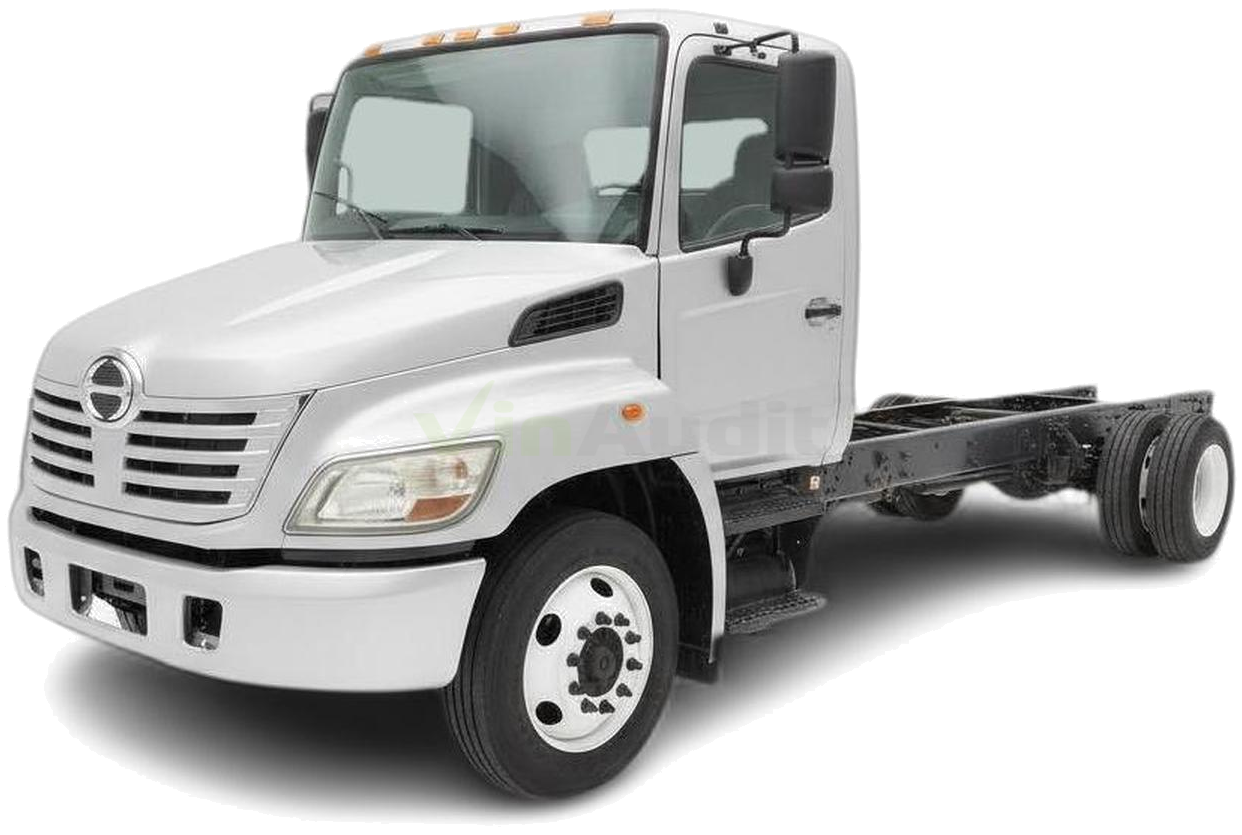
- Trim-Level Features: The 2010 Hino 268 is primarily offered as a cab-and-chassis model, meaning specific body configurations (like a box van, stake bed, or flatbed) are added by upfitters. The cab itself is designed for function and durability. Standard features typically included:
- Air conditioning
- Power steering
- Tilt and telescopic steering wheel
- AM/FM radio
- Durable vinyl or cloth seating
- Standard safety features like airbags and anti-lock brakes (ABS)
2010 Hino 268 Specifications
Vehicle Information
| Year | 2010 |
| Make | Hino |
| Model | 268 |
| Trim | - |
| Style | - |
| Type | Truck |
| Category | - |
Manufacturing Details
| Made In | United States |
| Manufacturing City | WILLIAMSTOWN |
Dimensions
| Doors | - |
| Curb Weight | - |
| Gross Vehicle Weight Rating | - |
| Overall Height | - |
| Overall Length | - |
| Overall Width | - |
| Wheelbase Length | - |
| Standard Seating | - |
Engine & Performance
| Engine | 7.6L I6 |
| Engine Size | 7.6L |
| Engine Cylinders | 6 |
| Transmission | - |
| Transmission Type | - |
| Transmission Speeds | - |
| Drivetrain | Rear-Wheel Drive |
Additional Features
| Anti-Brake System | - |
| Steering Type | - |
Pricing
| Manufacturer Suggested Retail Price (MSRP) | - |
| Invoice Price | - |
| Delivery Charges | - |
Vehicle History Report
Specifications
History
Events
History Check
Check
Check
Check
Check
Listings
Recalls
Check
Analysis
What Problems Does the 2010 Hino 268 Have?
Another area to watch out for is the diesel particulate filter (DPF). These systems are designed to reduce emissions but can become clogged over time, especially with frequent short trips or if the regeneration cycles are interrupted. A clogged DPF can cause significant performance issues and require expensive cleaning or replacement. Maintenance and proper driving practices are crucial to mitigate these DPF-related problems.
Some owners have reported issues with transmission shifting, particularly in the automatic transmissions. This can manifest as rough shifts, hesitation, or even failure to engage gears properly. Regular transmission fluid changes and inspection are important.
While Hino trucks are generally known for their reliability, the 2010 model year, being part of a generation using more complex emissions systems (like EGR and DPF), might see more of these specific issues compared to older or newer generations with different emissions control technologies. Recalls for the 2010 Hino 268 are specific and would need to be checked against the VIN. However, general long-term reliability is good if regular, manufacturer-recommended maintenance is performed diligently. The robust J08E engine is known to last hundreds of thousands of miles with proper care, but attention to the emission control systems is paramount to maintaining that long-term durability.
How long will the 2010 Hino 268 last?
What Technology & Safety Features are Included?
Driver-assistance features are minimal. Modern amenities like lane departure warnings, adaptive cruise control, or blind-spot monitoring were largely absent from the 2010 Hino 268. The focus is on the core driving experience and robust mechanical systems. The primary safety features are those mandated by regulations and essential for commercial operation.
Standard safety features include:
- Anti-lock Braking System (ABS): Essential for maintaining steering control during emergency braking, especially with heavy loads.
- Airbags: Driver and front passenger airbags are standard.
- Seatbelts: Three-point seatbelts for all occupants.
- Daytime Running Lights: To enhance visibility.
Regarding crash-test ratings, commercial trucks like the Hino 268 are generally not subjected to the same comprehensive crash testing programs (like NHTSA or IIHS) as passenger vehicles. Their construction is inherently more robust to handle commercial duty. Instead, compliance with Federal Motor Vehicle Safety Standards (FMVSS) is paramount. While specific crash-test results are not readily available, the robust chassis and frame construction are designed to protect occupants in typical operational scenarios.
What Colors Options are Available?
2010 Hino 268 Prices and Market Value
Currently, the used market prices for a 2010 Hino 268 are generally in the range of $15,000 to $35,000, heavily dependent on mileage, condition, and the type of body installed. These trucks experience a steady depreciation curve, which is moderate for commercial vehicles compared to passenger cars. Factors significantly affecting resale value include the overall condition of the engine and transmission, the integrity of the chassis and frame, the functionality of emissions systems (EGR/DPF), and the utility and condition of the fitted body. A well-maintained unit with lower mileage will always command a higher price.
2010 Hino 268 Cost of Ownership
2010 Hino 268 Fuel Efficiency
2010 Hino 268 Warranty
Basic
Powertrain
Rust
2010 Hino 268 Insurance
reasonable repair costs.
How Does the 2010 Hino 268 Compare to Other Truck?
Performance: Hino's J08E diesel engine is known for its strong torque and relatively good fuel economy, often matching or exceeding competitors like the Isuzu NPR in terms of raw hauling capability and efficiency for its GVWR. The Freightliner M2 106 offers a wider range of engine options, including larger Cummins and Detroit Diesel engines, which can provide more power but may sacrifice some fuel economy.
Features: In 2010, features were functional rather than luxurious across the board. The Hino 268 offered a practical, driver-focused cabin. The Freightliner M2 106 often provided a slightly more refined interior and a wider array of optional comfort and convenience features. Isuzu NPRs are also known for their straightforward design.
Reliability: Hino has a strong reputation for reliability, particularly with its J08E engines. While all trucks require maintenance, Hino trucks are often praised for their durability. Isuzu also has an excellent track record for longevity. Freightliner, while a major player, can have more varied reliability depending on the specific powertrain and options chosen.
Price: When new, Hino 268s were competitively priced, often offering a better value proposition than some premium European or larger American counterparts. In the used market, the 2010 Hino 268 tends to hold its value well, offering a solid balance of cost and capability. Isuzu NPRs from the same era are also strong contenders in terms of used value.
Alternatives:
- Similar: The Isuzu NPR is a very close competitor, offering similar reliability and utility, often at a comparable price point.
- Slightly Higher-End: The Freightliner M2 106 can be a good alternative if more power, a wider range of body options, or a more premium interior is desired, though it might come at a higher cost.
- Consider If Budget Allows: For those needing more robustness or specific vocational features, looking at smaller models from Peterbilt or Kenworth might be an option, though they typically come at a premium price.
Final Verdict: Is the 2010 Hino 268 a Good Truck?
It is highly recommended to purchase this vehicle used, as new models of this class are significantly more expensive, and the 2010 model has proven its worth and durability. Focus on units with lower mileage and a documented maintenance history. While specific trims aren't a major differentiator, prioritize vehicles with the engine and drivetrain configurations that best match your intended use. Thorough inspection, especially of the emissions systems (EGR/DPF) and transmission, is crucial before making a purchase.

Simon A
Simon is a contributor to VinCheck, where he provides articles and reviews on various automotive topics. His work focuses on delivering accurate and up-to-date information about used cars, helping readers make informed decisions.