
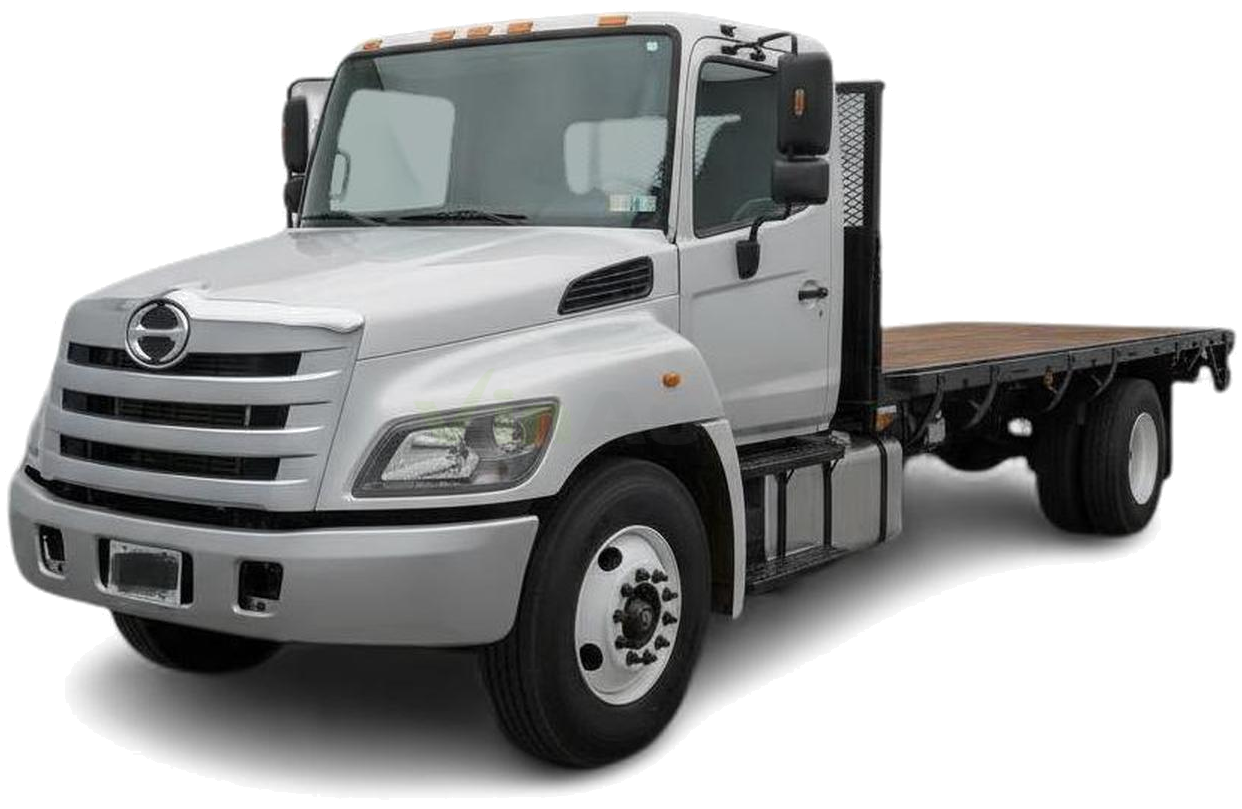
The Good
The 2015 Hino 268 excels in practical benefits like robust reliability and impressive fuel efficiency, appealing to budget-conscious operators. Emotionally, its dependable performance provides peace of mind, while its functional design emphasizes ease of operation and maintenance, leading to strong overall value.
The Bad
Potential buyers should be aware of possible issues with the diesel particulate filter (DPF) system, which can require regular maintenance or cleaning. Some owners have reported minor electrical glitches. Additionally, interior refinement might not match some competitors, focusing more on utility than luxury.
2015 Hino 268: Quick Overview
- Engine Options: The primary engine offered in the 2015 Hino 268 was the Hino J08E-VC, a 7.7-liter inline 6-cylinder turbocharged diesel engine.
- Horsepower: This engine typically produced around 220 horsepower.
- Torque: Torque figures were generally in the range of 440 lb-ft, providing ample pulling power for commercial applications.
- Fuel Economy: Specific MPG figures are not commonly published for commercial vehicles like the Hino 268 as they vary significantly based on load, driving conditions, and body configuration. However, Hino trucks are generally known for good fuel efficiency within their class, with owners reporting averages in the 10-15 MPG range under typical operating conditions.
- 0-60 Times: 0-60 mph times are not a relevant metric for this class of commercial vehicle and are not tracked or published. Performance is measured by hauling capacity and responsiveness under load.
- Towing Capacity: The towing capacity varies greatly depending on the specific configuration, axle ratings, and chassis type. The Hino 268 is a Class 6 truck, meaning its Gross Vehicle Weight Rating (GVWR) can be up to 25,950 lbs. Towing capacity is a function of the trailer's weight and the truck's ability to safely handle it, often exceeding 15,000 lbs for suitable trailer setups.
- Trim-Level Features: As a commercial chassis, the 2015 Hino 268 generally came with a functional and durable interior focused on the driver. Standard features often included:
- Power windows and door locks
- Air conditioning
- AM/FM radio with auxiliary input
- Adjustable steering wheel
- Cloth-upholstered seats
- Heavy-duty vinyl flooring
- Basic instrument cluster with essential gauges
- Standard safety features like airbags and anti-lock brakes (ABS)
2015 Hino 268 Specifications
Vehicle Information
| Year | 2015 |
| Make | Hino |
| Model | 268 |
| Trim | - |
| Style | - |
| Type | Truck |
| Category | - |
Manufacturing Details
| Made In | United States |
| Manufacturing City | WILLIAMSTOWN |
Dimensions
| Doors | - |
| Curb Weight | - |
| Gross Vehicle Weight Rating | 25950 pounds |
| Overall Height | - |
| Overall Length | - |
| Overall Width | - |
| Wheelbase Length | - |
| Standard Seating | - |
Engine & Performance
| Engine | 7.6L I6 |
| Engine Size | 7.6L |
| Engine Cylinders | 6 |
| Transmission | - |
| Transmission Type | - |
| Transmission Speeds | - |
| Drivetrain | Rear-Wheel Drive |
Additional Features
| Anti-Brake System | - |
| Steering Type | - |
Pricing
| Manufacturer Suggested Retail Price (MSRP) | - |
| Invoice Price | - |
| Delivery Charges | - |
Vehicle History Report
Specifications
History
Events
History Check
Check
Check
Check
Check
Listings
Recalls
Check
Analysis
What Problems Does the 2015 Hino 268 Have?
Another area that sometimes surfaces in owner discussions is related to the Exhaust Gas Recirculation (EGR) system. Clogged EGR valves or coolers can cause similar performance issues to DPF problems, affecting engine efficiency and potentially leading to drivability complaints.
While not specific to the 2015 model year, some owners have reported minor electrical gremlins, such as intermittent issues with dashboard lights, power accessories, or sensors. These can be challenging to diagnose and repair, often requiring a skilled technician.
Regarding recalls, it's crucial to check the National Highway Traffic Safety Administration (NHTSA) database for any specific recalls issued for the 2015 Hino 268. Recalls are issued to address safety defects. For example, a recall might involve issues with the braking system, steering components, or engine control modules. Without a specific recall number for the 2015 model year readily available, owners should proactively check their VIN.
In terms of long-term reliability, Hino generally has a good reputation for building durable diesel engines and chassis. However, the complexity of modern emissions systems means that maintenance and attention to these components are vital for ensuring longevity. Regular oil changes, fuel filter replacements, and adherence to the recommended DPF regeneration procedures are paramount. With proper care and addressing issues proactively, the 2015 Hino 268 can be a reliable workhorse for many years.
How long will the 2015 Hino 268 last?
What Technology & Safety Features are Included?
Driver-assistance features were largely absent in the 2015 Hino 268. Modern amenities like lane departure warnings, adaptive cruise control, or blind-spot monitoring were not standard. The focus was on essential driver feedback through gauges and warning lights.
Safety features for the 2015 Hino 268 typically included standard airbags for the driver and front passenger, along with Anti-lock Braking System (ABS) for enhanced braking control, especially in adverse conditions or under heavy loads. Seatbelts are, of course, a standard safety feature. The cab design is engineered for durability and occupant protection in a commercial setting.
Crash-test ratings for commercial vehicles like the Hino 268 are not conducted or published by organizations like the NHTSA or IIHS in the same way they are for passenger cars and light trucks. Commercial vehicle safety is primarily assessed through rigorous engineering standards, component testing, and fleet-wide safety performance data rather than standardized crash tests. Manufacturers focus on robust chassis construction, secure cab mounting, and effective braking systems to ensure driver safety. Optional safety features could have included things like a backup alarm or specialized lighting depending on the intended vocational use and specific upfitter configurations.
What Colors Options are Available?
2015 Hino 268 Prices and Market Value
Currently, on the used market, the 2015 Hino 268 can be found at prices ranging from around $20,000 to $45,000. This wide variance is due to factors such as mileage, overall condition, maintenance history, the type of body installed (e.g., a basic chassis versus a fully equipped box truck), and regional demand.
Depreciation for commercial trucks like the Hino 268 is generally more rapid in the first few years compared to passenger vehicles, but they hold their value relatively well over the long term due to their robust build and utilitarian purpose. Key factors affecting resale value include the truck's mechanical condition, the presence of a clean title, the wear and tear on the chassis and body, and any specialized equipment that remains functional and in demand.
2015 Hino 268 Cost of Ownership
2015 Hino 268 Fuel Efficiency
2015 Hino 268 Recalls & Defects
Suspension:front:springs:leaf Spring Assembly:u-Bolt, Leaf Spring TO Axle
2015 Hino 268 Warranty
Basic
Powertrain
Rust
2015 Hino 268 Insurance
reasonable repair costs.
How Does the 2015 Hino 268 Compare to Other Truck?
Performance: The Hino 268's 7.7-liter diesel engine offers robust performance suitable for its Class 6 rating. It generally matches or exceeds the horsepower and torque of comparable Isuzu and Fuso models, while the Freightliner M2 might offer slightly more powerful engine options in higher configurations. All are designed for vocational duties rather than high-speed acceleration.
Features: In terms of features, the 2015 Hino 268 is utilitarian. Its interior is focused on durability and driver functionality, with basic amenities. Competitors like the Freightliner M2 might offer more advanced interior options and a slightly more refined cabin, while Isuzu and Fuso are often similarly basic in standard configurations. Technology and driver-assistance features are minimal across all these models in this year range.
Reliability: Hino has a strong reputation for engine and chassis durability, often seen as a benchmark in the segment. Isuzu and Mitsubishi Fuso also have excellent track records for reliability and longevity, especially their diesel powertrains. Freightliner, while a major player, can have more variable reliability depending on the specific model and maintenance.
Price: The 2015 Hino 268 typically offered competitive pricing when new, often positioned advantageously against comparable Freightliner models. Used prices for the 2015 Hino 268 are also generally competitive. Isuzu and Fuso models often hold their value well, leading to similar used market prices.
Recommendations:
- Similar Alternatives: For businesses prioritizing robust engines and proven reliability, the 2015 Isuzu NPR-HD and 2015 Mitsubishi Fuso FE series are excellent alternatives. They offer comparable durability and utility.
- Slightly Different Option: If a slightly more refined interior or more diverse powertrain options are desired, the 2015 Freightliner Business Class M2 could be considered, though it might come at a slightly higher price point or have different long-term maintenance considerations.
Final Verdict: Is the 2015 Hino 268 a Good Truck?
It is certainly worth buying, especially on the used market. Given its robust construction and Hino's reputation for longevity, a well-maintained 2015 Hino 268 can offer significant value. Buyers should focus on inspecting the truck's maintenance records, particularly regarding the DPF and emissions systems, and should be prepared for typical upkeep associated with a diesel commercial vehicle. While new models are available, the used market presents a compelling opportunity to acquire a capable truck at a much lower entry cost. Specific trims are less critical than the overall condition and the vocational body equipped on the chassis.

Simon A
Simon is a contributor to VinCheck, where he provides articles and reviews on various automotive topics. His work focuses on delivering accurate and up-to-date information about used cars, helping readers make informed decisions.