
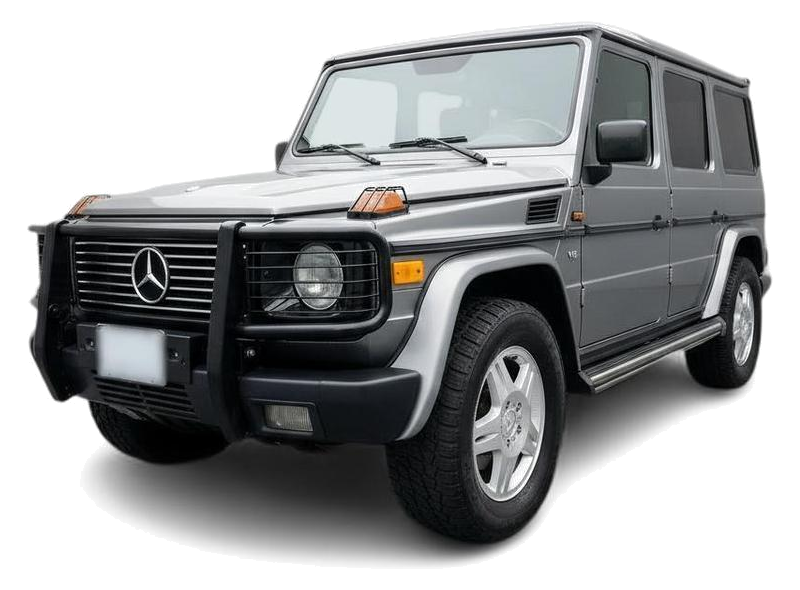
The 2000 Mercedes-Benz G-Class, a legendary off-roader with roots tracing back to the 1970s, embodies ruggedness and luxury. This robust SUV, built on a body-on-frame chassis, offered iconic boxy styling. Key trims included the G500. Its enduring popularity stems from its unparalleled off-road capability, distinctive design, and prestigious Mercedes-Benz badge, making it a sought-after vehicle for adventurers and status seekers alike. Initial pricing was in the luxury SUV segment, reflecting its premium positioning.
The Good
The 2000 G-Class boasts immense off-road prowess and a commanding presence that appeals to the senses. Practically, its robust build promises longevity, while the comfortable and luxurious interior offers a refined driving experience, making it a statement of both capability and sophisticated style.
The Bad
Potential buyers should be aware of its dated interior technology and comfort features compared to modern SUVs. Fuel economy is notoriously poor, and maintenance costs can be significantly high due to specialized parts and labor. Rust, particularly on the body and frame, is also a common concern over time.
2000 Mercedes-Benz G-Class: Quick Overview
- Engine Options: The primary engine for the 2000 G-Class in North America was the 5.0-liter V8.
- Horsepower: The 5.0-liter V8 engine produced approximately 296 horsepower.
- Fuel Economy: Expect very low fuel economy. EPA estimates for this era's G500 are around 11 mpg city and 13 mpg highway.
- 0-60 Times: Performance figures for the 2000 G500 typically ranged from 7.5 to 8.2 seconds, depending on specific conditions and driver.
- Towing Capacity: The G-Class typically has a substantial towing capacity, often rated around 7,000 lbs, making it suitable for heavy trailers.
- Trim-Level Features (G500):
- Standard features for the 2000 G-Class G500 included full-time four-wheel drive with three electronically locking differentials (center, front, and rear) for exceptional off-road capability.
- A robust body-on-frame construction.
- Standard luxury appointments such as leather upholstery, heated front seats, power-adjustable front seats with memory, wood trim accents, and automatic climate control.
- A premium sound system.
- Power sunroof.
- Xenon headlights.
- Cruise control.
- Anti-lock braking system (ABS).
- Traction control.
- Optional features might have included a navigation system (though rudimentary by today's standards) and a rear-seat entertainment system.
2000 Mercedes-Benz G-Class Specifications
Vehicle Information
| Year | 2000 |
| Make | Mercedes-Benz |
| Model | G-Class |
| Trim | - |
| Style | Convertible |
| Type | Convertible |
| Category | Compact Car |
Manufacturing Details
| Made In | Germany |
| Manufacturing City | - |
Dimensions
| Doors | - |
| Curb Weight | - |
| Gross Vehicle Weight Rating | - |
| Overall Height | - |
| Overall Length | - |
| Overall Width | - |
| Wheelbase Length | - |
| Standard Seating | - |
Engine & Performance
| Engine | 5.0L V8 |
| Engine Size | 5L |
| Engine Cylinders | 8 |
| Transmission | - |
| Transmission Type | - |
| Transmission Speeds | - |
| Drivetrain | Four-Wheel Drive |
Additional Features
| Anti-Brake System | - |
| Steering Type | - |
Pricing
| Manufacturer Suggested Retail Price (MSRP) | - |
| Invoice Price | - |
| Delivery Charges | - |
Vehicle History Report
Vehicle
Specifications
Specifications
Ownership
History
History
All History
Events
Events
NMVTIS Title
History Check
History Check
Salvage/Rebuilt
Check
Check
Accident
Check
Check
Theft
Check
Check
Open Lien
Check
Check
Past Sale
Listings
Listings
Safety
Recalls
Recalls
Odometer
Check
Check
Market Price
Analysis
Analysis
What Problems Does the 2000 Mercedes-Benz G-Class Have?
The 2000 Mercedes-Benz G-Class, while generally robust, is not immune to common issues as it ages. One of the most frequently reported concerns is related to the electronics. Owners often report malfunctioning power windows, central locking systems, and various dashboard warning lights. The HVAC system can also be a source of trouble, with blower motor failures and climate control module issues being somewhat common.
Rust is another significant long-term reliability concern, particularly in areas exposed to salt or moisture. Areas to inspect closely include the wheel wells, rocker panels, the tailgate, and the frame itself. Neglecting rust can lead to structural integrity issues over time.
The suspension and drivetrain can also present problems. Worn-out bushings, ball joints, and shock absorbers are common wear items. The transmission, while generally strong, can experience issues if not properly maintained, with some owners reporting delayed shifting or occasional harshness. Differential seals can also leak, requiring attention.
Regarding recalls for the 2000 model year, specific recalls are not as prevalent as with mass-produced vehicles, but it's always advisable to check with Mercedes-Benz or a reputable VIN decoder for any outstanding safety campaigns.
Long-term reliability is heavily dependent on rigorous and consistent maintenance. These vehicles were built with robust components, but neglecting fluid changes, filter replacements, and proactive inspections will accelerate wear and lead to more costly repairs. Despite potential issues, the core mechanical components, particularly the engine and transmission, can be very durable if treated well.
Rust is another significant long-term reliability concern, particularly in areas exposed to salt or moisture. Areas to inspect closely include the wheel wells, rocker panels, the tailgate, and the frame itself. Neglecting rust can lead to structural integrity issues over time.
The suspension and drivetrain can also present problems. Worn-out bushings, ball joints, and shock absorbers are common wear items. The transmission, while generally strong, can experience issues if not properly maintained, with some owners reporting delayed shifting or occasional harshness. Differential seals can also leak, requiring attention.
Regarding recalls for the 2000 model year, specific recalls are not as prevalent as with mass-produced vehicles, but it's always advisable to check with Mercedes-Benz or a reputable VIN decoder for any outstanding safety campaigns.
Long-term reliability is heavily dependent on rigorous and consistent maintenance. These vehicles were built with robust components, but neglecting fluid changes, filter replacements, and proactive inspections will accelerate wear and lead to more costly repairs. Despite potential issues, the core mechanical components, particularly the engine and transmission, can be very durable if treated well.
How long will the 2000 Mercedes-Benz G-Class last?
The 2000 Mercedes-Benz G-Class is renowned for its potential for long-term durability, with many examples routinely exceeding 200,000 miles and some even surpassing 300,000 miles with proper care. Owners who adhere to a strict maintenance schedule, including regular fluid changes, filter replacements, and timely addressing of minor issues, can expect years of reliable service. However, weaknesses emerge over time. Rust remains a significant factor that can compromise the vehicle's structural integrity and appearance. Electrical gremlins, aging suspension components, and potential transmission issues also become more prevalent as mileage accumulates. Despite these potential pitfalls, the core engineering and robust construction of the G-Class allow it to endure for a considerable lifespan when actively maintained.
What Technology & Safety Features are Included?
The 2000 Mercedes-Benz G-Class, while a capable off-roader, reflects the technology of its era.
Built-in Tech & Entertainment: For 2000, the G-Class featured a relatively basic infotainment system. This typically included an AM/FM radio with a cassette player and often a CD changer, usually located in the cargo area. Speaker systems were generally of good quality for the time, providing a decent audio experience. Climate control was often automatic, offering a degree of comfort and convenience. Power windows, locks, and mirrors were standard, along with cruise control. The instrument cluster provided essential information, but lacked the digital displays and advanced graphics found in modern vehicles.
Driver-Assistance Features: Driver assistance technologies were rudimentary in 2000. The G-Class offered Anti-lock Braking System (ABS) to prevent wheel lock-up during hard braking, and traction control systems were also present to help maintain grip on slippery surfaces. Parking sensors or rearview cameras were not available. Features like lane departure warning, adaptive cruise control, or blind-spot monitoring were non-existent.
Safety Features: Standard safety features included front airbags for the driver and front passenger. The G-Class also featured a robust body-on-frame construction, which inherently provides a strong safety cage. Seatbelts with pretensioners were standard. Advanced crumple zones and side-impact protection, as we know them today, were less sophisticated.
Optional Features: Optional equipment could have included a premium sound system, heated front seats, a power sunroof, and sometimes even a rudimentary navigation system (though its usability was very limited by today's standards).
Crash-Test Ratings: Official crash-test ratings from organizations like the NHTSA or IIHS for the 2000 Mercedes-Benz G-Class are not readily available or may not have been conducted under modern testing protocols. Given its construction and the safety standards of the time, it was considered a safe vehicle, but would likely not perform as well in contemporary crash tests compared to newer SUVs designed with advanced safety technologies and structural reinforcements.
Built-in Tech & Entertainment: For 2000, the G-Class featured a relatively basic infotainment system. This typically included an AM/FM radio with a cassette player and often a CD changer, usually located in the cargo area. Speaker systems were generally of good quality for the time, providing a decent audio experience. Climate control was often automatic, offering a degree of comfort and convenience. Power windows, locks, and mirrors were standard, along with cruise control. The instrument cluster provided essential information, but lacked the digital displays and advanced graphics found in modern vehicles.
Driver-Assistance Features: Driver assistance technologies were rudimentary in 2000. The G-Class offered Anti-lock Braking System (ABS) to prevent wheel lock-up during hard braking, and traction control systems were also present to help maintain grip on slippery surfaces. Parking sensors or rearview cameras were not available. Features like lane departure warning, adaptive cruise control, or blind-spot monitoring were non-existent.
Safety Features: Standard safety features included front airbags for the driver and front passenger. The G-Class also featured a robust body-on-frame construction, which inherently provides a strong safety cage. Seatbelts with pretensioners were standard. Advanced crumple zones and side-impact protection, as we know them today, were less sophisticated.
Optional Features: Optional equipment could have included a premium sound system, heated front seats, a power sunroof, and sometimes even a rudimentary navigation system (though its usability was very limited by today's standards).
Crash-Test Ratings: Official crash-test ratings from organizations like the NHTSA or IIHS for the 2000 Mercedes-Benz G-Class are not readily available or may not have been conducted under modern testing protocols. Given its construction and the safety standards of the time, it was considered a safe vehicle, but would likely not perform as well in contemporary crash tests compared to newer SUVs designed with advanced safety technologies and structural reinforcements.
What Colors Options are Available?
2000 Mercedes-Benz G-Class Prices and Market Value
When new, the 2000 Mercedes-Benz G-Class was a high-priced luxury SUV, with the G500 model starting in the neighborhood of $70,000 to $80,000 USD, depending on options. Its current used market prices vary significantly based on mileage, condition, maintenance history, and overall desirability. Well-maintained examples with lower mileage can still command prices ranging from $25,000 to $50,000 or even more for pristine, rare variants. Depreciation has been slower than for many other luxury SUVs due to its iconic status and enduring appeal. Factors affecting resale value include originality, the presence of rust, interior condition, and documented service records. Its cult following and off-road capability continue to support its residual value.
2000 Mercedes-Benz G-Class Cost of Ownership
Owning a 2000 Mercedes-Benz G-Class is decidedly costly. Insurance premiums will be higher than average due to its luxury status and repair costs. Fuel costs are substantial, with the V8 engine returning poor MPG, often in the low teens. Maintenance and repairs are a significant expense; parts are specialized and labor rates at Mercedes-Benz dealerships are premium. Expect to budget several thousand dollars annually for routine maintenance and potential repairs. This vehicle is definitely not economical to own; it is a costly proposition, requiring a dedicated budget for upkeep.
2000 Mercedes-Benz G-Class Fuel Efficiency
Fuel Type
Gasoline
Fuel Capacity
-
City Mileage
-
Highway Mileage
-
2000 Mercedes-Benz G-Class Insurance
Insurance for a 2000 Mercedes-Benz G-Class is moderately priced, reflecting its status as a Convertible with strong safety ratings and
reasonable repair costs.
How Does the 2000 Mercedes-Benz G-Class Compare to Other Convertible?
In its era, the 2000 Mercedes-Benz G-Class stood in a unique niche, often compared to other high-end SUVs but with a distinct focus on extreme off-road capability.
Performance: Against rivals like the Range Rover, Land Rover Discovery, or even the Cadillac Escalade, the G-Class offered superior off-road performance thanks to its locking differentials and robust chassis. Its on-road performance, while adequate with the V8, was not as refined or sporty as some competitors. The Range Rover offered a more balanced approach to on-road comfort and off-road prowess.
Features: For its price point, the G-Class provided a luxurious interior and a commanding presence. However, its technology and driver assistance features were generally less advanced than some newer competitors entering the market. Competitors like the Lexus LX 470 offered more advanced creature comforts and a smoother ride for a similar price.
Reliability: While Mercedes-Benz vehicles are known for quality, the G-Class, being a more specialized and older design by 2000, could be more prone to specific issues (like rust and electronics) than some of its Japanese or American counterparts. The Lexus LX 470, for instance, is often cited for exceptional long-term reliability and lower maintenance costs.
Price: The G-Class commanded a premium price at purchase and generally maintained strong resale value due to its exclusivity and capabilities. Other luxury SUVs offered more features for the money or were less expensive to maintain.
Alternatives:
- Similar: The Land Rover Range Rover (P38A generation) offered a blend of luxury and off-road capability, though often with more complex electronic issues. The Lexus LX 470 is a very strong alternative for those prioritizing reliability, comfort, and capable off-road ability without the extreme utilitarian focus of the G-Class.
- Better (if prioritizing modern tech/comfort): If extreme off-road capability isn't paramount, vehicles like the Porsche Cayenne (first generation) offered superior on-road dynamics and more modern features for a similar price, though with less legendary off-road pedigree. For pure luxury and on-road refinement, a well-equipped large luxury sedan or a more road-focused SUV like a Cadillac Escalade would be considered.
Performance: Against rivals like the Range Rover, Land Rover Discovery, or even the Cadillac Escalade, the G-Class offered superior off-road performance thanks to its locking differentials and robust chassis. Its on-road performance, while adequate with the V8, was not as refined or sporty as some competitors. The Range Rover offered a more balanced approach to on-road comfort and off-road prowess.
Features: For its price point, the G-Class provided a luxurious interior and a commanding presence. However, its technology and driver assistance features were generally less advanced than some newer competitors entering the market. Competitors like the Lexus LX 470 offered more advanced creature comforts and a smoother ride for a similar price.
Reliability: While Mercedes-Benz vehicles are known for quality, the G-Class, being a more specialized and older design by 2000, could be more prone to specific issues (like rust and electronics) than some of its Japanese or American counterparts. The Lexus LX 470, for instance, is often cited for exceptional long-term reliability and lower maintenance costs.
Price: The G-Class commanded a premium price at purchase and generally maintained strong resale value due to its exclusivity and capabilities. Other luxury SUVs offered more features for the money or were less expensive to maintain.
Alternatives:
- Similar: The Land Rover Range Rover (P38A generation) offered a blend of luxury and off-road capability, though often with more complex electronic issues. The Lexus LX 470 is a very strong alternative for those prioritizing reliability, comfort, and capable off-road ability without the extreme utilitarian focus of the G-Class.
- Better (if prioritizing modern tech/comfort): If extreme off-road capability isn't paramount, vehicles like the Porsche Cayenne (first generation) offered superior on-road dynamics and more modern features for a similar price, though with less legendary off-road pedigree. For pure luxury and on-road refinement, a well-equipped large luxury sedan or a more road-focused SUV like a Cadillac Escalade would be considered.
Final Verdict: Is the 2000 Mercedes-Benz G-Class a Good Convertible?
The 2000 Mercedes-Benz G-Class is ideal for affluent enthusiasts who prioritize iconic styling, unparalleled off-road capability, and a unique presence over modern technological conveniences and fuel efficiency. It is worth buying for those who can afford the substantial costs of ownership, including high fuel consumption, premium maintenance, and potential repairs. Buying used is the only practical option now. It is most suitable for buyers seeking a statement vehicle that can also tackle extreme terrain, rather than a daily commuter. Meticulous inspection for rust and a thorough pre-purchase mechanical assessment are crucial before any purchase.
