
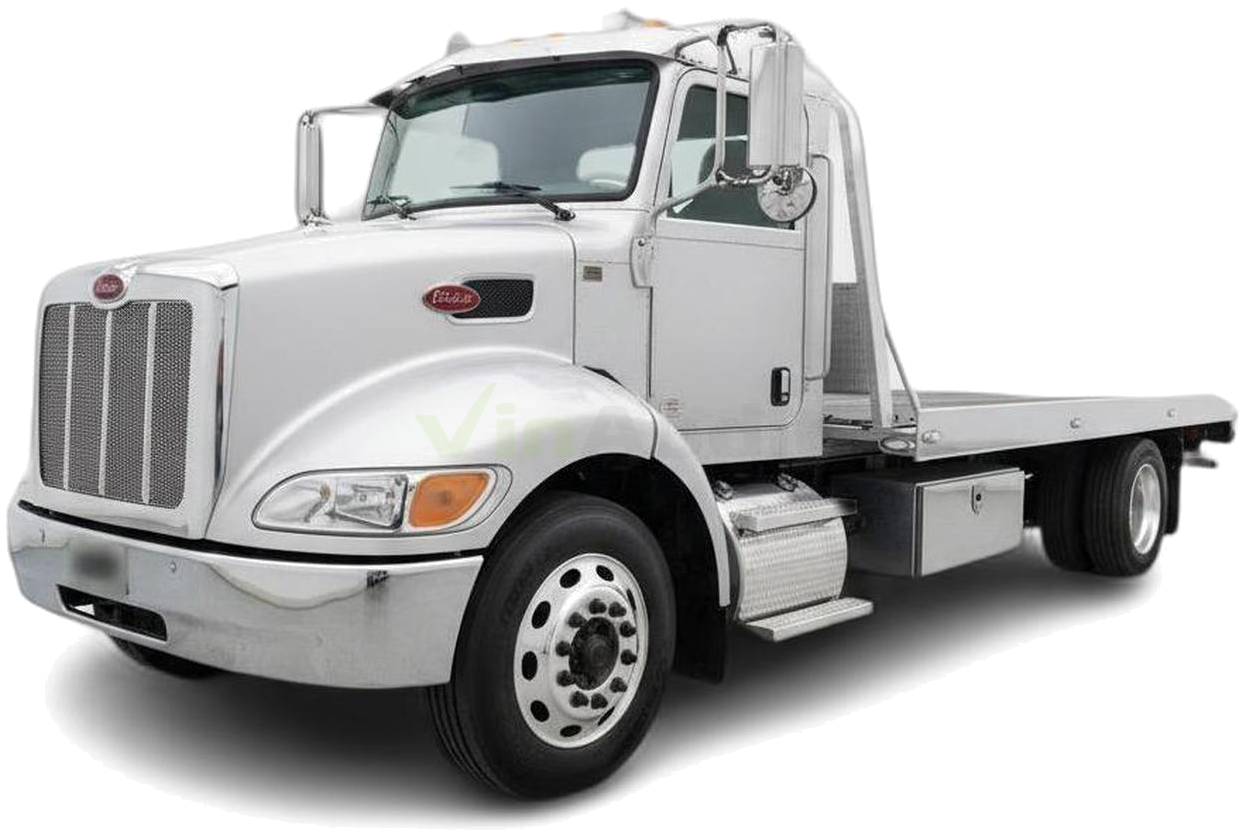
The Good
The 2019 Peterbilt 337 offers strong performance from PACCAR or Cummins engines, coupled with Peterbilt's legendary reliability for minimal downtime. Its classic design exudes professionalism, appealing to emotional pride of ownership, while practical buyers appreciate its efficiency, high payload capacity, and robust construction. The comfortable, driver-centric cabin enhances productivity, and its strong resale value ensures lasting investment.
The Bad
Potential weaknesses for the 2019 Peterbilt 337 include its higher initial cost compared to some rivals. Ride quality can be stiff, typical for a vocational truck. Like all modern diesels, its complex emissions systems (DEF/DPF) can be prone to issues and costly maintenance. Some drivers might find cab space limited, depending on their stature and configuration.
2019 Peterbilt 337: Quick Overview
- Engine Options: The 2019 Peterbilt 337 primarily offered PACCAR PX-7 and PACCAR PX-9 engines, known for their performance and efficiency. Cummins B6.7 and Cummins L9 engines were also available as popular choices, providing a wide range of power for various applications.
- Horsepower:
- PACCAR PX-7: Ranged from approximately 200 hp to 360 hp.
- PACCAR PX-9: Ranged from approximately 260 hp to 450 hp.
- Cummins B6.7: Ranged from approximately 200 hp to 325 hp.
- Cummins L9: Ranged from approximately 260 hp to 380 hp.
- Torque:
- PACCAR PX-7: 520-800 lb-ft.
- PACCAR PX-9: 660-1250 lb-ft.
- Cummins B6.7: 520-750 lb-ft.
- Cummins L9: 720-1150 lb-ft.
- Fuel Economy: Highly dependent on engine, load, body type, and driving conditions, but generally ranged from 6 to 10 miles per gallon (MPG) for a medium-duty vocational truck.
- 0-60 Times: Not a relevant performance metric for commercial medium-duty trucks, as their design prioritizes torque, payload, and towing capability over acceleration.
- Towing Capacity (GVWR/GCWR): The 337's Gross Vehicle Weight Rating (GVWR) typically spanned from 26,000 lbs to over 33,000 lbs, depending on axle configuration. Gross Combined Weight Rating (GCWR) was significantly higher, allowing for substantial trailer towing.
- Trim-Level Features & Configurations:
- Cab Styles: Primarily offered as a Day Cab, with an Extended Cab option for additional space.
- Axle Configurations: Available in 4x2 (single rear axle) and 6x4 (tandem rear axle) setups.
- Suspension: Front leaf spring suspension was standard, with rear air-ride or spring suspensions available.
- Transmissions: Options included Eaton Fuller manual transmissions, PACCAR's automated manual transmissions (AMT), and popular Allison automatic transmissions for ease of operation in vocational settings.
- Interior: Featured a functional, ergonomic dash with a driver information display, various seat options (including air-ride driver's seat), and optional power windows/locks.
- Chassis: Multiple frame rail options, various PTO (Power Take-Off) options, fuel tank sizes, battery boxes, and specialized body builder provisions.
- Brakes: Air brakes with ABS (Anti-lock Braking System) were standard for commercial vehicle compliance.
- Technology: Basic infotainment with AM/FM/WB radio, optional Bluetooth connectivity, and Peterbilt SmartNav telematics.
2019 Peterbilt 337 Specifications
Vehicle Information
| Year | 2019 |
| Make | Peterbilt |
| Model | 337 |
| Trim | - |
| Style | - |
| Type | Truck |
| Category | Medium Truck |
Manufacturing Details
| Made In | Canada |
| Manufacturing City | MONTREAL |
Dimensions
| Doors | - |
| Curb Weight | - |
| Gross Vehicle Weight Rating | 33000 pounds |
| Overall Height | - |
| Overall Length | - |
| Overall Width | - |
| Wheelbase Length | - |
| Standard Seating | - |
Engine & Performance
| Engine | 6.7L I6 |
| Engine Size | 6.7L |
| Engine Cylinders | 6 |
| Transmission | - |
| Transmission Type | - |
| Transmission Speeds | - |
| Drivetrain | Four-Wheel Drive |
Additional Features
| Anti-Brake System | - |
| Steering Type | - |
Pricing
| Manufacturer Suggested Retail Price (MSRP) | - |
| Invoice Price | - |
| Delivery Charges | - |
Vehicle History Report
Specifications
History
Events
History Check
Check
Check
Check
Check
Listings
Recalls
Check
Analysis
What Problems Does the 2019 Peterbilt 337 Have?
Electrical gremlins are another area of concern, manifesting as intermittent dashboard warnings, sensor failures, or wiring harness issues. While not unique to Peterbilt, these can be challenging to diagnose. Air system leaks, affecting both air brakes and air suspension, are also common over time due to wear on lines, fittings, and bags.
While Allison automatics are highly regarded, specific transmission issues may arise with other transmission types if not properly maintained or if subjected to extreme stress. The PACCAR PX engines are generally reliable, but some owners have reported less common issues like EGR cooler problems or turbocharger failures in higher mileage units. HVAC blower motor failures or AC compressor issues can also occur.
Regarding recalls, the 2019 Peterbilt 337, like many commercial vehicles, has had specific campaigns. For instance, some recalls involved potential steering shaft separation due to incorrect fasteners or issues with air brake system pressure relief valves, highlighting component-specific safety concerns rather than a fundamental design flaw. Always check the NHTSA database for the most up-to-date recall information by VIN.
Long-term reliability is strong for the 337's core components — chassis, cab, and major drivetrain. However, diligent maintenance of the emissions system is paramount. Neglecting this leads to significant long-term costs and potential operational hindrances. Corrosion can also become a concern in harsh environments without proper preventative care.
How long will the 2019 Peterbilt 337 last?
Over time, weaknesses primarily include the emissions control systems (DPF/SCR), which require continuous, costly maintenance and can be a source of downtime. Suspension components, air system parts, and electrical connections will inevitably require attention. Interior wear and tear is common. While structurally sound, keeping up with preventative maintenance — especially for the complex modern diesel systems — is crucial to realizing its impressive longevity and avoiding significant repair expenses.
What Technology & Safety Features are Included?
Built-in Tech: The cabin features a comprehensive driver information display within the gauge cluster, providing essential vehicle diagnostics, fuel economy data, and trip information. Electronic engine management systems ensure optimal performance and efficiency. Connectivity typically included USB ports and 12V outlets. Peterbilt SmartNav, an optional integrated telematics and navigation system, was available for advanced fleet management, routing, and vehicle monitoring.
Entertainment: Standard entertainment usually consisted of an AM/FM/Weather Band radio with auxiliary input, with optional Bluetooth connectivity. Basic sound systems were typical, focusing on clear audio rather than premium acoustics.
Driver-Assistance Features: Unlike passenger vehicles, the 337 did not come with extensive advanced driver-assistance systems (ADAS). Standard features included Anti-lock Braking System (ABS) and Traction Control System (TCS). Some configurations might have offered basic stability control. Rearview cameras were a common and highly beneficial optional feature for improved maneuverability and safety, especially with various body upfits.
Safety Features: The 337's safety is primarily derived from its robust, heavy-duty steel cab construction, designed to meet commercial vehicle safety standards for occupant protection. Large windshields and strategically placed mirrors ensured excellent visibility. Standard three-point seatbelts and powerful air brakes with ABS contributed to active safety. Optional features included upgraded LED lighting for enhanced visibility.
Crash-Test Ratings: It is important to note that commercial trucks like the Peterbilt 337 are not subjected to the same standardized crash-test ratings (e.g., NHTSA or IIHS) as passenger vehicles. Their safety is evaluated based on compliance with federal commercial motor vehicle safety regulations and rigorous manufacturer internal testing to ensure structural integrity and component performance under demanding operational conditions.
What Colors Options are Available?
2019 Peterbilt 337 Prices and Market Value
In the current used market (2024), a 2019 Peterbilt 337 can typically be found between $40,000 and $90,000+, depending heavily on mileage, condition, and the type of mounted body. Peterbilt trucks generally exhibit a slower depreciation curve after the initial few years compared to some competitors, thanks to their reputation for durability.
Factors significantly affecting resale value include the overall mechanical and cosmetic condition, complete maintenance records, desirable powertrain combinations (e.g., PACCAR/Cummins engines with Allison automatic transmissions), the utility and condition of the installed vocational body, and accumulated mileage or hours. Well-maintained trucks with in-demand configurations retain value best.
2019 Peterbilt 337 Cost of Ownership
2019 Peterbilt 337 Fuel Efficiency
2019 Peterbilt 337 Recalls & Defects
Power Train:clutch Assembly
Steering:column
Electronic Stability Control (Esc)
Service Brakes, Air:antilock:abs Warning Light
Fuel System, Diesel:fuel Injection System:fuel Rail
Steering:critical Fasteners
2019 Peterbilt 337 Warranty
Basic
Powertrain
Rust
2019 Peterbilt 337 Insurance
reasonable repair costs.
How Does the 2019 Peterbilt 337 Compare to Other Truck?
In terms of performance, all these trucks offer robust engine options. The 337's PACCAR PX-7 and PX-9 engines are strong, but rivals often provide comparable Cummins engines (like the B6.7 or L9) or their own proprietary diesels, ensuring competitive power and torque for vocational tasks. No single truck vastly outperforms the others; capability is largely matched.
Features across the segment are functional and work-oriented. Peterbilt and its sister company Kenworth (T370/T270) often have a slightly more refined interior finish and a classic "big rig" aesthetic, which appeals to brand loyalty. Freightliner and International offer very practical, driver-friendly cabins. Advanced driver-assistance features are generally limited across all brands in this class, focusing on basic safety like ABS and traction control.
Reliability is a key differentiator. Peterbilt and Kenworth are widely regarded for their premium build quality and long-term durability, often perceived as having a slight edge. Freightliner's M2 106 is also a very reliable and popular choice, benefiting from a vast dealer network. International has made significant strides in reliability, while Ford trucks leverage a huge service network.
Price typically positions the Peterbilt 337 and Kenworth T370 at the higher end of the spectrum, commanding a premium for their brand prestige and perceived quality. Freightliner M2 106 and Ford F-650/F-750 often offer more competitive entry-level pricing.
Recommendations:
- For a very similar premium experience and reliability: The Kenworth T370 is an excellent alternative, sharing many components with the Peterbilt 337.
- For robust reliability and a vast dealer network, potentially at a lower cost: The Freightliner M2 106 is a very strong contender.
- For strong capabilities and value, with a broad service presence: The Ford F-650/F-750 provides a compelling package.
Final Verdict: Is the 2019 Peterbilt 337 a Good Truck?
It is absolutely worth buying, particularly if you prioritize long-term durability and lower operational downtime. For most businesses, buying a used 2019 model presents excellent value, as initial depreciation has already occurred. Look for models with a documented maintenance history, desirable engine (PACCAR or Cummins) and transmission (Allison automatic) combinations, and a body upfit that precisely matches your business needs. While buying new offers full customization and warranty, the 2019 used model often provides a "sweet spot" of value, proven reliability, and reduced capital outlay for a trusted workhorse.

Cathleen V
Cathleen is an exceptional freelance writer covering hot topics in the automotive world from a gearhead's perspective. Her articles delve into various aspects of automotive technology and history, offering readers detailed insights into engine performance, reliability, and maintenance. Through her engaging and informative writing, Cathleen provides valuable information to automotive enthusiasts and consumers alike, helping them make informed decisions about vehicle maintenance and purchases.