The 1989 Ford Crown Victoria, a full-size sedan, emerged from a lineage of large Ford cars. Produced from 1983 to 2011, it saw significant updates throughout its lifespan. Key trims often included the base model and the more luxurious Crown Victoria LX. Its robust, body-on-frame construction and rear-wheel-drive platform made it a favorite for police departments, taxi services, and families seeking a durable, comfortable ride. Its imposing presence and classic American styling are still appreciated by enthusiasts.


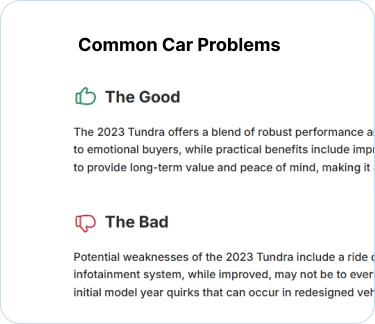
The Good
The 1989 Crown Victoria offers a comfortable, quiet ride and a spacious interior, appealing to comfort-seeking buyers. Its robust engineering contributes to perceived reliability, while its substantial presence evokes a sense of security and classic American automotive appeal. For practical buyers, its durable nature and potential for long service life present good value.
The Bad
Potential owners should watch for common issues like rear main seal leaks, aging suspension components, and rust, particularly in the lower body panels and frame. Electrical gremlins and wear on interior materials are also frequent concerns. The large size can make parking and maneuverability challenging in tight spaces.
1989 Ford Crown Victoria: Quick Overview
- Engine Options: The primary engine for the 1989 Ford Crown Victoria was the 5.0-liter (302 cubic inch) V8. In 1989, this engine was tuned for durability and smooth operation rather than outright power.
- Horsepower: The 5.0L V8 typically produced around 150-160 horsepower for this model year. Torque figures were more emphasized, providing good low-end grunt suitable for its size and intended use.
- Fuel Economy: As expected for a large, V8-powered, rear-wheel-drive sedan of this era, fuel economy was not a strong suit. EPA estimates for city driving were generally in the low to mid-teens (MPG), with highway figures reaching the low 20s (MPG) at best.
- 0-60 Times: Acceleration was modest. Expect 0-60 mph times to be in the 9-11 second range, depending on the specific configuration, condition, and load. It was designed for comfortable cruising, not rapid acceleration.
- Towing Capacity: While not its primary purpose, the Crown Victoria, due to its robust chassis and V8 engine, possessed a reasonable towing capacity. With optional towing packages, it could generally tow around 2,000-5,000 lbs, making it suitable for light trailers or small boats.
- Trim-Level Features:
- Base Model: Typically included essential features like power steering, power brakes, an AM/FM radio, bench seating, and manual windows and locks.
- LTD Crown Victoria LX: The more upscale LX trim added features such as power windows, power door locks, cruise control, air conditioning, upgraded interior trim, better seating materials (often cloth or vinyl with velour inserts), a tilt steering wheel, and sometimes an upgraded stereo system. Optional features could include power seats, alloy wheels, and a cassette player.
1989 Ford Crown Victoria Specifications
Vehicle Information
| Year | 1989 |
| Make | Ford |
| Model | Crown Victoria |
| Trim | - |
| Style | - |
| Type | Wagon |
| Category | Compact Car |
Manufacturing Details
| Made In | Canada |
| Manufacturing City | TALBOTVILLE |
Dimensions
| Doors | 4-Door |
| Curb Weight | 4013 pounds |
| Gross Vehicle Weight Rating | - |
| Overall Height | 56.50 inches |
| Overall Length | 216.00 inches |
| Overall Width | 79.30 inches |
| Wheelbase Length | 114.30 inches |
| Standard Seating | 6 |
Engine & Performance
| Engine | 5.0L V8 OHV 16V |
| Engine Size | 5L |
| Engine Cylinders | 8 |
| Transmission | 4-Speed Automatic |
| Transmission Type | Automatic |
| Transmission Speeds | 4-Speed |
| Drivetrain | Rear-Wheel Drive |
Additional Features
| Anti-Brake System | Non-ABS |
| Steering Type | Recirculating |
Pricing
| Manufacturer Suggested Retail Price (MSRP) | $17,556 |
| Invoice Price | - |
| Delivery Charges | - |
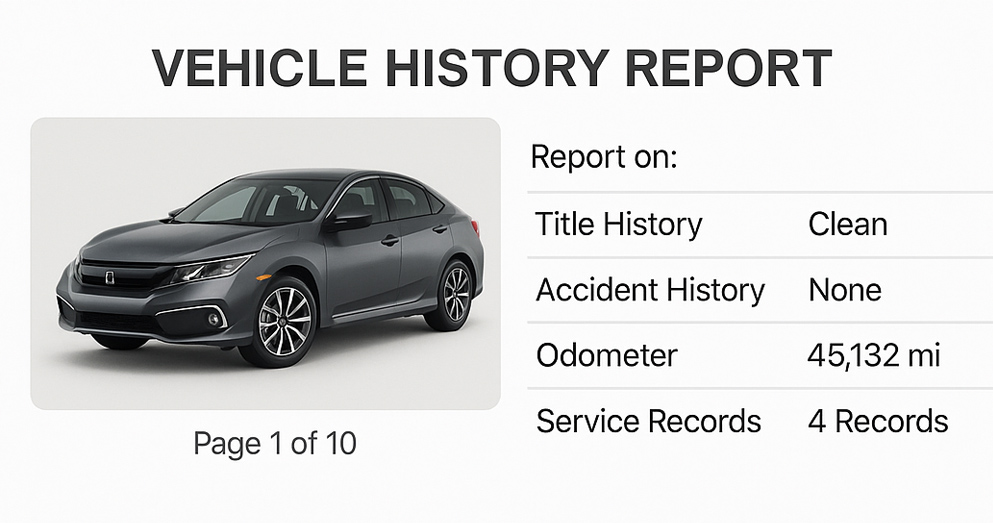
Vehicle History Report
Vehicle
Specifications
Specifications
Ownership
History
History
All History
Events
Events
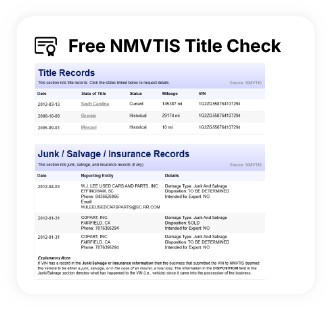
NMVTIS Title
History Check
History Check
Salvage/Rebuilt
Check
Check
Accident
Check
Check
Theft
Check
Check
Open Lien
Check
Check
Past Sale
Listings
Listings
Safety
Recalls
Recalls
Odometer
Check
Check
Market Price
Analysis
Analysis
What Problems Does the 1989 Ford Crown Victoria Have?
The 1989 Ford Crown Victoria, while generally considered a robust vehicle, is not without its common issues. One of the most frequently reported problems is related to the rear main engine seal, which can develop leaks over time, leading to oil drips. This is a labor-intensive repair and a common point of concern for owners. Suspension components, such as ball joints, control arm bushings, and shock absorbers, can wear out due to the vehicle's weight and age, leading to clunks, rattles, and less precise handling. For a 1989 model, rust is a significant consideration, especially in areas exposed to road salt. The frame and lower body panels, including rocker panels and wheel arches, are prone to corrosion. Inspecting these areas thoroughly is crucial. Electrical issues, while not as widespread as mechanical ones, can also arise. This may include problems with the alternator, voltage regulator, or various sensors that can cause the check engine light to illuminate or lead to intermittent electrical gremlins. The cooling system, particularly the radiator and hoses, may need attention as they age, with leaks being a possibility. The transmission, typically the AOD (Automatic Overdrive), is generally durable but can suffer from leaks or shifting issues if not properly maintained. No major recalls stand out specifically for the 1989 model year that would indicate a systemic design flaw affecting most vehicles, but standard maintenance and addressing wear-and-tear items are key to long-term reliability. Overall, the Crown Victoria's longevity is heavily dependent on the owner's maintenance habits and the vehicle's operating environment.
How long will the 1989 Ford Crown Victoria last?
With proper and consistent maintenance, a 1989 Ford Crown Victoria can achieve well over 200,000 miles, with many examples exceeding 300,000 miles. These vehicles were built with durability in mind, utilizing a strong, body-on-frame construction. The 5.0L V8 engine, when cared for, is known for its longevity. Weaknesses that emerge over time typically relate to wear-and-tear components such as suspension parts, exhaust systems, and seals. Rust is also a significant factor that can shorten a vehicle's service life, especially in corrosive climates. However, the fundamental mechanicals of the Crown Victoria are quite resilient, making them capable of providing decades of service if issues are addressed proactively. Regular fluid changes and attention to minor leaks can prevent more significant problems down the road.
What Technology & Safety Features are Included?
The 1989 Ford Crown Victoria represents the technology of its era, focusing on comfort and basic functionality rather than advanced digital integration.
Entertainment: Standard entertainment typically consisted of an AM/FM radio, often with a cassette player as an option. Sound quality was adequate for the time.
Technology & Convenience: Key technological features were centered around power accessories. Power steering and power brakes were standard, enhancing ease of driving. Cruise control was a common option on higher trims, facilitating highway travel. Air conditioning was also a popular option.
Driver-Assistance: In 1989, advanced driver-assistance systems as we know them today were non-existent. The focus was on the fundamental driving experience. Rear-wheel drive and the vehicle's substantial weight were the primary handling characteristics.
Safety Features: Safety features were more rudimentary compared to modern standards. Standard safety equipment included three-point seatbelts for front occupants and lap belts for rear passengers. Anti-lock braking systems (ABS) were an optional feature on some models in 1989, offering improved stopping power and control during emergency braking, particularly on slippery surfaces. The sheer mass and robust construction of the Crown Victoria provided a degree of passive safety. However, airbags were not yet standard equipment for this model year.
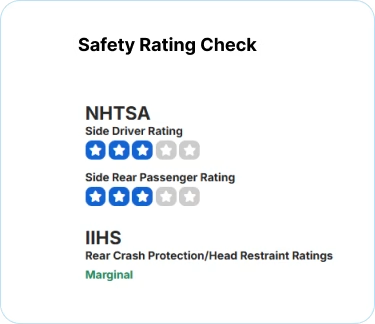
Crash-Test Ratings: Specific crash-test ratings for the 1989 model year from organizations like the NHTSA or IIHS are not readily available or as comprehensively documented as they are for contemporary vehicles. However, vehicles of this size and era generally performed adequately in frontal impacts due to their heavy construction, though side-impact protection was often less developed.
Entertainment: Standard entertainment typically consisted of an AM/FM radio, often with a cassette player as an option. Sound quality was adequate for the time.
Technology & Convenience: Key technological features were centered around power accessories. Power steering and power brakes were standard, enhancing ease of driving. Cruise control was a common option on higher trims, facilitating highway travel. Air conditioning was also a popular option.
Driver-Assistance: In 1989, advanced driver-assistance systems as we know them today were non-existent. The focus was on the fundamental driving experience. Rear-wheel drive and the vehicle's substantial weight were the primary handling characteristics.
Safety Features: Safety features were more rudimentary compared to modern standards. Standard safety equipment included three-point seatbelts for front occupants and lap belts for rear passengers. Anti-lock braking systems (ABS) were an optional feature on some models in 1989, offering improved stopping power and control during emergency braking, particularly on slippery surfaces. The sheer mass and robust construction of the Crown Victoria provided a degree of passive safety. However, airbags were not yet standard equipment for this model year.
Crash-Test Ratings: Specific crash-test ratings for the 1989 model year from organizations like the NHTSA or IIHS are not readily available or as comprehensively documented as they are for contemporary vehicles. However, vehicles of this size and era generally performed adequately in frontal impacts due to their heavy construction, though side-impact protection was often less developed.
What Colors Options are Available?
1989 Ford Crown Victoria Prices and Market Value
When new, the 1989 Ford Crown Victoria had an MSRP that typically ranged from around $18,000 for a base model to upwards of $23,000 for a well-optioned LX trim. These were substantial prices for the era, reflecting its position as a large, comfortable sedan. Depreciation was significant in the initial years, as is typical for most new cars. However, the Crown Victoria has found a niche in the used market, especially with collectors and those seeking a robust, classic American car. Current used market prices vary widely, from a few thousand dollars for a high-mileage, worn example to $10,000 or more for pristine, low-mileage survivors or well-maintained ex-police/taxi vehicles. Factors affecting resale value include condition, mileage, maintenance history, originality, and the presence of desirable options. Well-preserved examples, particularly LX trims, tend to hold their value better than average.
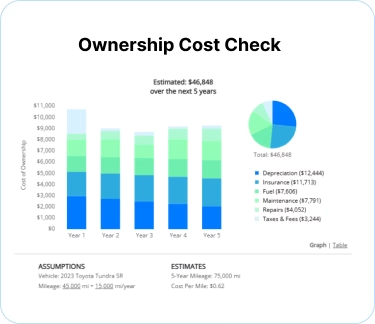
1989 Ford Crown Victoria Cost of Ownership
Owning a 1989 Ford Crown Victoria can be economical for the right buyer, provided they are aware of its characteristics. Fuel costs are a significant consideration due to the V8 engine, with MPG typically in the teens. Insurance rates are generally reasonable, especially for a classic or older vehicle policy. Maintenance costs are moderate; routine items like oil changes and tire rotations are standard. However, repairs for common issues such as rear main seal leaks or aged suspension components can be costly due to labor intensity. Overall, while fuel expenses can add up, the Crown Victoria is not inherently expensive to own, especially if you can perform some maintenance yourself. Its robust build suggests good long-term durability if well-maintained.
1989 Ford Crown Victoria Fuel Efficiency
Fuel Type
Gasoline
Fuel Capacity
18.00 gallons
City Mileage
17 miles/gallon
Highway Mileage
24 miles/gallon
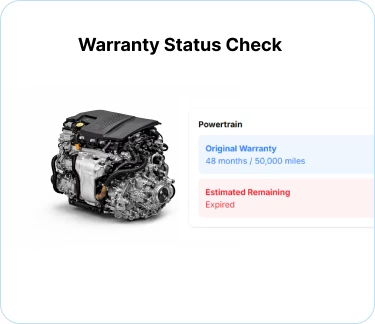
1989 Ford Crown Victoria Warranty
Basic
Original warranty
0 months / No data
Estimated remaining
Expired
Powertrain
Original warranty
0 months / No data
Estimated remaining
Expired
Rust
Original warranty
0 months / No data
Estimated remaining
Expired
1989 Ford Crown Victoria Insurance
Insurance for a 1989 Ford Crown Victoria is moderately priced, reflecting its status as a Wagon with strong safety ratings and
reasonable repair costs.
How Does the 1989 Ford Crown Victoria Compare to Other Wagon?
In its class, the 1989 Ford Crown Victoria competed with other large, rear-wheel-drive sedans such as the Chevrolet Caprice, Buick Roadmaster (though its resurgence was later), and the Mercury Grand Marquis (its sibling).
Performance: The Crown Victoria's 5.0L V8 offered respectable, if not thrilling, acceleration for its size. Rivals like the Caprice also offered V8 power, with some performance variants providing a sportier edge. The Crown Victoria was generally tuned for a comfortable, smooth ride over aggressive performance.
Features: In 1989, features were comparable across the segment. Both the Crown Victoria LX and competitors offered power amenities, air conditioning, and optional sound systems. The Crown Victoria's spacious interior and trunk were competitive advantages for families or those needing cargo space. Advanced tech was minimal across the board.
Reliability: The Crown Victoria has a reputation for robust, if not problem-free, reliability, largely due to its simple, sturdy construction. The Ford V8 engine is known for longevity. Competitors like the Caprice also had their strengths, but reliability perceptions could vary significantly based on specific components and maintenance.
Price: When new, pricing was competitive within the full-size segment. On the used market, the Crown Victoria often represents excellent value, particularly when compared to more complex or less durable alternatives.
Alternatives:
The Crown Victoria stands out for its blend of V8 power, traditional RWD handling, and a no-nonsense, durable design that made it a ubiquitous sight in police fleets and on family driveways.
Performance: The Crown Victoria's 5.0L V8 offered respectable, if not thrilling, acceleration for its size. Rivals like the Caprice also offered V8 power, with some performance variants providing a sportier edge. The Crown Victoria was generally tuned for a comfortable, smooth ride over aggressive performance.
Features: In 1989, features were comparable across the segment. Both the Crown Victoria LX and competitors offered power amenities, air conditioning, and optional sound systems. The Crown Victoria's spacious interior and trunk were competitive advantages for families or those needing cargo space. Advanced tech was minimal across the board.
Reliability: The Crown Victoria has a reputation for robust, if not problem-free, reliability, largely due to its simple, sturdy construction. The Ford V8 engine is known for longevity. Competitors like the Caprice also had their strengths, but reliability perceptions could vary significantly based on specific components and maintenance.
Price: When new, pricing was competitive within the full-size segment. On the used market, the Crown Victoria often represents excellent value, particularly when compared to more complex or less durable alternatives.
Alternatives:
- Similar: The Mercury Grand Marquis is an almost identical sibling, offering a slightly more luxurious feel and often more standard features. It’s a direct and often superior alternative if you prefer a more refined aesthetic.
- Different Focus: If outright comfort and a smoother, quieter ride are paramount, a comparable year Buick LeSabre (though front-wheel drive and V6) might be considered, though it sacrifices RWD dynamics. For a more performance-oriented large sedan of the era, one might look at specific RWD V8 models from other manufacturers, but these often came with higher prices and potentially less robust long-term durability for everyday use compared to the Crown Victoria's workhorse nature.
The Crown Victoria stands out for its blend of V8 power, traditional RWD handling, and a no-nonsense, durable design that made it a ubiquitous sight in police fleets and on family driveways.
Final Verdict: Is the 1989 Ford Crown Victoria a Good Wagon?
The 1989 Ford Crown Victoria is ideal for buyers seeking a classic American full-size sedan with a comfortable ride, a spacious interior, and robust mechanicals. It's a great option for those who appreciate traditional rear-wheel-drive dynamics and a substantial road presence. This car is certainly worth buying for enthusiasts, DIY mechanics, or anyone needing a durable, no-frills vehicle that can be maintained relatively affordably. It is most realistically purchased as a used vehicle, given its age. Look for well-maintained examples, ideally LX trims for more comfort features. Avoid cars with significant rust or evidence of neglect, as these can become costly projects. For its price point on the used market, it offers excellent value as a comfortable cruiser or a dependable daily driver, provided you're prepared for V8 fuel consumption and potential age-related maintenance.