
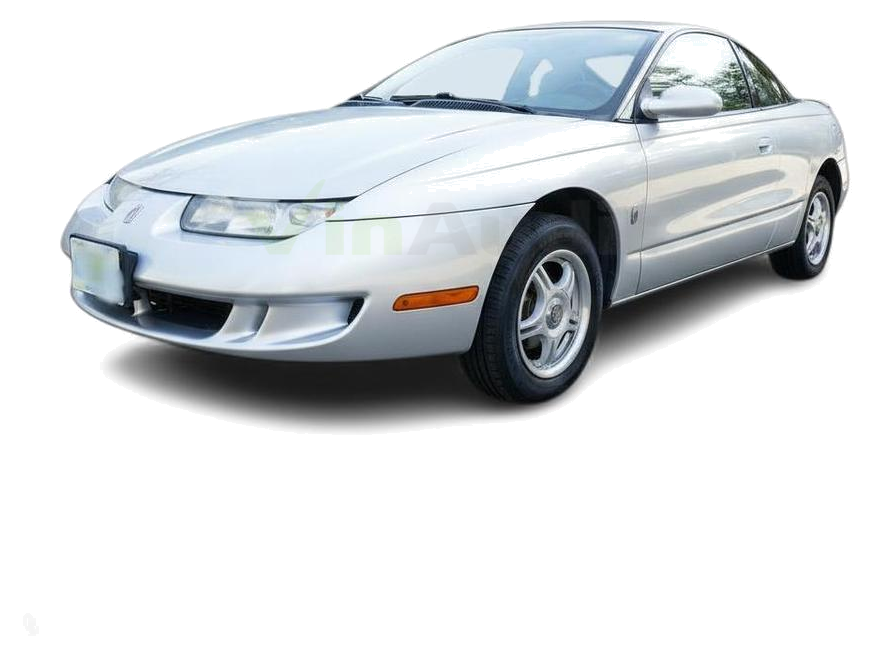
The 2000 Saturn S-Series was part of a distinctive line of compact cars produced by General Motors' Saturn division, known for its unique polymer body panels and dent-resistant doors. Available from 1991 to 2002, the 2000 model year offered sedan, coupe, and wagon body styles. Key trims included the SL (sedan), SC (coupe), and SW (wagon), often with base, SL1, SL2, SC1, SC2, SW1, and SW2 designations. New pricing ranged roughly from $12,000 to $18,000. It stood out for its quirky, customizable design and a focus on affordability and passenger safety, making it a popular choice for budget-conscious buyers seeking a reliable and somewhat unique vehicle.
The Good
The 2000 Saturn S-Series offered a compelling blend of practicality and personality. Its fuel efficiency appealed to practical buyers, while its unique polymer body panels provided a distinctive, albeit slightly quirky, design that resonated emotionally. Reliable performance for its class and a comfortable ride made it a sensible choice, offering good value for money.
The Bad
When considering a 2000 Saturn S-Series, be aware of potential issues like automatic transmission failures, particularly in higher mileage vehicles. Some owners have reported electrical gremlins, power window problems, and engine oil leaks. Rust can also be a concern, especially around wheel wells and rocker panels, despite the plastic body panels.
2000 Saturn S-Series: Quick Overview
- Engine Options: The 2000 Saturn S-Series primarily came with two inline-four engine options:
- A 1.9-liter (1898cc) DOHC engine.
- A 1.9-liter (1898cc) DOHC engine with variable valve timing (VVT) in higher trims.
- Horsepower:
- Base 1.9L engine: Approximately 100 horsepower.
- 1.9L DOHC VVT engine: Approximately 124 horsepower.
- Fuel Economy:
- Manual transmission models generally achieved better fuel economy, often in the range of 25-30 MPG city and 30-37 MPG highway.
- Automatic transmission models were slightly less efficient, typically around 23-28 MPG city and 28-34 MPG highway.
- Specific figures varied slightly by body style (sedan, coupe, wagon) and transmission.
- 0-60 Times:
- With the base 100 hp engine, 0-60 mph times were generally in the 10-12 second range.
- With the more powerful 124 hp VVT engine, 0-60 mph times were closer to the 8-10 second range.
- Towing Capacity: The Saturn S-Series was not designed for towing, and no official towing capacity is listed. It is a compact passenger vehicle.
- Trim-Level Features:
- SL/SW (Base/SL1/SW1): Typically offered standard air conditioning, power steering, power windows, power locks, AM/FM stereo, and a tilt steering wheel.
- SL2/SW2 (Higher Trims): Often included upgraded interior materials, alloy wheels, a more powerful engine, cruise control, keyless entry, and sometimes a sunroof.
- SC/SC1/SC2 (Coupe): The coupe models often featured a sportier aesthetic, a more driver-focused interior, and potentially unique styling elements. The SC2, in particular, usually came with the VVT engine and a range of premium features for its class.
2000 Saturn S-Series Specifications
Vehicle Information
| Year | 2000 |
| Make | Saturn |
| Model | S-Series |
| Trim | - |
| Style | - |
| Type | Hatchback |
| Category | Subcompact Car |
Manufacturing Details
| Made In | United States |
| Manufacturing City | SPRING HILL |
Dimensions
| Doors | 3-Door |
| Curb Weight | 2368 pounds |
| Gross Vehicle Weight Rating | - |
| Overall Height | 53.00 inches |
| Overall Length | 180.50 inches |
| Overall Width | 68.20 inches |
| Wheelbase Length | 102.40 inches |
| Standard Seating | 4 |
Engine & Performance
| Engine | 1.9L I4 |
| Engine Size | 1.9L |
| Engine Cylinders | 4 |
| Transmission | 4-Speed Automatic |
| Transmission Type | Automatic |
| Transmission Speeds | 4-Speed |
| Drivetrain | Front-Wheel Drive |
Additional Features
| Anti-Brake System | Non-ABS 4-Wheel ABS |
| Steering Type | Rack & Pinion |
Pricing
| Manufacturer Suggested Retail Price (MSRP) | $12,535 |
| Invoice Price | $10,905 |
| Delivery Charges | - |
Vehicle History Report
Specifications
History
Events
History Check
Check
Check
Check
Check
Listings
Recalls
Check
Analysis
What Problems Does the 2000 Saturn S-Series Have?
The 2000 Saturn S-Series, while generally considered a decent value, does have some frequently reported problems and long-term reliability concerns that potential buyers should be aware of. One of the most common and significant issues is with the automatic transmission. Many owners have experienced premature failure of the automatic gearbox, often requiring costly repairs or replacement. This is a widespread concern across many Saturn S-Series model years, including 2000.
Another area of concern is the engine, particularly related to oil leaks. Valve cover gaskets and other seals can degrade over time, leading to oil seeping onto the exhaust manifold, which can be a fire hazard if not addressed. The 1.9L DOHC engines, especially the VVT versions, can also be sensitive to maintenance; neglecting regular oil changes can lead to sludge buildup and eventual engine problems.
Electrical issues are also not uncommon. Owners have reported problems with power windows, power door locks, and the central locking system malfunctioning. Dashboard warning lights can sometimes illuminate intermittently, and issues with the alternator or starter motor can also arise. The ignition system, including coil packs and spark plug wires, can also be a source of trouble.
While the polymer body panels are touted for their dent resistance, they are not immune to damage, and repairs can sometimes be more specialized than traditional metal bodywork. Additionally, rust can still be a concern on the underlying metal structure, especially in areas exposed to road salt and moisture, such as the rocker panels, subframes, and wheel wells. This is particularly true for models in rust-belt regions.
Recalls for the 2000 model year were generally related to safety or specific component failures. For instance, there have been recalls concerning potential issues with airbags, seatbelt pretensioners, and braking systems. It is always advisable to check the National Highway Traffic Safety Administration (NHTSA) website for any outstanding recalls specific to the vehicle's VIN.
In terms of long-term reliability, the S-Series can be a dependable car if well-maintained. However, the aforementioned transmission issues can significantly impact its longevity if not addressed proactively. The relative simplicity of the powertrain can be an advantage for DIY mechanics, but some specialized parts can be harder to find as the vehicles age.
How long will the 2000 Saturn S-Series last?
With consistent and proper maintenance, the 2000 Saturn S-Series can reasonably achieve an average of 150,000 to 200,000 miles or more in years of service. Many owners report their S-Series lasting well over a decade if minor issues are addressed promptly. Long-term durability is decent for the powertrain, with the 1.9L engines capable of longevity. However, the major weakness over time tends to be the automatic transmission, which can be a limiting factor for reaching very high mileage without expensive repairs. Wear and tear on suspension components and exhaust systems are also common with age. Despite its weaknesses, a well-cared-for S-Series can still offer several more years of reliable transportation, especially if manual transmissions are preferred.
What Technology & Safety Features are Included?
The 2000 Saturn S-Series offered a relatively straightforward package of technology and safety features for its era, emphasizing core functionality over cutting-edge innovations. Standard in most models were features like air conditioning, power steering, and a tilt steering wheel, enhancing driver comfort and convenience.
Entertainment systems typically consisted of an AM/FM radio, often with a cassette player. CD players were available as an upgrade or on higher trim levels. Power windows and power door locks were also common, becoming increasingly standard even on lower trims by the 2000 model year. Keyless entry was an optional convenience feature that added to its practicality.
In terms of driver-assistance features, the 2000 S-Series was quite basic by modern standards. There were no advanced electronic aids like traction control or stability control offered as standard or widely available options. The focus was on the mechanical aspects of driving, with features like cruise control available on some trims.
Safety was a significant selling point for Saturn, and the S-Series was designed with passenger protection in mind. Standard safety features included front airbags and anti-lock braking system (ABS), which was often an optional upgrade on base models but became more common on higher trims. The S-Series also featured strong chassis construction and its signature polymer body panels were designed to absorb impact energy, contributing to its safety credentials.
Crash-test ratings from the National Highway Traffic Safety Administration (NHTSA) for models around this year generally showed good performance for its class. For side-impact and frontal-impact tests, the S-Series typically received favorable ratings, often scoring four out of five stars in many categories, indicating good protection for occupants. For example, the 2000 S-Series sedan received 4 stars for driver and front passenger in frontal crash tests and 4 stars for the rear passenger in side impact tests, and 5 stars for the front passenger in side impact tests. These ratings made it a competitive choice for safety-conscious buyers on a budget.
What Colors Options are Available?
2000 Saturn S-Series Prices and Market Value
When new, the 2000 Saturn S-Series had a starting Manufacturer's Suggested Retail Price (MSRP) typically ranging from approximately $12,000 to $18,000, depending on the body style (sedan, coupe, wagon) and trim level (SL, SC, SW, with 1 and 2 designations). As with most vehicles from this era, the S-Series experienced significant depreciation in its early years.
Currently, the used market prices for a 2000 Saturn S-Series are generally very low, reflecting its age and discontinued model status. You can often find examples in fair to good condition for anywhere between $1,500 to $4,000. Prices can fluctuate based on mileage, overall condition, maintenance history, and trim level. For instance, well-maintained coupes or higher-trim sedans/wagons with fewer miles might fetch slightly more. Factors affecting resale value include the presence of known mechanical issues (especially transmission), the extent of rust, and the overall cosmetic condition. Due to its age, the S-Series is now primarily valued as an affordable, basic transportation option rather than for any significant resale appreciation.
2000 Saturn S-Series Cost of Ownership
The 2000 Saturn S-Series is generally considered an economical vehicle to own. Insurance costs are typically low due to its age and market value. Fuel economy is a strong suit, especially with manual transmissions, keeping gas expenses manageable. Routine maintenance, such as oil changes and tire rotations, is affordable. However, repair costs can be a variable. While many common parts are inexpensive and readily available, significant repairs, particularly to the automatic transmission or engine, can be costly. Overall, if kept in good mechanical condition and with a focus on preventative maintenance, its long-term ownership costs remain relatively low, making it a budget-friendly choice.
2000 Saturn S-Series Fuel Efficiency
2000 Saturn S-Series Safety Rating
NHTSA
IIHS
2000 Saturn S-Series Warranty
Basic
Powertrain
Rust
2000 Saturn S-Series Insurance
reasonable repair costs.
How Does the 2000 Saturn S-Series Compare to Other Hatchback?
The 2000 Saturn S-Series competed in the highly contested compact car segment against rivals like the Honda Civic, Toyota Corolla, Ford Focus, and Nissan Sentra. In terms of performance, the S-Series, especially with the VVT engine, offered competitive acceleration for its class, though it generally didn't match the sportier offerings from Honda or Mazda. The base engine was adequate but could feel sluggish.
Features-wise, the S-Series offered a decent array for its price point, including standard A/C, power windows/locks on many trims, and its unique polymer body panels which were a distinctive feature. However, rivals like the Civic and Corolla often offered more sophisticated interior designs and a wider range of optional technology for the time, such as more advanced audio systems and, in some cases, early forms of traction control.
Reliability is where the S-Series faced its biggest challenges compared to Japanese rivals. While the Honda Civic and Toyota Corolla are legendary for their bulletproof reliability, the Saturn S-Series, particularly with its automatic transmission, was more prone to certain mechanical issues like transmission failure and electrical gremlins. The polymer body panels, while resistant to minor dings, could still develop issues with fit and finish over time.
Price was a strong suit for the Saturn S-Series; it was often positioned as a more affordable alternative to its Japanese competitors, offering good value for money, especially during its initial sale. This affordability is still reflected in its low used market prices today.
Recommendations for alternatives:
Similar: If you value the affordability and basic transportation of the S-Series, the Ford Focus and Nissan Sentra from the same era offer comparable pricing and general utility. The Focus, in particular, offered more modern styling and a more engaging driving experience in certain trims.
Better (if budget allows for slightly higher cost or more maintenance): The Honda Civic and Toyota Corolla are generally superior choices for long-term reliability, fuel efficiency, and driving dynamics. While they might have had a slightly higher initial or used price, their reputation for longevity and fewer major issues makes them a more prudent investment for many buyers. The Mazda Protege is also a strong contender, offering a fun-to-drive character and good reliability.
Final Verdict: Is the 2000 Saturn S-Series a Good Hatchback?
The 2000 Saturn S-Series is ideal for budget-conscious buyers seeking basic, no-frills transportation. It's a good fit for first-time drivers, students, or those needing a second car for short commutes where initial purchase price is the primary concern. If you prioritize quirky design and a generally comfortable ride over cutting-edge tech or bulletproof long-term reliability, it might be a contender.
Whether it's worth buying depends heavily on the specific vehicle. A used S-Series can be a steal if it has a documented history of good maintenance and, crucially, if it has the manual transmission, which is generally more reliable than the automatic. Avoid models with known transmission problems or extensive rust. If you're handy with basic repairs, you might be able to mitigate some of its potential weaknesses. It is generally not worth buying new, as its value has significantly depreciated and better, more reliable options exist in the new car market. Focus on well-maintained examples, ideally with a pre-purchase inspection, to maximize its potential as an economical daily driver.

Jovan
Jovan specializes in interpreting vehicle records and making sense of VIN data. With over 10 years of experience in the automotive data industry, his work ensures that every report is clear, accurate, and useful for car buyers.