
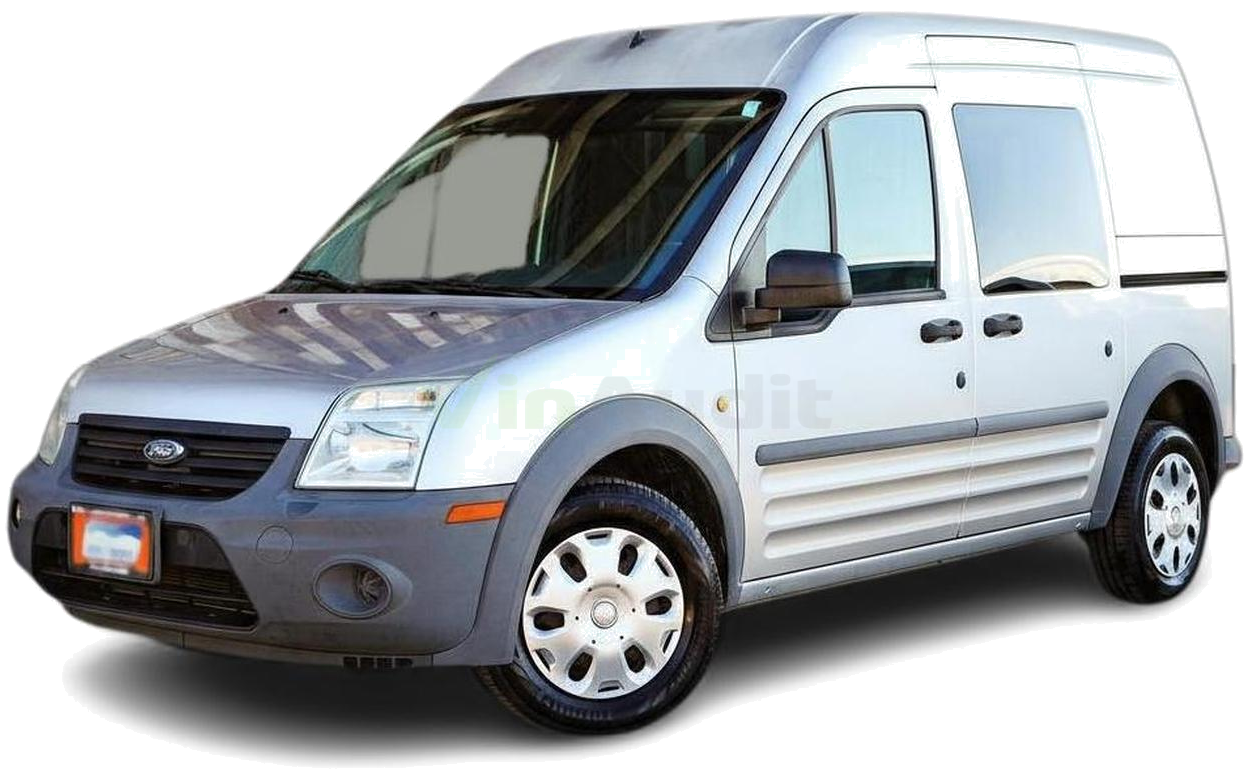
The Good
The 2010 Transit Connect offers a blend of practicality and surprising agility. For practical buyers, its fuel efficiency and cargo capacity are appealing. Emotionally, its unique design and maneuverability make it a standout choice. While not luxurious, it provides adequate comfort for daily use, making it a valuable and versatile option.
The Bad
Weaknesses of the 2010 Transit Connect include its relatively low power output, which can be noticeable when fully loaded. The interior, while functional, lacks refinement. Potential buyers should also watch out for transmission issues, especially with higher mileage models, and check for rust, particularly in colder climates.
2010 Ford Transit Connect: Quick Overview
- Engine Options: 2.0L Duratec I4
- Horsepower: 136 hp @ 6300 rpm
- Fuel Economy: 22 mpg city / 25 mpg highway (EPA estimates)
- 0–60 Times: Around 12 seconds (estimated)
- Towing Capacity: Limited towing capacity, typically around 2,000 lbs when properly equipped.
- Trim-Level Features:
- XL:
- Standard cloth upholstery
- AM/FM radio
- Manual windows and locks
- Air conditioning
- 15-inch steel wheels
- Driver and passenger airbags
- XLT: (Adds to or replaces XL features)
- Power windows and locks
- Cruise control
- Upgraded cloth upholstery
- CD player
- Optional rear parking sensors
- Optional roof rack
- XL:
- Cargo Capacity: Approximately 135 cubic feet behind the front seats.
- Transmission: 4-speed automatic.
2010 Ford Transit Connect Specifications
Vehicle Information
| Year | 2010 |
| Make | Ford |
| Model | Transit Connect |
| Trim | - |
| Style | XL Van FWD 8AT 2.0L I4 |
| Type | Van |
| Category | passenger |
Manufacturing Details
| Made In | Turkey |
| Manufacturing City | KOCAELI |
Dimensions
| Doors | 4-Door |
| Curb Weight | 3500 pounds |
| Gross Vehicle Weight Rating | - |
| Overall Height | 72 inches |
| Overall Length | 180.6 inches |
| Overall Width | 72 inches |
| Wheelbase Length | 113.2 inches |
| Standard Seating | 5 |
Engine & Performance
| Engine | 2L I4 |
| Engine Size | 2L |
| Engine Cylinders | 4 |
| Transmission | 8-Speed Automatic |
| Transmission Type | Automatic |
| Transmission Speeds | 8-Speed |
| Drivetrain | Front-Wheel Drive |
Additional Features
| Anti-Brake System | 4-Wheel ABS |
| Steering Type | Rack & Pinion |
Pricing
| Manufacturer Suggested Retail Price (MSRP) | $22,000 |
| Invoice Price | $20,500 |
| Delivery Charges | $795 |
Vehicle History Report
Specifications
History
Events
History Check
Check
Check
Check
Check
Listings
Recalls
Check
Analysis
What Problems Does the 2010 Ford Transit Connect Have?
Recall information for the 2010 Transit Connect should be checked with the NHTSA (National Highway Traffic Safety Administration) database.
Long-term reliability concerns also include potential issues with the air conditioning system and the door latches. While not a widespread issue, some owners have reported problems with the power windows and locks. Regular maintenance, including oil changes, fluid checks, and tire rotations, can significantly improve the vehicle's longevity. Inspecting the undercarriage for rust and addressing any issues promptly is also essential for preserving its structural integrity. Some reports mention issues with the coil pack failing over time. Always verify any potential recalls with official sources.
How long will the 2010 Ford Transit Connect last?
What Technology & Safety Features are Included?
Safety Features: Standard safety features included driver and passenger airbags, and anti-lock brakes (ABS).
Optional Features: Rear parking sensors were an available option on some trims.
Crash test ratings from the IIHS (Insurance Institute for Highway Safety) and NHTSA should be consulted for specific scores. These scores will provide insight into the vehicle's performance in various crash scenarios. While not packed with cutting-edge technology, the Transit Connect focused on functionality and practicality over luxury features. The available air conditioning and basic radio served practical needs. The emphasis was more on utility and cargo-carrying capacity than advanced tech, with safety features being fairly standard for the year. Check the official NHTSA and IIHS websites for accurate and detailed crash test results, as these can vary depending on the specific test and vehicle configuration. Stability control was an option for certain trims.
What Colors Options are Available?
Exterior Colors
Interior Colors
2010 Ford Transit Connect Prices and Market Value
2010 Ford Transit Connect Cost of Ownership
2010 Ford Transit Connect Fuel Efficiency
2010 Ford Transit Connect Recalls & Defects
Warning: Undefined array key "components" in /home/dev2/public_html/wp-content/themes/Divi-child/content/recalls.php on line 4
Deprecated: htmlspecialchars(): Passing null to parameter #1 ($string) of type string is deprecated in /home/dev2/public_html/wp-content/themes/Divi-child/content/recalls.php on line 4
Warning: Undefined array key "campaign" in /home/dev2/public_html/wp-content/themes/Divi-child/content/recalls.php on line 14
Deprecated: htmlspecialchars(): Passing null to parameter #1 ($string) of type string is deprecated in /home/dev2/public_html/wp-content/themes/Divi-child/content/recalls.php on line 14
Warning: Undefined array key "notes" in /home/dev2/public_html/wp-content/themes/Divi-child/content/recalls.php on line 35
Deprecated: htmlspecialchars(): Passing null to parameter #1 ($string) of type string is deprecated in /home/dev2/public_html/wp-content/themes/Divi-child/content/recalls.php on line 35
Warning: Undefined array key "components" in /home/dev2/public_html/wp-content/themes/Divi-child/content/recalls.php on line 4
Deprecated: htmlspecialchars(): Passing null to parameter #1 ($string) of type string is deprecated in /home/dev2/public_html/wp-content/themes/Divi-child/content/recalls.php on line 4
Warning: Undefined array key "campaign" in /home/dev2/public_html/wp-content/themes/Divi-child/content/recalls.php on line 14
Deprecated: htmlspecialchars(): Passing null to parameter #1 ($string) of type string is deprecated in /home/dev2/public_html/wp-content/themes/Divi-child/content/recalls.php on line 14
Warning: Undefined array key "notes" in /home/dev2/public_html/wp-content/themes/Divi-child/content/recalls.php on line 35
Deprecated: htmlspecialchars(): Passing null to parameter #1 ($string) of type string is deprecated in /home/dev2/public_html/wp-content/themes/Divi-child/content/recalls.php on line 35
2010 Ford Transit Connect Warranty
Basic
Powertrain
Rust
2010 Ford Transit Connect Insurance
reasonable repair costs.
How Does the 2010 Ford Transit Connect Compare to Other Van?
A similar alternative, if cargo space is a priority, would be a larger used van, such as a Ford E-Series or Chevy Express. However, these vans would sacrifice fuel economy. A possible “better” alternative might be a newer model of the Transit Connect itself (post-2014), which addresses some of the earlier model's weaknesses and offers more features and updated styling. The NV200 (later) is a comparable size and price point but may have similar limitations in terms of power and features. Ultimately, the best alternative depends on individual needs and priorities regarding size, fuel economy, and features.
Ranks #109 Truck
| 1 | 2023 Toyota Tundra | (5.0★) |
| 2 | 2022 Honda Ridgeline | (5.0★) |
| 3 | 2023 Ford E-Transit Chassis | (0.0★) |
| 4 | 2020 Mercedes-Benz Sprinter Cab Chassis | (0.0★) |
| 5 | 2024 Chevrolet Silverado 3500HD | (0.0★) |
| 6 | 2023 Hyundai Santa Cruz | (5.0★) |
| 7 | 2023 Nissan Frontier | (5.0★) |
| 8 | 2024 GMC Sierra 2500HD | (0.0★) |
| 9 | 2023 Ram 4500 | (0.0★) |
| 10 | 2022 Jeep Gladiator | (5.0★) |
| 11 | 2012 Suzuki Equator | (0.0★) |
| 12 | 2009 Mitsubishi Raider | (5.0★) |
| 109 | 2010 Ford Transit Connect | (0.0★) |
Final Verdict: Is the 2010 Ford Transit Connect a Good Van?

Drew B
Drew is a seasoned automotive expert and contributor to VinCheck.info. With nearly 15 years of experience as a former Porsche technician, he brings a wealth of hands-on knowledge to his writing. Born in North Carolina, a region renowned for its deep-rooted NASCAR culture, Drew developed a passion for cars early in life, often building and working on vehicles from a young age. At VINCheck, Drew leverages his extensive technical background to provide in-depth analyses of various vehicles. His articles often focus on engine performance, reliability, and maintenance insights, offering readers practical information grounded in real-world experience. Some of his notable contributions include reviews on the Mazda CX-5's longevity and detailed examinations of engine options for models like the 2011 Toyota Camry and Tacoma