
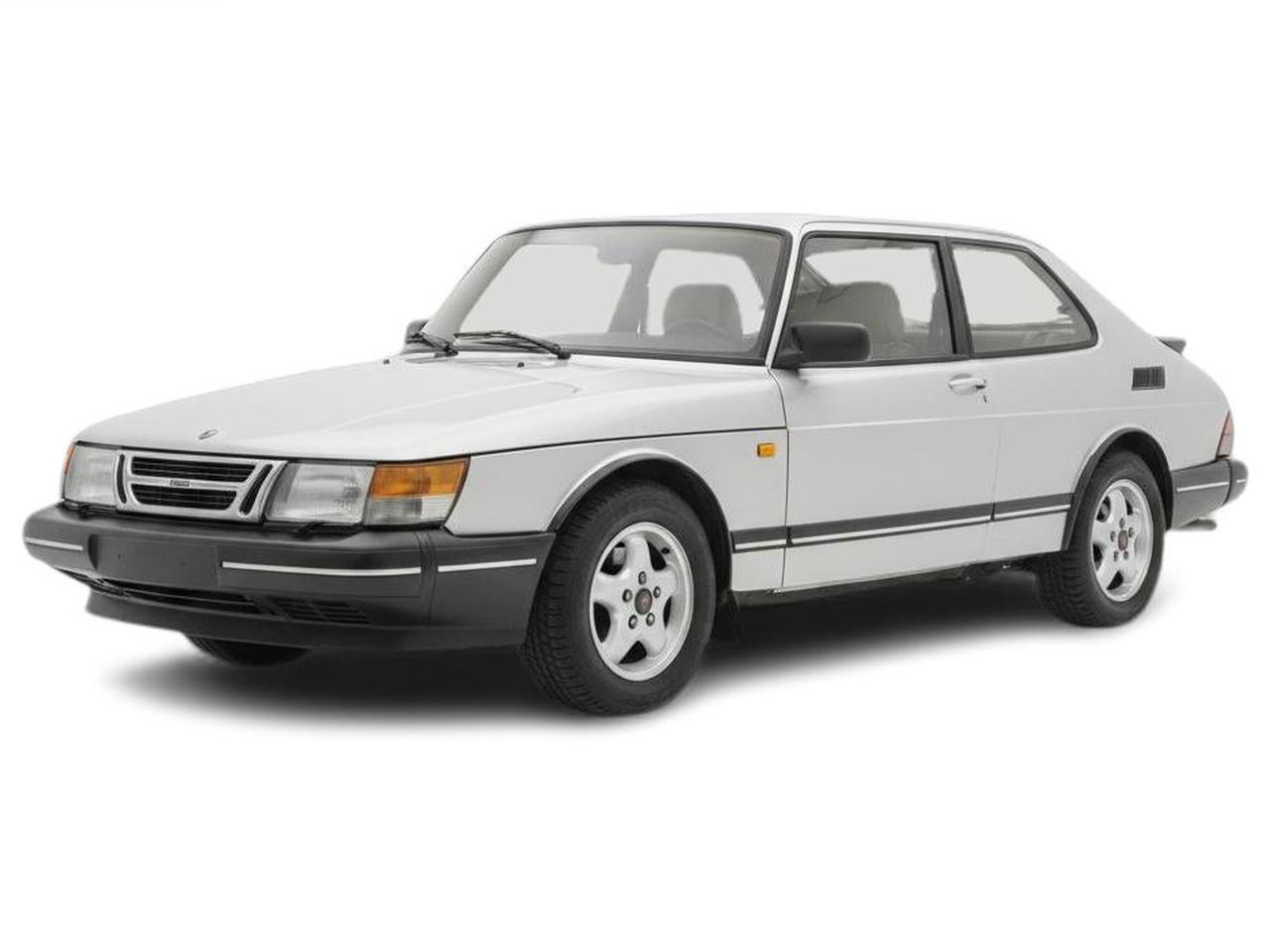
The Good
The 1991 Saab 900 offers a compelling blend of quirky, timeless design, impressive safety engineering, and a surprisingly engaging driving experience, especially with its turbocharged engine options. Its robust build and comfortable ride cater to practical needs, while its unique character and Scandinavian flair resonate emotionally with discerning drivers.
The Bad
Potential buyers of a 1991 Saab 900 should be aware of rust issues, particularly around the wheel arches and sills. Electrical gremlins are also common, and the aging drivetrain can require specialized maintenance. The clutch system and ignition components can also be points of concern.
1991 Saab 900: Quick Overview
- Engine Options: The 1991 Saab 900 primarily featured inline-four gasoline engines. These included a naturally aspirated 2.0-liter engine and a turbocharged 2.0-liter engine. The naturally aspirated engine produced approximately 126 horsepower, while the turbocharged versions could generate around 160-175 horsepower depending on the specific tune (e.g., standard turbo vs. SPG).
- Horsepower: Ranges from approximately 126 hp for the base models to around 175 hp for the higher-performance turbocharged variants like the SPG.
- Fuel Economy: Fuel economy varied with engine choice and driving style. For the naturally aspirated models, expect figures around 18-22 MPG in the city and 25-30 MPG on the highway. Turbocharged models would typically see slightly lower MPG, perhaps 17-21 MPG city and 24-28 MPG highway.
- 0-60 Times: These varied significantly. Naturally aspirated models might take around 10-11 seconds. The turbocharged models offered more spirited acceleration, with 0-60 MPH times often in the 8-9 second range, and the SPG models potentially dipping below 8 seconds.
- Towing Capacity: The 1991 Saab 900 was not designed for towing significant loads. Towing capacity is generally not specified or is very limited, unsuitable for heavy trailers.
- Trim-Level Features:
Base: Standard amenities, manual windows and locks, basic audio system.
Lux: Often included power windows, power locks, upgraded interior materials, and potentially a better sound system.
S: Typically added more sporty suspension components, alloy wheels, and often air conditioning as standard.
SPG (Special Performance Group): The top-tier performance model, featuring a more powerful turbocharged engine, sport-tuned suspension, aerodynamic body kit, larger wheels, performance brakes, and sport seats.
1991 Saab 900 Specifications
Vehicle Information
| Year | 1991 |
| Make | Saab |
| Model | 900 |
| Trim | - |
| Style | - |
| Type | Sedan |
| Category | Compact Car |
Manufacturing Details
| Made In | Sweden |
| Manufacturing City | TROLLHATTAN |
Dimensions
| Doors | 2-Door |
| Curb Weight | 2942 pounds |
| Gross Vehicle Weight Rating | - |
| Overall Height | - |
| Overall Length | - |
| Overall Width | - |
| Wheelbase Length | - |
| Standard Seating | - |
Engine & Performance
| Engine | Intercooled Engine |
| Engine Size | 2L |
| Engine Cylinders | 4 |
| Transmission | 5-Speed Manual |
| Transmission Type | Manual |
| Transmission Speeds | 5-Speed |
| Drivetrain | Front-Wheel Drive |
Additional Features
| Anti-Brake System | - |
| Steering Type | - |
Pricing
| Manufacturer Suggested Retail Price (MSRP) | - |
| Invoice Price | - |
| Delivery Charges | - |
Vehicle History Report
Specifications
History
Events
History Check
Check
Check
Check
Check
Listings
Recalls
Check
Analysis
What Problems Does the 1991 Saab 900 Have?
Electrically, Saabs of this era can be temperamental. Issues with the wiring harness, particularly the connections to the ignition module (DI cassette), fuel pump relay, and central locking system, are frequently reported. The dashboard illumination and gauge cluster can also develop faults. The 'check engine' light might come on due to various sensor issues, including the oxygen sensor and the mass airflow sensor.
The drivetrain can also present challenges. Clutch wear is common on manual transmission cars, and the hydraulic clutch system can develop leaks. Automatic transmissions, while generally reliable, can suffer from overheating if not properly maintained. Engine mounts can degrade over time, leading to increased vibration. The turbocharger system, if present, requires diligent maintenance; neglected oil changes can lead to premature turbo failure. Cooling system issues, such as radiator leaks or failing water pumps, are also not uncommon.
Saab issued recalls for various issues throughout the model run, though specific recalls for the 1991 model year should be researched individually through official channels. Common recalls often involved seat belts, braking systems, and fuel system components. Long-term reliability heavily depends on the quality of maintenance it has received throughout its life. A well-maintained 900 can be surprisingly durable, but neglected examples often require significant investment to address accumulated issues. Specific model year variations might have minor differences in component sourcing, but the core issues tend to persist across the early 900 generation.
How long will the 1991 Saab 900 last?
What Technology & Safety Features are Included?
Driver-assistance features were virtually non-existent in the modern sense. There were no advanced cruise control systems, parking sensors, or lane-keeping assists. The primary focus was on the driver's control and the car's inherent handling characteristics. Anti-lock Braking System (ABS) was an available option on some models, particularly the higher trims and the SPG, providing crucial stopping power assistance.
Safety was a hallmark of the Saab 900, even in 1991. Saabs were known for their strong safety cage construction, designed to protect occupants in a collision. Features included crumple zones, reinforced A-pillars, and side-impact protection in the doors. Seatbelts were standard, and some models offered airbags as an option or standard in later years of this generation, though for the 1991 model year, driver's side airbags were becoming more common as an option, with passenger airbags being less frequent.
Crash-test ratings from this era are not as standardized or readily available as they are today. However, the Saab 900 generally performed well in independent safety tests of the time, often exceeding the average for its class due to its robust construction. The unique 'Saab Active Head Restraints' (SAHR) were also introduced in this generation, designed to reduce whiplash injuries in rear-end collisions, though this feature might not have been standard on all 1991 models.
Optional features would have included things like air conditioning, power windows and locks (standard on higher trims), a power sunroof, and upgraded interior trim. The overall tech package was focused on functionality and durability rather than luxury or convenience features that are commonplace today.
What Colors Options are Available?
1991 Saab 900 Prices and Market Value
1991 Saab 900 Cost of Ownership
1991 Saab 900 Fuel Efficiency
1991 Saab 900 Safety Rating
NHTSA
IIHS
1991 Saab 900 Insurance
reasonable repair costs.
How Does the 1991 Saab 900 Compare to Other Sedan?
In terms of features, the Saab 900 stood out for its innovative safety designs and a distinctive, functional interior. While German rivals might have offered more luxurious materials or advanced technology options for the era (like more sophisticated climate control or integrated audio systems), the Saab emphasized practicality and robust construction. The Volvo 240/740 were known for their legendary durability and safety but offered a more utilitarian driving experience.
Reliability is where the Saab 900 is a mixed bag. While the core mechanicals are robust, electrical issues are more prevalent than in many of its German rivals. The BMW 3 Series could be expensive to maintain, and Mercedes-Benz models were notoriously costly. The Volvo 240 was often lauded for its mechanical simplicity and reliability. In terms of price, the Saab 900 typically offered a compelling value proposition, especially the turbocharged models, providing a good amount of performance and unique character for the money compared to similarly equipped German luxury brands.
Alternatives:
* Similar: If you seek distinctive European styling and a strong safety ethos, the Volvo 240/740 series is a similar, though less performance-oriented, alternative known for immense durability. The Audi 80 also offers a solid, well-built option with available AWD.
* Better Performance/Handling: For a more engaging driving experience and sharper handling, a BMW 3 Series (E30) is a classic choice, though often more expensive to purchase and maintain.
* More Refined Luxury: A Mercedes-Benz 190E offers a more luxurious and refined ride but typically at a higher cost. For those prioritizing sheer reliability and simplicity, a well-maintained Toyota Camry or Honda Accord from the same era could be considered, though they lack the Saab's unique character.
Final Verdict: Is the 1991 Saab 900 a Good Sedan?

Simon A
Simon is a contributor to VinCheck, where he provides articles and reviews on various automotive topics. His work focuses on delivering accurate and up-to-date information about used cars, helping readers make informed decisions.