
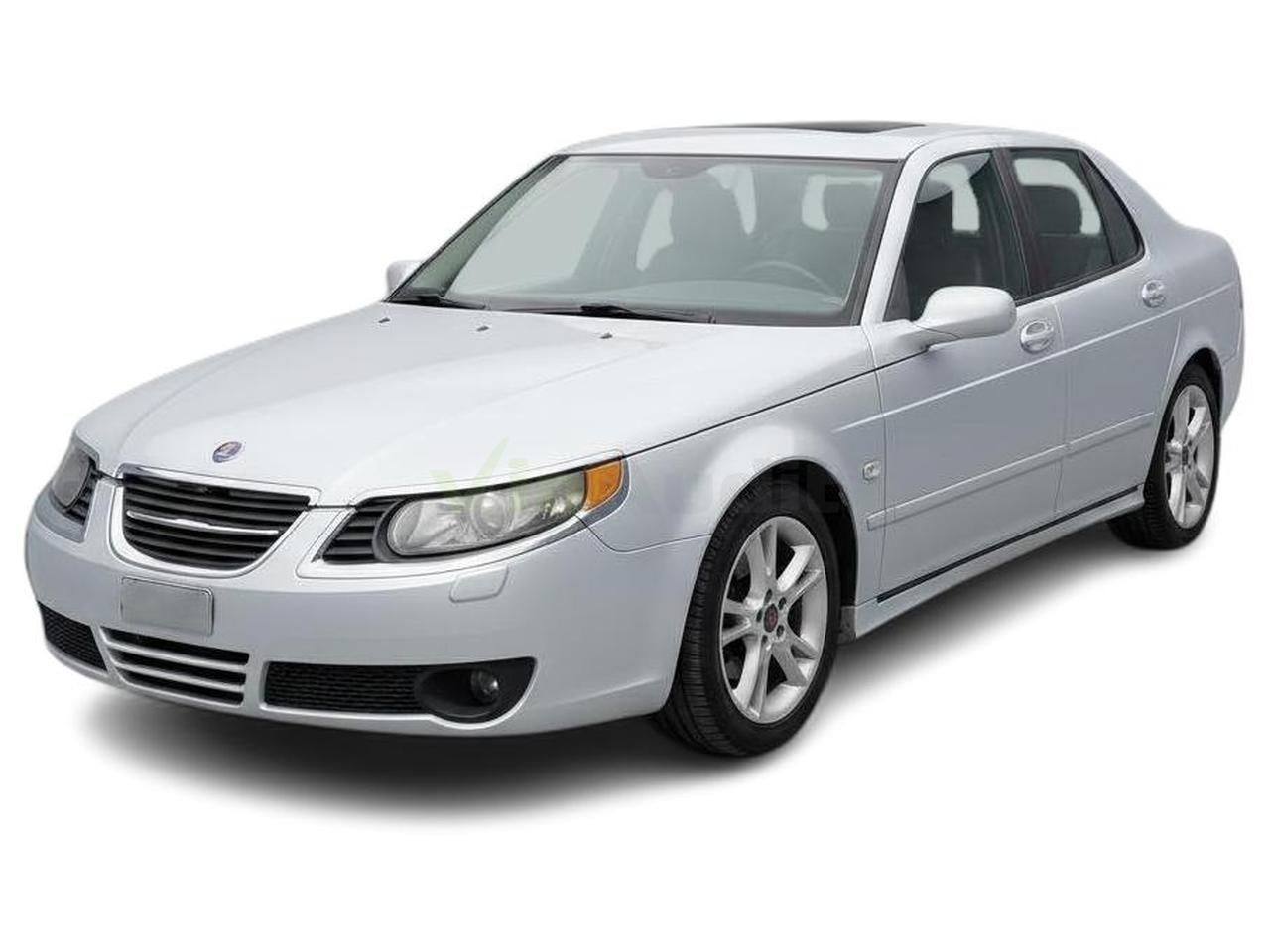
The Good
The 2009 Saab 9-5 offers a compelling blend of spirited turbocharged performance and supple ride comfort. Its distinctive Scandinavian design appeals to the heart, while practical buyers appreciate its strong safety ratings, relatively good fuel economy for its class, and a unique ownership proposition offering good value compared to more common luxury brands. Reliability, while not class-leading, is generally solid with proper maintenance.
The Bad
Potential owners of the 2009 Saab 9-5 should be aware of a few common issues. Electronics can be a weak point, with problems like climate control malfunctions or power window issues. The automatic transmission can sometimes be less refined than competitors, and some owners report issues with the ignition system and oil leaks. Parts availability can also be a concern as the brand is no longer in production.
2009 Saab 9-5: Quick Overview
- Engine Options: The 2009 Saab 9-5 was primarily offered with two turbocharged 4-cylinder engines and a V6 option.
- 2.0L Turbocharged Inline-4: This engine provided a balance of power and efficiency.
- 2.3L Turbocharged Inline-4 (often found in Aero trims): This offered a more potent performance upgrade.
- 3.0L Turbocharged V6: This provided the most powerful option, available in certain configurations.
- 2.0L Turbocharged Inline-4: This engine provided a balance of power and efficiency.
- Horsepower: Horsepower varied by engine and trim level.
- The 2.0T generally produced around 150-180 horsepower.
- The 2.3T typically ranged from 185 to 210 horsepower, with the Aero model often featuring higher output.
- The 3.0 V6 turbo could produce upwards of 200 horsepower, sometimes reaching closer to 250 hp depending on the specific tune.
- The 2.0T generally produced around 150-180 horsepower.
- Fuel Economy: EPA estimates for the 2009 Saab 9-5 varied based on engine and transmission. A typical range would be:
- For 4-cylinder models, expect around 18-20 MPG in the city and 26-28 MPG on the highway.
- V6 models would likely see slightly lower figures, perhaps in the 16-18 MPG city and 23-25 MPG highway range.
- For 4-cylinder models, expect around 18-20 MPG in the city and 26-28 MPG on the highway.
- 0-60 Times: These are approximate and dependent on engine, transmission, and driver.
- 4-cylinder models might achieve 0-60 mph in the 7-9 second range.
- The more powerful 2.3T or V6 variants could achieve 0-60 mph in approximately 6-7 seconds.
- 4-cylinder models might achieve 0-60 mph in the 7-9 second range.
- Towing Capacity: The Saab 9-5 was not designed for significant towing. Its towing capacity, if applicable at all, would be very limited, likely in the 1,000-2,000 lb range and not a primary selling point.
- Trim-Level Features:
- Arc: Typically featured leather upholstery, power-adjustable seats, automatic climate control, a premium audio system, and a sunroof.
- Vector: Often included sportier suspension tuning, unique interior accents (like brushed aluminum or wood trim), and potentially larger alloy wheels.
- Aero: The top-tier trim, characterized by the most powerful engine, sport-tuned suspension, enhanced aerodynamic body kit, larger wheels, and more aggressive interior styling.
- Common standard features across trims often included power windows, power locks, cruise control, and ABS.
- Arc: Typically featured leather upholstery, power-adjustable seats, automatic climate control, a premium audio system, and a sunroof.
2009 Saab 9-5 Specifications
Vehicle Information
| Year | 2009 |
| Make | Saab |
| Model | 9-5 |
| Trim | - |
| Style | 5-Speed |
| Type | Sedan |
| Category | Mid-Size Station Wagon |
Manufacturing Details
| Made In | Sweden |
| Manufacturing City | TROLLHATTAN |
Dimensions
| Doors | 4-Door |
| Curb Weight | 3730 pounds |
| Gross Vehicle Weight Rating | - |
| Overall Height | 57.70 inches |
| Overall Length | 190.60 inches |
| Overall Width | 70.50 inches |
| Wheelbase Length | 106.40 inches |
| Standard Seating | 5 |
Engine & Performance
| Engine | 2.3L I4 |
| Engine Size | 2.3L |
| Engine Cylinders | 4 |
| Transmission | 5-Speed Automatic |
| Transmission Type | Automatic |
| Transmission Speeds | 5-Speed |
| Drivetrain | Front-Wheel Drive |
Additional Features
| Anti-Brake System | 4-Wheel ABS |
| Steering Type | Rack & Pinion |
Pricing
| Manufacturer Suggested Retail Price (MSRP) | $41,675 |
| Invoice Price | $39,383 |
| Delivery Charges | $775 |
Vehicle History Report
Specifications
History
Events
History Check
Check
Check
Check
Check
Listings
Recalls
Check
Analysis
What Problems Does the 2009 Saab 9-5 Have?
How long will the 2009 Saab 9-5 last?
What Technology & Safety Features are Included?
In terms of driver-assistance features, the 2009 9-5 was relatively basic by modern standards. It typically included Anti-lock Braking System (ABS), Traction Control, and Electronic Stability Control (ESC), which were crucial safety nets. Parking assist sensors (rear) were sometimes offered as an option.
Safety was a strong suit for Saab, and the 9-5 was well-equipped. Standard safety features included front airbags, side-impact airbags, and curtain airbags. Anti-whiplash head restraints were also a common feature.
Crash-test ratings for the 2009 Saab 9-5, based on tests conducted by the Insurance Institute for Highway Safety (IIHS) and the National Highway Traffic Safety Administration (NHTSA) for similar model years, generally showed good performance. IIHS awarded it "Good" ratings in frontal and side-impact crash tests, and it was often considered a Top Safety Pick in its class for its respective model years. NHTSA also typically assigned high ratings for occupant protection in frontal and side impacts. While advanced driver-assistance systems like lane departure warning or adaptive cruise control were not common, the 9-5 provided a solid foundation of active and passive safety technologies for its time.
What Colors Options are Available?
2009 Saab 9-5 Prices and Market Value
2009 Saab 9-5 Cost of Ownership
2009 Saab 9-5 Fuel Efficiency
2009 Saab 9-5 Safety Rating
NHTSA
IIHS
2009 Saab 9-5 Recalls & Defects
AIR Bags:frontal:driver Side:inflator Module
2009 Saab 9-5 Warranty
Basic
Powertrain
Rust
2009 Saab 9-5 Insurance
reasonable repair costs.
How Does the 2009 Saab 9-5 Compare to Other Sedan?
Performance: The Saab 9-5, particularly in Aero trim with its turbocharged engines, offered a spirited and engaging driving experience, often outperforming rivals in straight-line acceleration thanks to its turbo torque. However, its handling, while competent, generally lacked the razor-sharp precision and sporty feel of the BMW 3 Series. Audi and Mercedes offered a more refined ride with good performance.
Features: The 9-5 provided a comfortable and well-appointed interior with a distinctive Scandinavian design. It often came with good standard features, and optional luxury amenities were available. However, its infotainment and tech features were beginning to feel dated compared to the newer models from German competitors, which offered more advanced navigation, Bluetooth integration, and connectivity options.
Reliability: This is where the Saab 9-5 often falls short when compared to its German counterparts. While not inherently unreliable, the documented issues with electronics and the availability of parts post-Saab's demise can make long-term ownership more challenging and potentially more expensive than a BMW or Audi of the same vintage, which have vast dealer networks and abundant parts.
Price: The Saab 9-5 typically offered a better value proposition when new, often priced competitively or slightly below its German rivals for comparable features. Currently, on the used market, the 9-5 represents excellent value, being significantly cheaper than similar year BMWs or Audis, making it an attractive option for budget-conscious buyers seeking a premium feel.
Alternatives:
- Similar: The Volvo S60 of the same era offers a similar Scandinavian flair, strong safety, and comfortable ride, often with more readily available parts.
- Better (for some): If performance and handling are paramount, a BMW 3 Series is hard to beat, though it will likely be more expensive to maintain. An Audi A4 offers a more refined interior and Quattro all-wheel drive. A Mercedes-Benz C-Class provides a plush ride and luxury ambiance. However, all these will generally be more costly to acquire and maintain than the Saab 9-5.
Final Verdict: Is the 2009 Saab 9-5 a Good Sedan?
It is absolutely worth buying, but with caveats. Focus on well-maintained examples, ideally with documented service history, and be prepared for potentially higher repair costs due to parts availability. Lower mileage, mid-range trims like the Arc or Vector offer a good balance of features and value. The Aero trim is fantastic for performance enthusiasts but may require more specialized attention. Buying new is not an option as the brand is defunct. Ultimately, the 2009 Saab 9-5 is for the enthusiast who understands its quirks and is willing to invest a little extra time and effort into maintaining a truly distinctive car.

Jovan
Jovan specializes in interpreting vehicle records and making sense of VIN data. With over 10 years of experience in the automotive data industry, his work ensures that every report is clear, accurate, and useful for car buyers.