
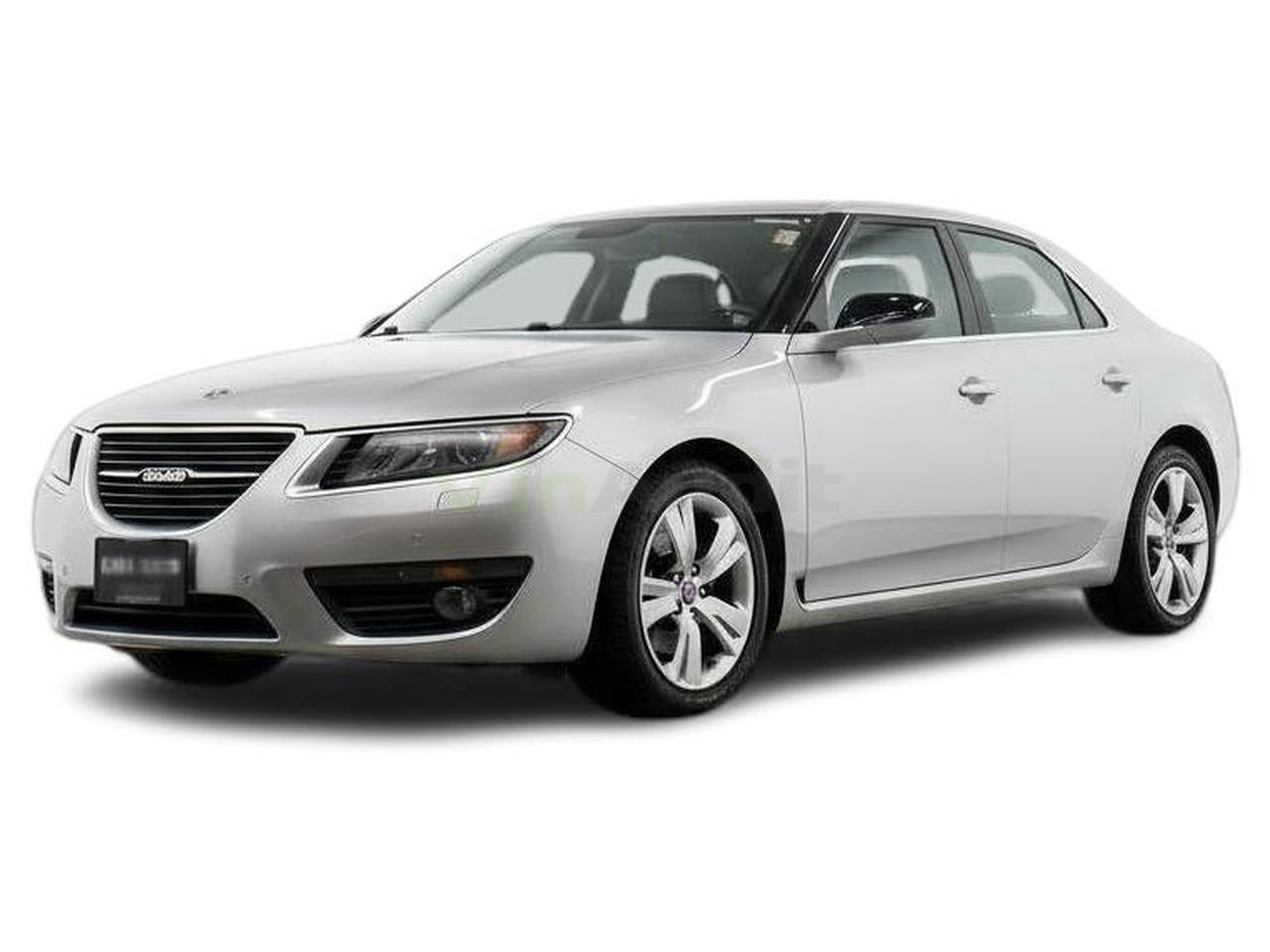
The Good
Key advantages of the 2011 Saab 9-5 include its distinctive, elegant Scandinavian design and comfortable, spacious interior, appealing to those seeking style and practicality. Performance-wise, its turbocharged engines offer engaging power. For practical buyers, its "under the radar" luxury status can mean unique value on the used market. It delivered a refined, comfortable ride and strong safety features, blending emotional appeal with tangible benefits.
The Bad
Known weaknesses for the 2011 Saab 9-5 primarily stem from Saab's short production run and subsequent bankruptcy. Parts availability can be a significant concern, potentially leading to higher repair costs and longer wait times. Electrical gremlins and software issues have been reported. Its low resale value reflects these challenges, and finding specialized mechanics can be difficult.
2011 Saab 9-5: Quick Overview
- Engine Options:
- 2.0L turbocharged inline-4 (Turbo4)
- 2.8L turbocharged V6 (Aero) - Horsepower:
- 2.0L Turbo4: 220 hp at 5300 rpm, 258 lb-ft of torque at 2500 rpm
- 2.8L V6 Aero: 300 hp at 5500 rpm, 295 lb-ft of torque at 2000 rpm - Fuel Economy (EPA Estimates):
- 2.0L Turbo4 FWD (Automatic): 18 city / 28 highway MPG
- 2.0L Turbo4 AWD (Automatic): 17 city / 27 highway MPG
- 2.8L V6 Aero AWD (Automatic): 16 city / 26 highway MPG - 0-60 MPH Acceleration (Estimated):
- 2.0L Turbo4 FWD: Around 7.5-8.0 seconds
- 2.8L V6 Aero AWD: Around 6.0-6.2 seconds - Towing Capacity:
- Generally not recommended for significant towing; often rated for light loads, typically around 2,000 lbs if properly equipped, but official ratings are often difficult to find or not emphasized for this class of vehicle. - Trim-Level Features:
- Turbo4 (Base): Standard features include 17-inch alloy wheels, automatic headlights, power front seats, dual-zone automatic climate control, leather upholstery, a cooled glovebox, a tilt-and-telescoping steering wheel, Bluetooth, an eight-speaker sound system with CD player, auxiliary audio jack, and satellite radio. Keyless entry and ignition were also standard.
- Turbo4 Premium: Added 18-inch alloy wheels, a panoramic sunroof, bi-xenon adaptive headlights, front and rear parking sensors, an auto-dimming driver-side mirror, driver memory functions, and an upgraded infotainment system with navigation and an 8-inch touchscreen.
- Aero: Top-tier performance trim. Built upon the Premium features, it added the more powerful 2.8L V6 engine, standard XWD (Saab's Haldex-based all-wheel drive), 19-inch alloy wheels, a sport-tuned suspension with adaptive dampers (DriveSense), sport seats, unique aerodynamic body kit, and heated rear seats.
2011 Saab 9-5 Specifications
Vehicle Information
| Year | 2011 |
| Make | Saab |
| Model | 9-5 |
| Trim | - |
| Style | - |
| Type | Sedan |
| Category | Compact Car |
Manufacturing Details
| Made In | Sweden |
| Manufacturing City | TROLLHATTAN |
Dimensions
| Doors | 4-Door |
| Curb Weight | - |
| Gross Vehicle Weight Rating | - |
| Overall Height | - |
| Overall Length | - |
| Overall Width | - |
| Wheelbase Length | - |
| Standard Seating | - |
Engine & Performance
| Engine | Turbo (11.5MY 9-3 AWD) A20NFT |
| Engine Size | 2L |
| Engine Cylinders | 4 |
| Transmission | 6-Speed Automatic |
| Transmission Type | Automatic |
| Transmission Speeds | 6-Speed |
| Drivetrain | All-Wheel Drive |
Additional Features
| Anti-Brake System | - |
| Steering Type | - |
Pricing
| Manufacturer Suggested Retail Price (MSRP) | - |
| Invoice Price | - |
| Delivery Charges | - |
Vehicle History Report
Specifications
History
Events
History Check
Check
Check
Check
Check
Listings
Recalls
Check
Analysis
What Problems Does the 2011 Saab 9-5 Have?
Electrical system issues have been reported, including infotainment glitches, sensor malfunctions, and occasional problems with various electronic modules. Users have noted software bugs that could affect the navigation system or other driver interfaces. The complex nature of modern automotive electronics, combined with the lack of ongoing software updates from a defunct manufacturer, contributes to these concerns.
The XWD all-wheel-drive system, while performing well, can be expensive to repair if problems arise, particularly with the Haldex unit or rear differential. Regular fluid changes are crucial for its longevity. Owners also sometimes report premature wear of suspension components, though this can vary with driving conditions.
There have been some minor recalls, primarily related to potential issues with the power steering hose (risk of fluid leak and fire) and certain brake pedal pivots not being correctly installed. These were typically addressed early in the vehicle's life. Prospective buyers should always check a specific vehicle's VIN for any open recalls.
Long-term reliability is a mixed bag. The core GM powertrains (2.0L LHU and 2.8L LP9 engines) are generally robust if maintained properly. However, the unique Saab interfaces and the difficulty in finding technicians deeply familiar with this specific generation of Saab can make diagnosis and repair of Saab-specific systems more challenging and expensive than with comparable German luxury sedans. This uncertainty, coupled with diminished dealer support, makes long-term ownership a commitment to proactive maintenance and potentially independent Saab specialists.
How long will the 2011 Saab 9-5 last?
Weaknesses over time include potential for electrical gremlins to worsen, the aging of unique Saab interior components that are hard to replace, and the eventual wear of AWD system components if not serviced properly. Suspension components and turbochargers, while robust, are wear items that will eventually require attention. The most significant long-term weakness is the diminishing support infrastructure, which can turn minor issues into major headaches due to repair complexity and parts sourcing.
What Technology & Safety Features are Included?
Driver-assistance features, while not as extensive as modern vehicles, included standard front and rear parking sensors on the Premium and Aero trims. Optional features like adaptive cruise control were available, providing a convenience edge for long-distance driving. The Aero trim also offered Saab's advanced DriveSense adaptive chassis system, which allowed drivers to select different suspension and steering characteristics.
Safety was a hallmark of Saab, and the 2011 9-5 was no exception. It came standard with a comprehensive suite of safety features including dual front, side, and full-length side curtain airbags. Anti-lock brakes (ABS), traction control, and stability control (ESP) were standard on all models. Active head restraints were also included to mitigate whiplash injuries. The vehicle's sturdy construction and the inclusion of adaptive headlights (on Premium/Aero) further contributed to its safety profile.
Regarding crash-test ratings, the 2011 Saab 9-5 was not extensively tested by U.S. agencies like the NHTSA or IIHS due to its limited production run. However, the virtually identical Opel Insignia (on which the 9-5 was based) received a 5-star rating from Euro NCAP, which is generally indicative of a strong safety structure. While direct ratings for the 9-5 are scarce in North America, its European counterpart's performance suggests a robust safety design.
What Colors Options are Available?
2011 Saab 9-5 Prices and Market Value
On the current used market, prices have plummeted significantly due to the brand's discontinuation. Expect to find well-maintained examples ranging from $5,000 to $15,000, depending heavily on mileage, condition, and trim (Aero models typically command a bit more). Depreciation has been steep and continuous. Factors severely affecting resale value include the defunct brand status, concerns over parts availability, limited specialized mechanic support, and a smaller buyer pool. While this makes it a poor investment for resale, it can represent excellent value for a unique luxury sedan if a buyer is aware of the potential ownership challenges.
2011 Saab 9-5 Cost of Ownership
2011 Saab 9-5 Fuel Efficiency
2011 Saab 9-5 Safety Rating
NHTSA
2011 Saab 9-5 Insurance
reasonable repair costs.
How Does the 2011 Saab 9-5 Compare to Other Sedan?
Performance: The Saab 9-5 Aero's 300 hp V6 was competitive with base and mid-level engines from German rivals (e.g., BMW 535i, Audi A6 3.0T), offering strong acceleration and standard AWD. Its handling, especially with the DriveSense adaptive suspension, was competent, but it typically didn't match the outright dynamic prowess of a BMW or the razor-sharp precision of an Audi. The 2.0L turbo was a good performer for its segment but wasn't a "sport" sedan.
Features: The 9-5 offered a strong array of luxury features for its price point, including standard leather, comprehensive infotainment, and available adaptive cruise control, matching or even exceeding some standard offerings of its rivals. Its distinctive interior design was a strong differentiator.
Reliability: This is where the 9-5 faces its biggest challenge. While the underlying GM platform and powertrains are generally robust, the "Saab-specific" components and the lack of ongoing factory support or specialized dealer networks make long-term reliability a concern. Parts availability and expertise are significant issues that don't plague its rivals.
Price: New, the 9-5 was priced to be a value alternative to German luxury. Used, its price has depreciated far more steeply than any of its rivals due to brand discontinuation, making it a bargain but also carrying the associated risks.
Recommended Alternatives:
For a balance of luxury, performance, and far better long-term reliability and support, the Volvo S80 (especially with the T6 AWD engine) is a very similar alternative in terms of Scandinavian philosophy and comfort-first approach, but with established parts and service. For those seeking more engaging driving dynamics and proven reliability, a BMW 535i/528i or an Audi A6 3.0T/2.0T Quattro from the same era would be superior choices, though they will command higher used prices and potentially higher maintenance costs for German specifics. The Cadillac CTS (especially V6 variants) also offers a distinctly American luxury/sport sedan experience with easier parts sourcing.
Final Verdict: Is the 2011 Saab 9-5 a Good Sedan?
It's best for someone with mechanical aptitude, access to a trusted independent Saab specialist, or a willingness to research and source parts. Opting for the Aero trim provides the most engaging driving experience and best feature set. Avoid if you prioritize absolute reliability, ease of repair, widespread dealer support, or strong resale value. For those who embrace its quirks and challenges, the 9-5 offers a distinctive, enjoyable luxury sedan experience unlike any other.

Jovan
Jovan specializes in interpreting vehicle records and making sense of VIN data. With over 10 years of experience in the automotive data industry, his work ensures that every report is clear, accurate, and useful for car buyers.