
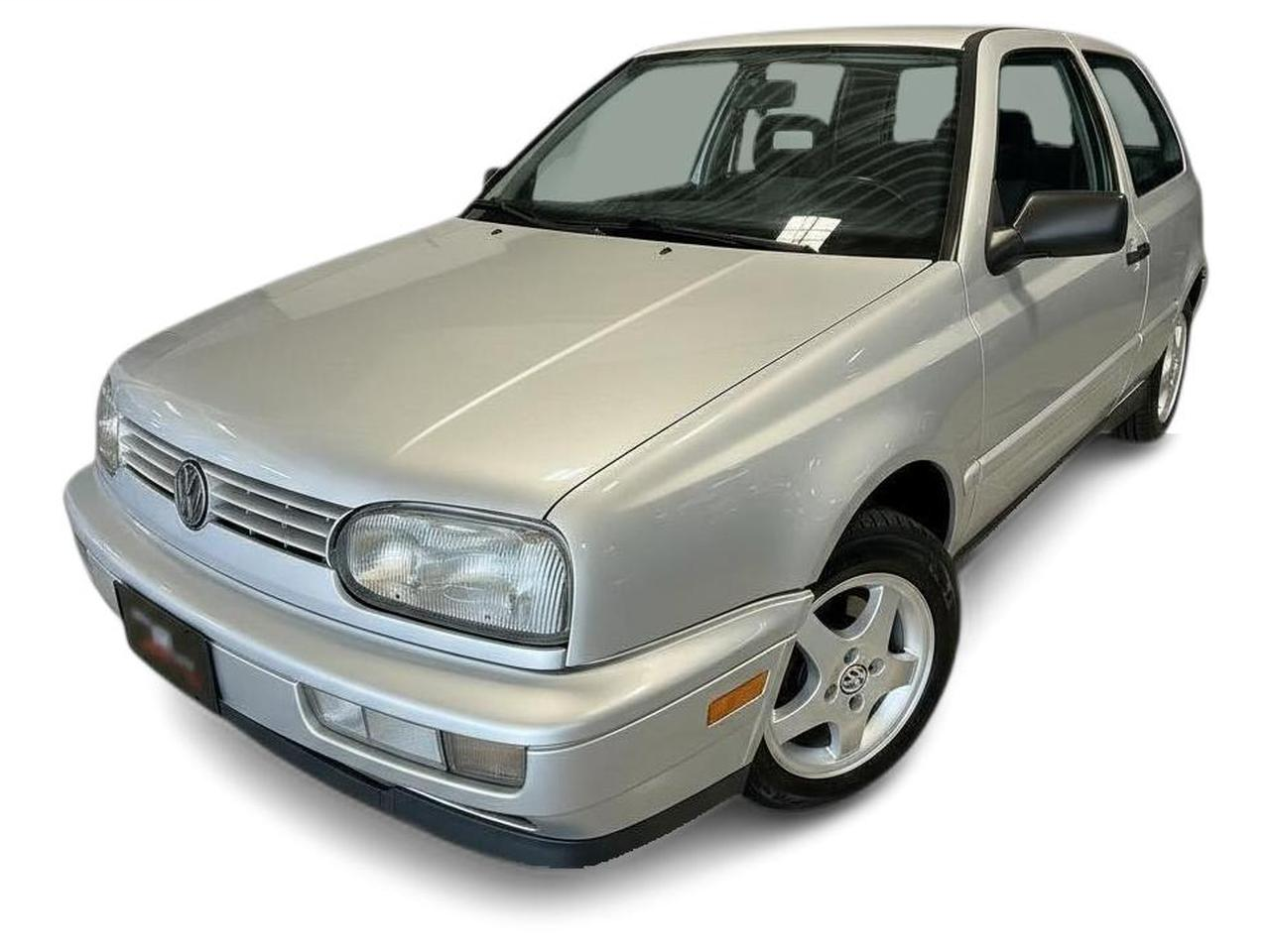
The 1997 Volkswagen GTI, part of the Mk3 generation (1993-1999), is a hot hatch celebrated for its blend of sporty performance and everyday usability. Available as a 3-door or 5-door hatchback, its key trim was simply the GTI. New pricing typically ranged from the mid-$10,000s to low $20,000s. Its popularity stems from its accessible performance, distinctive styling, and the enduring GTI badge, offering an engaging driving experience that appealed to enthusiasts seeking practicality.
The Good
The 1997 GTI offers spirited performance with its peppy engine and agile handling, providing an emotional thrill. Practically, it boasts decent fuel efficiency, a comfortable ride, a well-built interior, and strong value for a sporty hatchback.
The Bad
Potential owners of the 1997 GTI should be aware of common issues like electrical gremlins, aging suspension components, and the potential for rust, especially in certain climates. Maintenance history is crucial.
1997 Volkswagen GTI: Quick Overview
- Engine Options: The primary engine for the 1997 Volkswagen GTI was the 2.0-liter (1984cc) 8-valve inline-four cylinder engine. In some markets, a 16-valve version might have been available, offering slightly more power.
- Horsepower: The standard 8-valve 2.0L engine typically produced around 115 horsepower. The 16-valve variant, if equipped, could offer around 150 horsepower.
- Fuel Economy: EPA estimates for the 1997 GTI generally ranged from approximately 20-23 MPG in city driving and 27-30 MPG on the highway, depending on transmission and driving conditions.
- 0-60 Times: With the 8-valve engine, 0-60 MPH times were typically in the 9-10 second range. The 16-valve version could achieve this in closer to 8 seconds.
- Towing Capacity: The Volkswagen GTI is not designed for towing, and therefore, a towing capacity is not applicable or listed.
- Trim-Level Features (GTI): The GTI trim was positioned as the sportier variant of the Golf. Key features often included: sport seats with enhanced bolstering, unique GTI badging and exterior styling cues (e.g., specific wheels, body kit accents), a more performance-oriented suspension setup, power windows and locks, a premium sound system, and often ABS (Anti-lock Braking System) and airbags as standard or optional safety features. Air conditioning was usually standard.
1997 Volkswagen GTI Specifications
Vehicle Information
| Year | 1997 |
| Make | Volkswagen |
| Model | GTI |
| Trim | - |
| Style | - |
| Type | Hatchback |
| Category | Compact Car |
Manufacturing Details
| Made In | Mexico |
| Manufacturing City | PUEBLA |
Dimensions
| Doors | 2-Door |
| Curb Weight | 2800 pounds |
| Gross Vehicle Weight Rating | - |
| Overall Height | 56.20 inches |
| Overall Length | 160.40 inches |
| Overall Width | 66.70 inches |
| Wheelbase Length | 97.40 inches |
| Standard Seating | 5 |
Engine & Performance
| Engine | 2.8L V6 |
| Engine Size | 2.8L |
| Engine Cylinders | 6 |
| Transmission | 5-Speed Manual |
| Transmission Type | Manual |
| Transmission Speeds | 5-Speed |
| Drivetrain | Front-Wheel Drive |
Additional Features
| Anti-Brake System | 4-Wheel ABS |
| Steering Type | Rack & Pinion |
Pricing
| Manufacturer Suggested Retail Price (MSRP) | $19,710 |
| Invoice Price | $18,198 |
| Delivery Charges | - |
Vehicle History Report
Vehicle
Specifications
Specifications
Ownership
History
History
All History
Events
Events
NMVTIS Title
History Check
History Check
Salvage/Rebuilt
Check
Check
Accident
Check
Check
Theft
Check
Check
Open Lien
Check
Check
Past Sale
Listings
Listings
Safety
Recalls
Recalls
Odometer
Check
Check
Market Price
Analysis
Analysis
What Problems Does the 1997 Volkswagen GTI Have?
The 1997 Volkswagen GTI, like many vehicles of its era, has a few common areas that owners report issues with. Electrical problems are not uncommon, including faulty window regulators, issues with the central locking system, and intermittent warning lights on the dashboard. The ignition system, particularly coil packs and spark plug wires, can also be a source of trouble, leading to misfires and rough running. The cooling system is another area to watch; radiators can develop leaks, and the plastic coolant flange at the back of the engine is prone to cracking over time, leading to coolant loss.
Suspension components can wear out, especially if the car has high mileage or has been driven enthusiastically. This can manifest as clunking noises, poor handling, and uneven tire wear. The exhaust system can also be a point of concern, with rust and eventual breakage being common, especially in areas with harsh winters or high humidity. Some owners have reported premature failure of the clutch if the vehicle has been driven hard. While not specific to the 1997 model year, general Mk3 Golf/GTI concerns can include seized or leaking brake calipers and issues with the ABS sensors.
Recalls for this specific model year are relatively scarce by today's standards, but it's always advisable to check with Volkswagen or a reputable VIN decoder for any outstanding safety campaigns. Long-term reliability hinges heavily on consistent maintenance. Neglected maintenance, particularly of the timing belt (which needs periodic replacement), can lead to catastrophic engine damage.
Suspension components can wear out, especially if the car has high mileage or has been driven enthusiastically. This can manifest as clunking noises, poor handling, and uneven tire wear. The exhaust system can also be a point of concern, with rust and eventual breakage being common, especially in areas with harsh winters or high humidity. Some owners have reported premature failure of the clutch if the vehicle has been driven hard. While not specific to the 1997 model year, general Mk3 Golf/GTI concerns can include seized or leaking brake calipers and issues with the ABS sensors.
Recalls for this specific model year are relatively scarce by today's standards, but it's always advisable to check with Volkswagen or a reputable VIN decoder for any outstanding safety campaigns. Long-term reliability hinges heavily on consistent maintenance. Neglected maintenance, particularly of the timing belt (which needs periodic replacement), can lead to catastrophic engine damage.
How long will the 1997 Volkswagen GTI last?
Based on owner data and typical maintenance habits, a well-maintained 1997 Volkswagen GTI can reasonably achieve between 200,000 to 250,000 miles, and sometimes even more. The long-term durability is heavily influenced by how diligently its maintenance schedule has been followed. The 2.0-liter engine is generally robust if oil changes are regular and the timing belt is replaced at recommended intervals. However, as the car ages, components like suspension bushings, exhaust systems, and various seals will inevitably wear and require replacement. Electrical gremlins can also become more persistent with age, testing an owner's patience and mechanical aptitude.
What Technology & Safety Features are Included?
The 1997 Volkswagen GTI reflects the technology and safety standards of its era. Built-in tech was relatively basic by modern standards. The entertainment system typically consisted of an AM/FM radio with a cassette player. Some models might have offered an optional CD player. Power windows and locks were common features, enhancing convenience. Climate control was usually managed via manual knobs for heating and air conditioning.
Driver-assistance features were minimal. Anti-lock Braking System (ABS) was often available as an option or standard on higher trims, helping to prevent wheel lock-up during hard braking. Traction control was not a common feature on this model. The primary safety focus was on passive restraints.
Standard safety features typically included front airbags for the driver and front passenger. Seatbelt pre-tensioners were also incorporated to tighten the belts in a collision. The body structure itself was designed with crumple zones to absorb impact energy. For crash-test ratings, specific data for the 1997 model year can be scarce and may not be as comprehensive as modern tests. However, the Mk3 Golf platform generally performed adequately for its time, though it would not meet today's stringent safety standards. Organizations like the NHTSA (National Highway Traffic Safety Administration) and IIHS (Insurance Institute for Highway Safety) would have conducted tests, but detailed reports for this specific model year and trim might require deeper archival research. Generally, the GTI offered a reasonable safety package for the late 1990s.
Driver-assistance features were minimal. Anti-lock Braking System (ABS) was often available as an option or standard on higher trims, helping to prevent wheel lock-up during hard braking. Traction control was not a common feature on this model. The primary safety focus was on passive restraints.
Standard safety features typically included front airbags for the driver and front passenger. Seatbelt pre-tensioners were also incorporated to tighten the belts in a collision. The body structure itself was designed with crumple zones to absorb impact energy. For crash-test ratings, specific data for the 1997 model year can be scarce and may not be as comprehensive as modern tests. However, the Mk3 Golf platform generally performed adequately for its time, though it would not meet today's stringent safety standards. Organizations like the NHTSA (National Highway Traffic Safety Administration) and IIHS (Insurance Institute for Highway Safety) would have conducted tests, but detailed reports for this specific model year and trim might require deeper archival research. Generally, the GTI offered a reasonable safety package for the late 1990s.
What Colors Options are Available?
1997 Volkswagen GTI Prices and Market Value
When new, the 1997 Volkswagen GTI typically ranged from around $16,000 to $19,000, depending on options and market. As with most vehicles, the GTI experienced significant depreciation in its early years. However, its status as a beloved hot hatch has helped it maintain a certain level of value in the used market, especially for well-maintained examples. Currently, used prices can vary widely, from as low as $2,000 for models needing significant work to $5,000-$8,000 or even more for pristine, low-mileage, and original examples. Factors affecting resale value include overall condition, mileage, maintenance history, originality of parts, and the presence of desirable options. Models with the rarer 16-valve engine often command a premium.
1997 Volkswagen GTI Cost of Ownership
The 1997 Volkswagen GTI is generally considered economical to own, especially compared to contemporary sports cars. Insurance costs are typically moderate, falling in line with other compact hatchbacks. Fuel economy is decent, averaging around 25 MPG combined. Maintenance costs are reasonable, with common parts being readily available. However, specialized repairs or uncommon parts can increase costs. Long-term ownership requires attention to potential wear items like suspension and exhaust. Overall, with diligent maintenance and by addressing issues promptly, the GTI remains an affordable and enjoyable car to own.
1997 Volkswagen GTI Fuel Efficiency
Fuel Type
Gasoline
Fuel Capacity
14.50 gallons
City Mileage
19 miles/gallon
Highway Mileage
25 miles/gallon
1997 Volkswagen GTI Safety Rating
NHTSA
IIHS
1997 Volkswagen GTI Warranty
Basic
Original warranty
0 months / No data
Estimated remaining
Expired
Powertrain
Original warranty
0 months / No data
Estimated remaining
Expired
Rust
Original warranty
0 months / No data
Estimated remaining
Expired
1997 Volkswagen GTI Insurance
Insurance for a 1997 Volkswagen GTI is moderately priced, reflecting its status as a Hatchback with strong safety ratings and
reasonable repair costs.
reasonable repair costs.
How Does the 1997 Volkswagen GTI Compare to Other Hatchback?
The 1997 Volkswagen GTI competed in a segment filled with compelling hot hatches. Its primary rivals included the Honda Civic Si, Ford Focus SVT (though later), and the Mazda Protegé ES. In terms of performance, the GTI's 2.0L engine offered a good balance of power and torque for its class, though the Honda Civic Si often had a slight edge in outright acceleration and a more rev-happy engine. The GTI's handling was praised for its composed feel and willingness to turn, providing a driving experience that felt substantial and European, a contrast to some more nimble but less refined Japanese rivals.
Feature-wise, the GTI offered a more premium interior feel compared to many competitors, with better-quality materials and a solid build. However, it might have lagged behind some in terms of cutting-edge tech or standard equipment, relying more on its driving dynamics. Reliability is where the GTI can sometimes be a mixed bag when stacked against rivals. While the engine and transmission can be durable, the Mk3 platform is known for its electrical quirks and potential for wear-and-tear items to need replacement more frequently than, say, a Honda Civic of the same era. This can make the Civic Si a more reliable long-term proposition for buyers prioritizing minimal hassle.
Price-wise, the GTI was often positioned slightly higher than its direct competitors upon release, reflecting its European origins and perceived quality. Currently, in the used market, prices are competitive, but well-maintained GTIs can command similar or even higher prices than comparable Civics due to enthusiast demand.
Alternatives:
Feature-wise, the GTI offered a more premium interior feel compared to many competitors, with better-quality materials and a solid build. However, it might have lagged behind some in terms of cutting-edge tech or standard equipment, relying more on its driving dynamics. Reliability is where the GTI can sometimes be a mixed bag when stacked against rivals. While the engine and transmission can be durable, the Mk3 platform is known for its electrical quirks and potential for wear-and-tear items to need replacement more frequently than, say, a Honda Civic of the same era. This can make the Civic Si a more reliable long-term proposition for buyers prioritizing minimal hassle.
Price-wise, the GTI was often positioned slightly higher than its direct competitors upon release, reflecting its European origins and perceived quality. Currently, in the used market, prices are competitive, but well-maintained GTIs can command similar or even higher prices than comparable Civics due to enthusiast demand.
Alternatives:
- Honda Civic Si (e.g., 1999-2000): Offers superior reliability, a more potent engine, and often sharper handling, though perhaps a less mature interior.
- Mazda Protegé ES: A strong contender offering good value, decent performance, and respectable reliability, though generally less engaging to drive than the GTI.
- Ford Focus SVT (2002-2004): A later competitor that improved upon many aspects, offering stronger performance and more modern features, but is a generation newer.
Final Verdict: Is the 1997 Volkswagen GTI a Good Hatchback?
The 1997 Volkswagen GTI is ideal for driving enthusiasts who appreciate a balance of sporty performance, practical hatchback utility, and a touch of European refinement. It's perfect for younger drivers looking for an engaging first car (with appropriate caution), or for those seeking an affordable daily driver with character. It's worth buying, particularly on the used market, provided a thorough inspection is conducted. Look for examples with comprehensive maintenance records, especially proof of timely timing belt replacements and attention to the cooling system. Avoid vehicles with extensive modifications unless you are well-versed in performance tuning. The 16-valve version, if found in good condition, offers a more potent driving experience and is often more desirable among enthusiasts. Buying a well-maintained used GTI offers significant value and driving enjoyment for the money.

Simon A
Simon is a contributor to VinCheck, where he provides articles and reviews on various automotive topics. His work focuses on delivering accurate and up-to-date information about used cars, helping readers make informed decisions.