by VIN, Year, Make, Model by License Plate

1996 Pontiac Bonneville Overview, Reviews, Ratings & Specs

Rating: 0.00
Based on 0 Owner Reviews
Simon A | May 14, 2026
The 1996 Pontiac Bonneville, a large sedan produced by General Motors, offered a blend of performance and comfort.
Introduced in 1957 and ending its run in 2005, the Bonneville was a staple in Pontiac's lineup.
For 1996, it was available in SE and SSE trims, with optional supercharged engines.
It stood out with its aggressive styling and potent powertrain options, appealing to buyers seeking a more spirited driving experience in a full-size car.
The Good

The 1996 Bonneville offered a comfortable ride, robust V6 power, and distinctive styling that appealed to those wanting American muscle.
Its spacious interior provided practicality, while the available supercharged engine offered exhilarating performance.

The Bad

Potential buyers should be aware of common issues such as transmission problems, coolant leaks from the intake manifold, and electrical glitches.
Rust can also be a concern, especially around the wheel wells and rocker panels.
Regular maintenance is crucial.

1996 Pontiac Bonneville: Quick Overview

  • Engine Options:
    - 3.8L Series I V6 (Naturally Aspirated)
    - 3.8L Series II V6 (Supercharged)
  • Horsepower:
    - Naturally Aspirated: Approximately 205 hp @ 5,200 rpm
    - Supercharged: Approximately 240 hp @ 5,200 rpm
  • Fuel Economy (EPA Estimated MPG):
    - Naturally Aspirated: ~18 mpg city / 27 mpg highway
    - Supercharged: ~17 mpg city / 25 mpg highway
    (Note: Actual mileage may vary significantly based on driving conditions and maintenance.)
  • 0-60 Times:
    - Naturally Aspirated: Around 8.5 - 9.5 seconds
    - Supercharged: Around 7.0 - 7.5 seconds
    (Note: These are estimates and can vary.)
  • Towing Capacity:
    The 1996 Pontiac Bonneville was not typically equipped or marketed for significant towing. Standard towing capacity would be very limited, generally under 1,000 lbs for light trailer hauling if equipped with a proper hitch. It was primarily designed as a passenger car, not a truck or SUV.
  • Trim-Level Features:
    SE (Standard):
    • 3.8L Series I V6 engine
    • Front-wheel drive
    • 4-speed automatic transmission
    • Power windows, door locks, and mirrors
    • Air conditioning
    • AM/FM stereo with cassette player
    • Cruise control
    • Driver and passenger airbags
    • Anti-lock braking system (ABS)
    • Cloth seating
    • 15-inch wheels
  • SSE (Sport Sedan - Optional/Higher Trim):
    • Often included the 3.8L Series II Supercharged V6 engine (optional)
    • Sport suspension tuning
    • Leather seating (optional)
    • Power driver's seat
    • Upgraded audio system
    • Fog lights
    • 16-inch alloy wheels
    • Dual exhaust
    • Traction control (optional)
    • Sunroof (optional)

1996 Pontiac Bonneville Specifications

Vehicle Information
Year 1996
Make Pontiac
Model Bonneville
Trim -
Style -
Type Sedan
Category Large Car
Manufacturing Details
Made In United States
Manufacturing City WILMINGTON
Dimensions
Doors 4-Door
Curb Weight 3446 pounds
Gross Vehicle Weight Rating -
Overall Height -
Overall Length -
Overall Width -
Wheelbase Length -
Standard Seating -
Engine & Performance
Engine L36
Engine Size 3.8L
Engine Cylinders 6
Transmission -
Transmission Type Automatic
Transmission Speeds -
Drivetrain Front-Wheel Drive
Additional Features
Anti-Brake System -
Steering Type -
Pricing
Manufacturer Suggested Retail Price (MSRP) -
Invoice Price -
Delivery Charges -

Vehicle History Report

Vehicle
Specifications
Ownership
History
All History
Events
NMVTIS Title
History Check
Salvage/Rebuilt
Check
Accident
Check
Theft
Check
Open Lien
Check
Past Sale
Listings
Safety
Recalls
Odometer
Check
Market Price
Analysis

What Problems Does the 1996 Pontiac Bonneville Have?

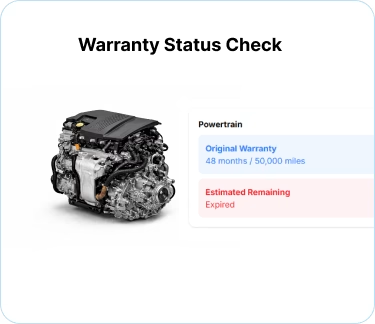
The 1996 Pontiac Bonneville, like many vehicles of its era, has some common issues that owners frequently report. A significant concern for this model year, and the GM W-body platform it rides on, is related to the 3.8L V6 engine, particularly the intake manifold gasket. This gasket can degrade over time, leading to coolant leaks into the engine valley, which can cause internal corrosion and potentially severe engine damage if not addressed promptly.

Another area of concern is the automatic transmission. Failures, particularly with the 4T60-E transmission, have been reported, often manifesting as slipping gears, delayed engagement, or a complete loss of drive. Regular fluid changes and maintenance can help prolong its life, but internal component wear is not uncommon.

Electrical issues are also a recurring theme. Problems with window regulators, door lock actuators, and dashboard warning lights (like the check engine light or ABS light) can be frustrating for owners. The instrument cluster itself can sometimes fail, leading to inoperative gauges.

Suspension and steering components can also wear out. Worn ball joints, tie rod ends, and struts can lead to clunking noises, imprecise steering, and a less stable ride.

Rust is a perennial concern for vehicles from the 1990s, and the Bonneville is no exception. Areas prone to rust include the wheel wells, rocker panels, and the subframes. Thorough inspection for rust is crucial when considering a used model.

While there were no widespread recalls specifically targeting major catastrophic failures for the 1996 model year, it's always advisable to check the National Highway Traffic Safety Administration (NHTSA) database for any specific recalls that may have been issued for safety-related defects.

In terms of long-term reliability, the Bonneville can be a dependable car if well-maintained. However, the potential for expensive repairs related to the engine, transmission, and electrical systems means that proactive maintenance and a thorough pre-purchase inspection are highly recommended.

How long will the 1996 Pontiac Bonneville last?

Based on owner data and typical maintenance, a 1996 Pontiac Bonneville, if properly cared for, can realistically achieve between 150,000 to 200,000 miles of service. Some well-maintained examples have even surpassed 250,000 miles.

The long-term durability is significantly influenced by how the vehicle has been maintained. Key weaknesses that can impact longevity include potential transmission issues and the aforementioned coolant leaks from the intake manifold gasket, which can lead to severe engine problems if neglected. Rust is also a significant factor that can compromise structural integrity over time, especially in colder climates.

However, the core powertrain, particularly the 3.8L V6 engine, is known for its robustness. With regular oil changes, coolant flushes, and attention to any developing leaks, it can last for many years. The chassis and body, despite rust concerns, are generally solid.



What Technology & Safety Features are Included?

The 1996 Pontiac Bonneville offered a reasonable suite of technology and safety features for its time, blending convenience with occupant protection.

Standard Tech and Entertainment:
Every 1996 Bonneville came equipped with a basic AM/FM stereo system with a cassette player. Power windows, power door locks, and power mirrors were also standard across most trims, adding to everyday convenience. Air conditioning was a given, and cruise control made highway driving more comfortable. A digital odometer and trip computer were also part of the standard instrumentation.

Optional Tech and Entertainment:
Buyers could opt for an upgraded CD player, which was a significant technological advancement in the mid-90s. Some models might have featured a premium sound system with more speakers for enhanced audio quality. A power sunroof was also a popular option, adding to the cabin's airy feel.

Driver-Assistance Features:
The primary driver-assistance feature available was the Anti-lock Braking System (ABS), standard on most models, which helped prevent wheel lock-up during hard braking situations, allowing for better steering control. Traction control was an available option on higher trims, particularly those with the supercharged engine, helping to manage wheel slip during acceleration on slippery surfaces.

Safety Features:
Standard safety equipment included driver and front passenger airbags. Seat belts were, of course, standard. The 1996 Bonneville was built on GM's W-body platform, which was designed with occupant safety in mind.

Crash-Test Ratings:
While specific 1996 model year crash test ratings can be hard to find in a unified format today, the general GM W-body platform of this era performed adequately in government crash tests for its time. For instance, earlier models of the W-body platform received good marks in frontal crash tests from the National Highway Traffic Safety Administration (NHTSA). Side-impact protection was evolving, and while not as advanced as today's standards, the Bonneville offered a substantial structure that provided a degree of protection. It's important to note that crash test standards and methodologies have significantly evolved since 1996.

What Colors Options are Available?

We’re working on this section!
In the meantime, feel free to explore the other sections for more content.

1996 Pontiac Bonneville Prices and Market Value

When new in 1996, the Pontiac Bonneville had an original MSRP that typically ranged from approximately $23,000 for a base SE model to upwards of $29,000-$30,000 for a well-equipped SSE or supercharged variant. Like most vehicles from this era, the Bonneville experienced significant depreciation in its first few years.

Today, the current used market prices for a 1996 Pontiac Bonneville are considerably lower, generally ranging from $1,500 to $4,000, depending heavily on condition, mileage, and trim level. A well-maintained, low-mileage supercharged SSE can fetch prices at the higher end of this spectrum. Factors affecting resale value include overall condition (body rust, interior wear, mechanical soundness), maintenance history, and the presence of desirable options like the supercharged engine or leather interior. These cars are now considered budget-friendly used vehicles, often appealing to buyers prioritizing affordability and V6 power over modern amenities.

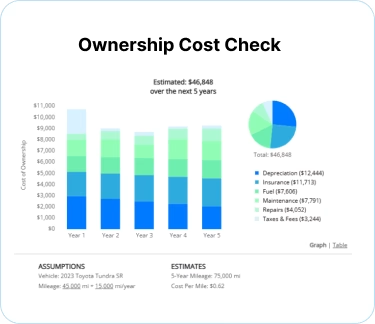
1996 Pontiac Bonneville Cost of Ownership

Owning a 1996 Pontiac Bonneville can be relatively economical, especially given its low current used market price. Insurance costs are typically modest due to its age and lower replacement value. Fuel costs, while not stellar at around 17-18 mpg combined, are manageable for a V6. Maintenance is where costs can vary; routine items like oil changes and tire rotations are standard. However, potential repairs for the transmission, intake manifold gaskets, and electrical components can be significant. Overall, if you find a well-maintained example and address issues promptly, it can be an economical choice for a comfortable V6 sedan, but unexpected repairs can increase the long-term cost.

1996 Pontiac Bonneville Fuel Efficiency

Fuel Type Gasoline
Fuel Capacity 18 gallons
City Mileage 17 miles/gallon
Highway Mileage 27 miles/gallon

1996 Pontiac Bonneville Safety Rating

NHTSA
Side Driver Rating Not Tested
Frontal Passenger Rating
Rollover Rating Not Tested
Side Rear Passenger Rating Not Tested
Frontal Driver Rating
Side Driver Rating Not Tested
Frontal Passenger Rating
Rollover Rating Not Tested
Side Rear Passenger Rating Not Tested
Frontal Driver Rating
IIHS
Moderate Overlap Front Test Results Not Tested

1996 Pontiac Bonneville Recalls & Defects

Electrical System:ignition:anti-Theft:control Module
Recall date 1995-10-23
Recall no. 95v204000
Source NHTSA
Summary These Vehicles Were Assembled With A Malfunction Alarm, Lighting and Locking (Mall) Module That CAN Contain A Damaged Capacitor. IF THE Capacitor IS Damaged, THE "key IN THE Ignition" Warning Chime and THE Driver Seat Belt Unbuckled Warning Chime and Indicator Lamp MAY NOT Work. This Does NOT Meet THE Requirements OF Fmvss NO. 114, "theft Protection" and Fmvss NO. 208, "occupant Crash Protection." IN Addition, Other Chime Reminder Functions, Interior Lighting Controls, and Power Door Locking Features ARE Also Affected.
Consequence Consequence OF Non-Compliance; THE Driver MAY NOT BE Aware That THE KEY WAS Left IN THE Ignition or That THE Safety Belt WAS NOT Buckled.
Remedy Dealers Will Inspect And, IF Required, Replace THE Mall Module.
Notes System: Electrical; Ignition; Anti-Theft; Fmvss NO. 114 and NO. 208.vehicle Description: Passenger Vehicles.note: Owners WHO Take Their Vehicles TO AN Authorized Dealer ON AN Agreed Upon Service Date and DO NOT Receive THE Free Remedy Within A Reasonable Time Should Contact Buick AT 1-800-521-7300; Oldsmobile AT 1-800-442-6537; or Pontiac AT 1-800-762-2737. Also Contact THE National Highway Traffic Safety Administration's Auto Safety Hotline AT 1-800-424-9393.
Fuel System, Gasoline:fuel Injection System
Recall date 1996-07-01
Recall no. 96v116000
Source NHTSA
Summary A Backfire During Engine Starting CAN Cause Breakage OF THE Upper Intake Manifold.
Consequence This Condition CAN Cause A No-Start Condition and Possibly AN Engine Compartment Fire.
Remedy Dealers Will Update THE Powertrain Control Module Programming. Until THE Campaign Repair IS Made, THE Vehicle Hood Should BE Shut Whenever Starting THE Vehicle TO Reduce THE Chance OF Personal Injury.
Notes Vehicle Description: Passenger Vehicles Equipped With 3.8l V6 Engine. Owner Notification: Owner Notifications Began During July 1996. Note: Owners WHO Take Their Vehicles TO AN Authorized Dealer ON AN Agreed Upon Service Date and DO NOT Receive THE Free Remedy Within A Reasonable Time Should Contact Buick AT 1-800-521-7300; Pontiac AT 1-800-762-2737; or Oldsmobile AT 1-800-442-6537. Also Contact THE National Highway Traffic Safety Administration's Auto Safety Hotline AT 1-800-424-9393.
Exterior Lighting
Recall date 2009-04-07
Recall no. 09e012000
Source NHTSA
Summary Sabersport IS Recalling 16,270 Combination Corner and Bumper Lamp Assemblies OF Various Part Numbers Sold FOR USE AS Aftermarket Equipment FOR Various Passenger Vehicles. These Headlamps Fail TO Conform TO THE Requirements OF Federal Motor Vehicle Safety Standard NO. 108, "lamps, Reflective Devices, and Associated Equipment." These Lamps DO NOT Contain THE Required Amber Side Reflectors.
Consequence Decreased Lighting Visibility MAY Result IN A Vehicle Crash.
Remedy Sabersport Will Notify Owners and Offer A Full Refund FOR THE Noncompliant Combination Lamps. THE Safety Recall Began ON MAY 11, 2009. Owners MAY Contact Sabersport AT 1-909-598-7589.
Notes This Recall Only Pertains TO Aftermarket Replacement Equipment and HAS NO Relation TO ANY Original Equipment Installed ON Vehicles Produced BY THE Vehicle Manufacturer.in Order TO Determine IF Your Aftermarket Lamp Assembly IS Affected BY This Noncompliance, Please Review THE List OF Model Numbers Provided TO US BY Sabersport.the List CAN BE Found Under "document Search" Located AT THE Bottom OF Your Screen.owners MAY Also Contact THE National Highway Traffic Safety Administration's Vehicle Safety Hotline AT 1-888-327-4236 (Tty 1-800-424-9153), or GO TO <A Href=http://Www.safercar.gov>http://www.safercar.gov</a> .

1996 Pontiac Bonneville Insurance

Insurance for a 1996 Pontiac Bonneville is moderately priced, reflecting its status as a Sedan with strong safety ratings and
reasonable repair costs.

How Does the 1996 Pontiac Bonneville Compare to Other Sedan?

In 1996, the Pontiac Bonneville competed in the large sedan segment against rivals like the Ford Crown Victoria/Grand Marquis, Chevrolet Lumina (its corporate sibling), Dodge Intrepid, and the Toyota Avalon.

Performance: The Bonneville, especially with the supercharged 3.8L V6, offered a distinct advantage in performance over many rivals. Its acceleration was notably strong, providing a more engaging driving experience than the often softer-tuned Crown Victoria or Avalon. The Chevrolet Lumina offered similar powertrain options but lacked the Bonneville's aggressive styling and potent supercharged option. The Dodge Intrepid offered a different approach with its 'cab-forward' design and available V6 engines, but the Bonneville's supercharged variant often outpaced it.

Features: For its time, the Bonneville offered a competitive feature set, including available leather interiors, premium sound systems, and power amenities. However, rivals like the Toyota Avalon were often lauded for their more refined interiors and higher levels of standard equipment. The Crown Victoria offered a more traditional, robust build with a strong emphasis on comfort and space.

Reliability: This is where the Bonneville often lagged behind its Japanese competitors like the Toyota Avalon, which generally held a reputation for superior long-term reliability. While the Bonneville's 3.8L V6 is durable, issues like transmission problems and coolant leaks were more prevalent than in the Avalon. The Crown Victoria, with its simpler V8 and robust chassis, was generally considered quite reliable, though also prone to its own set of issues.

Price: The Bonneville was competitively priced against its domestic rivals, often offering more power for the money than comparable Ford or Chevrolet models. It was generally more affordable than the premium-leaning Toyota Avalon.

Alternatives:
  • Similar Alternative: The Chevrolet Lumina (especially the Z34 trim) offered a similar large FWD sedan experience with V6 power, though typically less performance-oriented than the Bonneville. The Oldsmobile LSS, also on the W-body platform, offered a more luxurious take.
  • Better Alternative (Reliability): The Toyota Avalon is a strong contender if reliability is paramount. It offers comfort, a smooth ride, and excellent build quality, though at the cost of the Bonneville's sporty edge and V6 grunt.
  • Better Alternative (RWD/Robustness): The Ford Crown Victoria or Mercury Grand Marquis offer a rear-wheel-drive platform, a powerful V8 engine, and renowned durability, though with a less sporting feel and a more traditional, less aerodynamic design.

Final Verdict: Is the 1996 Pontiac Bonneville a Good Sedan?

The 1996 Pontiac Bonneville is ideal for buyers seeking a comfortable, spacious, and relatively powerful American sedan on a budget. It's particularly appealing to those who appreciate its distinctive styling and the exhilarating performance offered by the supercharged V6 engine.

Whether it's worth buying depends heavily on the individual car. Buying used is the only option, and careful inspection is paramount. Look for vehicles with documented maintenance, especially regarding coolant and transmission services. The SSE trim with the supercharged engine offers the most compelling performance package.

It's a good purchase for someone who prioritizes V6 power and a comfortable ride over cutting-edge technology or absolute long-term reliability. If you're mechanically inclined or have a trusted mechanic, the potential for affordable transportation with some spirit makes it a worthwhile consideration, provided you find a well-cared-for example.

1996 Pontiac Bonneville Owner Reviews

0.00
Consumer Rating, Based on 0 Consumer Reviews
Overall rating
Cancel
Thank You for Your Review!

We truly appreciate the time and effort you took to share your experience with us.

Uh oh!

Something went wrong, please try again later.

Author Image
Simon A

Simon is a contributor to VinCheck, where he provides articles and reviews on various automotive topics. His work focuses on delivering accurate and up-to-date information about used cars, helping readers make informed decisions.