by VIN, Year, Make, Model by License Plate

2023 Suzuki Hayabusa Overview, Reviews, Ratings & Specs

Rating: 0.00
Based on 0 Owner Reviews
Cathleen V | June 3, 2026
The 2023 Suzuki Hayabusa, often referred to as the 'Busa', is a legendary hyperbike that first debuted in 1999, immediately setting a new benchmark for speed and performance. This iconic sportbike has gone through significant redesigns, with the current generation representing a major evolution. It's a full fairing sportbike that has seen model years including 1999-2007, 2008-2021, and the current 2022-present generation. There is primarily one trim level for the Hayabusa, focusing on its singular, high-performance nature. The 2023 model typically starts around $19,000. Its popularity stems from its unparalleled acceleration, distinctive aerodynamic styling, and its status as a performance icon.
The Good

The 2023 Hayabusa excels in breathtaking acceleration and a thrilling, powerful ride that appeals to the emotions. Practically, its robust Suzuki engineering suggests strong reliability and a well-built machine. The refined aerodynamics offer a surprisingly stable platform for its speed, and its iconic design is a statement for enthusiasts.

The Bad

Potential buyers should be aware of the Hayabusa's significant power, which demands experienced riders. Its aggressive ergonomics, while refined, may not be ideal for extended touring for everyone. The price point is also substantial, and its specialized nature means fewer aftermarket customization options compared to some other sportbikes.

2023 Suzuki Hayabusa: Quick Overview

  • Engine: 1340cc liquid-cooled, 4-stroke, DOHC, 16-valve, inline-four
  • Engine Options: Only one primary engine configuration offered for the 2023 model year.
  • Horsepower: Approximately 188 hp (at the crank)
  • Torque: Approximately 110 lb-ft (at the crank)
  • Fuel Economy: Estimated around 35-40 mpg (highway), though this varies significantly with riding style. Official EPA estimates are not always readily available for such performance bikes.
  • 0-60 Times: Sub-3 seconds (often reported in the 2.5-2.8 second range depending on rider and conditions).
  • Top Speed: Electronically limited to 186 mph (300 km/h) in most markets, though historically it was capable of much higher speeds before voluntary manufacturer agreements.
  • Towing Capacity: Not applicable. The Hayabusa is a high-performance sportbike designed for solo rider operation and does not have provisions for towing.
  • Trim-Level Features: The 2023 Hayabusa is offered in a single, highly equipped trim. Key features include:
    • Suzuki Drive Mode Selector (SDMS): Allows riders to select from multiple power modes for different riding conditions and preferences.
    • Traction Control System (SRTS): 10-mode system that can be adjusted or turned off.
    • Anti-lock Braking System (ABS): Standard front and rear.
    • Motion Track Anti-lock Brake System: ABS that also factors in lean angle.
    • Wheelie Control System: Three modes plus off.
    • Launch Control System: Three modes.
    • Engine Brake Control: Three modes plus off.
    • Cruise Control: Integrated into the rider aids.
    • Bi-directional Quick Shift System: Allows clutchless upshifts and downshifts.
    • LED Lighting: Headlights, taillights, and turn signals.
    • Full-Color TFT LCD Instrument Cluster: Displays a wealth of information and allows access to rider aid settings.
    • Aerodynamic Bodywork: Distinctive and functional design to improve stability at high speeds.
    • Brembo Stylema Monobloc Calipers: For superior braking performance.
    • Showa BFF Front Fork and Showa BFRC lite Rear Shock: Fully adjustable suspension for optimal handling.
    • Slipper Clutch: Reduces stress on the drivetrain during hard downshifts.
    • USB Power Outlet: Located in the tail section for charging devices.

2023 Suzuki Hayabusa Specifications

Vehicle Information
Year 2023
Make Suzuki
Model Hayabusa
Trim -
Style -
Type Motorcycle
Category Motorcycle
Manufacturing Details
Made In Japan
Manufacturing City HAMAMATSU
Dimensions
Doors -
Curb Weight -
Gross Vehicle Weight Rating -
Overall Height -
Overall Length -
Overall Width -
Wheelbase Length -
Standard Seating -
Engine & Performance
Engine DXA1
Engine Size 1340L
Engine Cylinders 4
Transmission -
Transmission Type -
Transmission Speeds -
Drivetrain -
Additional Features
Anti-Brake System -
Steering Type -
Pricing
Manufacturer Suggested Retail Price (MSRP) -
Invoice Price -
Delivery Charges -

Vehicle History Report

Vehicle
Specifications
Ownership
History
All History
Events
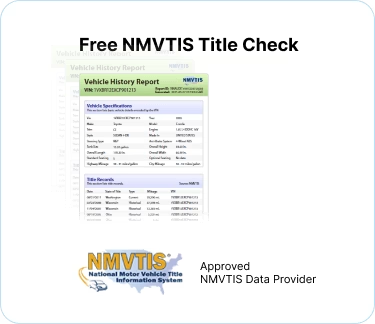
NMVTIS Title
History Check
Salvage/Rebuilt
Check
Accident
Check
Theft
Check
Open Lien
Check
Past Sale
Listings
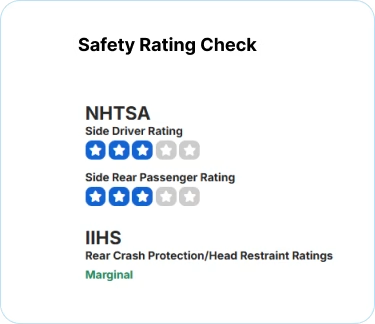
Safety
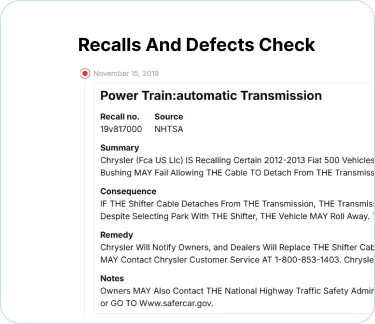
Recalls
Odometer
Check
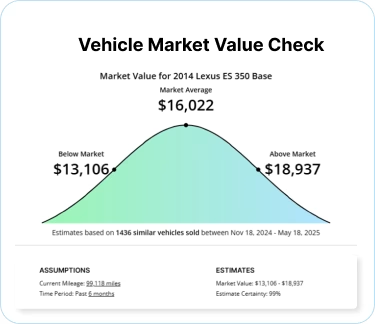
Market Price
Analysis

What Problems Does the 2023 Suzuki Hayabusa Have?

The 2023 Suzuki Hayabusa, being part of a generation that has been refined over the past few years, generally boasts excellent long-term reliability, a hallmark of Suzuki engineering. However, like any high-performance machine, there are nuances to consider. Early models of the previous generation (pre-2022) sometimes saw reports of premature clutch wear if ridden aggressively without proper technique, but this is less common with the more robust clutch components in the current generation. Some owners have reported minor electrical gremlins or sensor issues, particularly with the advanced rider aids, though these are typically resolved with software updates or minor component replacements. Fuel pump issues have been occasionally noted across various Suzuki models over the years, but widespread or consistent problems with the Hayabusa's fuel system are not frequently reported for the 2023 model. One aspect to watch out for, particularly with any used Hayabusa, is the maintenance history. Due to its performance capabilities, improper maintenance or abuse can lead to accelerated wear on components like the drivetrain, brakes, and suspension. For the 2023 model year specifically, there haven't been widespread, systemic issues reported that would indicate a significant reliability concern. Suzuki generally has a good track record for minimizing recalls on their flagship models after initial rollout. It's always prudent to check official recall databases for any specific notices pertaining to a particular VIN. The longevity of a Hayabusa, like any motorcycle, is heavily dependent on regular and proper maintenance. Owners who adhere to Suzuki's service schedule, use high-quality fluids, and ride within the machine's limits can expect hundreds of thousands of miles of service. The engine is robust, and the chassis is well-built. Weaknesses are more often related to rider input and maintenance rather than inherent design flaws in the current generation.

How long will the 2023 Suzuki Hayabusa last?

Based on owner data and typical maintenance habits for high-performance motorcycles, a well-maintained 2023 Suzuki Hayabusa can realistically achieve an average of 150,000 to 200,000 miles or more over its service life. Many owners treat the Hayabusa as a cherished performance machine, ensuring regular oil changes, chain maintenance, and timely replacement of wear items like tires and brake pads. The robust inline-four engine is known for its durability. Long-term weaknesses are not inherent to the design but can arise from aggressive riding styles that place extra stress on the drivetrain and clutch, or from neglected maintenance. However, compared to many sportbikes, the Hayabusa's more relaxed ergonomics for a hyperbike can also mean it's used for longer rides, accumulating mileage steadily without excessive strain. The build quality suggests strong resilience over time.

What Technology & Safety Features are Included?

The 2023 Suzuki Hayabusa is equipped with a comprehensive suite of advanced technology and rider-assistance systems designed to enhance safety, control, and rider experience. While it doesn't feature 'entertainment' in the car sense, its tech focuses on performance and safety.

Driver-Assistance Features: The Hayabusa boasts the Suzuki Intelligent Ride System (SIRS), which incorporates several electronic aids:
  • Suzuki Drive Mode Selector (SDMS): Offers multiple pre-set and customizable riding modes to adjust throttle response, power delivery, and traction control.
  • Traction Control System (SRTS): A 10-mode system that can be adjusted on the fly to suit different conditions and preferences, with mode 1 being the least intrusive and mode 10 the most.
  • Wheelie Control System: Features three modes plus an off setting to manage front wheel lift during acceleration.
  • Launch Control System: Three modes to optimize acceleration from a standstill, managing engine output for the best possible launch.
  • Engine Brake Control: Three modes and an off setting to manage engine braking characteristics during deceleration.
  • Cruise Control: Integrated system for maintaining speed on highways.
  • Bi-directional Quick Shift System: Allows for seamless upshifts and downshifts without the need for the clutch lever, enhancing performance and rider comfort.
  • Motion Track Traction Control System (MT-TCS): Integrates lean angle sensor data to apply traction control more precisely.
  • Motion Track Anti-lock Brake System (MT-ABS): Also incorporates lean angle data to optimize braking performance during cornering.
  • Cornering ABS: Ensures more stable braking when leaning.
Safety Features:
  • Standard ABS (Anti-lock Braking System)
  • LED headlights, taillights, and turn signals for improved visibility.
  • Strong Brembo brakes for powerful and reliable stopping.
Built-in Tech:
  • A full-color TFT LCD instrument cluster serves as the central hub for all rider information and settings. It provides clear display of speed, RPM, gear position, selected rider aids, and more.
  • A USB power outlet is located under the tail section for convenient charging of devices.
Optional Features: Suzuki typically offers official accessory packages which can include items like aesthetic enhancements, comfort upgrades (like different seat options), and sometimes performance-oriented parts from their own range or approved third parties. However, advanced tech features like radar-assisted cruise control or blind-spot monitoring are not standard or typically available as factory options.

Crash-Test Ratings: Motorcycles like the Hayabusa are not subjected to formal crash-test ratings in the same way cars are by organizations like NHTSA or Euro NCAP. Safety is assessed through the performance of its integrated safety systems, braking capabilities, and stability characteristics.

What Colors Options are Available?

We’re working on this section!
In the meantime, feel free to explore the other sections for more content.

2023 Suzuki Hayabusa Prices and Market Value

The 2023 Suzuki Hayabusa had an original MSRP typically starting around $19,000 USD.

Currently, the used market for the 2023 Hayabusa is still somewhat limited as the model is relatively new. However, examples with low mileage are likely to be found in the $17,000 to $19,000 range, depending on condition, color, and any aftermarket modifications.

Depreciation on the Hayabusa is generally moderate, especially compared to some other sportbikes. Its status as an iconic, limited-production (in terms of its unique position) hyperbike means it holds its value relatively well. Factors affecting resale value include:
  • Mileage: Lower mileage commands higher prices.
  • Condition: Excellent cosmetic and mechanical condition is crucial.
  • Maintenance History: A well-documented service record increases value.
  • Aftermarket Modifications: While some tasteful upgrades can add value, extensive or poorly executed modifications can detract from it. OEM parts are often preferred.
  • Color: Certain color schemes might be more desirable to specific buyers.
  • Demand: As a performance icon, demand can fluctuate but remains consistently strong among enthusiasts.

2023 Suzuki Hayabusa Cost of Ownership

Owning a 2023 Suzuki Hayabusa is generally considered costly, not due to poor reliability, but the nature of a high-performance machine. Insurance premiums can be substantial due to its power, potential for high-speed incidents, and replacement cost. Fuel economy, while better than previous generations, will still be higher than a standard commuter bike, especially when ridden hard. Maintenance costs are typical for a premium motorcycle, with scheduled services requiring specialized knowledge and parts. Repairs, especially for major components or if involved in an accident, can be expensive due to the specialized nature and cost of parts. Overall, the Hayabusa is a costly motorcycle to own and operate, appealing to enthusiasts who prioritize performance and prestige over economy.

2023 Suzuki Hayabusa Fuel Efficiency

Fuel Type Gasoline
Fuel Capacity -
City Mileage -
Highway Mileage -

2023 Suzuki Hayabusa Insurance

Insurance for a 2023 Suzuki Hayabusa is moderately priced, reflecting its status as a Motorcycle with strong safety ratings and
reasonable repair costs.

How Does the 2023 Suzuki Hayabusa Compare to Other Motorcycle?

The 2023 Suzuki Hayabusa occupies a unique niche as a hyperbike, often standing somewhat alone due to its specific blend of extreme speed, outright power, and touring capability. However, it can be compared to other top-tier sportbikes and hypersport motorcycles that offer exceptional performance and technology.

Key Rivals & Comparison:

Kawasaki Ninja H2 / H2R: The H2 offers similar extreme performance with its supercharged engine, pushing the boundaries of acceleration and top speed. The H2R is even more extreme and track-focused. The H2 is generally more technologically advanced with features like the supercharger. In terms of reliability, both are generally good, but the Hayabusa might have a slight edge in perceived long-term robustness due to its non-supercharged engine. Price-wise, the H2 is often in a similar or higher bracket than the Hayabusa.

BMW S 1000 RR: This is a leading liter-class sportbike that offers phenomenal performance, handling, and a plethora of electronic rider aids. While not quite reaching the Hayabusa's outright top-end speed, the S 1000 RR excels in track-day agility and overall sportbike prowess. It offers comparable or superior technological features in terms of advanced electronics. Reliability is excellent. The S 1000 RR is typically priced similarly to the Hayabusa.


Ducati Panigale V4 / V4S: Ducati's flagship sportbike offers breathtaking performance, exquisite Italian engineering, and advanced electronics. Its V4 engine delivers immense power and a unique character. It is generally considered more of a pure sportbike than the Hayabusa, with less emphasis on aerodynamic stability at extreme road speeds. Price is typically higher than the Hayabusa. Reliability is good, but historically, Ducati maintenance can be more involved and costly.

Features: The Hayabusa's strength lies in its balance of power, stability, and a comprehensive, albeit focused, suite of rider aids. While superbikes like the S 1000 RR or Panigale V4 might offer more intricate electronic packages for track use, the Hayabusa's SIRS is very effective for road riding at speed. The Kawasaki H2 has the unique appeal of its supercharger technology.

Reliability: Suzuki has a long-standing reputation for building durable and reliable motorcycles, and the Hayabusa is a prime example. While all high-performance bikes require diligent maintenance, the Hayabusa is generally considered exceptionally robust.

Price: The Hayabusa sits at a premium price point, but often offers more outright displacement and a unique blend of performance that can represent good value for those seeking its specific capabilities. Rivals like the H2 can be more expensive, and some superbikes are comparable.

Recommendations:
* For ultimate straight-line speed and stability: The Kawasaki Ninja H2 is a comparable alternative, offering similar hyperbike thrills with supercharger tech. The H2R is for track use only.
* For a more track-focused sportbike experience: The BMW S 1000 RR or Ducati Panigale V4 are excellent choices, offering sharper handling and advanced electronics tailored for spirited riding and track days.
* If value and robust engineering are paramount: The 2023 Suzuki Hayabusa remains a standout, offering an unparalleled combination of speed, comfort for its class, and proven Suzuki reliability at a competitive price within the hyperbike segment.

Final Verdict: Is the 2023 Suzuki Hayabusa a Good Motorcycle?

The 2023 Suzuki Hayabusa is ideal for experienced riders who crave immense power, blistering acceleration, and the unique prestige of owning a hyperbike icon. It appeals to those who appreciate its refined aerodynamics for stability at high speeds and potentially for longer-distance sport touring, albeit with a sportbike posture.

It is absolutely worth buying for the right rider. Its worth is amplified by its blend of cutting-edge technology, legendary performance, and Suzuki's reputation for build quality.

Conditions for purchase:
* New vs. Used: Buying new offers peace of mind with a full warranty and the latest spec. However, a lightly used Hayabusa from recent model years can offer significant savings, making it a more accessible entry into this exclusive machine.
* Trim: As there is primarily one high-spec trim, the decision is less about trim levels and more about condition and available color options.
* Rider Skill: This bike demands respect and a high level of riding skill. It is not a beginner's motorcycle.

For those who understand its capabilities and respect its power, the Hayabusa is a magnificent, capable, and remarkably durable machine that offers an unparalleled riding experience.

2023 Suzuki Hayabusa Owner Reviews

0.00
Consumer Rating, Based on 0 Consumer Reviews
Overall rating
Cancel
Thank You for Your Review!

We truly appreciate the time and effort you took to share your experience with us.

Uh oh!

Something went wrong, please try again later.

Author Image
Cathleen V

Cathleen is an exceptional freelance writer covering hot topics in the automotive world from a gearhead's perspective. Her articles delve into various aspects of automotive technology and history, offering readers detailed insights into engine performance, reliability, and maintenance. Through her engaging and informative writing, Cathleen provides valuable information to automotive enthusiasts and consumers alike, helping them make informed decisions about vehicle maintenance and purchases.