by VIN, Year, Make, Model by License Plate

1999 Ford E-350 Overview, Reviews, Ratings & Specs

Rating: 0.00
Based on 0 Owner Reviews â–
Drew B | September 25, 2025
The 1999 Ford E-350 is a full-size van, part of the Econoline/E-Series line that's been a staple for cargo and passenger hauling for decades. It's available in cargo van, passenger van, and cutaway chassis configurations. Model years for this generation span from the early 90s to the mid-2010s. Key trims include the base model, XL, and XLT, with varying levels of features. Pricing ranged from around $20,000 to $30,000 when new. Its versatility and ruggedness make it popular for businesses and large families.
The Good

The 1999 Ford E-350 boasts robust performance thanks to its powerful engine options, offering ample towing and hauling capability. Its simple, durable design contributes to its reliability, making it a workhorse. While not luxurious, it offers decent comfort for passengers, especially in well-maintained examples. For practical buyers, it's a value proposition due to its utility and longevity. Emotionally, it evokes a sense of dependability and capability.

The Bad

The 1999 Ford E-350 can suffer from rust, particularly in areas with road salt. Suspension components can wear down over time due to the vehicle's weight and usage. Fuel economy is generally poor. Also, check for transmission issues, a common problem in older vans. Inspect the brakes and ensure regular maintenance has been performed.

1999 Ford E-350: Quick Overview

  • Engine Options:
    • 4.9L Inline-6 (base engine): Often found in earlier E-Series models but may be less common in the 1999 E-350.
    • 5.4L Triton V8: A popular choice, offering a good balance of power and reliability.
    • 6.8L Triton V10: The most powerful option, providing substantial towing capacity.
    • 7.3L Power Stroke Turbo Diesel V8: Highly desirable for its durability and torque, but can be more expensive to maintain.
  • Horsepower:
    • 4.9L I6: Approximately 145-150 hp (if equipped).
    • 5.4L V8: Approximately 235-255 hp.
    • 6.8L V10: Approximately 265-310 hp.
    • 7.3L Diesel V8: Approximately 210-275 hp (depending on the year and tuning).
  • Fuel Economy:
    • Expect around 10-14 MPG city and 13-17 MPG highway, depending on the engine, drivetrain, and load. Diesel models often achieve slightly better highway fuel economy.
  • 0-60 Times:
    • Not a primary focus for this vehicle. Expect times in the 10-14 second range, varying significantly based on engine and load.
  • Towing Capacity:
    • Varies greatly based on configuration. Can range from 5,000 lbs to over 10,000 lbs with the V10 or diesel engine and proper towing equipment.
  • Trim-Level Features:
    • Base: Typically includes basic features like vinyl seats, AM/FM radio, and manual windows/locks.
    • XL: Adds features like cloth seats, carpeting, and sometimes upgraded audio.
    • XLT: Offers more comfort and convenience features, such as power windows/locks, cruise control, and upgraded interior trim.
    • Optional features across trims included air conditioning, upgraded audio systems, and various seating configurations.

1999 Ford E-350 Specifications

Vehicle Information
Year 1999
Make Ford
Model E-350
Trim -
Style -
Type Van
Category Cargo Van
Manufacturing Details
Made In United States
Manufacturing City LORAIN
Dimensions
Doors 3-Door
Curb Weight 5485 pounds
Gross Vehicle Weight Rating 9400 pounds
Overall Height 84.10 inches
Overall Length 231.90 inches
Overall Width 79.30 inches
Wheelbase Length 138.00 inches
Standard Seating 2
Engine & Performance
Engine 5.4L V8
Engine Size 5.4L
Engine Cylinders 8
Transmission 4-Speed Automatic
Transmission Type Automatic
Transmission Speeds 4-Speed
Drivetrain Rear-Wheel Drive
Additional Features
Anti-Brake System 4-Wheel ABS
Steering Type Recirculating
Pricing
Manufacturer Suggested Retail Price (MSRP) $23,750
Invoice Price $20,678
Delivery Charges -

Vehicle History Report

Vehicle
Specifications
Ownership
History
All History
Events
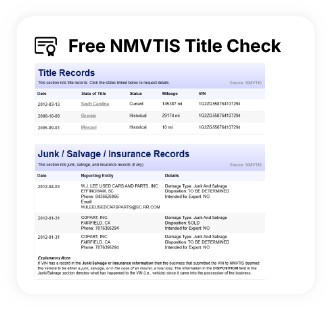
NMVTIS Title
History Check
Salvage/Rebuilt
Check
Accident
Check
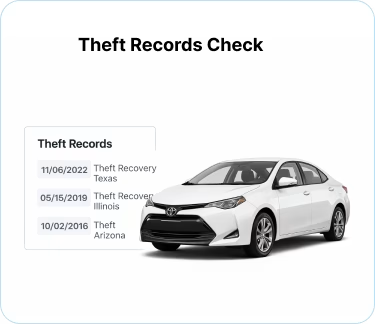
Theft
Check
Open Lien
Check
Past Sale
Listings
Safety
Recalls
Odometer
Check
Market Price
Analysis

What Problems Does the 1999 Ford E-350 Have?

The 1999 Ford E-350, while generally reliable, has some frequently reported problems. Rust is a major concern, especially in areas with salted roads. The undercarriage, body panels (particularly around the wheel wells and door seams), and brake lines are prone to corrosion. Transmission issues, including slipping or rough shifting, are also common, particularly in higher-mileage vehicles. The 4R100 transmission, often paired with the V8 and V10 engines, is known to require servicing or rebuilding over time.

Other potential issues include problems with the fuel pump, ignition system, and sensors. The ball joints, tie rod ends, and other suspension components can wear out, leading to steering and handling problems. Brake system issues, such as premature wear or leaks, should also be checked. The 7.3L Power Stroke diesel, while durable, can experience injector problems and issues with the glow plug system. Oil leaks are also common as the engine ages.

Recalls for the 1999 E-350 have addressed issues such as faulty speed control deactivation switches that could lead to fires, and potential problems with the fuel tank straps. Check the NHTSA website for a complete list of recalls. Long-term reliability depends heavily on maintenance. Neglecting fluid changes, ignoring warning lights, or postponing repairs can significantly shorten the vehicle's lifespan.

How long will the 1999 Ford E-350 last?

A well-maintained 1999 Ford E-350 can easily exceed 200,000 miles, and some owners report reaching 300,000 or even 400,000 miles with proper care. The lifespan greatly depends on usage (commercial vs. personal), climate, and adherence to recommended maintenance schedules. Regular oil changes, transmission servicing, and cooling system flushes are crucial. Long-term weaknesses include rust, suspension wear, and potential transmission failure. Diesel engines, while durable, require specialized maintenance. Ignoring these issues can lead to costly repairs and significantly reduce the vehicle's lifespan.

What Technology & Safety Features are Included?

The 1999 Ford E-350's built-in tech is relatively basic by today's standards. Entertainment features typically consisted of an AM/FM radio, and possibly a cassette player or CD player as optional upgrades. Higher trim levels might have included premium sound systems. Driver-assistance features were minimal, generally limited to power steering and power brakes. Cruise control was available as an option on some trims. Safety features included standard front airbags and three-point seatbelts for front occupants. ABS (anti-lock braking system) was available as an option.

Optional features varied depending on the trim level and included items such as power windows, power locks, air conditioning (front and rear), upgraded interior trim, and different seating configurations. Some models could be equipped with towing packages that included heavier-duty suspension components and trailer wiring.

Crash test ratings for the 1999 Ford E-350 from the NHTSA (National Highway Traffic Safety Administration) can be found through online resources. However, it's important to note that safety standards and testing procedures have evolved significantly since 1999, so comparing these ratings to modern vehicles isn't directly comparable. The focus was more on occupant protection in a frontal impact. Side impact protection was limited compared to modern vehicles with side airbags and reinforced structures.

What Colors Options are Available?

Exterior Colors
Oxford White
Dark Toreador Red Metallic
Silver Metallic
Dark Blue Metallic
Interior Colors
Medium Graphite

1999 Ford E-350 Prices and Market Value

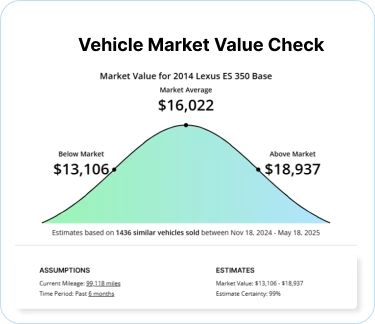
The 1999 Ford E-350 had a starting MSRP ranging from approximately $20,000 to $30,000, depending on the trim level and options. Current used market prices typically range from $3,000 to $10,000+, depending on condition, mileage, engine type, and configuration. Depreciation has been significant due to age, but well-maintained examples, especially those with the 7.3L diesel engine, hold their value better. Factors affecting resale value include the engine type (diesel models are more desirable), overall condition (rust-free is highly valued), mileage, maintenance history, and whether it's a cargo or passenger configuration. Conversion vans often command a higher price.

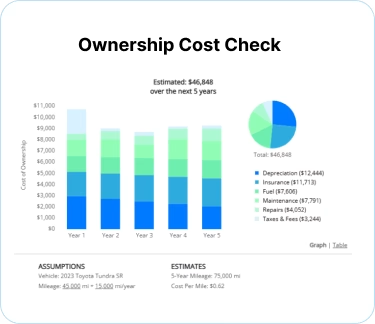
1999 Ford E-350 Cost of Ownership

The 1999 Ford E-350 is generally not considered economical to own. Fuel costs are high due to poor MPG. Insurance costs can vary depending on usage (personal or commercial) and driving record. Maintenance costs are moderate, but repairs can be expensive, especially for transmission and engine issues. Long-term ownership costs are influenced heavily by the vehicle's condition and maintenance history. Neglecting repairs can lead to a cascade of problems and increased expenses. Diesel models may have higher maintenance costs but potentially longer engine life.

1999 Ford E-350 Fuel Efficiency

Fuel Type Gasoline
Fuel Capacity 35.00 gallons
City Mileage 13 miles/gallon
Highway Mileage 17 miles/gallon

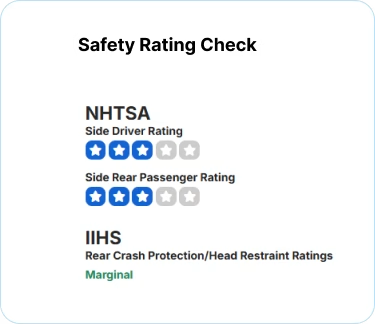
1999 Ford E-350 Safety Rating

NHTSA
Side Driver Rating Not Tested
Frontal Passenger Rating Not Tested
Rollover Rating Not Tested
Side Rear Passenger Rating Not Tested
Frontal Driver Rating Not Tested
IIHS
Moderate Overlap Front Test Results Not Tested

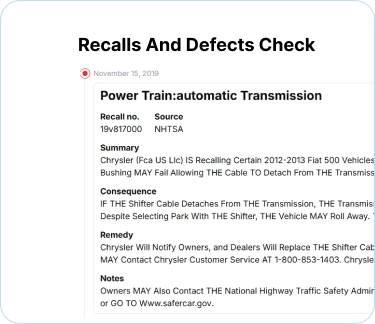
1999 Ford E-350 Recalls & Defects

Power Train:manual Transmission
Recall date 1998-10-14
Recall no. 98v257000
Source NHTSA
Summary Vehicle Description: Pickup Trucks Built With Single Rear Wheels and Equipped With 3.55:1 and 3.73:1 Axle Ratio. These Vehicles Were Built With Incorrect Speedometer Driven Gears, Resulting IN A Lower Speedometer Reading Than THE Actual Vehicle Speed Being Driven.
Consequence This CAN Result IN THE Vehicle Being Driven AT AN Unsafe or Illegal Speed Should THE Driver NOT Realize That HIS Vehicle Road Speed IS Greater Than THE Speedometer Indication.
Remedy Dealers Will Install THE Correct Speedometer Gear.
Notes Owner Notification Began February 26, 1999. Owners WHO Take Their Vehicles TO AN Authorized Dealer ON AN Agreed Upon Service Date and DO NOT Receive THE Free Remedy Within A Reasonable Time Should Contact Ford AT 1-800-392-3673.also Contact THE National Highway Traffic Safety Administration's Auto Safety Hotline AT 1-888-dash-2-dot (1-888-327-4236).
Latches/Locks/Linkages:doors:latch
Recall date 1999-03-15
Recall no. 99v046000
Source NHTSA
Summary Vehicle Description: Utility Vans Equipped With THE "60/40" Hinged Side Cargo Doors. THE Strikers FOR THE 60/40 Door Single Latch System Were Found TO Contain Stress Cracks AT THE Striker Wire Lower Stake Joint. Strikers With Stress Cracks MAY NOT Meet THE Requirements OF Fmvss NO. 206, "door Locks and Door Retention Components."
Consequence IN THE Event OF A Crash, THE Door Strikers MAY NOT Hold THE Door, Increasing THE Risk OF Personal Injury or Property Damage.
Remedy Dealers Will Replace THE Door Striker.
Notes Owner Notification Began April 7, 1999.owners WHO Take Their Vehicles TO AN Authorized Dealer ON AN Agreed Upon Service Date and DO NOT Receive THE Free Remedy Within A Reasonable Time Should Contact Ford AT 1-800-392-3673.also Contact THE National Highway Traffic Safety Administration's Auto Safety Hotline AT 1-888-dash-2-dot (1-888-327-4236).
Equipment:other:labels
Recall date 2000-09-21
Recall no. 00v284000
Source NHTSA
Summary Vehicle Description: Bi-Fuel CNG Pickup Trucks and Bi-Fuel CNG Vans, Modified BY CFI Control Systems, Inc., Fail TO Conform TO THE Requirements OF Fmvss NO. 303, "fuel System Integrity OF Compressed Natural GAS Vehicles." THE Label Affixed TO THE Fuel Filler Door BY THE Vehicle Modifier Contains THE Inspection Date and Expiration Date OF THE CNG Tank. However, IT Does NOT Contain THE Statement "see Instructions ON THE Fuel Container FOR Inspection and Service Life."
Consequence These Vehicles DO NOT Comply With THE Requirements.
Remedy Owners Will BE Provided A Label With THE Required Statement, Along With Instructions FOR Affixing THE Label AT THE Fuel Filler Door. Owner Notification Began November 2, 2000. Owners WHO Take Their Vehicles TO AN Authorized Dealer ON AN Agreed Upon Service Date and DO NOT Receive THE Free Remedy Within A Reasonable Time Should Contact Ford AT 1-800-392-3673.
Notes Also Contact THE National Highway Traffic Safety Administration's Auto Safety Hotline AT 1-888-Dash-2-dot (1-888-327-4236).
Wheels:lugs/Nuts/Bolts/studs
Recall date 2000-04-19
Recall no. 00v115000
Source NHTSA
Summary Vehicle Description: Cutaways and Stripped Chassis With Single Rear Wheels. THE LUG Nuts CAN Potentially Bottom OUT ON A Shoulder ON THE Studs.
Consequence IF This Occurs, There CAN BE AN Inadequate Clamp Load TO Attach THE Wheel TO THE Axle, Resulting IN Noise, Damage TO THE Wheel and Hub, or IN Extreme Cases, Loss OF A Rear Wheel While THE Vehicle IS Being Driven.
Remedy Dealers Will Replace THE Rear Wheel Attaching Studs.
Notes Owner Notification Began MAY 15, 2000. Owners WHO Take Their Vehicles TO AN Authorized Dealer ON AN Agreed Upon Service Date and DO NOT Receive THE Free Remedy Within A Reasonable Time Should Contact Ford AT 1-800-392-3673.also Contact THE National Highway Traffic Safety Administration's Auto Safety Hotline AT 1-888-dash-2-dot (1-888-327-4236).
Fuel System, Gasoline:storage:tank Assembly
Recall date 2001-04-05
Recall no. 01v114000
Source NHTSA
Summary Vehicle Description: ON Certain Vans With Ambulance Prep Packages or Other Severe-Duty Applications Involving Operation AT or Near THE Gross Vehicle Weight With Frequent Twisting OF THE Vehicle Body, Such AS Off-Road, Rough Road or Speed Bump Events, THE 35 Gallon Mid-ship Fuel Tank Could Develop A Crack Where IT Contacts THE Frame Cross Member. IF THE Fuel Tank Cracks, Fuel Leakage Could Occur.
Consequence Fuel Leakage IN THE Presence OF AN Ignition Source Could Result IN A Fire.
Remedy Dealers Will Inspect THE Fuel Tank And, IF Cracked, Will Replace THE Tank. Insulator Pads Will BE Installed ON All Vehicles TO Reduce THE Stress Levels IN THE Fuel Tank. Owner Notification Began April 19, 2001. Owners WHO Take Their Vehicles TO AN Authorized Dealer ON AN Agreed Upon Service Date and DO NOT Receive THE Free Remedy Within A Reasonable Time Should Contact Ford AT 1-800-392-3673.
Notes Also Contact THE National Highway Traffic Safety Administration's Auto Safety Hotline AT 1-888-Dash-2-dot (1-888-327-4236).
Equipment Adaptive/Mobility
Recall date 2004-11-26
Recall no. 04v562000
Source NHTSA
Summary ON Certain Vans Equipped With Sure-Lok Wheelchair Securement Systems, THE Sprocket Teeth OF THE Retractor Assembly IS OUT OF Alignment.
Consequence IN THE Event OF A Vehicle Crash, THE Wheelchair MAY NOT BE Adequately Secured Possibly Resulting IN Injuries TO A Wheelchair Occupant.
Remedy Dealers Will Inspect and Replace THE Wheelchair Securement Retractors AS Necessary. Sure-Lok Will Handle THE Repairs FOR This Campaign. Owners Should Contact Sure-Lock AT 1-908-231-1804 or Mobilityworks AT 1-800-769-8267.
Notes Sure-Lok Recall NO. 04e-058.customers CAN Also Contact THE National Highway Traffic Safety Administration's Auto Safety Hotline AT 1-888-dash-2-dot (1-888-327-4236).
Vehicle Speed Control
Recall date 2007-08-03
Recall no. 07v336000
Source NHTSA
Summary ON Certain Pickup Trucks, Passenger Vehicles, Sport Utility Vehicles, and Motor Homes Chassis, THE Speed Control Deactivation Switch May, Under Certain Conditions, Leak Internally and Then Overheat, Smoke, or Burn.
Consequence This Could Result IN AN Underhood Fire.
Remedy Dealers Will Install A Fused Wiring Harness. Owners OF THE Passenger Cars Included IN This Campaign Will BE Instructed TO Return Their Vehicles TO Their Dealers TO Have THE Speed Control Deactivation Switch Disconnected AS AN Interim Repair. AS Soon AS Repair Parts ARE Available (Expected October 2007), Owners Will BE Instructed TO Return TO THE Dealers FOR Installation OF A Fused Wiring Harness. THE Recall Began ON August 13, 2007, and Mailing Completed BY September 19, 2007. Owners MAY Contact Ford AT 1-888-222-2751.


Notes Ford Recall NO. 05s28.customers MAY Also Contact THE National Highway Traffic Safety Administration;s Vehicle Safety Hotline AT 1-888-327-4236 (Tty 1-800-424-9153), or GO TO Http://Www.safercar.gov.
Vehicle Speed Control:cruise Control
Recall date 2008-02-04
Recall no. 08v051000
Source NHTSA
Summary Ford IS Recalling 225,000 MY 1992-2003 Econoline, MY 1993-1995 Taurus Sho, MY 1992-1998 Crown Victoria, MY 1993 Bronco, F-series, MY 1995-1997 F-series Super Duty Stripped Chassis, MY 1992-1998 Mercury Grand Marquis, and MY 1992-1995 Lincoln Town Car Vehicles. THE Affected Vehicles Were Previously Repaired Using A Wiring Harness That IS NOT Compatible With THE Vehicle Circuit Polarity.


Consequence AS A Result, THE Fuse IS Located IN THE Output Circuit Rather Than IN THE Intended Input Power Feed Circuit, and MAY NOT Offer THE Intended Protection IN THE Event OF AN Electrical Short TO Ground.
Remedy Dealers Will Install A NEW Wiring Harness, or Replace THE Mating Electrical Component. THE Recall Began ON February 18, 2008. Owners MAY Contact Ford AT 1-800-392-3673.
Notes Ford Recall NO. 08s01.customers MAY Also Contact THE National Highway Traffic Safety Administration's Vehicle Safety Hotline AT 1-888-327-4236 (Tty 1-800-424-9153), or GO TO Http://Www.safercar.gov.
Vehicle Speed Control
Recall date 2009-10-13
Recall no. 09v399000
Source NHTSA
Summary Ford IS Recalling Model Years 1995-2003 Windstar, 2000-2003 Excursion Diesel, 1993-1997 and 1999-2003 F-250 SD Through F-550 SD Diesel, 1992-2003 E-150 Through E-550, 1995-2002 Explorer, 1997 and 2002 Mercury Mountaineer, 1995-1997 and 2001-2003 Ranger, and 1994 F53 Vehicles Equipped With THE Texas Instruments Speed Control Deactivation Switch (Scds). THE Scds MAY Leak Internally and Then Overheat, Smoke, or Burn.
Consequence A Vehicle Fire Could Occur With or Without THE Engine Running.
Remedy Ford Will Notify Owners That Dealers Will Install A Fused Wiring Harness IN Line With THE Scds. ON 1999-2003 Windstar Vehicles With A Leaking Scds, Dealers Will Also Inspect THE ABS Control Module Connector and Repair AS Necessary. Repairs Will BE Completed Free OF Charge. THE Safety Recall Began ON October 27, 2009. Owners MAY Contact Ford AT 1-888-222-2751.
Notes Ford's Recall Campaign Number IS 09s09.owners MAY Also Contact THE National Highway Traffic Safety Administration's Vehicle Safety Hotline AT 1-888-327-4236 (Tty 1-800-424-9153), or GO TO <A Href=http://Www.safercar.gov>http://www.safercar.gov</a> .

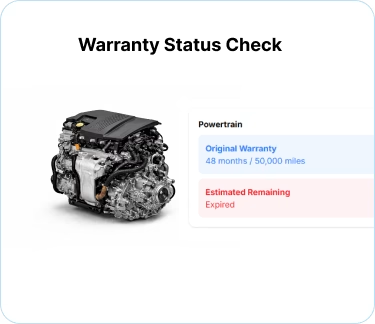
1999 Ford E-350 Warranty

Basic
Original warranty 36 months / 36,000 miles
Estimated remaining Expired
Powertrain
Original warranty 36 months / 36,000 miles
Estimated remaining Expired
Rust
Original warranty 60 months / unlimited miles
Estimated remaining Expired

1999 Ford E-350 Insurance

Insurance for a 1999 Ford E-350 is moderately priced, reflecting its status as a Van with strong safety ratings and
reasonable repair costs.

How Does the 1999 Ford E-350 Compare to Other Van?

The 1999 Ford E-350's key rivals included the Chevrolet Express/GMC Savana, and the Dodge Ram Van (later the Sprinter in later years). In terms of performance, the E-350's engine options were comparable to those offered by GM, with similar horsepower and towing capabilities. The 7.3L Power Stroke diesel offered a slight edge in torque compared to GM's diesel offerings at the time. The Dodge Ram Van was typically considered less refined.

Regarding features, the E-350 was generally on par with its competitors, offering similar trim levels and optional equipment. However, the Sprinter, introduced later, offered more modern features and a higher roof design for increased cargo space. Reliability is a mixed bag; the E-350 is generally considered reliable if maintained well, but the transmission can be a weak point. The Chevrolet/GMC vans are also known for their reliability, while the Dodge Ram Van had a less stellar reputation.

In terms of price, the E-350 was typically competitive with the Chevrolet/GMC vans. Used prices today reflect the vehicle's age and condition. As for alternatives, if looking for a more modern van with better fuel economy and features, a newer Chevrolet Express/GMC Savana, Ford Transit, or Mercedes-Benz Sprinter would be better choices, albeit at a higher price point. If budget is the primary concern and heavy-duty capability is needed, a well-maintained E-350 can still be a viable option.

Final Verdict: Is the 1999 Ford E-350 a Good Van?

The 1999 Ford E-350 is ideal for those needing a robust and capable work van or a vehicle for hauling large groups of people on a budget. It's worth buying *used* if you find a well-maintained example with minimal rust, a solid transmission, and a reliable engine (especially the 7.3L diesel if you need serious towing power). It's best suited for buyers who prioritize function over luxury and are willing to perform regular maintenance. Avoid neglected examples with extensive rust or signs of transmission problems. The XLT trim offers a better balance of features and comfort than the base model. Consider it a cost-effective solution if you understand its limitations and are prepared for potential repairs.

1999 Ford E-350 Owner Reviews

0.00
Consumer Rating, Based on 0 Consumer Reviews
Overall rating
Cancel
Thank You for Your Review!

We truly appreciate the time and effort you took to share your experience with us.

Uh oh!

Something went wrong, please try again later.

Author Image
Drew B

Drew is a seasoned automotive expert and contributor to VinCheck.info. With nearly 15 years of experience as a former Porsche technician, he brings a wealth of hands-on knowledge to his writing. Born in North Carolina, a region renowned for its deep-rooted NASCAR culture, Drew developed a passion for cars early in life, often building and working on vehicles from a young age. At VINCheck, Drew leverages his extensive technical background to provide in-depth analyses of various vehicles. His articles often focus on engine performance, reliability, and maintenance insights, offering readers practical information grounded in real-world experience. Some of his notable contributions include reviews on the Mazda CX-5's longevity and detailed examinations of engine options for models like the 2011 Toyota Camry and Tacoma