by VIN, Year, Make, Model by License Plate

2013 Yamaha FJR1300 Overview, Reviews, Ratings & Specs

Rating: 0.00
Based on 0 Owner Reviews
Simon A | September 26, 2025
The 2013 Yamaha FJR1300 is a highly regarded sport-touring motorcycle, representing a significant refresh of Yamaha's established FJR series, which first appeared in the US in 2003. This full-fairing machine is designed to blend the performance of a sport bike with the comfort and practicality needed for long-distance touring. For 2013, the primary trim was the FJR1300A, typically priced new around $15,890. It stands out for its exceptional reliability, powerful inline-four engine, and advanced features like cruise control and traction control, making it popular among riders seeking a versatile, high-performance tourer.
The Good

The 2013 Yamaha FJR1300 offers exhilarating performance from its potent 1298cc engine, coupled with Yamaha's renowned reliability. Its plush comfort, featuring an adjustable windscreen and heated grips, makes long journeys a joy. The updated design is sleek and purposeful. Practical buyers appreciate the shaft drive for low maintenance and decent fuel efficiency, while emotional riders love the smooth power delivery and confidence-inspiring handling, making it an excellent value for a premium sport-tourer.

The Bad

While highly praised, the 2013 FJR1300 has a few known weaknesses. Its considerable weight can be noticeable at low speeds. Some riders report engine heat on their legs, particularly in slow city traffic. The stock suspension, while adequate for most, can feel soft for aggressive riding or when carrying heavy loads, leading some owners to consider aftermarket upgrades for improved handling and adjustability.

2013 Yamaha FJR1300: Quick Overview

  • Engine Options: The 2013 Yamaha FJR1300 comes with a single, highly refined engine option: a 1298cc, liquid-cooled, DOHC, 16-valve, inline four-cylinder engine. This powerplant is known for its smooth, tractable power delivery across the rev range, ideal for both touring and spirited riding.
  • Horsepower: The engine produces approximately 141 horsepower (at the crankshaft) and around 125 hp at the rear wheel, providing ample power for highway cruising, rapid acceleration, and passing maneuvers even when fully loaded with luggage and a passenger.
  • Fuel Economy: Riders can expect an average fuel economy of approximately 38-42 miles per gallon (MPG), depending on riding style and conditions. With its generous fuel tank capacity, this provides a substantial range between fill-ups, enhancing its long-distance touring capability.
  • 0-60 Times: The FJR1300 is remarkably quick for a touring machine, with 0-60 mph acceleration times typically falling in the impressive 3.0-3.5 second range, putting it on par with many dedicated sportbikes.
  • Towing Capacity: Motorcycles, including the Yamaha FJR1300, are not designed for towing and therefore do not have a rated towing capacity.
  • Trim-Level Features (FJR1300A for 2013):
    • Engine Management: Yamaha Chip Controlled Throttle (YCC-T) for precise throttle response and D-Mode (selectable engine maps: Touring and Sport).
    • Rider Aids: Traction Control System (TCS) and Cruise Control for enhanced safety and comfort on long rides.
    • Braking: Advanced ABS (Anti-lock Braking System) and a Unified Braking System (linked brakes) for confident stopping power.
    • Comfort & Convenience: Electrically adjustable windscreen, heated grips (standard), shaft drive (low maintenance), integrated color-matched side cases for ample storage, adjustable seat height, and adjustable handlebars.
    • Instrumentation: A comprehensive instrument panel with an analog tachometer and speedometer, flanked by a multi-function LCD display providing a wealth of information including fuel gauge, gear position, ambient temperature, and trip meters.

2013 Yamaha FJR1300 Specifications

Vehicle Information
Year 2013
Make Yamaha
Model FJR1300
Trim -
Style -
Type Motorcycle
Category Motorcycle
Manufacturing Details
Made In Japan
Manufacturing City HAMAMATSU
Dimensions
Doors -
Curb Weight -
Gross Vehicle Weight Rating -
Overall Height -
Overall Length -
Overall Width -
Wheelbase Length -
Standard Seating -
Engine & Performance
Engine 1304CC
Engine Size 1304L
Engine Cylinders 4
Transmission -
Transmission Type -
Transmission Speeds -
Drivetrain -
Additional Features
Anti-Brake System -
Steering Type -
Pricing
Manufacturer Suggested Retail Price (MSRP) -
Invoice Price -
Delivery Charges -

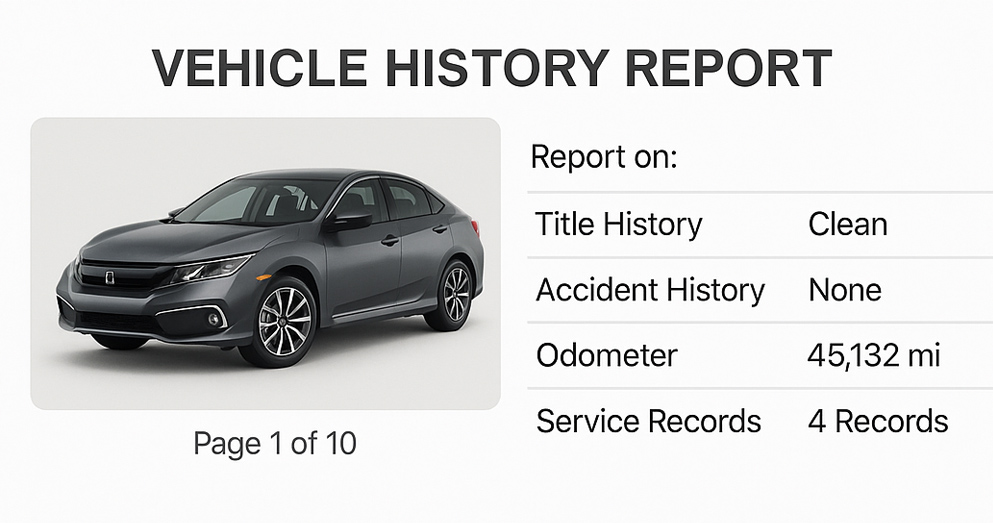
Vehicle History Report

Vehicle
Specifications
Ownership
History
All History
Events
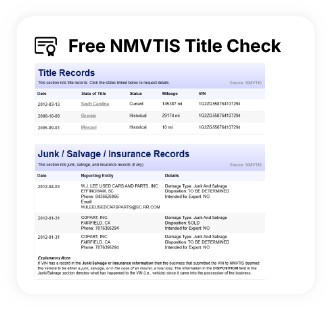
NMVTIS Title
History Check
Salvage/Rebuilt
Check
Accident
Check
Theft
Check
Open Lien
Check
Past Sale
Listings
Safety
Recalls
Odometer
Check
Market Price
Analysis

What Problems Does the 2013 Yamaha FJR1300 Have?

The 2013 Yamaha FJR1300, representing the third generation of the FJR series, significantly improved upon earlier models and enjoys a strong reputation for long-term reliability. However, a few areas commonly noted by owners warrant attention.
One frequently discussed item, particularly for high-mileage examples, is the stator. While the 2013 model's stator design was improved over previous generations, some owners still report stator failure or degradation, typically occurring between 40,000 and 60,000 miles. This is a common wear item on many motorcycles with high electrical loads. It's not a universal issue, but it's worth monitoring and budgeting for potential replacement.
Another long-term maintenance point is the lubrication of the final drive splines. While the FJR utilizes a robust shaft drive system, periodic lubrication of the splines, especially during tire changes, is crucial to prevent premature wear. Neglecting this can lead to expensive repairs over time.
Engine heat remains a comfort concern for some riders, especially in warmer climates or slow-moving traffic. The fairing, while excellent for wind protection, can direct engine heat towards the rider's legs.
The stock suspension, while competent for average riding, can feel undersprung or underdamped for more aggressive riders or those frequently carrying a passenger and full luggage. This often leads to owners upgrading their fork springs or rear shock for a more customized and performance-oriented ride.
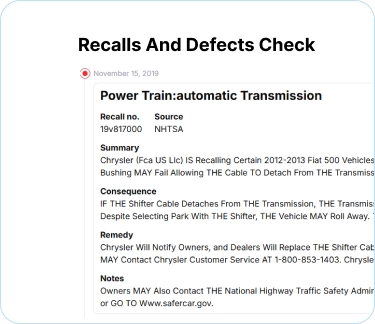
Regarding recalls, the 2013 FJR1300 has had a remarkably clean record. A review of NHTSA data for this specific model year does not reveal any widespread, major safety recalls impacting a large number of units. This speaks to the maturity and refinement of the platform by its third generation. Generally, the FJR series is considered one of the most reliable sport-tourers on the market, capable of enduring very high mileages with diligent maintenance.

How long will the 2013 Yamaha FJR1300 last?

The 2013 Yamaha FJR1300 is renowned for its exceptional longevity, often serving owners for well over 100,000 miles with proper maintenance. It's not uncommon to find FJR models, including the 2013 refresh, approaching or exceeding 150,000 to 200,000 miles on the original engine and drivetrain. This impressive durability is a testament to Yamaha's engineering.
The robust inline-four engine and shaft drive system are typically the strongest long-term components. However, weaknesses over time often include wear items such as the stator, which may require replacement in higher mileage bikes. Suspension components, including fork seals and the rear shock, will eventually necessitate rebuilding or replacement. Consumables like brake pads, tires, and clutch plates will, of course, need regular attention. Electrical connections can also corrode over many years. Overall, with diligent preventative maintenance, the FJR is a marathon machine built to last for decades.

What Technology & Safety Features are Included?

The 2013 Yamaha FJR1300, a significant update for its model year, introduced a host of advanced built-in technologies that greatly enhanced its riding experience, comfort, and safety.
Built-in Tech & Comfort Features:
At its core, the FJR boasts Yamaha Chip Controlled Throttle (YCC-T), a ride-by-wire system that provides precise throttle input. This works in conjunction with Yamaha's D-Mode system, offering riders a choice between "Touring" mode for smoother, more relaxed power delivery and "Sport" mode for more aggressive, direct response. Standard heated grips ensure comfort in colder weather, while the electrically adjustable windscreen allows for on-the-fly customization of wind protection, adapting to varying conditions and rider preferences. Cruise control is a standard and much-appreciated feature for long highway stretches, reducing rider fatigue. The comprehensive instrument cluster combines analog gauges for speed and RPM with a multi-function LCD providing essential trip data, fuel level, gear position, and other vital information.
Entertainment:
As a motorcycle focused on performance and touring, the 2013 FJR1300 did not come with an integrated entertainment system or stereo. Riders typically added aftermarket GPS units, phone mounts, and communication systems if they desired audio or navigation.
Driver-Assistance & Safety Features:
Safety was significantly bolstered for 2013. The FJR came standard with an Anti-lock Braking System (ABS), which prevents wheel lock-up during hard braking and is a crucial safety feature. It also featured Yamaha's Unified Braking System (UBS), which intelligently links the front and rear brakes for balanced stopping power. A Traction Control System (TCS) was also standard, detecting rear wheel spin and modulating engine power to maintain traction, especially useful in slippery conditions or aggressive acceleration.
Optional Features:
While the 2013 FJR1300A was a well-appointed standard model, factory optional accessories largely consisted of functional items like a matching top case for additional luggage capacity, tank bags, taller windscreens, or crash protection. The electronically adjustable suspension (ES) model would be introduced in subsequent years (e.g., 2014+), but was not a feature for the 2013 FJR1300A.
Crash-Test Ratings:
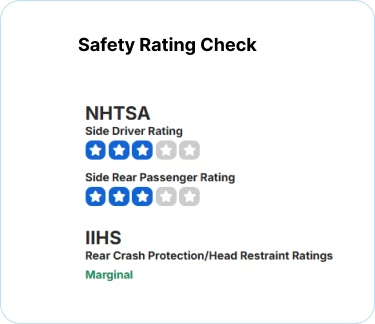
It is important to note that motorcycles do not undergo formal crash-test ratings by organizations like NHTSA or IIHS in the same way cars do. Motorcycle safety is primarily addressed through rider-assistance features like ABS and TCS, robust chassis design, and advancements in rider protective gear.

What Colors Options are Available?

We’re working on this section!
In the meantime, feel free to explore the other sections for more content.

2013 Yamaha FJR1300 Prices and Market Value

When new, the 2013 Yamaha FJR1300A had an MSRP of approximately $15,890 USD. As of 2024, the current used market prices for a 2013 model typically range from $6,000 to $9,500, varying significantly based on condition, mileage, and geographical location.
Like most motorcycles, the FJR experiences a notable initial depreciation. However, its depreciation curve tends to flatten out over time, and it holds its value relatively well compared to some competitors, largely due to its legendary reliability and enduring popularity among touring enthusiasts. Factors positively affecting resale value include low mileage, excellent mechanical and cosmetic condition, a complete service history (especially proof of valve adjustments), the presence of factory accessories like the color-matched side cases, and desirable aftermarket upgrades such as upgraded suspension or comfort seats. A well-maintained FJR will always command a premium in the used market.

2013 Yamaha FJR1300 Cost of Ownership

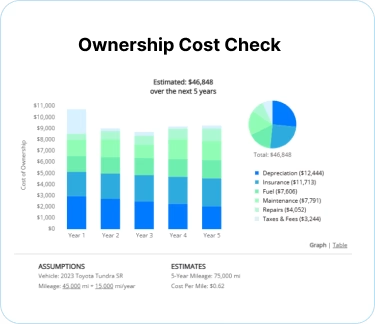
Owning a 2013 Yamaha FJR1300 involves moderate long-term costs. Insurance premiums vary, but are generally reasonable for a sport-tourer of its size, often less than pure sportbikes. Fuel costs can add up, as the FJR requires premium octane fuel and, despite decent MPG (38-42), is a large-capacity touring bike ridden long distances. Maintenance is generally manageable; the shaft drive eliminates chain maintenance, but major services like valve adjustments (every 26,600 miles) can be labor-intensive and costly if done at a dealership. Repairs are infrequent due to Yamaha's reliability, but potential stator replacement on high-mileage bikes can be a significant expense. Overall, the FJR is a moderately economical motorcycle to own in its class, offering excellent value and durability without the exorbitant costs associated with some European rivals, making it a sensible long-term investment for touring riders.

2013 Yamaha FJR1300 Fuel Efficiency

Fuel Type Gasoline
Fuel Capacity -
City Mileage -
Highway Mileage -

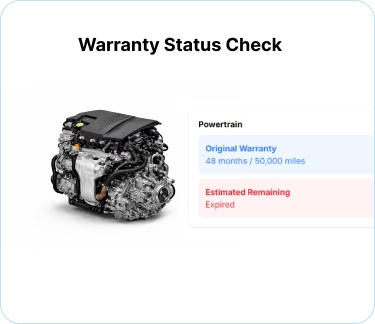
2013 Yamaha FJR1300 Warranty

Basic
Original warranty 0 months / No data
Estimated remaining Expired
Powertrain
Original warranty 0 months / No data
Estimated remaining Expired
Rust
Original warranty 0 months / No data
Estimated remaining Expired

2013 Yamaha FJR1300 Insurance

Insurance for a 2013 Yamaha FJR1300 is moderately priced, reflecting its status as a Motorcycle with strong safety ratings and
reasonable repair costs.

How Does the 2013 Yamaha FJR1300 Compare to Other Motorcycle?

The 2013 Yamaha FJR1300 competes directly with several formidable sport-touring machines, each with its unique strengths.

Against the Kawasaki Concours 14 (GTR1400): The Concours 14 generally offers more outright horsepower and a sportier edge, often appealing to riders who prioritize aggressive performance. Both feature shaft drive, ABS, and traction control. The FJR is often perceived as slightly more comfortable for long days in the saddle, while the Concours excels in high-speed stability. Reliability is strong for both Japanese machines, with the FJR often having a slight edge in perceived engine durability, though the Concours is also excellent. Pricing is comparable on the used market, making it a close contest.

Against the BMW R1200RT: The BMW R1200RT, with its Boxer twin engine, presents a different riding character, often feeling more relaxed and touring-focused, with a lighter feel at low speeds. BMW typically offers more advanced electronic features, like electronic suspension adjustment (ESA, though the 2013 FJR-A didn't have it) and integrated audio/navigation, but at a significantly higher new and often used price point. Reliability for BMW has improved, but the FJR generally enjoys a reputation for lower long-term maintenance costs and simpler mechanics. Performance-wise, the FJR's inline-four is smoother and more powerful than the R1200RT's Boxer.

Against the Honda ST1300: While the ST1300 was discontinued after 2012, it was a direct competitor. The Honda's V4 engine is renowned for its silken smoothness and bulletproof reliability, arguably matching or even exceeding the FJR in that regard. The FJR generally offers more modern features for 2013 (e.g., standard cruise control, traction control). Used ST1300s are often more affordable due to their age.

Alternatives: Besides the aforementioned, the Triumph Trophy SE (a triple-cylinder sport-tourer) offers a distinct engine character and a high level of comfort and tech. For riders prioritizing extreme value, a well-maintained Honda VFR800 (V-TEC models) or an earlier generation FJR could also be considered, though they are lighter and less powerful than the FJR1300.

Recommendation: The 2013 Yamaha FJR1300 holds its own very well. It strikes an excellent balance of thrilling performance, touring comfort, advanced features for its time, and outstanding reliability. It's often a "best of both worlds" option, offering a sportier feel than a BMW RT without the razor-edge aggression of a Concours 14. It's a solid recommendation for anyone seeking a versatile and dependable sport-tourer.

Final Verdict: Is the 2013 Yamaha FJR1300 a Good Motorcycle?

The 2013 Yamaha FJR1300 is an exceptional sport-touring motorcycle, ideal for riders who demand a potent blend of performance, long-distance comfort, and unwavering reliability. It suits commuters who tackle significant highway miles, weekend warriors planning spirited rides, and seasoned tourers embarking on cross-country adventures. Its smooth power, advanced rider aids (ABS, TCS, cruise control), and practical features like heated grips and integrated luggage make it highly versatile.

It is absolutely worth buying, especially on the used market. The 2013 model, being a refreshed generation, offers modern features without the "new bike" depreciation. When buying used, prioritize models with comprehensive service records, particularly for valve adjustments and any stator maintenance. While later "ES" models offered electronic suspension, the standard 2013 FJR1300A remains a fantastic value. It's a durable workhorse that provides immense enjoyment for its cost, promising many years and miles of trouble-free riding with proper care.

2013 Yamaha FJR1300 Owner Reviews

0.00
Consumer Rating, Based on 0 Consumer Reviews
Overall rating
Cancel
Thank You for Your Review!

We truly appreciate the time and effort you took to share your experience with us.

Uh oh!

Something went wrong, please try again later.

Author Image
Simon A

Simon is a contributor to VinCheck, where he provides articles and reviews on various automotive topics. His work focuses on delivering accurate and up-to-date information about used cars, helping readers make informed decisions.