by VIN, Year, Make, Model by License Plate

2015 BIG TEX Big Tex Overview, Reviews, Ratings & Specs

Rating: 0.00
Based on 0 Owner Reviews â–
Jovan | October 2, 2025
The 2015 BIG TEX Big Tex is a robust and versatile trailer, designed for a multitude of hauling needs. Primarily known for its heavy-duty construction and reliability, it has been a staple in the trailer market for many years. The Big Tex line generally features a standard utility trailer body style, with various configurations and sizes available. While specific trim levels aren't as defined as in automotive vehicles, options often relate to size, axle configuration, and specific features like ramps or gate types. Pricing for a 2015 model would vary significantly based on size and condition, but typically ranged from a few thousand dollars for smaller units to upwards of $10,000 for larger, more feature-rich models. Its popularity stems from its durable build quality and its ability to handle demanding tasks, making it a trusted choice for professionals and hobbyists alike.
The Good

The 2015 BIG TEX Big Tex excels in rugged performance and unwavering reliability, offering peace of mind for demanding jobs. Its straightforward, functional design prioritizes durability over aesthetics, appealing to practical buyers. For emotional buyers, its strength and capacity provide a sense of security and capability, making it a valuable workhorse.

The Bad

Potential weaknesses for the 2015 BIG TEX Big Tex include susceptibility to rust and corrosion, particularly in harsh environments. Tire wear can be accelerated under heavy loads. Electrical component issues, such as faulty lights or brake controllers, may arise over time and with heavy use. Lack of advanced features is also a consideration.

2015 BIG TEX Big Tex: Quick Overview

  • Engine Options: As a trailer, the 2015 BIG TEX Big Tex does not have an engine. Its capabilities are dictated by its construction and towing vehicle.
  • Horsepower: Not applicable.
  • Fuel Economy: Not applicable.
  • 0-60 Times: Not applicable.
  • Towing Capacity: This is highly variable and depends on the specific model and configuration of the Big Tex trailer. Common Gross Vehicle Weight Ratings (GVWR) for Big Tex trailers can range from as low as 2,990 lbs for smaller utility trailers to over 14,000 lbs for heavy-duty equipment haulers. Individual trailer load capacities should always be checked on the trailer's VIN plate or documentation.
  • Key Trim-Level Features: Big Tex trailers are not typically categorized by traditional 'trims' like vehicles. Instead, features are often selected based on the model and intended use. Common variations and features include:
    • Size: Available in numerous bed lengths and widths (e.g., 5x8, 6x10, 7x14, 8.5x20).
    • Axle Configuration: Single axle, tandem axle, or triple axle configurations, affecting weight capacity and stability.
    • Brakes: Electric brakes on one or more axles for enhanced stopping power, crucial for heavier loads.
    • Gate/Ramp Options: Full-width ramp gates, spring-assisted ramp gates, bi-fold gates, or removable side rails for ease of loading various equipment and vehicles.
    • Decking: Standard treated lumber decking, steel diamond plate, or a combination.
    • Fenders: Standard steel fenders or heavy-duty options.
    • Coupler Type: Common sizes include 2-inch ball, 2-5/16 inch ball, or pintle hook couplers.
    • Tie-Down Points: Various stake pockets, D-rings, or E-track systems for securing cargo.
    • Lighting: Standard LED or incandescent trailer lighting systems, often with break-away systems for electric brakes.
    • Jack: A-frame tongue jack (manual or electric) for easier coupling and uncoupling.
    • Finish: Typically a durable powder-coat or enamel paint finish designed for longevity in outdoor conditions.

2015 BIG TEX Big Tex Specifications

Vehicle Information
Year 2015
Make BIG TEX
Model Big Tex
Trim -
Style -
Type Recreational Vehicle
Category Special Purpose Vehicle
Manufacturing Details
Made In United States
Manufacturing City MOUNT PLEASANT
Dimensions
Doors -
Curb Weight -
Gross Vehicle Weight Rating -
Overall Height -
Overall Length -
Overall Width -
Wheelbase Length -
Standard Seating -
Engine & Performance
Engine -
Engine Size -
Engine Cylinders -
Transmission -
Transmission Type Not Applicable
Transmission Speeds -
Drivetrain Not Applicable
Additional Features
Anti-Brake System Not Applicable
Steering Type -
Pricing
Manufacturer Suggested Retail Price (MSRP) -
Invoice Price -
Delivery Charges -

Vehicle History Report

Vehicle
Specifications
Ownership
History
All History
Events
NMVTIS Title
History Check
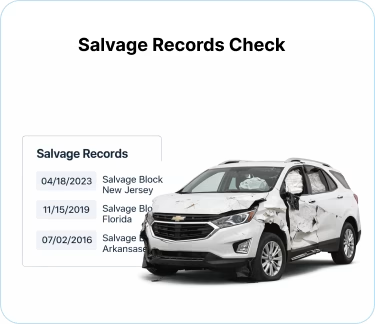
Salvage/Rebuilt
Check
Accident
Check
Theft
Check
Open Lien
Check
Past Sale
Listings
Safety
Recalls
Odometer
Check
Market Price
Analysis

What Problems Does the 2015 BIG TEX Big Tex Have?

While the 2015 BIG TEX Big Tex is generally regarded as a reliable and durable trailer, like any product, it can experience some issues over time, especially with consistent heavy use. Frequently reported concerns often revolve around the wear and tear associated with trailer components rather than inherent manufacturing defects.

One common area of concern, particularly with trailers used in various weather conditions, is rust and corrosion. The steel frame and components are susceptible to oxidation, especially if not properly maintained or if exposed to salt and moisture regularly. Owners often address this by regularly cleaning the trailer, touching up paint chips, and occasionally applying protective coatings.

Electrical systems can also be a source of problems. Trailer lights, including brake lights, turn signals, and running lights, can experience issues with wiring connections, bulb failures, or corrosion within the housings. Similarly, the electric brake system, if equipped, might require attention to the wiring, brake controller, or the brake assemblies themselves. These issues are often exacerbated by road vibration and exposure to the elements.

Tires are a wear item, but improper inflation, overloading, or misalignment can lead to premature wear or blowouts. Owners should regularly check tire pressure and inspect for damage. Axle bearings also require periodic maintenance and lubrication to prevent premature failure.

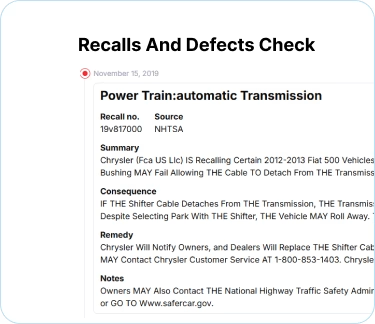
While specific recalls for the 2015 model year are not widely documented as systemic issues across the entire range, it is always advisable for owners to check the National Highway Traffic Safety Administration (NHTSA) website or consult with a Big Tex dealer using the trailer's VIN to ensure no safety recalls apply.

In terms of long-term reliability, the Big Tex brand is known for its robust construction. With regular maintenance, including greasing bearings, checking tire pressure, inspecting brakes, and addressing rust as it appears, these trailers can last for many years, often exceeding a decade of service. The durability of the frame and the quality of the welds are generally considered strengths. However, the longevity of components like wiring, lights, and the decking (especially wood) will depend heavily on the user's maintenance habits and the severity of the working conditions.

How long will the 2015 BIG TEX Big Tex last?

Estimating average mileage for a trailer is less relevant than assessing its years of service and the total weight it has hauled. For a 2015 BIG TEX Big Tex, with proper maintenance, including regular greasing of wheel bearings, checking tire pressure, inspecting brakes, and addressing any surface rust promptly, owners can reasonably expect 10 to 15 years of service, if not more.

The trailer's long-term durability is a strong suit, owing to its typically heavy-gauge steel construction and robust welds. The frame itself is often built to withstand significant stress. However, weaknesses can emerge over time in the form of electrical component failures (lights, wiring), rust accumulation on structural components, and wear on the decking material (if wooden). The lifespan of tires will also significantly impact usability and cost. Neglecting maintenance, particularly bearing lubrication, can lead to catastrophic axle failure, a major weakness if not proactively managed. Overall, its construction supports longevity, but its practical service life is heavily influenced by how well it's cared for and the intensity of its usage.

What Technology & Safety Features are Included?

As a utility trailer, the 2015 BIG TEX Big Tex is not equipped with the advanced technology, entertainment systems, or driver-assistance features found in automobiles. Its focus is purely on functionality and safe hauling.

Built-in Tech: The primary 'tech' on a Big Tex trailer revolves around its lighting and braking systems. This typically includes:
  • Standard Lighting: LED or incandescent tail lights, brake lights, and turn signals. Modern trailers often feature LED lighting for increased brightness and longevity.
  • Breakaway System: For trailers equipped with electric brakes, a breakaway system is a crucial safety feature. It consists of a battery, a controller, and a cable. If the trailer separates from the towing vehicle, the cable pulls a switch, activating the trailer's brakes.
  • Electric Brakes: Many larger Big Tex models come with electric brakes on one or more axles. These are controlled by a brake controller installed in the towing vehicle.

Entertainment Features: None are present. Trailers are designed for hauling, not passenger comfort or infotainment.

Driver-Assistance Features: None are applicable to the trailer itself. The driver of the towing vehicle is responsible for all aspects of safe operation.

Safety Features: The safety features of a Big Tex trailer are directly related to its construction and intended purpose:
  • Robust Frame and Construction: Heavy-duty steel frames, secure welds, and strong axles contribute to overall trailer integrity and safety.
  • Secure Tie-Down Points: Stake pockets, D-rings, or other anchor points are vital for safely securing cargo, preventing it from shifting or falling off during transit.
  • Ramp Gates/Loading Systems: Well-designed ramps or gates facilitate safe loading and unloading of vehicles and equipment.
  • Axle and Tire Capacity: Proper sizing of axles and tires for the trailer's GVWR is critical for safe operation and preventing failures.
  • Coupler and Safety Chains: A properly rated coupler and securely attached safety chains are essential for preventing complete separation from the towing vehicle.

Optional Features: Options often enhance safety and utility, such as:
  • Upgraded lighting (e.g., all LED).
  • Electric brakes on additional axles.
  • Various ramp gate designs for easier loading.
  • Durable decking materials like steel diamond plate.
  • Removable side rails for more versatile cargo hauling.

Crash-Test Ratings: Trailers, unlike passenger vehicles, are not typically subjected to formal crash-testing by organizations like the NHTSA or IIHS. Their safety is assessed based on compliance with federal and state regulations regarding lighting, braking, weight capacity, and structural integrity. The primary 'safety rating' comes from the manufacturer's adherence to these standards and the quality of their construction. A properly rated and maintained trailer, when towed by a capable vehicle, is considered safe.

What Colors Options are Available?

Exterior Colors
Big Tex Red
Denim Blue
Cowboy Hat Tan
Big Tex White
Rustic Brown
Hat Band Black
Interior Colors
Barn Red Interior
Denim Interior

2015 BIG TEX Big Tex Prices and Market Value

The original pricing for a 2015 BIG TEX Big Tex trailer varied significantly based on size, configuration, and added options. Smaller utility trailers (e.g., 5x8 or 6x10) might have started in the range of $1,500 to $3,000 when new. Larger, heavier-duty models, such as equipment haulers or car trailers with tandem axles and ramps, could have cost anywhere from $5,000 to $10,000 or more.

Currently, the used market prices for a 2015 Big Tex trailer also depend heavily on its condition, size, and features. Expect to see prices for well-maintained smaller trailers ranging from $800 to $2,000, while larger, more robust models in good condition might sell for $3,000 to $7,000 or higher.

Depreciation for trailers is generally slower than for vehicles, especially for well-built brands like Big Tex. A significant factor affecting resale value is the trailer's condition, including frame integrity, rust levels, tire condition, and the functionality of its lights and brakes. Trailers that have been regularly maintained, kept clean, and stored properly will command higher prices. Overloading and neglect will severely diminish resale value. The presence of desirable features like ramps, electric brakes, and heavy-duty construction also positively impacts resale value.

2015 BIG TEX Big Tex Cost of Ownership

Owning a 2015 BIG TEX Big Tex is generally considered economical, especially when compared to motorized vehicles.

Insurance: Trailer insurance is often optional but recommended, especially for high-value or frequently used trailers. Costs are typically low, often a small fraction of auto insurance premiums.

Fuel: Fuel costs are borne by the towing vehicle, so the trailer itself does not consume fuel. However, a heavier trailer will increase fuel consumption of the tow vehicle.

Maintenance & Repair: Regular maintenance, including greasing bearings, checking tire pressure, and inspecting lights/brakes, is crucial and relatively inexpensive. Major repairs, such as axle replacement or extensive rust repair, can be costly, but are avoidable with good upkeep.

Overall, the 2015 Big Tex Big Tex is a cost-effective investment, with primary ownership costs tied to preventative maintenance and the fuel used by the towing vehicle.

2015 BIG TEX Big Tex Fuel Efficiency

Fuel Type NOT Applicable
Fuel Capacity -
City Mileage -
Highway Mileage -

2015 BIG TEX Big Tex Insurance

Insurance for a 2015 BIG TEX Big Tex is moderately priced, reflecting its status as a Recreational Vehicle with strong safety ratings and
reasonable repair costs.

How Does the 2015 BIG TEX Big Tex Compare to Other Recreational Vehicle?

When stacking the 2015 BIG TEX Big Tex against its key rivals, the comparison focuses on utility trailers, a category where Big Tex has built a strong reputation. Competitors often include brands like CAM Superline, Load Trail, and various other regional or national trailer manufacturers.

Performance: In terms of raw hauling performance and capability, the Big Tex Big Tex generally stands tall. Known for its heavy-duty construction and robust frame designs, it often offers superior load capacities and stability, especially in its larger configurations, compared to some lighter-duty competitors. Its performance is largely dictated by the quality of its axles, suspension, and overall build.

Features: Feature sets can be comparable across brands, with options for ramp gates, electric brakes, and various decking materials being common. Big Tex often distinguishes itself with durable construction that enhances the longevity of these features. While not as feature-rich in terms of technology as some specialized trailers, its straightforward, functional design is a strength for many users.

Reliability: Big Tex has a reputation for high reliability due to its robust build quality. While all trailers require maintenance, Big Tex trailers often prove more resistant to wear and tear over the long term compared to lower-cost alternatives. Competitors may offer similar reliability, but Big Tex is consistently ranked among the top tier for durability.

Price: Big Tex trailers typically sit in the mid-to-upper price range for utility trailers. They are not the cheapest option on the market, but their higher initial cost is often justified by their superior durability and longer lifespan, leading to a better overall value proposition for many users. Cheaper rivals might offer similar specs on paper but may not hold up as well under heavy use.

Alternatives:
  • Similar: CAM Superline and Load Trail are strong contenders offering comparable build quality, features, and reliability. These brands often have extensive dealer networks and a wide range of models.
  • Potentially Better (depending on need): For specific applications, brands like Bwise or Iron Bull might offer more specialized designs or heavier-duty options that could outperform a standard Big Tex. However, for general utility and heavy hauling, Big Tex remains a benchmark.
In summary, the 2015 BIG TEX Big Tex is a highly competitive trailer that often excels in reliability and durability, justifying its price point. While slightly more expensive than some budget options, its long-term value and robust performance make it a smart choice for those who demand a dependable workhorse.

Final Verdict: Is the 2015 BIG TEX Big Tex a Good Recreational Vehicle?

The 2015 BIG TEX Big Tex is ideal for individuals and businesses requiring a durable, reliable, and versatile trailer for a variety of hauling needs, from landscaping and construction to hauling equipment or recreational vehicles. It is particularly well-suited for those who prioritize longevity and robustness over creature comforts or cutting-edge technology.

It is certainly worth buying, especially in the used market, provided it has been well-maintained. The initial cost of a new Big Tex can be higher than some competitors, but its reputation for durability often translates to a lower total cost of ownership over time.

When considering a purchase, inspect used models thoroughly for rust, frame integrity, and functioning electrical and brake systems. Opting for a model with electric brakes and a well-designed ramp gate will enhance usability. For those with demanding tasks, investing in a tandem-axle model or one with a higher GVWR is recommended. Given its proven track record, a well-cared-for 2015 Big Tex remains a sound investment for anyone needing a dependable trailer.

2015 BIG TEX Big Tex Owner Reviews

0.00
Consumer Rating, Based on 0 Consumer Reviews
Overall rating
Cancel
Thank You for Your Review!

We truly appreciate the time and effort you took to share your experience with us.

Uh oh!

Something went wrong, please try again later.

Author Image
Jovan

Jovan specializes in interpreting vehicle records and making sense of VIN data. With over 10 years of experience in the automotive data industry, his work ensures that every report is clear, accurate, and useful for car buyers.