The 1995 Hyundai Accent, part of the first generation (1995-2000), was a subcompact car offered as a 3-door hatchback and a 4-door sedan. It arrived in the US for the 1995 model year. Key trims included the base, GLS, and GT. It was known for its affordability and surprisingly decent fuel economy, making it a popular choice for budget-conscious buyers and first-time car owners seeking a no-frills transportation solution.
The Good
The 1995 Hyundai Accent offered excellent fuel efficiency and a remarkably low purchase price, appealing to practical buyers. Its straightforward design and simple mechanics contributed to a sense of reliability for those seeking an uncomplicated ownership experience, while its nimble size made it easy to maneuver.
The Bad
Owners should be aware of potential issues with rust, especially in areas exposed to salt. Interior materials, while functional, were not premium. Engine power was modest, and long-term transmission reliability could be a concern for some examples, particularly with high mileage.
1995 Hyundai Accent: Quick Overview
- Engine Options: The 1995 Hyundai Accent was primarily equipped with a 1.5-liter inline-4 engine.
- Horsepower: This engine typically produced around 92 horsepower.
- Fuel Economy: Expected to achieve figures in the range of 28-32 MPG in the city and 35-40 MPG on the highway, making it quite efficient for its time.
- 0-60 Times: Acceleration was not a strong suit, with 0-60 mph times generally in the 11-13 second range, depending on body style and transmission.
- Towing Capacity: Not applicable; the Accent was not designed for towing.
- Trim-Level Features:
Base Trim: Included essentials like power steering, front disc brakes, AM/FM stereo, and intermittent wipers. Air conditioning was often an option.
GLS Trim: Added features like a tachometer, power windows and door locks, a driver's side airbag, and often upgraded interior upholstery and a better sound system. Sometimes featured a rear spoiler.
GT Trim: Positioned as the sportier option, it might have included alloy wheels, sportier suspension tuning, body-colored mirrors and door handles, and potentially different interior trim.
1995 Hyundai Accent Specifications
Vehicle Information
| Year | 1995 |
| Make | Hyundai |
| Model | Accent |
| Trim | - |
| Style | 4-Speed |
| Type | Sedan |
| Category | Compact Car |
Manufacturing Details
| Made In | South Korea |
| Manufacturing City | ULSAN |
Dimensions
| Doors | 4-Door |
| Curb Weight | 2167 pounds |
| Gross Vehicle Weight Rating | - |
| Overall Height | 54.90 inches |
| Overall Length | 162.10 inches |
| Overall Width | 63.80 inches |
| Wheelbase Length | 94.50 inches |
| Standard Seating | 5 |
Engine & Performance
| Engine | 1.5L I4 |
| Engine Size | 1.5L |
| Engine Cylinders | 4 |
| Transmission | 4-Speed Automatic |
| Transmission Type | Automatic |
| Transmission Speeds | 4-Speed |
| Drivetrain | Front-Wheel Drive |
Additional Features
| Anti-Brake System | Non-ABS 2-Wheel ABS |
| Steering Type | Rack & Pinion |
Pricing
| Manufacturer Suggested Retail Price (MSRP) | $8,579 |
| Invoice Price | - |
| Delivery Charges | - |
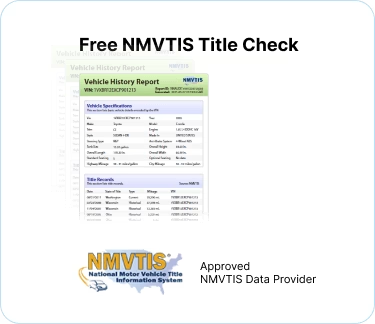
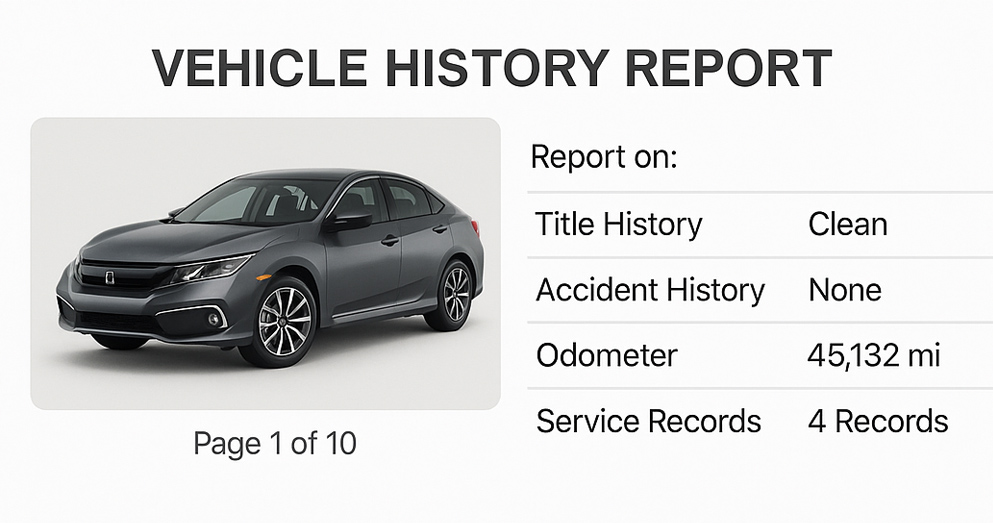
Vehicle History Report
Vehicle
Specifications
Specifications
Ownership
History
History
All History
Events
Events
NMVTIS Title
History Check
History Check
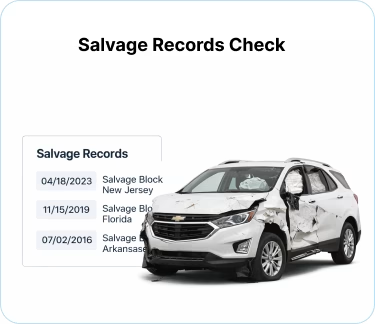
Salvage/Rebuilt
Check
Check
Accident
Check
Check
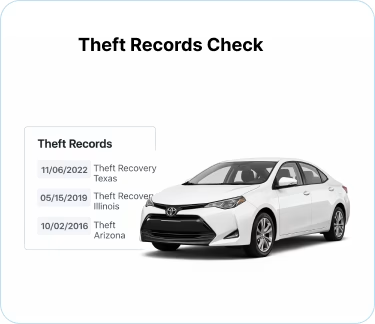
Theft
Check
Check
Open Lien
Check
Check
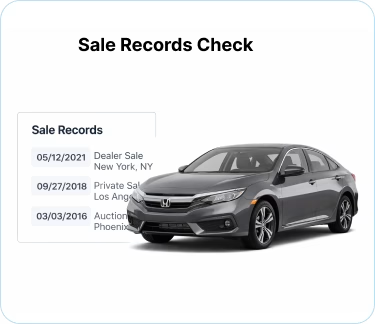
Past Sale
Listings
Listings
Safety
Recalls
Recalls
Odometer
Check
Check
Market Price
Analysis
Analysis
What Problems Does the 1995 Hyundai Accent Have?
The 1995 Hyundai Accent, while generally considered a reliable entry-level car for its price point, did have some common issues reported by owners. A prevalent concern across many vehicles of this era, and particularly noticeable on Accents, is rust. Areas prone to corrosion include the rocker panels, wheel wells, and the undercarriage, especially in regions where road salt is used during winter. This can significantly impact the structural integrity and appearance over time. Another area to watch is the transmission, particularly the automatic transmission, which could become hesitant or fail prematurely in some cases, especially with higher mileage. Clutch wear on manual transmissions is also a typical maintenance item for older vehicles. Electrical gremlins, such as issues with power windows, door locks, or intermittent dashboard lights, can occur, often due to aging wiring or failing switches. The cooling system, including radiator and hoses, may require attention as components age. While there aren't widespread recalls that plague the entire 1995 model year, individual vehicles might have been subject to smaller safety campaigns for specific components. Long-term reliability is often directly tied to maintenance history; cars that have been regularly serviced tend to fare better. However, the relatively simple mechanical design of the Accent means that most repairs are straightforward and can be relatively inexpensive compared to more complex vehicles, which aids in its long-term viability if maintained.
How long will the 1995 Hyundai Accent last?
Based on owner data and typical maintenance, a 1995 Hyundai Accent could reasonably achieve between 150,000 to 200,000 miles or more in its service life, provided it received consistent maintenance. Regular oil changes, attention to the cooling system, and timely replacement of wear items like brakes and suspension components are crucial. The long-term durability is decent for a budget car, especially regarding its powertrain. However, weaknesses emerge over time, primarily in the form of rust, which can compromise the body's integrity. Interior components like upholstery and plastics may show wear and tear. The suspension can also develop rattles or looseness. Despite these issues, the fundamental mechanicals often hold up well, making it a viable option if kept in good condition.

What Technology & Safety Features are Included?
The 1995 Hyundai Accent was a product of its time, meaning its technology, entertainment, and safety features were quite basic, reflecting its budget-friendly positioning.
Technology & Entertainment: Standard entertainment typically consisted of an AM/FM radio. Higher trims, like the GLS or GT, might have offered an upgraded stereo system with cassette player. Power windows and power door locks were often optional on lower trims but standard on higher ones. Features like a tachometer were also more common on sportier trims. Air conditioning was a common option that buyers would seek out.
Driver-Assistance Features: Driver-assistance features as we know them today were virtually nonexistent. Power steering was a standard convenience that made maneuvering easier. Anti-lock Braking System (ABS) was not widely available, if at all, on this model year.
Safety Features: The 1995 Accent generally came with a driver's side airbag as standard on most trims, a significant safety advancement for the era. A passenger airbag was not a common feature. Seatbelts were, of course, standard. For crash-test ratings, data from NHTSA (National Highway Traffic Safety Administration) for this specific model year can be scarce or reflect older testing methodologies. However, subcompact cars of this era generally performed modestly in crash tests compared to modern vehicles. The structure and safety cage were designed to meet the standards of the mid-1990s. For a comprehensive understanding, one would need to consult specific archives for the NHTSA or IIHS (Insurance Institute for Highway Safety) ratings available for the 1995 model year Accent, though these might be limited.
Technology & Entertainment: Standard entertainment typically consisted of an AM/FM radio. Higher trims, like the GLS or GT, might have offered an upgraded stereo system with cassette player. Power windows and power door locks were often optional on lower trims but standard on higher ones. Features like a tachometer were also more common on sportier trims. Air conditioning was a common option that buyers would seek out.
Driver-Assistance Features: Driver-assistance features as we know them today were virtually nonexistent. Power steering was a standard convenience that made maneuvering easier. Anti-lock Braking System (ABS) was not widely available, if at all, on this model year.
Safety Features: The 1995 Accent generally came with a driver's side airbag as standard on most trims, a significant safety advancement for the era. A passenger airbag was not a common feature. Seatbelts were, of course, standard. For crash-test ratings, data from NHTSA (National Highway Traffic Safety Administration) for this specific model year can be scarce or reflect older testing methodologies. However, subcompact cars of this era generally performed modestly in crash tests compared to modern vehicles. The structure and safety cage were designed to meet the standards of the mid-1990s. For a comprehensive understanding, one would need to consult specific archives for the NHTSA or IIHS (Insurance Institute for Highway Safety) ratings available for the 1995 model year Accent, though these might be limited.
What Colors Options are Available?
1995 Hyundai Accent Prices and Market Value
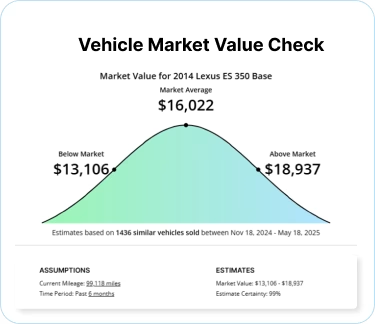
When new, the 1995 Hyundai Accent was positioned as an extremely affordable vehicle, with prices typically starting in the low to mid-$10,000 range. Current used market prices for the 1995 Accent are very low, often found for a few hundred to a couple of thousand dollars, heavily depending on condition, mileage, and location. Depreciation was steep in the early years, as is typical for economy cars, but the vehicle has long since passed its major depreciation curve. Factors affecting its current resale value are primarily its condition, including rust and mechanical soundness. A well-maintained, rust-free example will command a premium over a neglected one. Its basic nature means it has limited collector appeal, so value is mostly tied to its utility as cheap transportation.

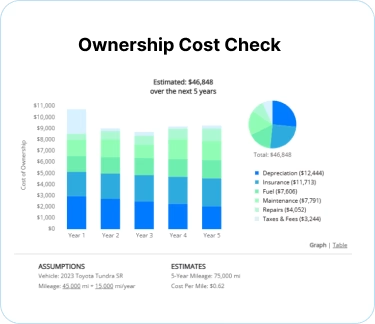
1995 Hyundai Accent Cost of Ownership
The 1995 Hyundai Accent is remarkably economical to own. Insurance costs are typically very low due to its age, low market value, and basic safety features. Fuel costs are minimal thanks to its excellent MPG. Maintenance is generally inexpensive, as parts are readily available and labor costs are lower for simpler vehicles. Repairs are also typically affordable because of the car's straightforward design and plentiful aftermarket support. Overall, the 1995 Accent is one of the most cost-effective vehicles to own and operate, making it an ideal choice for those on a tight budget or seeking minimal financial commitment.

1995 Hyundai Accent Fuel Efficiency
Fuel Type
Gasoline
Fuel Capacity
11.90 gallons
City Mileage
28 miles/gallon
Highway Mileage
36 miles/gallon
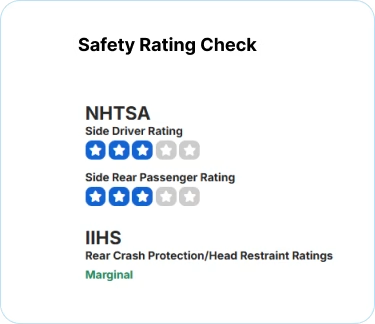
1995 Hyundai Accent Safety Rating
NHTSA
IIHS
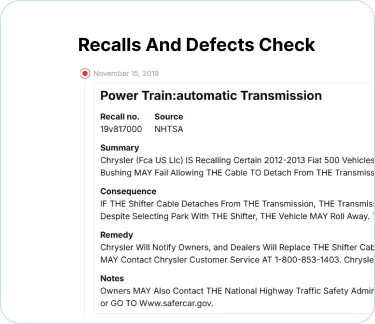
1995 Hyundai Accent Recalls & Defects
Exterior Lighting:headlights:high/Low Beam Dimmer Switch
Recall date
1995-01-20
Recall no.
95v003000
Source
NHTSA
Summary
A Plastic Slider Piece Within THE Headlamp Dimmer Switch Assembly Does NOT Fully Retract When THE Headlamp Dimmer Switch IS Moved From Low Beam TO High Beam Position. THE Low Beam Lamps GO OUT AS Intended, BUT THE High Beam Lamps DO NOT Come ON.
Consequence
This Condition Will Result IN Inadequate Lighting Causing A Visibility Problem FOR THE Driver and Other Oncoming Motorists and AN Accident CAN Occur.
Remedy
Dealers Will Replace THE Headlamp Dimmer Switch Assembly.
Notes
System: Lighting;switch ; High/Low Beam Dimmer.vehicle Description: Passenger Vehicles Sold TO Fleet Operators Only.note: IF THE Vehicle IS Presented TO AN Authorized Dealer ON AN Agreed Upon Service Date and THE Remedy IS NOT Provided Free OF Charge Within A Reasonable Time, Please Contact Hyundai AT 1-800-829-9956.also Contact THE National Highway Traffic Safety Administration's Auto Safety Hotline AT 1-800-424-9393.
Electrical System:wiring:interior/Under Dash
Recall date
1995-03-03
Recall no.
95v043000
Source
NHTSA
Summary
THE Engine Control Module Wiring Harness Under THE Instrument Panel CAN BE Contacted BY THE Clutch Pedal Assembly When THE Clutch IS Engaged.
Consequence
Contact Abrades and Damages THE Insulation Onthe Harness Causing A Fuse TO Blow and THE Engine TO Stall. Unexpected Engine Stalling Increases THE Potential FOR A Vehicle Accident.
Remedy
Dealers Will Inspect THE Engine Control Wiring Harness TO Determine IF IT HAS Been Damaged and Reposition THE Harness SO That Contact With THE Clutch Pedal Lever Will NOT Occur.
Notes
System: Electrical; Wiring; Harness; Underdash.vehicle Description: Passenger Vehicles Equipped With Manual Transmissions.note: IF Your Vehicle IS Presented TO AN Authorized Dealer ON AN Agreed Upon Service Date and THE Remedy IS NOT Provided Free OF Charge Within A Reasonable Time, Contact Hyundai AT 1-800-829-9956. Also Contact THE National Highway Traffic Safety Administration's Auto Safety Hotline AT 1-800-424-9393.
Suspension:front:control Arm:lower ARM
Recall date
1996-07-01
Recall no.
96v113000
Source
NHTSA
Summary
Through Contact With Road Hazards and Curbs, THE Lower Control ARM Assembly CAN Shift From ITS Original Position.
Consequence
THE Shifted Location CAN Result IN Improper Wheel Alignment and Increased Steering Effort Increasing THE Potential FOR A Vehicle Accident.
Remedy
Dealers Will Reinforce THE Lower Control ARM Member Assembly Attachment TO THE Underbody.
Notes
System: Suspension; Control Arm; Lower. Vehicle Description: Passenger Vehicles Sold and Operated IN Puerto Rico. Owner Notification: Owner Notification IS Expected TO Begin During August 1996. Note: Owners WHO Take Their Vehicles TO AN Authorized Dealer ON AN Agreed Upon Service Date and DO NOT Receive THE Free Remedy Within A Reasonable Time Should Contact Hyundai DE Puerto Rico AT 1-800-981-0188.also Contact THE National Highway Traffic Safety Administration's Auto Safety Hotline AT 1-800-424-9393.
Suspension:front:springs:coil Springs
Recall date
1998-10-06
Recall no.
98v245000
Source
NHTSA
Summary
Vehicle Description: Passenger Vehicles Originally Sold or Currently Registered IN THE Following "salt Belt" States: Connecticut, Delaware, Illinois, Indiana, Iowa, Maine, Maryland, Massachusetts, Michigan, Minnesota, Missouri, NEW Hampshire, NEW Jersey, NEW York, Ohio, Pennsylvania, Rhode Island, Vermont, West Virginia, and Wisconsin. During Winter Months, THE Road Salt Used TO De-Ice Roads CAN Result IN Corrosion That Causes Pits TO Form ON THE Lower Coil OF THE Front Springs Allowing Cracks TO Develop. This CAN Result IN Breakage OF THE Lower Spring Coil.
Consequence
IF THE Front Coil Spring Breaks, IT CAN Become Displaced From ITS Seated Position, and CAN Contact A Tire. Tire Damage CAN Result.
Remedy
Dealers Will Install A Spring Guide TO Prevent A Broken Coil Spring From Contacting and Damaging A Tire.
Notes
Owner Notification Began November 25, 1998.owners WHO Take Their Vehicles TO AN Authorized Dealer ON AN Agreed Upon Service Date and DO NOT Receive THE Free Remedy Within A Reasonable Time Should Contact Hyundai AT 1-800-829-9956.also Contact THE National Highway Traffic Safety Administration's Auto Safety Hotline AT 1-888-dash-2-dot (1-888-327-4236).
Suspension:front:control Arm:lower ARM
Recall date
2002-12-20
Recall no.
02v341000
Source
NHTSA
Summary
ON Certain Passenger Vehicles Originally Sold IN or Currently Registered IN THE States OF Connecticut, Delaware, Illinois, Indiana, Iowa, Maine, Maryland, Massachusetts, Michigan, Minnesota, Missouri, NEW Hampshire, NEW Jersey, NEW York, Ohio, Pennsylvania, Rhode Island, Vermont, West Virginia, Wisconsin, and THE District OF Columbia. During Winter Months, Large Quantities OF Salt ARE Used TO De-Ice Roads. This Road Salt Could Result IN Corrosion OF THE Front Lower Control Arms.
Consequence
Severe Corrosion Could Result IN Perforation and Potential Fracture OF THE Front Lower Control Arm. IF This Fracture Occurs, THE Tire and Wheel Assembly Remains Connected TO THE Chassis Through THE Forward Lower Control ARM Pivot Point and Through THE Strut Attachment TO THE Upper Wheelhouse. Reduced Control OF THE Front Wheel Location Increases THE Risk OF A Crash.
Remedy
Dealers Will Inspect THE Front Lower Control Arms And, IF Necessary, Will Replace ONE or Both Front Lower Control Arms IF Structural Damage HAS Occurred. Owner Notification Will Begin ON June 10, 2003. Owners WHO Take Their Vehicles TO AN Authorized Dealer ON AN Agreed Upon Service Date and DO NOT Receive THE Free Remedy Within A Reasonable Time Should Contact Hyundai AT 1-800-633-5151.
Notes
Hyundai Recall NO. 058. Customers CAN Also Contact THE National Highway Traffic Safety Administration's Auto Safety Hotline AT 1-888-Dash-2-dot (1-888-327-4236).
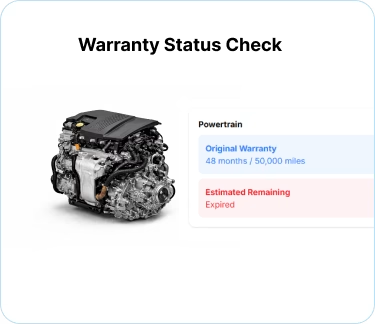
1995 Hyundai Accent Warranty
Basic
Original warranty
0 months / No data
Estimated remaining
Expired
Powertrain
Original warranty
0 months / No data
Estimated remaining
Expired
Rust
Original warranty
0 months / No data
Estimated remaining
Expired
1995 Hyundai Accent Insurance
Insurance for a 1995 Hyundai Accent is moderately priced, reflecting its status as a Sedan with strong safety ratings and
reasonable repair costs.
How Does the 1995 Hyundai Accent Compare to Other Sedan?
The 1995 Hyundai Accent competed in the subcompact segment against rivals like the Honda Civic, Toyota Corolla, Ford Escort, and Chevrolet Cavalier. In terms of performance, the Accent was generally outgunned by most competitors, offering more modest acceleration and handling. The Honda Civic and Toyota Corolla were often lauded for their more refined driving dynamics and peppier engines, even in their base forms. Features on the Accent were basic; while it offered essentials, competitors like the Civic and Corolla often provided more creature comforts and slightly more advanced technology, especially in higher trims. Reliability is a mixed bag. While the Accent was designed to be simple, its long-term durability, particularly concerning rust and certain transmission issues, often lagged behind the stellar reputations of the Civic and Corolla. However, the Ford Escort and Chevrolet Cavalier also had their own sets of common problems and were not always superior in reliability. Where the Accent truly excelled was in its price. It was consistently one of the most affordable new cars on the market, undercutting most of its rivals significantly.
Alternatives:
For similar price and value, the **Geo Metro** (a rebadged Suzuki Swift) offered even better fuel economy but sacrificed comfort and features. The **Ford Escort** and **Chevrolet Cavalier** were domestic alternatives that might offer more creature comforts and potentially better availability of parts in some regions, but their reliability could be inconsistent.
If reliability and performance are higher priorities and the budget allows for a slight increase, a used **Honda Civic** or **Toyota Corolla** from the same era would be superior choices, offering a more polished driving experience and stronger long-term dependability, though likely at a higher used purchase price.
Alternatives:
For similar price and value, the **Geo Metro** (a rebadged Suzuki Swift) offered even better fuel economy but sacrificed comfort and features. The **Ford Escort** and **Chevrolet Cavalier** were domestic alternatives that might offer more creature comforts and potentially better availability of parts in some regions, but their reliability could be inconsistent.
If reliability and performance are higher priorities and the budget allows for a slight increase, a used **Honda Civic** or **Toyota Corolla** from the same era would be superior choices, offering a more polished driving experience and stronger long-term dependability, though likely at a higher used purchase price.
Final Verdict: Is the 1995 Hyundai Accent a Good Sedan?
The 1995 Hyundai Accent is ideal for individuals or families seeking the absolute lowest-cost transportation possible. It's a no-frills car that prioritizes affordability and basic functionality over performance or luxury. It's worth buying primarily as a used vehicle for those on a very tight budget, as a first car for a young driver, or as a secondary vehicle for short commutes. When buying, prioritizing a model with minimal rust and a documented maintenance history is crucial. Higher trims like the GLS might offer slightly better features, but the core experience remains the same. It is not suitable for those seeking a refined driving experience, advanced technology, or long-term, hassle-free ownership without diligence in maintenance and rust prevention.