
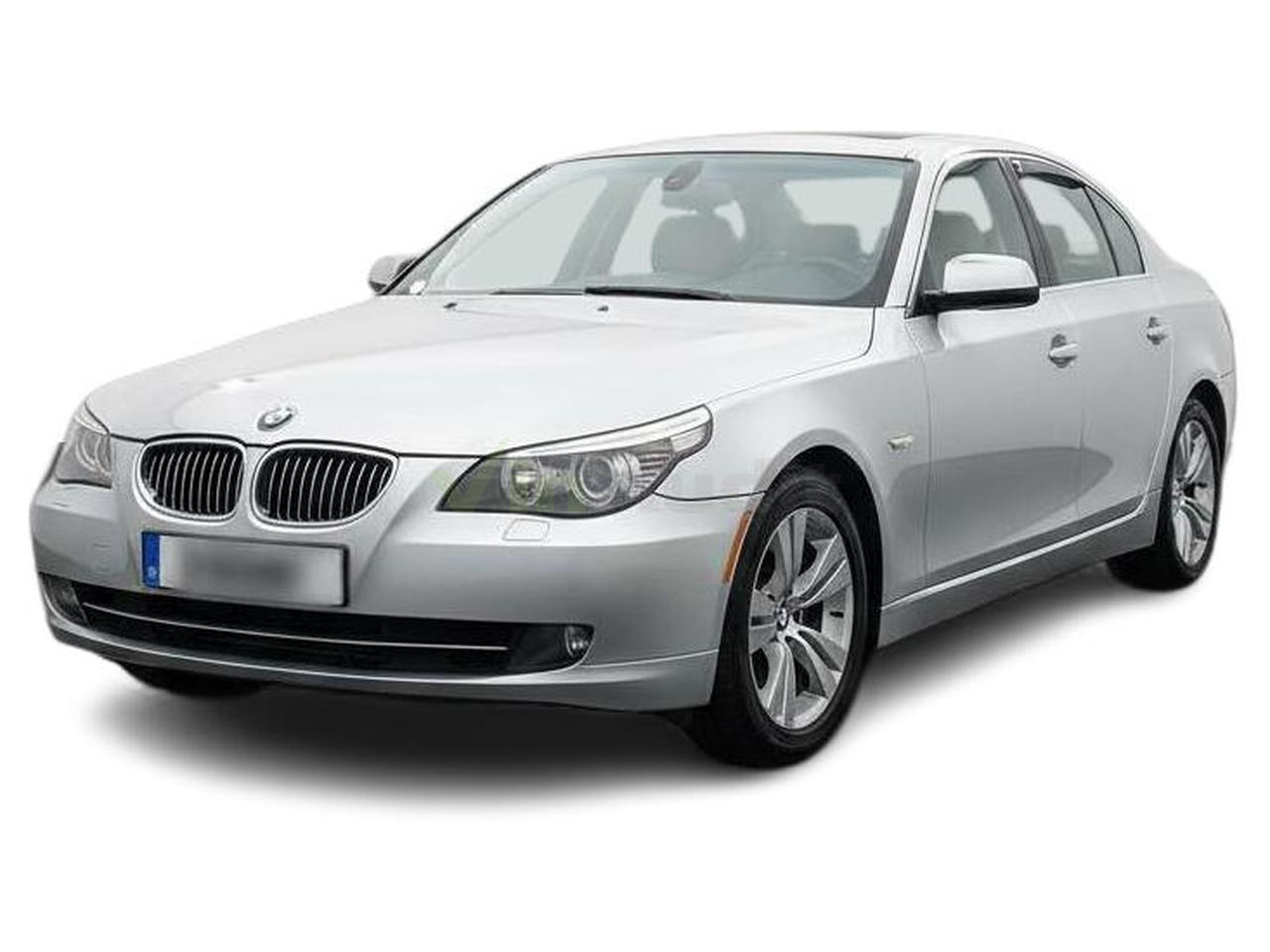
The Good
The 2010 BMW 5-Series offers a compelling blend of advantages. Its potent engines and agile handling deliver an emotional "Ultimate Driving Machine" experience, while the refined interior and comfortable ride appeal to practical buyers seeking luxury. Its distinctive design retains timeless appeal, and for its class, it provides reasonable efficiency. Today, it offers strong used market value for a premium sedan.
The Bad
The 2010 BMW 5-Series has known weaknesses to watch out for, primarily concerning its complex electrical systems like iDrive, and common issues such as oil leaks from valve covers and oil pan gaskets. Cooling system components can also be problematic. High maintenance and repair costs, especially for the V8 (550i) and N54 twin-turbo (535i) engines, are significant considerations for prospective owners.
2010 BMW 5-Series: Quick Overview
Here is a bullet-point summary of key specifications for the 2010 BMW 5-Series (E60/E61 generation):
- Engine Options:
- 528i: 3.0-liter naturally aspirated inline-6 (N52), 230 horsepower, 200 lb-ft of torque.
- 535i: 3.0-liter twin-turbocharged inline-6 (N54), 300 horsepower, 300 lb-ft of torque.
- 550i: 4.8-liter naturally aspirated V8 (N62), 360 horsepower, 360 lb-ft of torque.
- M5: 5.0-liter naturally aspirated V10 (S85), 500 horsepower, 384 lb-ft of torque (high-performance model).
- Transmission: Most commonly 6-speed automatic; 6-speed manual available on some trims (e.g., 535i, M5).
- Fuel Economy (EPA estimated, automatic transmission):
- 528i: Approximately 18 MPG city / 28 MPG highway.
- 535i: Approximately 17 MPG city / 26 MPG highway.
- 550i: Approximately 15 MPG city / 23 MPG highway.
- 0-60 MPH Acceleration (approximate manufacturer data/estimates):
- 528i: 6.5 - 7.0 seconds.
- 535i: 5.5 - 6.0 seconds.
- 550i: 5.0 - 5.5 seconds.
- M5: Around 4.5 seconds.
- Towing Capacity: While not a primary feature for the sedan in the North American market, European models (especially Touring/wagon) could be equipped for towing capacities up to around 3,500 lbs, depending on configuration and region. US sedans generally have very limited or no official towing capacity.
- Trim-Level Features:
- Standard features (varies by trim): iDrive infotainment system, power windows/locks, automatic climate control, Dakota leatherette upholstery, power front seats, dynamic cruise control, bi-xenon adaptive headlights, stability control, and ABS.
- 528i: Entry-level, well-equipped with core luxury features, 17-inch alloy wheels.
- 535i: Adds the more powerful twin-turbo I6 engine, often includes sport-tuned suspension and available xDrive all-wheel drive.
- 550i: Features the potent V8 engine, often includes premium leather, larger alloy wheels (e.g., 18-inch), Logic7 premium audio, and additional luxury appointments as standard or common options.
- M5: Comprehensive performance enhancements including unique exterior styling, sport suspension, upgraded braking system, M-specific interior with sport seats, and enhanced electronics.
- Common Options: Navigation system, head-up display, active cruise control, active steering, heated front and rear seats, parking assist, Comfort Access keyless entry, and a power rear sunshade.
2010 BMW 5-Series Specifications
Vehicle Information
| Year | 2010 |
| Make | BMW |
| Model | 5-Series |
| Trim | - |
| Style | 4-Door |
| Type | Sedan |
| Category | Mid-Size Car |
Manufacturing Details
| Made In | Germany |
| Manufacturing City | DINGOLFING |
Dimensions
| Doors | 4-Door |
| Curb Weight | 1680.1 kg |
| Gross Vehicle Weight Rating | - |
| Overall Height | 148.08 cm |
| Overall Length | 485.39 cm |
| Overall Width | 184.66 cm |
| Wheelbase Length | 288.8 cm |
| Standard Seating | 5 |
Engine & Performance
| Engine | 3L I6 |
| Engine Size | 3L |
| Engine Cylinders | 6 |
| Transmission | Automatic |
| Transmission Type | Automatic |
| Transmission Speeds | 6-Speed |
| Drivetrain | All-Wheel Drive |
Additional Features
| Anti-Brake System | 4-Wheel ABS |
| Steering Type | Rack & Pinion |
Pricing
| Manufacturer Suggested Retail Price (MSRP) | $48,100 USD |
| Invoice Price | $44,250 USD |
| Delivery Charges | $825 USD |
Vehicle History Report
Specifications
History
Events
History Check
Check
Check
Check
Check
Listings
Recalls
Check
Analysis
What Problems Does the 2010 BMW 5-Series Have?
A common theme across the E60 platform is electrical issues. Owners frequently report problems with the iDrive system, including display failures or controller malfunctions. Various sensors, such as ABS wheel speed sensors and crankshaft position sensors, can fail, leading to dashboard warning lights and performance issues. Window regulators are also known to fail. Parasitic battery drains can be an intermittent nuisance, often stemming from electronic modules not properly shutting down.
Engine-specific problems are a significant concern:
- For the 528i (N52 engine), failures of the electric water pump are notoriously common and can lead to overheating. Oil leaks from the valve cover gasket and oil filter housing gasket are also prevalent.
- The 535i (N54 twin-turbo engine) is infamous for issues with its high-pressure fuel pump (HPFP), fuel injectors, and turbocharger wastegate rattles, all of which were subjects of extended warranties or recalls for earlier N54 years, but residual problems can persist. Carbon buildup on intake valves is also a common maintenance item requiring walnut blasting.
- The 550i (N62 V8 engine) is prone to significant oil consumption due to failing valve stem seals, an expensive repair. Leaks from the alternator bracket gasket and oil pan gasket are also frequent. A plastic coolant pipe running through the engine's "valley" can also fail, leading to coolant loss.
Suspension components, such as control arm bushings and sway bar links, wear out, affecting ride quality and handling. Issues with the Dynamic Drive (active roll stabilization) system, leading to fluid leaks, can also occur.
Regarding recalls, the 2010 5-Series may be subject to the widespread Takata airbag inflator recall, so checking the VIN is crucial. There was also a recall for the blower motor wiring that could pose a fire risk. Owners should always verify open recalls via BMW or NHTSA resources for any specific VIN.
Long-term reliability largely depends on meticulous maintenance and proactive repair. Deferred maintenance on these complex vehicles inevitably leads to substantial repair bills.
How long will the 2010 BMW 5-Series last?
However, long-term durability is heavily contingent on meticulous and proactive maintenance. Weaknesses over time primarily involve the degradation of plastic and rubber components within the cooling system and engine bay, leading to leaks and failures. Electrical issues tend to become more frequent as sensors and modules age. Suspension components also require replacement at higher mileages. The cost of ownership significantly increases beyond 100,000 miles due to these common wear-and-tear items and the expense of specialized BMW parts and labor.
What Technology & Safety Features are Included?
At its core, the vehicle featured BMW's iDrive infotainment system. While earlier E60 models used the more basic CCC (Car Communication Computer), 2010 models often came with the more advanced CIC (Car Information Computer) system, offering improved graphics, a more intuitive menu structure, and better functionality for navigation and media. Standard tech included push-button start/stop, dual-zone automatic climate control, and a multi-function steering wheel. An optional, sophisticated navigation system with real-time traffic updates was a desirable upgrade.
For entertainment, a CD/MP3 player was standard, often accompanied by an AUX input. Many models included a USB port for external media, and the optional Logic7 premium audio system delivered exceptional sound quality. A DVD changer was also available as an option.
Driver-assistance features further enhanced the driving experience and safety. These included available Adaptive Headlights that swiveled with steering input, front and rear Parking Distance Sensors (PDC), Active Cruise Control (ACC) which maintained a set distance from the vehicle ahead, and a Head-Up Display (HUD) projecting key information onto the windshield. Lane Departure Warning (LDW) was another advanced option.
In terms of safety, the 2010 5-Series was well-equipped. Standard features included Dynamic Stability Control (DSC), Anti-lock Braking System (ABS), Dynamic Brake Control (DBC), and a comprehensive airbag system with front, side-impact, and head airbags for front and rear occupants. Run-flat tires were often standard. Other safety innovations included Brake Fade Compensation and Brake Drying. The E60 5-Series generally performed well in crash tests. The Insurance Institute for Highway Safety (IIHS) rated the 5-Series "Good" in its Moderate Overlap Front, Side Impact, and Rear Crash Protection tests, though Roof Strength was rated "Marginal" for the sedan. The National Highway Traffic Safety Administration (NHTSA) typically gave the E60 high ratings, often 4 or 5 stars in frontal and side impact tests for its model years.
What Colors Options are Available?
2010 BMW 5-Series Prices and Market Value
Today, the used market prices for a 2010 BMW 5-Series reflect significant depreciation. Depending on condition, mileage, and trim, prices generally range from $5,000 to $15,000 for standard models (528i, 535i, 550i). Well-preserved M5 models can still fetch $15,000 to $30,000 or more, especially if they are manual transmission variants. Depreciation is steep, typical for a luxury European sedan. Factors severely impacting resale value include a lack of comprehensive maintenance records, high mileage, known engine-specific issues (especially for N54, N62, and S85 engines), and overall cosmetic condition. Conversely, a documented service history, lower mileage, and desirable optional features can command better prices.
2010 BMW 5-Series Cost of Ownership
Maintenance and repair costs are the most significant factors making this vehicle costly to own. BMW parts are expensive, and specialized labor is often required, leading to high shop rates. Common issues like cooling system failures, oil leaks, and engine-specific problems can result in substantial repair bills. Therefore, the 2010 BMW 5-Series is unequivocally a costly vehicle to own, requiring a significant budget for its upkeep.
2010 BMW 5-Series Fuel Efficiency
2010 BMW 5-Series Safety Rating
NHTSA
IIHS
2010 BMW 5-Series Recalls & Defects
Service Brakes, Hydraulic:power Assist:vacuum
Fuel System, Other:storage:fuel Gauge System
Electrical System:12v/24v/48v Battery:cables
Engine and Engine Cooling:exhaust System:emission Control:crankcase (Pcv)
Engine and Engine Cooling:engine
2010 BMW 5-Series Warranty
Basic
Powertrain
Rust
2010 BMW 5-Series Insurance
reasonable repair costs.
How Does the 2010 BMW 5-Series Compare to Other Sedan?
In terms of performance, the 5-Series typically stands out as the "driver's car." Its sharp steering, balanced chassis, and powerful engines (especially the 535i and 550i) offer a more engaging and sporty driving experience than most competitors. The Mercedes E-Class (W211 or early W212 if considering 2010) offers a more comfort-oriented, refined ride. The Audi A6 provides a blend of sportiness and luxury, often with its quattro all-wheel-drive advantage. The Lexus GS and Infiniti M models offer solid performance but generally lack BMW's ultimate dynamic prowess.
Regarding features, all these luxury sedans were well-appointed. BMW's iDrive system, while advanced, was polarizing; some found it less intuitive than Mercedes' COMAND or Audi's MMI, especially earlier versions. Premium audio, navigation, advanced climate control, and various driver aids were common across the board, either standard or optional.
Reliability is where the 2010 5-Series often faces its toughest competition. While robust when new, the complexity and specific engine issues (N54 HPFP, N62 valve stem seals) mean it generally ranks lower in long-term reliability surveys compared to the Lexus GS or Infiniti M, which are often lauded for their bulletproof dependability. The Mercedes E-Class and Audi A6 of similar vintage also have their share of common, expensive issues as they age, making their long-term reliability profile somewhat comparable to BMW's.
For price in the used market, the 2010 5-Series generally depreciates similarly to the Mercedes E-Class and Audi A6. The Lexus GS and Infiniti M might hold their value slightly better due to their reputation for lower running costs.
Recommended Alternatives:
- For significantly better long-term reliability and potentially lower ownership costs, consider a 2007-2011 Lexus GS 350 or an Infiniti M35/M45. They offer strong performance and luxury with fewer common expensive faults.
- If you still desire German luxury but want a slightly different flavor, the 2010 Mercedes-Benz E-Class (W212 generation) offers a more serene and comfortable ride, often with a more traditional luxury interior. The Audi A6 (C6 generation) provides excellent quattro AWD capability and a high-quality interior, but may share similar maintenance cost profiles with BMW.
Final Verdict: Is the 2010 BMW 5-Series a Good Sedan?
It is absolutely worth buying as a used vehicle, given its massive depreciation, but under very specific conditions. Prospective buyers must prioritize a vehicle with a complete and verifiable service history, ideally from a BMW specialist. A thorough pre-purchase inspection (PPI) by an independent BMW mechanic is non-negotiable to uncover potential hidden issues.
For those seeking the lowest long-term costs, the 528i with the N52 engine generally presents fewer common catastrophic issues than the twin-turbo 535i (N54) or V8 550i (N62). However, all trims will demand a significant budget for maintenance and potential repairs. Owners should have an emergency fund for unexpected expenses. If these conditions are met, the 2010 5-Series can deliver an incredibly rewarding and luxurious driving experience at a fraction of its original price.

Drew B
Drew is a seasoned automotive expert and contributor to VinCheck.info. With nearly 15 years of experience as a former Porsche technician, he brings a wealth of hands-on knowledge to his writing. Born in North Carolina, a region renowned for its deep-rooted NASCAR culture, Drew developed a passion for cars early in life, often building and working on vehicles from a young age. At VINCheck, Drew leverages his extensive technical background to provide in-depth analyses of various vehicles. His articles often focus on engine performance, reliability, and maintenance insights, offering readers practical information grounded in real-world experience. Some of his notable contributions include reviews on the Mazda CX-5's longevity and detailed examinations of engine options for models like the 2011 Toyota Camry and Tacoma