
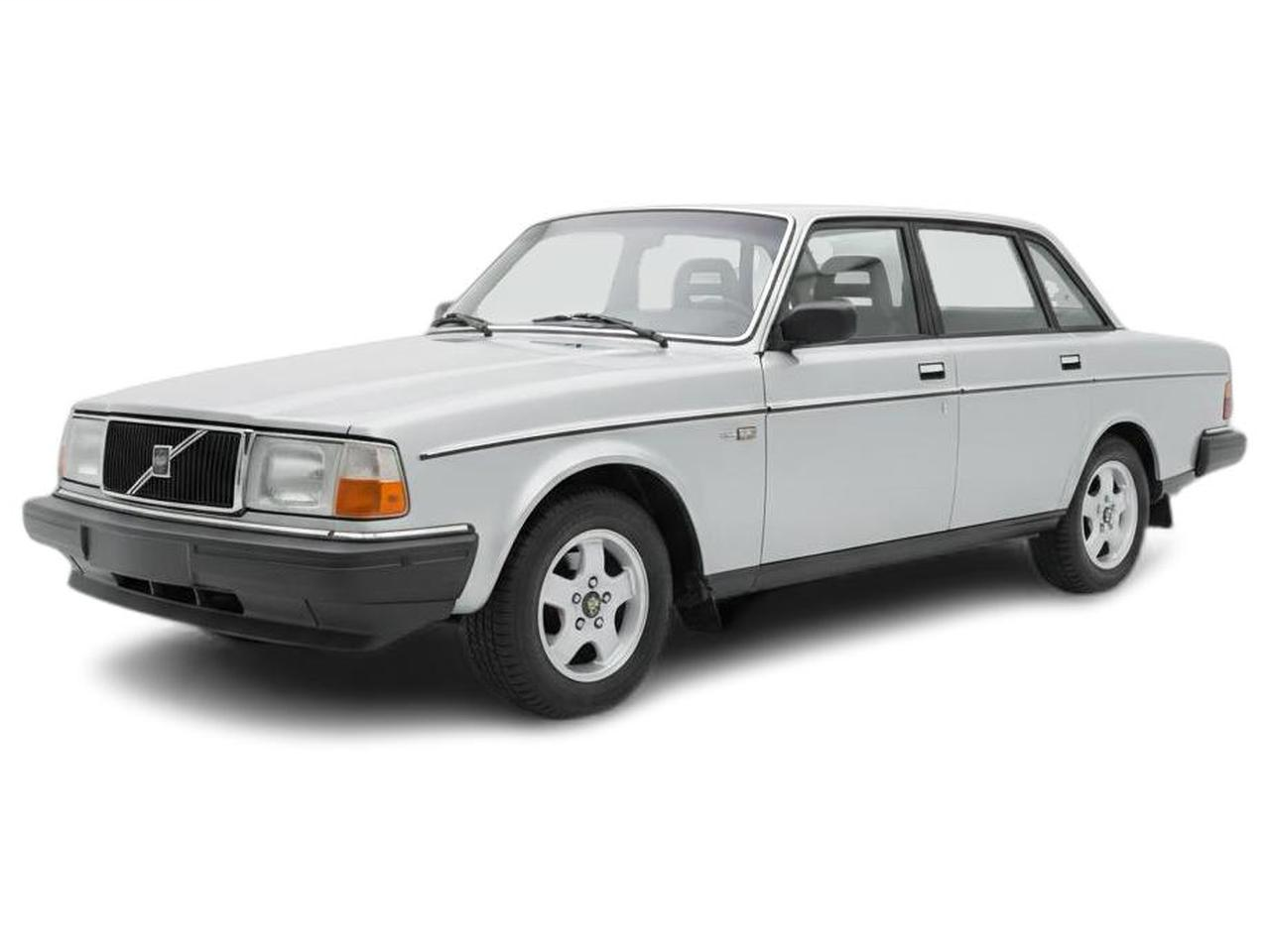
The 1986 Volvo 240, a stalwart of Swedish automotive engineering, enjoyed a production run that spanned from 1983 to 1993 for the 240 series. Available as a robust sedan and a cavernous station wagon, key trims included the GL and the DL. New, pricing ranged roughly from $13,000 to $20,000. Its enduring popularity stems from its legendary reputation for safety, durability, and utilitarian design, making it a pragmatic choice for families and individuals prioritizing longevity.
The Good
The 1986 Volvo 240 excels in rock-solid reliability and a comfortable, spacious interior, appealing to practical minds. Emotionally, its iconic, unassuming design evokes a sense of timeless security and dependable stewardship, offering exceptional long-term value.
The Bad
When considering a 1986 Volvo 240, watch for potential rust, particularly around wheel wells and rocker panels. Electrical gremlins, aging cooling systems, and worn suspension components are also common concerns that require diligent inspection.
1986 Volvo 240: Quick Overview
- Engine Options: Primarily featured a 2.3-liter inline-four cylinder engine. This was typically fuel-injected (B230F) or, in some performance variants, offered with turbocharging (B230FT).
- Horsepower: The standard B230F engine typically produced around 114 horsepower. The turbocharged B230FT variant could produce upwards of 162 horsepower.
- Fuel Economy: Generally ranged from 18-22 MPG in the city and 24-29 MPG on the highway, depending on the engine and transmission configuration.
- 0-60 Times: These were not a strong suit for the 240. Non-turbo models typically took around 10-12 seconds. Turbo models could achieve 0-60 mph in the 8-9 second range.
- Towing Capacity: While not designed as a primary towing vehicle, the robust construction allowed for light towing. Specific towing capacities were not a commonly advertised spec, but generally suitable for small trailers.
- Trim-Level Features (GL/DL):
DL (base model): Typically included power steering, adjustable steering wheel, AM/FM radio, cloth upholstery, and basic instrumentation. - GL (higher trim): Often added amenities such as air conditioning, power windows and locks (though manual were common), cruise control, upgraded interior trim, alloy wheels, and sometimes a sunroof. The GL also often received the more powerful engine options or was more likely to be optioned with the turbocharger.
- Body Styles: Available as a 4-door Sedan and a 5-door Station Wagon.
- Transmission: Typically offered with a 4-speed manual transmission with overdrive or a 3-speed (or later 4-speed) automatic transmission.
1986 Volvo 240 Specifications
Vehicle Information
| Year | 1986 |
| Make | Volvo |
| Model | 240 |
| Trim | - |
| Style | GL Wagon RWD 4MT 2.3L I4 |
| Type | Wagon |
| Category | passenger |
Manufacturing Details
| Made In | Sweden |
| Manufacturing City | GOTHENBURG |
Dimensions
| Doors | 4-Door |
| Curb Weight | - |
| Gross Vehicle Weight Rating | - |
| Overall Height | - |
| Overall Length | - |
| Overall Width | - |
| Wheelbase Length | - |
| Standard Seating | - |
Engine & Performance
| Engine | 2.3L I4 |
| Engine Size | 2.3L |
| Engine Cylinders | 4 |
| Transmission | 4-Speed Manual |
| Transmission Type | Manual |
| Transmission Speeds | 4-Speed |
| Drivetrain | Rear-Wheel Drive |
Additional Features
| Anti-Brake System | - |
| Steering Type | - |
Pricing
| Manufacturer Suggested Retail Price (MSRP) | - |
| Invoice Price | - |
| Delivery Charges | - |
Vehicle History Report
Vehicle
Specifications
Specifications
Ownership
History
History
All History
Events
Events
NMVTIS Title
History Check
History Check
Salvage/Rebuilt
Check
Check
Accident
Check
Check
Theft
Check
Check
Open Lien
Check
Check
Past Sale
Listings
Listings
Safety
Recalls
Recalls
Odometer
Check
Check
Market Price
Analysis
Analysis
What Problems Does the 1986 Volvo 240 Have?
The 1986 Volvo 240 is renowned for its exceptional long-term reliability, a testament to its robust engineering. However, like any vehicle of this vintage, certain issues can arise. Frequently reported problems often revolve around the aging electrical system; components like the alternator, starter, and various sensors can eventually fail. Premature wear on the oxygen sensor can also impact fuel efficiency and emissions. The fuel pump is another component that may require replacement over time.
Cooling system issues are also not uncommon. Radiators can develop leaks, and heater cores are susceptible to clogging or failure, leading to poor heating performance. Rubber hoses and seals can degrade, necessitating replacements to prevent leaks and overheating. Suspension components, such as ball joints, tie rod ends, and bushings, will eventually wear out, leading to a less precise ride and potential steering issues. The aging of these rubber and metal parts is a natural consequence of their age and mileage.
Rust is a significant concern, particularly in areas prone to road salt. Look for corrosion on the fenders, rocker panels, door bottoms, and around the rear wheel wells. The exhaust system is also susceptible to rust.
While specific recalls for the 1986 model year might be limited, general long-term reliability concerns for the 240 series often include potential issues with the automatic transmission not shifting smoothly if not maintained. The engines themselves, particularly the B230F, are generally bulletproof if properly maintained with regular oil changes. Turbocharged models (B230FT) require more diligent maintenance to prevent turbocharger damage.
It's worth noting that the build quality is exceptional, and many of these issues are repairable with readily available parts and a good mechanic, contributing to its continued appeal for those who value longevity.
Cooling system issues are also not uncommon. Radiators can develop leaks, and heater cores are susceptible to clogging or failure, leading to poor heating performance. Rubber hoses and seals can degrade, necessitating replacements to prevent leaks and overheating. Suspension components, such as ball joints, tie rod ends, and bushings, will eventually wear out, leading to a less precise ride and potential steering issues. The aging of these rubber and metal parts is a natural consequence of their age and mileage.
Rust is a significant concern, particularly in areas prone to road salt. Look for corrosion on the fenders, rocker panels, door bottoms, and around the rear wheel wells. The exhaust system is also susceptible to rust.
While specific recalls for the 1986 model year might be limited, general long-term reliability concerns for the 240 series often include potential issues with the automatic transmission not shifting smoothly if not maintained. The engines themselves, particularly the B230F, are generally bulletproof if properly maintained with regular oil changes. Turbocharged models (B230FT) require more diligent maintenance to prevent turbocharger damage.
It's worth noting that the build quality is exceptional, and many of these issues are repairable with readily available parts and a good mechanic, contributing to its continued appeal for those who value longevity.
How long will the 1986 Volvo 240 last?
Based on owner data and anecdotal evidence, the 1986 Volvo 240 is capable of achieving well over 200,000 miles, with many examples exceeding 300,000 miles and even reaching 400,000 or more. With diligent and consistent maintenance, including regular oil changes, fluid flushes, and timely replacement of wear items like belts and hoses, these cars can offer decades of service. The long-term durability is a hallmark of Volvo's robust build quality. Weaknesses that emerge over time are primarily due to the natural aging of rubber and plastic components, and potential corrosion, rather than inherent mechanical flaws, reinforcing the importance of preventative maintenance and regular inspections.
What Technology & Safety Features are Included?
The 1986 Volvo 240, reflecting its era, prioritizes fundamental safety and utility over advanced technology. Built-in tech was limited to the essentials. Entertainment typically consisted of an AM/FM radio, often with a cassette player as an optional upgrade. Later models and higher trims might have offered a more sophisticated sound system, but digital connectivity or sophisticated infotainment systems were nonexistent.
Driver-assistance features were also rudimentary by today's standards. Cruise control was an optional feature available on some models, primarily the GL trim. Power windows and door locks were also optional, with manual operation being the standard for many configurations.
However, where the 1986 Volvo 240 truly excelled was in its inherent safety features, which were revolutionary for their time and remain a core part of its appeal. Standard safety equipment included three-point seatbelts (a significant innovation when introduced), crumple zones designed to absorb impact energy, and a reinforced passenger cage. Anti-lock braking systems (ABS) were becoming available as an option on some Volvo models around this time, but their prevalence on the 1986 240 would have been limited and likely an expensive option.
Volvo's commitment to safety meant that even without modern electronic aids, the 240 offered a high level of passive safety. While specific NHTSA or IIHS crash-test ratings for the exact 1986 model may not be readily available in modern databases, Volvo vehicles of this period consistently performed exceptionally well in independent safety tests, earning a reputation for being among the safest cars on the road. The robust construction and thoughtful design contributed to excellent occupant protection in collisions.
Driver-assistance features were also rudimentary by today's standards. Cruise control was an optional feature available on some models, primarily the GL trim. Power windows and door locks were also optional, with manual operation being the standard for many configurations.
However, where the 1986 Volvo 240 truly excelled was in its inherent safety features, which were revolutionary for their time and remain a core part of its appeal. Standard safety equipment included three-point seatbelts (a significant innovation when introduced), crumple zones designed to absorb impact energy, and a reinforced passenger cage. Anti-lock braking systems (ABS) were becoming available as an option on some Volvo models around this time, but their prevalence on the 1986 240 would have been limited and likely an expensive option.
Volvo's commitment to safety meant that even without modern electronic aids, the 240 offered a high level of passive safety. While specific NHTSA or IIHS crash-test ratings for the exact 1986 model may not be readily available in modern databases, Volvo vehicles of this period consistently performed exceptionally well in independent safety tests, earning a reputation for being among the safest cars on the road. The robust construction and thoughtful design contributed to excellent occupant protection in collisions.
What Colors Options are Available?
1986 Volvo 240 Prices and Market Value
When new, the 1986 Volvo 240 typically retailed between approximately $13,000 and $20,000, depending on the body style and trim level. As a utilitarian and durable vehicle, the 240 experienced a moderate rate of depreciation initially, but its value has stabilized considerably in the used market, especially for well-maintained examples. Current used market prices can range widely, from as little as $2,000 for project cars needing significant work, to $5,000-$10,000 for clean, low-mileage examples in good condition. Factors affecting resale value include overall condition, mileage, maintenance history, originality, and the presence of desirable options like a sunroof or turbocharger. Immaculate, low-mileage vehicles in sought-after trims can even command prices exceeding typical market values due to their cult following.
1986 Volvo 240 Cost of Ownership
The 1986 Volvo 240 is generally economical to own. Insurance costs are typically low due to its age and safety record. Fuel economy, while not exceptional by modern standards, is reasonable for its class. Maintenance is straightforward and parts are widely available, keeping routine service costs moderate. Repairs, when needed, are often predictable and can be handled by many independent mechanics, preventing exorbitant dealership fees. Overall, the 240 offers a very cost-effective ownership experience, especially when considering its longevity and robustness, making it an economical choice for long-term transportation.
1986 Volvo 240 Fuel Efficiency
Fuel Type
Gasoline
Fuel Capacity
-
City Mileage
-
Highway Mileage
-
1986 Volvo 240 Recalls & Defects
Warning: Undefined array key "components" in /home/dev2/public_html/wp-content/themes/Divi-child/content/recalls.php on line 4
Deprecated: htmlspecialchars(): Passing null to parameter #1 ($string) of type string is deprecated in /home/dev2/public_html/wp-content/themes/Divi-child/content/recalls.php on line 4
Recall date
1986-09-15
Recall no.
Warning: Undefined array key "campaign" in /home/dev2/public_html/wp-content/themes/Divi-child/content/recalls.php on line 14
Deprecated: htmlspecialchars(): Passing null to parameter #1 ($string) of type string is deprecated in /home/dev2/public_html/wp-content/themes/Divi-child/content/recalls.php on line 14
Warning: Undefined array key "campaign" in /home/dev2/public_html/wp-content/themes/Divi-child/content/recalls.php on line 14
Deprecated: htmlspecialchars(): Passing null to parameter #1 ($string) of type string is deprecated in /home/dev2/public_html/wp-content/themes/Divi-child/content/recalls.php on line 14
Source
NHTSA
Summary
IN THE Event OF A Low Speed Frontal Impact, Engine Movement Could Cause THE Throttle Cable Sleeve TO BE Pulled OUT OF THE Adjusting Fitting and NOT Return TO ITS Original Position or Idle Position. Consequence OF Defect: IF This Occurs AN Increase IN Engine Speed Would Result, Making Car Difficult TO Control IN A Post Collision Environment, Which CAN Cause More Serious Damage And/Or Injuries.
Consequence
Remedy
Replace Throttle Cables.
Notes
Warning: Undefined array key "notes" in /home/dev2/public_html/wp-content/themes/Divi-child/content/recalls.php on line 35
Deprecated: htmlspecialchars(): Passing null to parameter #1 ($string) of type string is deprecated in /home/dev2/public_html/wp-content/themes/Divi-child/content/recalls.php on line 35
Warning: Undefined array key "notes" in /home/dev2/public_html/wp-content/themes/Divi-child/content/recalls.php on line 35
Deprecated: htmlspecialchars(): Passing null to parameter #1 ($string) of type string is deprecated in /home/dev2/public_html/wp-content/themes/Divi-child/content/recalls.php on line 35
1986 Volvo 240 Insurance
Insurance for a 1986 Volvo 240 is moderately priced, reflecting its status as a Wagon with strong safety ratings and
reasonable repair costs.
reasonable repair costs.
How Does the 1986 Volvo 240 Compare to Other Wagon?
The 1986 Volvo 240 competed in a segment populated by sedans and wagons focused on practicality and durability. Its primary rivals included vehicles like the , , and . In terms of performance, the Volvo 240 was generally outpaced by some of its rivals, particularly the more performance-oriented trims of the Taurus or the lighter Japanese sedans. Its 0-60 times were modest, prioritizing steady power delivery over brisk acceleration.
Features on the Volvo 240 were functional rather than luxurious or technologically advanced. While rivals like the Taurus began offering more electronic features and creature comforts, the 240 stuck to a more utilitarian approach, emphasizing build quality and safety. The Toyota Camry offered a more refined interior and often better fuel efficiency.
Where the 1986 Volvo 240 truly stood out was in its legendary reliability and safety. While the Taurus and Celebrity were prone to more frequent mechanical issues, and the Camry, though reliable, didn't possess the same tank-like build, the Volvo was built to last. Its safety ratings and construction were superior to most of its contemporaries.
In terms of price, the Volvo 240 was often positioned slightly higher than American counterparts like the Ford Taurus, reflecting its premium European build and reputation. It was generally comparable to or slightly more expensive than the Toyota Camry when new.
Similar Alternatives:
- Another Swedish stalwart offering unique character, strong safety, and robust build, though often with a more performance-oriented, enthusiast appeal.
- A more luxurious but considerably more expensive option, offering similar build quality and long-term durability.
Better Alternatives (depending on priorities):
- If prioritizing a more refined ride, better fuel economy, and slightly more modern features, the Camry is a strong contender.
- Similar to the Camry, offering a balance of reliability, efficiency, and slightly more engaging driving dynamics.
Features on the Volvo 240 were functional rather than luxurious or technologically advanced. While rivals like the Taurus began offering more electronic features and creature comforts, the 240 stuck to a more utilitarian approach, emphasizing build quality and safety. The Toyota Camry offered a more refined interior and often better fuel efficiency.
Where the 1986 Volvo 240 truly stood out was in its legendary reliability and safety. While the Taurus and Celebrity were prone to more frequent mechanical issues, and the Camry, though reliable, didn't possess the same tank-like build, the Volvo was built to last. Its safety ratings and construction were superior to most of its contemporaries.
In terms of price, the Volvo 240 was often positioned slightly higher than American counterparts like the Ford Taurus, reflecting its premium European build and reputation. It was generally comparable to or slightly more expensive than the Toyota Camry when new.
Similar Alternatives:
-
-
Better Alternatives (depending on priorities):
-
-
Final Verdict: Is the 1986 Volvo 240 a Good Wagon?
The 1986 Volvo 240 is ideal for pragmatic buyers who prioritize safety, unparalleled durability, and utilitarian functionality over performance or cutting-edge technology. It's an excellent choice for individuals or families seeking an affordable, reliable vehicle for daily commuting, errands, or even as a dependable workhorse, especially the station wagon variant. It is definitely worth buying for those who appreciate its robust engineering and are willing to perform regular maintenance. Buying a used model is the only option. Look for well-maintained examples, ideally with documented service history. Sedans and especially station wagons in GL trim with the B230F engine offer the best balance of features and reliability. Avoid heavily modified or neglected examples.

Jovan
Jovan specializes in interpreting vehicle records and making sense of VIN data. With over 10 years of experience in the automotive data industry, his work ensures that every report is clear, accurate, and useful for car buyers.