by VIN, Year, Make, Model by License Plate

2020 Blue Bird School/Transit Bus Overview, Reviews, Ratings & Specs

Rating: 0.00
Based on 0 Owner Reviews
Simon A | May 1, 2026
The 2020 Blue Bird School/Transit Bus is a robust and highly recognizable vehicle, a staple in pupil transportation and various transit applications for decades. Built upon a legacy of safety and durability, its primary body style is a conventional transit bus. While Blue Bird continuously evolves its models, the 2020 iteration benefits from long-standing design principles. Key trims often revolve around capacity and specialized configurations, such as standard school bus, activity bus, or shuttle bus variants. New pricing can range significantly based on customization, but typically starts in the six figures. Its enduring popularity stems from its reputation for unparalleled safety features and exceptional longevity, making it a trusted choice for districts and operators.
The Good

The 2020 Blue Bird School/Transit Bus excels in reliability and safety, offering peace of mind for emotional buyers and dependable service for practical needs. Its durable construction ensures long-term value, while spacious interiors and functional design prioritize passenger comfort and efficient operation. This bus is built to last.

The Bad

While generally robust, potential buyers should watch out for the inherent weight and handling characteristics of a large bus, which require specialized driving skills. Fuel efficiency, especially for older or heavier configurations, can be a concern. Maintenance can also be more involved and costly than smaller vehicles.

2020 Blue Bird School/Transit Bus: Quick Overview

  • Engine Options: The 2020 Blue Bird School/Transit Bus typically offers robust diesel engine options from reputable manufacturers. Common choices include Cummins ISB or ISL series engines, known for their durability and torque, essential for hauling large numbers of passengers and operating in demanding conditions. Some models might also be available with gasoline engine options, though less common for heavy-duty school bus applications.
  • Horsepower: Horsepower ratings generally vary depending on the specific engine chosen and the bus configuration. For diesel engines like the Cummins ISB, horsepower can range from approximately 200 hp to over 300 hp. The ISL models would typically offer higher power outputs. These figures are optimized for consistent torque delivery, crucial for acceleration with a full load and for climbing inclines.
  • Fuel Economy: Fuel economy is highly variable and depends heavily on engine selection, transmission, load weight, driving conditions, and route topography. For a large vehicle like a school or transit bus, expect fuel economy to be in the range of 6-10 miles per gallon (MPG). This is a practical consideration for fleet operators managing substantial mileage.
  • 0-60 Times: 0-60 mph times are not typically a primary performance metric for school or transit buses, as their design prioritizes safety, capacity, and operational efficiency over acceleration speed. When loaded, these vehicles would have considerably slower acceleration, likely well over 30 seconds, with the emphasis on smooth and controlled movement.
  • Towing Capacity: School and transit buses are not designed for towing. Their purpose is to transport passengers, and towing is not an applicable specification for these vehicle types.
  • Trim-Level Features: Key trim-level features are highly customizable and depend on the intended use.
    • School Bus Trims: Feature extensive safety equipment like flashing warning lights, stop arms, reinforced body structures, high-back padded seats, emergency exits, and child-specific safety restraints.
    • Transit Bus Trims: Focus on passenger accessibility and comfort, often including features like kneeling suspensions, wheelchair lifts or ramps, wider aisles, comfortable seating with more legroom, interior lighting suited for public transport, and digital display systems for routes.
    • Activity Bus Trims: Blend school bus safety with transit bus amenities, often featuring more comfortable seating, entertainment options, and enhanced luggage storage, while still adhering to stringent school bus safety standards.
    • General Features: Across all trims, standard features include durable construction, heavy-duty chassis, powerful HVAC systems, robust braking systems, and often, driver-focused ergonomics for long operational hours. Customization options are extensive, allowing for specific seating layouts, auxiliary heating, specialized lighting, and advanced communication systems.

2020 Blue Bird School/Transit Bus Specifications

Vehicle Information
Year 2020
Make Blue Bird
Model School/Transit Bus
Trim -
Style -
Type Bus
Category Bus
Manufacturing Details
Made In United States
Manufacturing City FORT VALLEY
Dimensions
Doors -
Curb Weight -
Gross Vehicle Weight Rating 33000 pounds
Overall Height -
Overall Length -
Overall Width -
Wheelbase Length -
Standard Seating -
Engine & Performance
Engine Ford 6.8L
Engine Size 6.8L
Engine Cylinders 8
Transmission -
Transmission Type -
Transmission Speeds -
Drivetrain -
Additional Features
Anti-Brake System -
Steering Type -
Pricing
Manufacturer Suggested Retail Price (MSRP) -
Invoice Price -
Delivery Charges -

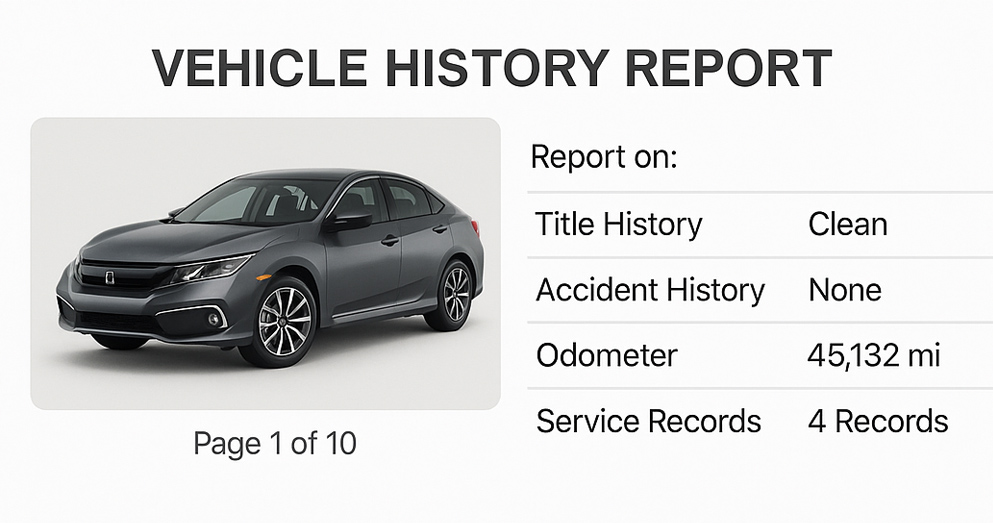
Vehicle History Report

Vehicle
Specifications
Ownership
History
All History
Events
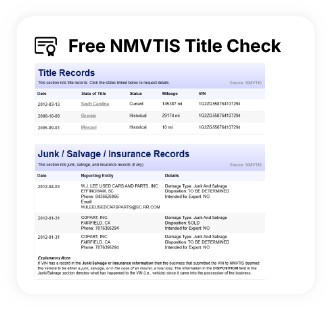
NMVTIS Title
History Check
Salvage/Rebuilt
Check
Accident
Check
Theft
Check
Open Lien
Check
Past Sale
Listings
Safety
Recalls
Odometer
Check
Market Price
Analysis

What Problems Does the 2020 Blue Bird School/Transit Bus Have?

For the 2020 Blue Bird School/Transit Bus, issues are generally less about specific model year defects and more about the inherent complexities of operating heavy-duty vehicles. However, common areas of concern across many large buses, including Blue Birds, can involve the drivetrain and emission systems, particularly with diesel engines. Over time, exhaust gas recirculation (EGR) systems and diesel particulate filters (DPFs) can become clogged, leading to performance issues and requiring specialized cleaning or repair. These are often maintenance-related but can be costly.

Electrical gremlins, while not rampant, can sometimes manifest, affecting auxiliary systems like lights, audio, or climate control. This can be due to the sheer number of components and wiring harnesses in such large vehicles.

Another aspect to consider is the wear and tear on suspension components, brake systems, and tires, which are subjected to significant stress due to the vehicle's weight and frequent use. Regular, diligent maintenance is crucial to mitigate these issues.

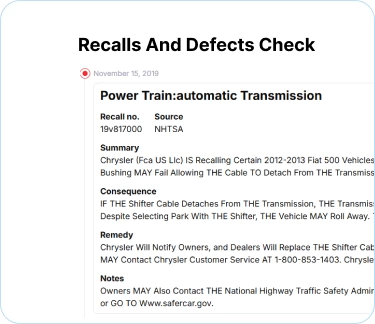
Recalls for Blue Bird buses, as with any manufacturer, are issued as needed based on safety investigations. Specific recalls for the 2020 model year would need to be checked against official NHTSA databases. However, historically, recalls can involve brake system components, seat belt assemblies, or potential fire hazards related to specific parts or installations. It is imperative for owners and operators to stay informed about any active recalls and ensure they are addressed promptly.

Long-term reliability is generally a strong suit for Blue Bird, as these buses are engineered for high mileage and demanding service. However, the longevity of specific components like transmissions, engines, and chassis will heavily depend on the quality and frequency of maintenance performed. Neglecting routine checks and fluid changes can significantly shorten the lifespan of these expensive components.

How long will the 2020 Blue Bird School/Transit Bus last?

Based on owner data and typical usage patterns, a 2020 Blue Bird School/Transit Bus, with consistent and proper maintenance, can realistically achieve between 15 to 20 years of service, often accumulating over 250,000 to 500,000 miles. Their construction is designed for longevity, with robust chassis and high-quality components. Long-term durability is a hallmark, with many school districts operating their Blue Birds well beyond the average vehicle lifespan. Weaknesses that can emerge over time, particularly past 10 years or 300,000 miles, often relate to the aging of auxiliary systems, such as HVAC, and potential corrosion on body panels in areas with harsh climates. Engine and transmission longevity are highly dependent on maintenance, but these core components are known for their resilience.

What Technology & Safety Features are Included?

The 2020 Blue Bird School/Transit Bus prioritizes safety and functionality over extensive infotainment. Standard safety features are comprehensive, reflecting its primary role in transporting vulnerable passengers. This includes a reinforced steel body cage construction, dual-pane safety glass, high-back padded seats designed to protect occupants in a rollover, emergency exits (roof hatches, rear windows, and side exits), and a highly visible amber and red warning light system for school buses, accompanied by a stop arm. Advanced braking systems, often ABS, are standard for improved control.

Driver-assistance features are generally minimal on standard school bus configurations, with the focus on driver awareness and vehicle control. However, optional features can include backup cameras for improved rear visibility, especially in tight maneuvering situations, and sometimes, advanced monitoring systems for driver behavior. For transit configurations, features like kneeling suspension systems to ease passenger boarding and wheelchair lifts/ramps are common, enhancing accessibility.

Built-in technology for passengers is typically limited to essential communication systems like intercoms for the driver. Entertainment systems are usually aftermarket additions, if at all. However, optional upgrades might include more sophisticated driver information displays, GPS tracking, and even Wi-Fi for certain transit or activity bus applications.

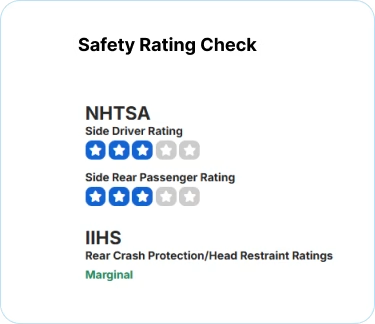
Crash-test ratings for school buses are not conducted in the same way as passenger cars by organizations like IIHS or NHTSA. Instead, school buses are built to meet stringent federal safety standards (FMVSS) that govern their design and construction to maximize occupant protection in various crash scenarios. These standards focus on structural integrity, occupant restraint, fire resistance, and emergency egress. While specific crash-test data isn't publicly available in the traditional sense, the inherent design and rigorous testing to meet FMVSS standards are why school buses are considered among the safest vehicles on the road for passenger transport.

What Colors Options are Available?

We’re working on this section!
In the meantime, feel free to explore the other sections for more content.

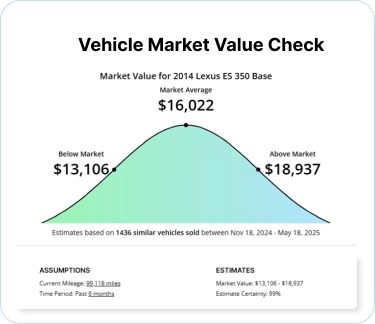
2020 Blue Bird School/Transit Bus Prices and Market Value

When new, the 2020 Blue Bird School/Transit Bus prices vary significantly based on configuration, options, and customization, but typically start in the $80,000 to $150,000 range, often extending higher for specialized models. Depreciation on these vehicles is generally slower than for typical commercial vans or passenger vehicles, especially for well-maintained school bus models. This is due to their robust construction and the consistent demand from school districts and transit authorities.

Current used market prices for a 2020 model can range from $40,000 to $100,000 or more, depending on mileage, condition, engine type, and specific features. Factors affecting resale value include maintenance history, overall structural integrity, the presence of corrosion, and the operational hours or miles accumulated. Buses used in demanding municipal or charter services may depreciate faster than those used primarily for school routes with controlled mileage. Specific safety features and recent mechanical work can also bolster resale value.

2020 Blue Bird School/Transit Bus Cost of Ownership

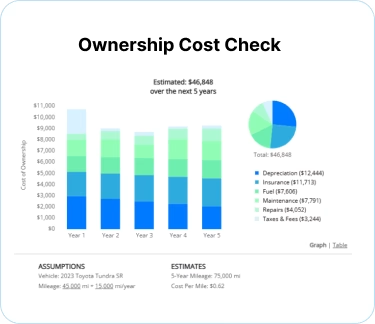
Owning a 2020 Blue Bird School/Transit Bus involves significant costs. Insurance premiums can be substantial due to the vehicle's size, passenger capacity, and specialized use, requiring commercial-grade policies. Fuel costs, especially with diesel engines, are a major ongoing expense, with MPG typically in the 6-10 range. Maintenance and repair costs are also higher than for smaller vehicles; while durable, parts and specialized labor for large-duty vehicles are more expensive. Routine maintenance like oil changes, filter replacements, and brake services are critical. Overall, this vehicle is not economical to own in the same way a car is; it is a high-investment, high-operating-cost asset primarily for commercial or institutional use where its utility outweighs the expense.

2020 Blue Bird School/Transit Bus Fuel Efficiency

Fuel Type Gasoline
Fuel Capacity -
City Mileage -
Highway Mileage -

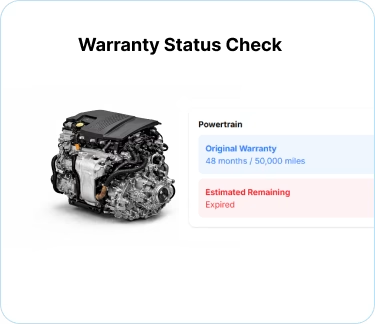
2020 Blue Bird School/Transit Bus Warranty

Basic
Original warranty 0 months / No data
Estimated remaining Expired
Powertrain
Original warranty 0 months / No data
Estimated remaining Expired
Rust
Original warranty 0 months / No data
Estimated remaining Expired

2020 Blue Bird School/Transit Bus Insurance

Insurance for a 2020 Blue Bird School/Transit Bus is moderately priced, reflecting its status as a Bus with strong safety ratings and
reasonable repair costs.

How Does the 2020 Blue Bird School/Transit Bus Compare to Other Bus?

The 2020 Blue Bird School/Transit Bus competes in a segment dominated by a few key manufacturers, primarily IC Bus and Thomas Built Buses, with other niche players also present.

Performance: In terms of raw performance like acceleration, all these heavy-duty buses are comparable, prioritizing torque and hauling capacity over speed. Engine options from Cummins and similar providers are standard across competitors, offering similar power and reliability. The Blue Bird is known for its solid, predictable performance in carrying large groups.

Features: Feature sets are often highly customizable. Blue Bird is renowned for its exceptional safety features, often considered a benchmark in the industry, with robust construction and driver visibility. IC Bus and Thomas also offer comprehensive safety packages, with variations in interior comfort and accessibility options. For transit applications, kneeling features and wheelchair access are comparable across brands, though specific designs may differ.

Reliability: Blue Bird has a long-standing reputation for extreme durability and reliability, often cited as a key reason for its popularity. IC Bus and Thomas Built Buses are also well-regarded for their robust builds and long service lives, with reliability being a primary purchasing factor for fleet managers. All three brands are built to withstand rigorous daily use.

Price: Pricing is generally competitive across the primary players. A similarly equipped 2020 model from IC Bus or Thomas Built Buses would likely fall within the same price bracket as a Blue Bird, depending heavily on specific options and configurations. Customization can drive prices up significantly for all.

Alternatives: For a standard school bus, the most direct and often equivalent alternatives are the IC CE Series and the Thomas Built Saf-T-Liner MVP. Both offer comparable safety, reliability, and customization. For transit or shuttle applications, one might also consider models from companies like Goshen Coach or Arboc, which often focus more on specialized passenger transport and accessibility, though these might differ in scale and primary purpose. For a more vocational or commercial transit focus, brands like Freightliner (with custom bus body builders) could also be considered, though less common for dedicated school transport. Ultimately, the choice often comes down to dealer support, specific customization needs, and historical fleet preference.

Final Verdict: Is the 2020 Blue Bird School/Transit Bus a Good Bus?

The 2020 Blue Bird School/Transit Bus is ideal for school districts, charter bus companies, municipalities, and organizations requiring dependable, safe, and durable passenger transportation for large groups. It is worth buying for its exceptional safety record, proven longevity, and robust construction, which translate to a lower total cost of ownership over its extensive lifespan, despite higher initial and operating costs.

Buying new is advantageous for fleets needing specific customizations and the latest safety technologies, offering full warranty and predictable maintenance. However, purchasing a well-maintained used 2020 model can provide excellent value, especially if mileage is reasonable and maintenance records are transparent. Specific trims to consider depend on the application: standard school bus for pupil transport, activity bus for multi-purpose needs, or transit configurations for accessible public transport. Overall, for its intended purpose, the Blue Bird remains a highly recommended and worthwhile investment.

2020 Blue Bird School/Transit Bus Owner Reviews

0.00
Consumer Rating, Based on 0 Consumer Reviews
Overall rating
Cancel
Thank You for Your Review!

We truly appreciate the time and effort you took to share your experience with us.

Uh oh!

Something went wrong, please try again later.

Author Image
Simon A

Simon is a contributor to VinCheck, where he provides articles and reviews on various automotive topics. His work focuses on delivering accurate and up-to-date information about used cars, helping readers make informed decisions.