
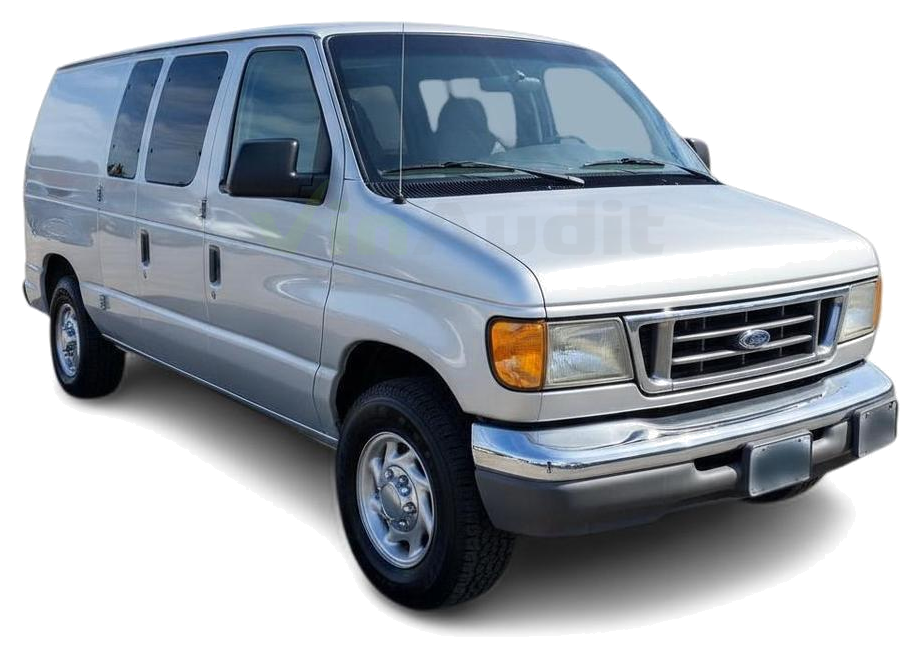
The Good
The 1998 Ford E-250 boasts strong performance for hauling and towing thanks to its powerful V8 and V10 engine options, paired with remarkable reliability and simple, durable mechanics. While not luxurious, it offers decent comfort and immense interior space for its class. Its functional, classic van design appeals to those seeking raw utility or a blank canvas for customization. It represents excellent value on the used market, offering immense utility for practical buyers, while emotional buyers appreciate its rugged, go-anywhere spirit and potential for unique adventures.
The Bad
Known weaknesses of the 1998 Ford E-250 include notoriously poor fuel economy due to its large engines and heavy curb weight. Its handling can be cumbersome and truck-like. Interior ergonomics are basic, and materials are not premium. Common mechanical issues can include exhaust manifold leaks, front suspension wear, and potential rust around body panels and the frame, especially in salt-belt regions. Spark plug ejection on early Triton engines is also a concern.
1998 Ford E-250: Quick Overview
- Engine Options: The 1998 E-250 offered a range of robust powertrains:
- 4.2L "Essex" V6 (Gasoline): Primarily available in lighter-duty E-150s, but could be optioned in some E-250s for specific applications.
- 4.6L "Triton" V8 (Gasoline): A common and capable option.
- 5.4L "Triton" V8 (Gasoline): Offering more power and torque, ideal for heavier loads.
- 6.8L "Triton" V10 (Gasoline): The most powerful gasoline engine, reserved for the heaviest-duty applications and greater towing.
- 7.3L "Power Stroke" V8 Turbo Diesel: A highly sought-after and legendary diesel engine known for its durability and immense torque.
- Horsepower: Horsepower varied significantly by engine:
- 4.2L V6: Approximately 205 hp
- 4.6L V8: Approximately 215 hp
- 5.4L V8: Approximately 235 hp
- 6.8L V10: Approximately 260-275 hp
- 7.3L Power Stroke Diesel: Approximately 215 hp, but with significantly higher torque.
- Fuel Economy: Generally poor, as expected for a full-size van of this era.
- Gasoline V8/V10: Typically 10-14 MPG combined.
- 7.3L Diesel: Generally better, around 14-18 MPG combined, sometimes higher on the highway.
- 0-60 MPH Times: These are not performance vehicles. Expect leisurely acceleration.
- Gasoline engines: Typically 10-12 seconds, varying with load and gearing.
- Towing Capacity: A strong point for the E-250.
- Depending on engine, axle ratio, and configuration, towing capacity ranged from approximately 7,000 lbs to over 9,000 lbs, making it excellent for trailers, boats, or RVs.
- Trim-Level Features: The E-250 focused on utility and durability.
- XL Trim: The basic workhorse. Included vinyl seats, rubber flooring, manual windows/locks, AM/FM radio, basic instrumentation. Designed for durability and easy cleaning in commercial use.
- XLT Trim: Offered more creature comforts. Added cloth seats, carpeting, power windows/locks, air conditioning, cruise control, tilt steering, upgraded audio, and chrome exterior accents.
- Chateau Trim (Passenger Van): The most luxurious passenger variant, typically found in E-150s but sometimes available for E-250 passenger models. Featured higher-quality cloth or optional leather seating, more extensive interior trim, advanced audio, and often a rear air conditioning system. E-250 specific features often included heavy-duty suspension, higher GVWR, and available limited-slip differentials to handle heavier loads.
1998 Ford E-250 Specifications
Vehicle Information
| Year | 1998 |
| Make | Ford |
| Model | E-250 |
| Trim | - |
| Style | - |
| Type | Van |
| Category | Cargo Van |
Manufacturing Details
| Made In | United States |
| Manufacturing City | LORAIN |
Dimensions
| Doors | 3-Door |
| Curb Weight | 5080 pounds |
| Gross Vehicle Weight Rating | 7200 pounds |
| Overall Height | 83.40 inches |
| Overall Length | 211.90 inches |
| Overall Width | 79.30 inches |
| Wheelbase Length | 138.00 inches |
| Standard Seating | 2 |
Engine & Performance
| Engine | 5.4L V8 |
| Engine Size | 5.4L |
| Engine Cylinders | 8 |
| Transmission | 4-Speed Automatic |
| Transmission Type | Automatic |
| Transmission Speeds | 4-Speed |
| Drivetrain | Rear-Wheel Drive |
Additional Features
| Anti-Brake System | 2-Wheel ABS |
| Steering Type | Recirculating |
Pricing
| Manufacturer Suggested Retail Price (MSRP) | $19,595 |
| Invoice Price | $17,166 |
| Delivery Charges | - |
Vehicle History Report
Specifications
History
Events
History Check
Check
Check
Check
Check
Listings
Recalls
Check
Analysis
What Problems Does the 1998 Ford E-250 Have?
Steering and suspension components are also common failure points due to the vehicle's weight and usage. Owners frequently report worn ball joints, tie rods, and bushings leading to loose steering and uneven tire wear. The heavy-duty leaf springs in the rear are durable, but front coil springs and shocks will eventually sag or wear out. Transmission issues, particularly with the 4R70W or 4R100 automatic transmissions, can arise, especially if the vehicle was regularly used for heavy towing or was poorly maintained. Overheating and delayed shifts are common symptoms.
Rust is a significant long-term concern, particularly in regions that use road salt. It affects rocker panels, wheel wells, door bottoms, and crucially, the frame. Fuel system problems, such as fuel pump failure, are also common with age and mileage. Electrical gremlins, including faulty dashboard gauges, power window motors, and general wiring degradation, tend to crop up as the vehicle ages.
Regarding recalls, the 1998 E-Series, like many vehicles of its time, had several. Notable recalls for the broader E-Series generation around this period included issues with the cruise control deactivation switch, which could potentially overheat and cause fires (affecting many Ford vehicles), certain seat belt buckle assemblies failing, and concerns over steering shaft components. It's always advisable for prospective buyers to check the NHTSA database for specific recalls associated with the vehicle's VIN to ensure all applicable recalls have been addressed.
How long will the 1998 Ford E-250 last?
What Technology & Safety Features are Included?
For entertainment, the standard offering was typically an AM/FM radio, with optional upgrades including a cassette player or a single-disc CD player. Passenger van trims (like XLT or Chateau) might have offered additional rear speakers or basic rear climate controls for passenger comfort. Bluetooth connectivity, USB ports, or advanced sound systems were not available.
Driver-assistance features, as understood today, were virtually non-existent. The E-250 offered fundamental aids like standard power steering and power brakes. Optional conveniences included cruise control, which was a significant "tech" feature for highway driving, and a tilt steering wheel for driver comfort. There were no features like blind-spot monitoring, lane-keeping assist, or backup cameras.
In terms of safety features, the 1998 E-250 included essential passive safety measures. Driver and front passenger airbags were typically standard or a widely available option. Three-point seatbelts were provided for front occupants, and lap belts for most rear seats in passenger configurations. Anti-lock brakes (ABS) were an important optional or standard safety feature on many E-250 models, enhancing braking control. However, advanced safety systems like stability control, traction control, or electronic brake-force distribution were not yet common in this vehicle class and were not present.
Crash-test ratings for full-size vans of this era from organizations like the IIHS or NHTSA are less comprehensive than for modern passenger vehicles. While specific detailed frontal or side-impact ratings for the 1998 E-250 might not be readily available in modern databases, full-size vans historically did not perform as well in early frontal offset crash tests due to their limited front crumple zones. However, their sheer mass and body-on-frame construction offered a perceived sense of safety in many real-world scenarios. It's important to remember that safety standards and test methodologies have evolved significantly since 1998.
What Colors Options are Available?
1998 Ford E-250 Prices and Market Value
1998 Ford E-250 Cost of Ownership
1998 Ford E-250 Fuel Efficiency
1998 Ford E-250 Safety Rating
NHTSA
IIHS
1998 Ford E-250 Recalls & Defects
Equipment:other:labels
Equipment Adaptive/Mobility
Vehicle Speed Control
Vehicle Speed Control:cruise Control
Vehicle Speed Control
1998 Ford E-250 Warranty
Basic
Powertrain
Rust
1998 Ford E-250 Insurance
reasonable repair costs.
How Does the 1998 Ford E-250 Compare to Other Van?
In terms of performance, the E-250 was highly competitive. Ford offered a strong lineup of gasoline V8s (4.6L, 5.4L Triton) and the powerful 6.8L Triton V10, giving it excellent towing and hauling capabilities. Its standout was the optional 7.3L Power Stroke diesel, which offered superior torque and fuel economy for heavy-duty applications, a significant advantage over its gasoline-only Dodge rival. The Chevy Express/GMC Savana countered with robust Vortec V8s (5.0L, 5.7L, 6.5L Diesel for some years), which were also very capable. Dodge Ram Vans offered strong Magnum V8s (5.2L, 5.9L) but lacked a factory diesel option.
Features across all three full-size vans were quite similar: utilitarian, body-on-frame designs with basic interiors focused on durability and function rather than luxury. Ford's interior ergonomics were practical, and passenger versions (like the XLT) offered standard power accessories and air conditioning, much like its GM counterparts. The Ram Van was often perceived as slightly less refined but still offered similar core features.
Reliability was a strong suit for all three, as they were designed for strenuous commercial use. Ford's 7.3L Power Stroke diesel is legendary for its longevity. The gasoline Triton engines were generally durable, though the early spark plug ejection issue was a known flaw. GM's Vortec V8s also had a reputation for robust reliability. Dodge's Magnum engines were solid but could suffer from plenum gasket issues. All three are susceptible to rust and age-related wear on suspension and electrical components.
Regarding price, when new, all three were similarly positioned within the market segment for full-size vans. On the current used market, the Ford E-Series, particularly with the 7.3L diesel, and the Chevy Express/GMC Savana tend to hold their value better than the Dodge Ram Van, primarily due to higher demand and stronger aftermarket support for the engines.
Similar Alternatives: For a direct comparison as a used work or conversion van, the Chevrolet Express/GMC Savana (especially models with the 5.7L Vortec V8 or later 6.0L V8) are excellent and often equally reliable alternatives, offering similar utility and parts availability.
Better Alternatives (with caveats): If modern features, significantly better fuel economy, and refined driving dynamics are priorities, newer vans like the Ford Transit, Mercedes-Benz Sprinter, or Ram ProMaster are superior. However, they come at a much higher price point, have more complex systems, and might not offer the same raw towing capacity or simple repairability as the older E-250.
Final Verdict: Is the 1998 Ford E-250 a Good Van?
It is absolutely worth buying as a used vehicle, given its low initial purchase price and long-term durability, but only under certain conditions. Prioritize a well-maintained example with a clear service history. Thoroughly inspect for rust, especially on the frame and common body areas. The 7.3L Power Stroke diesel engine is highly recommended for those seeking maximum longevity, towing power, and better (relatively) fuel efficiency, though it often commands a premium. If purchasing a gasoline model, be aware of potential spark plug issues on the Triton engines. For comfort, opt for XLT trims; for pure utility, the XL suffices. Avoid poorly maintained examples; while parts are cheap, major repairs can negate the initial savings. Its value lies in its unpretentious utility and rugged reliability for those who need a workhorse, not a show pony.

Jovan
Jovan specializes in interpreting vehicle records and making sense of VIN data. With over 10 years of experience in the automotive data industry, his work ensures that every report is clear, accurate, and useful for car buyers.