
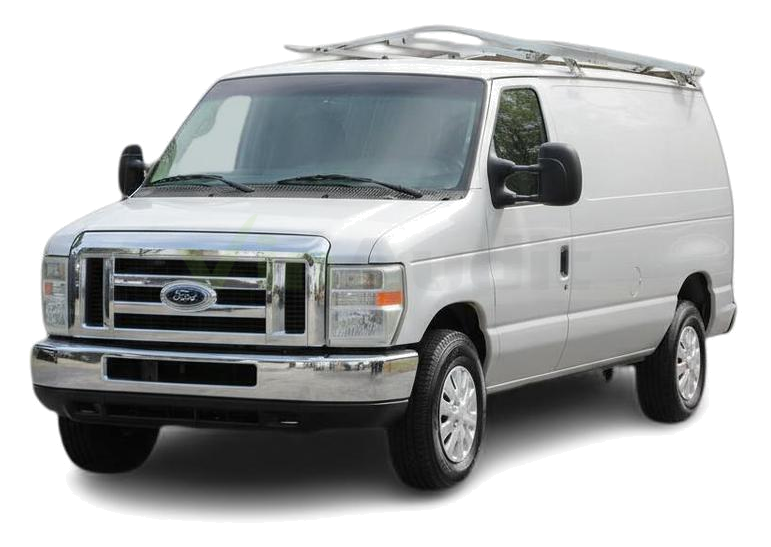
The Good
The 2009 Ford E-250 excels in practicality with its durable performance and proven reliability, offering immense value. Its spacious interior provides comfort for long hauls, while its utilitarian design prioritizes function. This van appeals to the practical buyer needing capability and the emotional buyer seeking freedom for adventure or business.
The Bad
When considering a 2009 Ford E-250, watch out for potential issues with the transmission, particularly on higher-mileage examples. Fuel economy is a notable weakness given its size and engine options. Interior materials can show wear, and some older models might exhibit rust, especially in salt-belt regions.
2009 Ford E-250: Quick Overview
- Engine Options: The 2009 Ford E-250 was typically offered with two main engine choices: a 4.6L Triton V8 and a 5.4L Triton V8.
- Horsepower: The 4.6L V8 produced approximately 225 horsepower, while the larger 5.4L V8 offered around 255 horsepower.
- Fuel Economy: Fuel economy is not a strong suit for the E-250. Expect figures in the range of 11-13 MPG city and 15-17 MPG highway, depending on the engine and configuration.
- 0-60 Times: Official 0-60 mph times are rarely published for commercial vans like the E-250, but expect acceleration to be leisurely, especially when loaded. Estimates place it in the 9-11 second range for unloaded models.
- Towing Capacity: The E-250 boasts impressive towing capabilities. Depending on the configuration (axle ratio, engine), towing capacity can range from approximately 7,000 lbs up to over 10,000 lbs, making it suitable for heavy loads.
- Trim-Level Features:
XL Trim: This is the base work-oriented trim. Standard features typically include vinyl flooring, durable cloth or vinyl seating, manual windows and door locks, a basic AM/FM stereo, and heavy-duty suspension. It prioritizes functionality and ease of cleaning.
XLT Trim: The XLT offers a step up in comfort and convenience. It often adds features like power windows and door locks, cruise control, a better audio system, upgraded interior trim, and sometimes a tilt steering wheel. Options could include passenger seating configurations for van models. - Body Styles: Available as both a Cargo Van and a Passenger Van, with various wheelbase options.
2009 Ford E-250 Specifications
Vehicle Information
| Year | 2009 |
| Make | Ford |
| Model | E-250 |
| Trim | - |
| Style | - |
| Type | Van |
| Category | Cargo Van |
Manufacturing Details
| Made In | United States |
| Manufacturing City | AVON LAKE |
Dimensions
| Doors | 3-Door |
| Curb Weight | 5225 pounds |
| Gross Vehicle Weight Rating | 8900 pounds |
| Overall Height | 84.10 inches |
| Overall Length | 237.00 inches |
| Overall Width | 79.30 inches |
| Wheelbase Length | 138.00 inches |
| Standard Seating | 2 |
Engine & Performance
| Engine | 4.6L V8 |
| Engine Size | 4.6L |
| Engine Cylinders | 8 |
| Transmission | 4-Speed Automatic |
| Transmission Type | Automatic |
| Transmission Speeds | 4-Speed |
| Drivetrain | Rear-Wheel Drive |
Additional Features
| Anti-Brake System | 4-Wheel ABS |
| Steering Type | Recirculating |
Pricing
| Manufacturer Suggested Retail Price (MSRP) | $28,085 |
| Invoice Price | $24,934 |
| Delivery Charges | $980 |
Vehicle History Report
Specifications
History
Events
History Check
Check
Check
Check
Check
Listings
Recalls
Check
Analysis
What Problems Does the 2009 Ford E-250 Have?
Another area to watch is the exhaust system, which can be prone to rust and leaks over time, especially in regions where roads are treated with salt during winter. Cooling system components, such as radiators and water pumps, can also wear out and require replacement. Some owners have also noted electrical gremlins, including issues with interior lights, power accessories, or sensor malfunctions.
Regarding recalls for the 2009 model year, specific recall campaigns would need to be checked with Ford or NHTSA based on the vehicle's VIN. However, general recall trends for the E-Series in this era sometimes involved issues related to airbags, fuel systems, or braking components. Long-term reliability hinges heavily on maintenance. Properly serviced E-250s, especially those with the V8 engines, can endure hundreds of thousands of miles. However, neglected maintenance, particularly fluid changes for the engine and transmission, can significantly shorten the lifespan and increase the likelihood of costly repairs. Rust can also be a concern, especially on the frame and body panels in areas exposed to moisture and salt.
How long will the 2009 Ford E-250 last?
What Technology & Safety Features are Included?
Built-in Tech & Entertainment: Standard entertainment typically consisted of a basic AM/FM radio with an optional CD player. Higher trims like the XLT might have offered an improved audio system with more speakers. Connectivity options were rudimentary by modern standards, lacking features like Bluetooth or USB ports in most configurations. Navigation systems were generally not integrated.
Driver-Assistance Features: Driver-assistance features were very limited. Backup sensors were sometimes available as an option on higher trims, but sophisticated systems like rearview cameras, lane departure warning, or adaptive cruise control were absent.
Safety Features: Standard safety equipment included front airbags for the driver and passenger. Anti-lock brakes (ABS) were also standard, providing crucial stopping power. Depending on the configuration, side-curtain airbags might have been an option, particularly for passenger van models, enhancing occupant protection in certain collision scenarios. Traction control was also available on some models.
Optional Features: Buyers could opt for various packages that added comfort and convenience, such as power windows and door locks (standard on XLT), cruise control, a tilt steering wheel, and enhanced interior lighting. For cargo van configurations, specialized shelving and upfitting options were commonly selected from Ford or aftermarket providers. For passenger versions, different seating configurations and climate control options were available.
Crash-Test Ratings: As a commercial vehicle, the E-250's crash-test ratings are not always directly comparable to passenger cars. However, the E-Series generally performed adequately in its class during its production run. The National Highway Traffic Safety Administration (NHTSA) ratings for similar E-Series models from this era indicated reasonable protection, though specific ratings for the 2009 E-250 should be verified through NHTSA's database. The focus was on structural integrity and occupant containment for its intended use.
What Colors Options are Available?
2009 Ford E-250 Prices and Market Value
Currently, the used market price for a 2009 Ford E-250 varies significantly. Expect prices to range from $5,000 to $15,000 or more, heavily influenced by mileage, condition, maintenance history, and geographical location. Cargo vans in good condition with lower mileage tend to command higher prices than passenger versions.
Depreciation for the E-250 has been steady but not as rapid as for many passenger vehicles, a testament to its durable nature and ongoing demand in commercial sectors. Factors affecting resale value include the presence of rust, the condition of the engine and transmission, tire wear, and whether it has been used heavily for commercial purposes. A well-documented maintenance history and a clean title will significantly boost its resale value. Specialized conversions (like RVs) can also increase value but may narrow the buyer pool.
2009 Ford E-250 Cost of Ownership
2009 Ford E-250 Fuel Efficiency
2009 Ford E-250 Safety Rating
NHTSA
IIHS
2009 Ford E-250 Recalls & Defects
Equipment Adaptive/Mobility
Equipment Adaptive/Mobility
Equipment Adaptive/Mobility
Equipment Adaptive/Mobility
Equipment Adaptive/Mobility
Equipment Adaptive/Mobility
Fuel System, Other:fuel Injection System
Fuel System, Other:delivery:hoses, Lines/Piping, and Fittings
Fuel System, Other:fuel Injection System
Equipment
Equipment Adaptive/Mobility
Equipment Adaptive/Mobility
Equipment Adaptive/Mobility
Equipment Adaptive/Mobility
Equipment Adaptive/Mobility
Equipment Adaptive/Mobility
Equipment Adaptive/Mobility
Equipment Adaptive/Mobility
Equipment:appliance:air Conditioner
2009 Ford E-250 Warranty
Basic
Powertrain
Rust
2009 Ford E-250 Insurance
reasonable repair costs.
How Does the 2009 Ford E-250 Compare to Other Van?
Performance: The E-250's V8 engines provided ample power for hauling and towing, often outperforming the base engines found in the Express/Savana. However, its ride quality and handling are truck-like, less refined than some competitors. The Dodge Sprinter, with its diesel engine options, offered better fuel efficiency and a more car-like driving experience but at a higher price point.
Features: In 2009, the E-250 offered basic amenities. While it had functional interiors, it lagged behind competitors in terms of advanced technology and comfort features. The Sprinter, even then, offered more modern interiors and available features like advanced climate control and navigation. The Express/Savana were similarly basic in their standard offerings, often requiring option packages to add desired features.
Reliability: The Ford E-Series has a long-standing reputation for robust reliability, particularly its powertrains. While transmissions could be a weak point on heavily used models, the overall mechanicals are generally durable. The Chevrolet Express/GMC Savana share a similar reputation for mechanical fortitude, often considered very reliable workhorses. The Dodge Sprinter, while offering good performance, could sometimes be more costly to repair due to its more complex diesel engines and European origins.
Price: The E-250 was generally priced competitively when new and continues to offer a more budget-friendly entry point on the used market compared to similarly equipped Sprinters. The Express/Savana were also strong contenders in terms of value.
Recommendations:
For a budget-conscious buyer prioritizing raw power and towing capacity, the 2009 Ford E-250 remains a solid choice. Its V8 engines are proven workhorses.
The Chevrolet Express/GMC Savana (2009) are very similar alternatives, often indistinguishable in terms of capability and reliability, making them equally viable options.
If fuel efficiency and a more modern, refined driving experience are priorities, and the budget allows, consider a later model Dodge Sprinter (perhaps a slightly older one to match the E-250's price bracket). However, be prepared for potentially higher maintenance costs.
Overall, for general-purpose hauling and utilitarian needs, the E-250 and its GM counterparts are excellent, reliable choices.
Final Verdict: Is the 2009 Ford E-250 a Good Van?
It is absolutely worth buying, especially on the used market, provided it has been well-maintained and inspected thoroughly. The E-250 offers exceptional value for its ruggedness and versatility. Buying used is the only realistic option, as new models are no longer produced. Focus on lower-mileage examples, ideally with documented maintenance history. While the base XL trim is functional, the XLT offers a noticeable upgrade in comfort and convenience for those who will spend significant time in the vehicle. It's a practical choice for those who understand its limitations (like fuel economy) and value its strengths.

Simon A
Simon is a contributor to VinCheck, where he provides articles and reviews on various automotive topics. His work focuses on delivering accurate and up-to-date information about used cars, helping readers make informed decisions.