by VIN, Year, Make, Model by License Plate

2004 Ford F-550 Overview, Reviews, Ratings & Specs

Rating: 0.00
Based on 0 Owner Reviews
Simon A | September 27, 2025
The 2004 Ford F-550 is a heavy-duty work truck, part of Ford's Super Duty line first introduced in 1999. Primarily sold as a chassis cab, it serves as a versatile platform for various commercial upfits like dump trucks, tow trucks, and utility vehicles. Key trims often include XL and XLT, emphasizing capability over luxury. Its popularity stems from its extreme towing and payload capacities, making it an indispensable tool for demanding professional applications. Pricing for new models was typically in the $30,000-$40,000 range, while used models vary widely.
The Good

The 2004 Ford F-550 offers immense performance with powerful engine options, delivering exceptional towing and payload capabilities crucial for practical commercial use. Its rugged, purpose-built design evokes a sense of unstoppable power, appealing emotionally. While not known for comfort or efficiency, its sheer utility and value as a durable workhorse make it a smart investment for businesses requiring uncompromising strength and reliability in demanding tasks.

The Bad

The 2004 Ford F-550's primary weakness is the notorious 6.0L Power Stroke diesel engine, prone to various issues including EGR cooler failures, head gasket problems, and injector troubles. Other concerns include heavy fuel consumption, a stiff ride when unloaded, large turning radius, and potentially high maintenance costs due to its heavy-duty nature and specialized components.

2004 Ford F-550: Quick Overview

  • Engine Options: The 2004 F-550 was primarily available with two robust engine choices designed for heavy-duty work:
    • 6.0L Power Stroke Turbo Diesel V8: This engine was known for its substantial torque.
    • 6.8L Triton V10 Gasoline: A large displacement gasoline engine offering strong, reliable power.

  • Horsepower:
    • 6.0L Power Stroke Turbo Diesel V8: Approximately 325 horsepower and 560 lb-ft of torque.
    • 6.8L Triton V10 Gasoline: Approximately 310 horsepower and 425 lb-ft of torque.

  • Fuel Economy: Fuel economy is not a strong suit for a vehicle of this class and capability. Specific EPA ratings are not typically provided for chassis cab heavy-duty trucks, but owners generally report:
    • 6.0L Power Stroke Diesel: Roughly 8-12 miles per gallon (MPG), heavily dependent on load and driving conditions.
    • 6.8L Triton V10 Gasoline: Around 5-8 MPG, again, highly variable with usage.

  • 0-60 Times: 0-60 MPH acceleration times are not relevant or measured for heavy-duty chassis cab trucks like the F-550, as their design priority is towing and hauling immense loads, not rapid acceleration.

  • Towing Capacity: The F-550 boasts impressive towing and payload capacities, which vary significantly based on body configuration, axle ratio, and transmission. Typical maximum conventional towing capacity can exceed 15,000 to 20,000 pounds, with Gross Combined Weight Rating (GCWR) reaching up to 33,000 pounds when properly equipped with a fifth-wheel or gooseneck setup.

  • Trim-Level Features: The 2004 F-550 was offered in utility-focused trims, prioritizing function over luxury.
    • XL Trim: The base work truck trim, featuring vinyl seating, manual windows and locks, AM/FM radio, and basic instrumentation. Designed for durability and minimal frills.
    • XLT Trim: Offered more creature comforts, including cloth seats, power windows and locks, cruise control, air conditioning, and an upgraded audio system with a CD player.
    • Lariat Trim: While less common on F-550 chassis cabs, some Lariat models would add leather seating, power-adjustable seats, and more premium interior finishes, though these were more prevalent on F-250/F-350 models.
    All trims emphasized heavy-duty chassis components, robust suspension, and strong braking systems to handle extreme loads.

2004 Ford F-550 Specifications

Vehicle Information
Year 2004
Make Ford
Model F-550
Trim -
Style Regular Cab 2WD
Type Pickup Truck
Category Heavy Truck
Manufacturing Details
Made In United States
Manufacturing City JEFFERSON COUNTY
Dimensions
Doors 4-Door
Curb Weight -
Gross Vehicle Weight Rating -
Overall Height -
Overall Length -
Overall Width -
Wheelbase Length -
Standard Seating -
Engine & Performance
Engine 6.8L V10
Engine Size 6.8L
Engine Cylinders 8
Transmission 5-Speed Automatic
Transmission Type Automatic
Transmission Speeds 5-Speed
Drivetrain Rear-Wheel Drive
Additional Features
Anti-Brake System -
Steering Type -
Pricing
Manufacturer Suggested Retail Price (MSRP) -
Invoice Price -
Delivery Charges -

Vehicle History Report

Vehicle
Specifications
Ownership
History
All History
Events
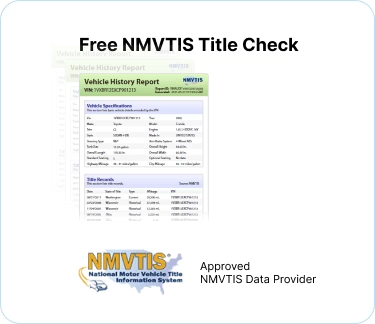
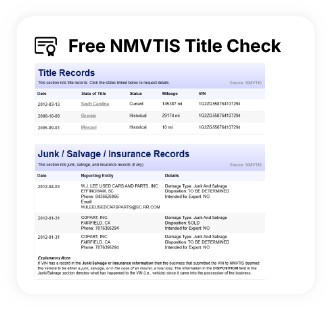
NMVTIS Title
History Check
Salvage/Rebuilt
Check
Accident
Check
Theft
Check
Open Lien
Check
Past Sale
Listings
Safety
Recalls
Odometer
Check
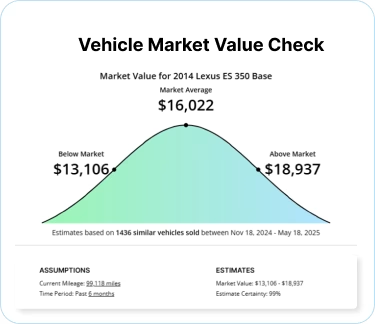
Market Price
Analysis

What Problems Does the 2004 Ford F-550 Have?

The 2004 Ford F-550, particularly models equipped with the 6.0L Power Stroke diesel engine, is well-known for several frequently reported problems that significantly impact its long-term reliability. The most common issues with the 6.0L include EGR (Exhaust Gas Recirculation) cooler failures, which can lead to coolant loss and eventual head gasket problems. The oil cooler is another notorious weak point; when it clogs, it can starve the turbocharger of oil and cause the engine to overheat. High-Pressure Oil Pump (HPOP) failures are also common, leading to no-start conditions. Fuel injector issues, STC (Standpipe and Dummy Plug) failures, and turbocharger lag or failure further contribute to the engine's reputation for requiring extensive and costly repairs.

Beyond the engine, other long-term reliability concerns for the 2004 F-550 include wear on heavy-duty suspension components, such as ball joints and tie rods, which are subjected to constant stress from heavy loads. Brake components also experience accelerated wear. Rust is a significant issue, especially on the frame, body panels, and brake lines in regions with road salt. Electrical gremlins, while not as severe as engine issues, can manifest with age, affecting windows, locks, or dashboard instrumentation.

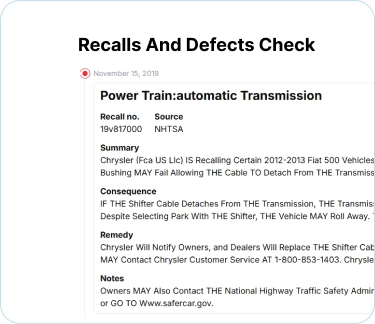
Regarding recalls for the 2004 F-550, several were issued. One notable recall involved the speed control deactivation switch, which could overheat and cause a fire. Other recalls addressed issues such as parking brake cable corrosion, potentially leading to reduced parking brake effectiveness, and seat belt retractor malfunctions. It's crucial for potential buyers to check a vehicle's VIN for any open recalls. Proactive maintenance, particularly "bulletproofing" modifications for the 6.0L Power Stroke, can mitigate some of these long-term reliability concerns, but they underscore that the 2004 F-550 requires vigilant care to remain a dependable workhorse.

How long will the 2004 Ford F-550 last?

The 2004 Ford F-550, particularly with its diesel engine, often achieves impressive long-term service. Well-maintained units can easily surpass 200,000 to 300,000 miles, and many are still actively working after 15-20 years. This longevity is primarily due to its heavy-duty construction, including a robust frame and drivetrain components designed for commercial use. The 6.8L V10 gasoline engine, while less common for high-mileage commercial applications, is also a durable powertrain when properly serviced.

However, this durability is heavily dependent on diligent maintenance. Neglecting the 6.0L Power Stroke diesel's specific service requirements, especially regarding its notorious failure points, significantly shortens its lifespan and leads to costly breakdowns. Over time, typical weaknesses include rust on the chassis and body, wear on suspension and steering components from heavy loads, and degradation of interior plastics. Despite these, the core structure and heavy-duty mechanicals are built to last, making it a viable long-term work vehicle if ongoing maintenance and potential major engine repairs are factored into the ownership cost.

What Technology & Safety Features are Included?

The 2004 Ford F-550, being a heavy-duty commercial chassis cab, was not designed with advanced technology, entertainment, or driver-assistance features in mind. Its primary focus was on utility, power, and durability.

Built-in Tech & Entertainment: The 'tech' of 2004 was relatively basic. Standard features typically included an AM/FM radio, often with a cassette player in XL trims, and a single-disc CD player in XLT models. Air conditioning was either standard or a common option. Beyond that, there were no infotainment screens, Bluetooth connectivity, USB ports, or satellite radio as standard. Instrumentation consisted of traditional analog gauges for speed, RPM, fuel, temperature, and oil pressure. Basic digital readouts for odometer and trip information were common.

Driver-Assistance Features: Driver-assistance technology was rudimentary for the 2004 F-550. The most significant "assistance" feature would have been standard Anti-lock Braking System (ABS), which helped prevent wheel lock-up during hard braking. Traction control might have been an option on some configurations, but sophisticated systems like lane departure warning, blind-spot monitoring, adaptive cruise control, or automatic emergency braking were decades away from being offered on vehicles of this class.

Safety Features: Standard safety features were also basic for the era. The F-550 came with dual front airbags for the driver and passenger. The heavy-duty steel frame and overall robust construction provided a degree of passive safety. Seatbelts with pretensioners were standard. However, side airbags, curtain airbags, or advanced occupant protection systems were not available.

Optional Features: Optional features largely revolved around convenience and power, such as power windows, power door locks, and cruise control, usually bundled into higher trims like the XLT. Upgraded seating materials (cloth vs. vinyl) and towing packages were also common options.

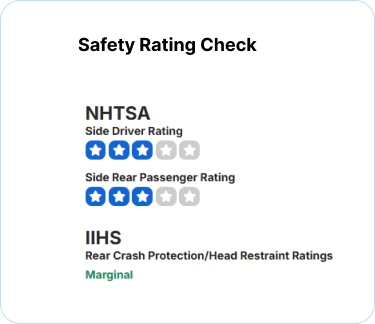
Crash-Test Ratings: It is important to note that the National Highway Traffic Safety Administration (NHTSA) and the Insurance Institute for Highway Safety (IIHS) do not typically conduct crash tests or provide ratings for heavy-duty commercial vehicles like the Ford F-550. These vehicles are primarily designed for commercial use and their sheer size and weight often make standard passenger vehicle crash tests irrelevant or impractical. Therefore, no official crash-test ratings are available for the 2004 Ford F-550.

What Colors Options are Available?

We’re working on this section!
In the meantime, feel free to explore the other sections for more content.

2004 Ford F-550 Prices and Market Value

When new in 2004, a base Ford F-550 chassis cab typically started in the $30,000 to $40,000 range, depending on engine choice, drivetrain, and initial configuration. Prices could rise significantly with custom upfits. Today, the used market prices for a 2004 F-550 are incredibly varied, ranging from under $10,000 for well-used or problematic examples to $25,000-$40,000+ for well-maintained units with desirable upfits (e.g., dump beds, tow bodies, service trucks).

Depreciation for the chassis itself was substantial in the initial years, as is typical for most new vehicles. However, its value as a specialized work tool means that well-maintained diesel models, especially those with expensive and functional upfits, tend to hold their value quite well in the commercial used market. Factors significantly affecting resale value include the engine type (diesel generally commands a premium), mileage, overall mechanical condition, documented maintenance history (crucial for 6.0L Power Stroke), and the condition and utility of any installed commercial body. Rust, particularly on the frame, can severely diminish value.

2004 Ford F-550 Cost of Ownership

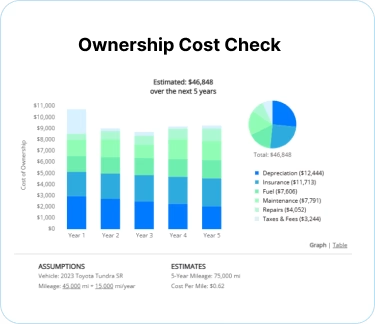
Owning a 2004 Ford F-550 is generally costly. Insurance rates can be higher due to its commercial classification and sheer size, varying with use and state. Fuel costs are substantial; with single-digit to low-teen MPG for both gasoline and diesel engines, and large fuel tanks, filling up is expensive and frequent. Maintenance is also higher than a passenger vehicle; diesel engines require specific, often pricier, filters and larger oil capacities. Repair costs, especially for the notorious 6.0L Power Stroke engine, can be exorbitant, involving complex diagnostics and expensive parts. Long-term ownership demands a significant budget for proactive maintenance and potential major repairs. This vehicle is decidedly not economical to own for casual use, but its high operating costs are often justified by its earning potential in commercial applications.

2004 Ford F-550 Fuel Efficiency

Fuel Type Diesel
Fuel Capacity -
City Mileage -
Highway Mileage -

2004 Ford F-550 Warranty

Basic
Original warranty 0 months / No data
Estimated remaining Expired
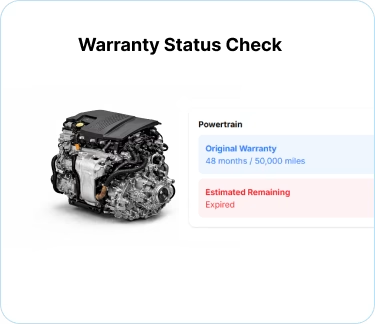
Powertrain
Original warranty 0 months / No data
Estimated remaining Expired
Rust
Original warranty 0 months / No data
Estimated remaining Expired

2004 Ford F-550 Insurance

Insurance for a 2004 Ford F-550 is moderately priced, reflecting its status as a Pickup Truck with strong safety ratings and
reasonable repair costs.

How Does the 2004 Ford F-550 Compare to Other Pickup Truck?

In 2004, the primary rival to the Ford F-550 in the heavy-duty commercial chassis cab segment was the Chevrolet Kodiak/GMC TopKick C5500. Dodge's Ram 5500 series wouldn't arrive until 2008, making the Ford and GM offerings the dominant players in this specific class for that model year.

Performance: Both the F-550 and the C5500 offered robust powertrains. The F-550 boasted the 6.0L Power Stroke diesel (325 hp/560 lb-ft) and the 6.8L Triton V10 gasoline (310 hp/425 lb-ft). The C5500 typically offered GM's Duramax 6.6L diesel (around 300 hp/520 lb-ft for 2004) and various gasoline Vortec V8/V10 engines. Performance was generally competitive, with both brands providing ample power and torque for heavy hauling. Ford's Power Stroke often had a slight edge in torque numbers for the year, appealing to those needing maximum pulling power.

Features: Features were largely comparable and utilitarian across both brands. Both came in basic XL-equivalent trims, offering manual controls and vinyl seats, up to XLT-equivalent trims with power accessories and more comfortable interiors. Neither offered advanced tech or driver-assistance systems common today, focusing instead on robust chassis, heavy-duty axles, and strong braking systems.

Reliability: This is where a significant distinction lay. The 6.0L Power Stroke in the 2004 F-550 developed a reputation for numerous reliability issues, including EGR and oil cooler failures, head gasket problems, and injector issues. In contrast, the Duramax diesel in the GM C5500, while not entirely without its own maintenance quirks, was generally considered more reliable and less prone to catastrophic failures in the long run. The Ford V10 gas engine was quite reliable, but less popular for heavy commercial applications.

Price: New prices for both F-550 and C5500 were competitive, largely depending on configuration, engine choice, and upfit. On the used market, F-550s might be found at lower prices due to the potential 6.0L Power Stroke issues, but a "bulletproofed" diesel F-550 or a well-maintained V10 could command prices similar to a comparable C5500.

Alternatives & Recommendation:
For the 2004 model year, if long-term reliability of the diesel engine is paramount, a well-maintained GM Kodiak/TopKick C5500 with a Duramax diesel might be a slightly safer bet, though finding parts and specialized mechanics for the older GM medium-duty trucks can be challenging. For the F-550, if considering the 6.0L diesel, a thorough pre-purchase inspection and evidence of "bulletproofing" modifications are essential. The 6.8L V10 F-550 is a more reliable but less fuel-efficient alternative. Newer model F-550s (2008+ for the Ram 5500, or later Ford models with the 6.7L Power Stroke) offer significant reliability and performance improvements, but at a much higher cost.

Final Verdict: Is the 2004 Ford F-550 a Good Pickup Truck?

The 2004 Ford F-550 is an ideal vehicle for commercial businesses or individuals requiring immense towing and payload capacities for specialized tasks like heavy equipment hauling, utility work, or as a platform for dump or tow truck bodies. It is unequivocally not suited for casual personal transportation due to its size, poor fuel economy, and truck-like ride.

Is it worth buying? Yes, but with significant caveats. It is a used-market-only purchase. The 6.0L Power Stroke diesel, while powerful, requires thorough inspection and ideally, documented "bulletproofing" modifications to address its notorious reliability issues. Without these, it can become a money pit. The 6.8L Triton V10 gasoline engine offers greater reliability at the expense of higher fuel consumption and slightly less torque. Look for well-maintained XLT trims for a balance of utility and basic comfort. A comprehensive pre-purchase inspection by a mechanic specializing in these heavy-duty trucks is absolutely essential. If these conditions are met, and the vehicle's capabilities match your extreme work requirements, a 2004 F-550 can still be a highly effective and value-driven workhorse.

2004 Ford F-550 Owner Reviews

0.00
Consumer Rating, Based on 0 Consumer Reviews
Overall rating
Cancel
Thank You for Your Review!

We truly appreciate the time and effort you took to share your experience with us.

Uh oh!

Something went wrong, please try again later.

Author Image
Simon A

Simon is a contributor to VinCheck, where he provides articles and reviews on various automotive topics. His work focuses on delivering accurate and up-to-date information about used cars, helping readers make informed decisions.