
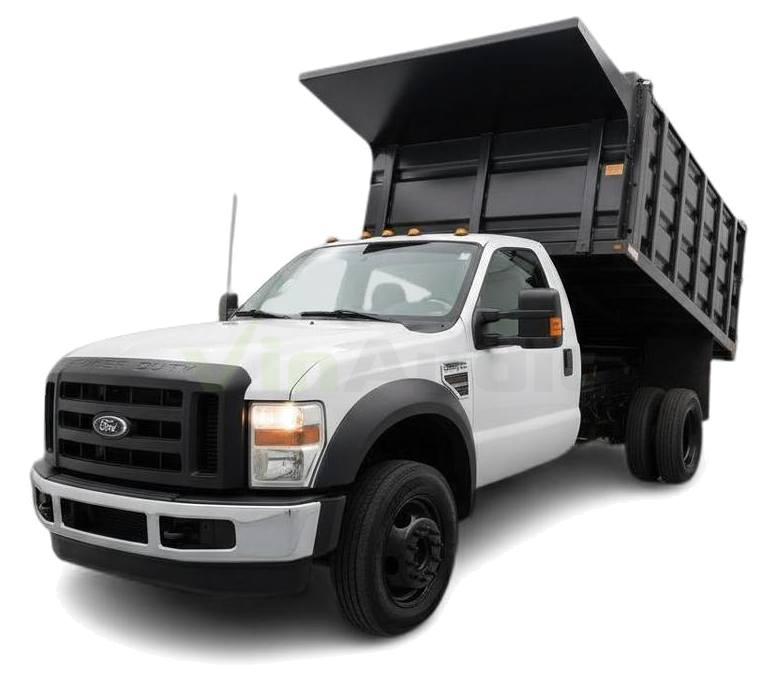
The Good
The 2009 Ford F-550 offers unparalleled performance for heavy-duty tasks, boasting massive towing and payload capacities essential for practical commercial operations. Its robust construction ensures long-term reliability and value. While comfort is functional, the sheer capability and "can-do" attitude appeal emotionally to those needing an unyielding workhorse. It's a practical investment for businesses requiring maximum utility and durability.
The Bad
Key weaknesses for the 2009 Ford F-550 include its notoriously poor fuel economy, particularly with the 6.4L Power Stroke diesel, and a very stiff, utilitarian ride quality. The large turning radius can be challenging in tight spaces. Potential buyers should also watch for specific engine issues common to the 6.4L diesel, which can lead to expensive repairs.
2009 Ford F-550: Quick Overview
Here are the key specifications for the 2009 Ford F-550:
- Engine Options: The 2009 F-550 was primarily offered with two robust engine choices. The first was a 6.8-liter Triton V10 gasoline engine, known for its strong output and durability. The second, and more popular for heavy commercial applications, was the 6.4-liter Power Stroke V8 turbo-diesel engine, which provided immense torque for demanding tasks.
- Horsepower: For the 6.8L Triton V10, output was approximately 362 horsepower and 457 lb-ft of torque. The 6.4L Power Stroke diesel produced around 350 horsepower and a substantial 650 lb-ft of torque, critical for its heavy-duty hauling capabilities.
- Fuel Economy: Official EPA ratings are not available for chassis cab vehicles like the F-550. However, owners typically report very poor fuel economy figures, often in the single digits (MPG) for the diesel under load, and low teens for the gasoline V10. Efficiency is not a primary design focus for this class of vehicle.
- 0-60 MPH Times: Performance acceleration figures like 0-60 mph times are not relevant for the F-550. This vehicle is engineered for payload and towing, not speed, and its acceleration heavily depends on the upfit and load it carries.
- Towing Capacity: The F-550's towing capacity is one of its standout features and highly variable. With a Gross Combined Weight Rating (GCWR) often exceeding 33,000 lbs, conventional bumper towing capacities could range up to approximately 16,000 lbs. For fifth-wheel or gooseneck towing, capacities could easily surpass 20,000 to 24,000 lbs, depending on the specific chassis configuration, axle ratio, and installed upfit.
- Trim-Level Features: The F-550 was typically offered in working trims:
- XL: This is the base "work truck" trim, featuring vinyl seating, a rubber floor for easy cleaning, manual windows and door locks (power options were sometimes available), and a basic AM/FM radio. It's designed for functionality and durability.
- XLT: Stepping up, the XLT offered more creature comforts such as cloth upholstery, carpeting (optional), power windows, power door locks, power mirrors, a CD player, cruise control, and air conditioning. It provided a slightly more comfortable cabin for extended workdays.
- Lariat: While less common for the F-550 chassis cab due to its commercial nature, the Lariat trim added luxury features like leather seating, power-adjustable front seats, an upgraded sound system, automatic climate control, and steering wheel-mounted controls.
2009 Ford F-550 Specifications
Vehicle Information
| Year | 2009 |
| Make | Ford |
| Model | F-550 |
| Trim | - |
| Style | XL Chassis Cab RWD 5AT 6.8L V10 |
| Type | Chassis Cab |
| Category | commercial |
Manufacturing Details
| Made In | United States |
| Manufacturing City | JEFFERSON COUNTY |
Dimensions
| Doors | 2-Door |
| Curb Weight | 7500 pounds |
| Gross Vehicle Weight Rating | 19500 pounds |
| Overall Height | 81 inches |
| Overall Length | 227 inches |
| Overall Width | 96 inches |
| Wheelbase Length | 141 inches |
| Standard Seating | 3 |
Engine & Performance
| Engine | 6.8L V10 |
| Engine Size | 6.8L |
| Engine Cylinders | 10 |
| Transmission | 5-Speed Automatic |
| Transmission Type | Automatic |
| Transmission Speeds | 5-Speed |
| Drivetrain | Rear-Wheel Drive |
Additional Features
| Anti-Brake System | 4-Wheel ABS |
| Steering Type | Recirculating Ball |
Pricing
| Manufacturer Suggested Retail Price (MSRP) | $30,000 |
| Invoice Price | - |
| Delivery Charges | - |
Vehicle History Report
Specifications
History
Events
History Check
Check
Check
Check
Check
Listings
Recalls
Check
Analysis
What Problems Does the 2009 Ford F-550 Have?
- 6.4L Power Stroke Diesel Engine Issues:
- EGR System Failures: The Exhaust Gas Recirculation (EGR) system is a significant weak point. EGR coolers are notorious for failing, which can lead to coolant loss and potentially engine damage if not addressed promptly. Clogging of the EGR valve is also common, leading to performance issues and "check engine" lights.
- Diesel Particulate Filter (DPF) Problems: The DPF, part of the emissions system, is prone to clogging, especially with extensive idling or short-trip driving. Forced regenerations or eventual DPF replacement are costly and common.
- Turbocharger Issues: Failures of the twin-turbocharger setup are not uncommon, often exacerbated by a clogged DPF or other exhaust system issues. Replacing turbos is a very expensive repair.
- Fuel System Concerns: Problems with the high-pressure fuel pump (HPFP) can occur, and injector issues, while improved from earlier Power Strokes, are still a possibility at higher mileages.
- Cooling System: The cooling system needs rigorous maintenance, as overheating can accelerate other issues.
- Transmission Reliability: The TorqShift 5R110W automatic transmission is generally robust but can experience wear and tear under constant heavy loads, requiring diligent fluid and filter changes. Overheating during extreme towing is possible if maintenance is neglected.
- Suspension and Steering Components: Due to the heavy nature of the F-550 and its typical use in demanding conditions, front-end components like ball joints, tie rods, and wheel bearings tend to wear out faster than in lighter vehicles. Regular inspection and replacement are often necessary to maintain proper handling and safety.
- Recalls: Several recalls were issued for the 2009 Ford F-550. These include issues related to the steering drag link, which could separate and cause a loss of steering control (NHTSA Campaign Number 09V112000). Another recall addressed potential short circuits in the electronic throttle control leading to an engine shutdown (NHTSA Campaign Number 09V399000). Furthermore, some trucks were recalled for potential issues with the trailer brake controller. It is crucial for prospective buyers to check if all recall campaigns have been performed on any used vehicle.
How long will the 2009 Ford F-550 last?
What Technology & Safety Features are Included?
- Entertainment: The base XL trim typically came with a simple AM/FM radio. Higher XLT and the rare Lariat trims offered a single-CD player, and an auxiliary audio input jack was available for connecting external devices. For the 2009 model year, Ford's early SYNC voice-activated communication and entertainment system was an optional upgrade, primarily on XLT and Lariat trims. This system provided Bluetooth connectivity for hands-free calling and music streaming, along with USB input.
- Driver-Assistance Features: Driver-assistance technology was largely absent, as it was not common in heavy-duty trucks of this vintage. There were no features like lane-keeping assist, blind-spot monitoring, or adaptive cruise control. However, one crucial driver-assistance feature for its intended purpose was the optional factory-integrated trailer brake controller, which provided seamless and powerful braking control for attached trailers, significantly enhancing towing safety. Rear parking sensors were sometimes available but less common on the F-550 chassis cab configurations.
- Safety Features: Standard safety equipment included dual front airbags for the driver and passenger. The F-550 was equipped with a robust four-wheel anti-lock braking system (ABS) to aid in controlled stopping, especially under heavy loads. A Tire Pressure Monitoring System (TPMS) was also standard, alerting the driver to low tire pressure. Side-impact airbags or side curtain airbags were generally not offered on the F-Series Super Duty trucks, especially the commercial chassis cab models, reflecting their utilitarian design.
- Crash-Test Ratings: It is important to note that specialized, heavy-duty commercial chassis cab vehicles like the 2009 Ford F-550 are typically not subjected to the standardized crash tests performed by organizations such as the National Highway Traffic Safety Administration (NHTSA) or the Insurance Institute for Highway Safety (IIHS). Their size, weight, and variable upfit configurations make standard testing impractical and the results not comparable to passenger vehicles. As such, official crash-test ratings are not available for this vehicle.
What Colors Options are Available?
2009 Ford F-550 Prices and Market Value
Today, in the used market (2024), current prices for a 2009 F-550 are highly variable due to its commercial nature. A high-mileage chassis cab in average condition might range from $10,000 to $20,000. However, well-maintained examples with lower mileage for its class and, crucially, desirable and functional upfits (like a dump body, tow rig, or utility bed) can command prices from $25,000 to upwards of $40,000 or even higher.
Depreciation for commercial vehicles like the F-550 follows a different curve than passenger cars. While the initial drop is present, their value as a vocational tool tends to stabilize and hold strong, especially for specific applications. Factors significantly affecting resale value include the condition and history of the 6.4L Power Stroke diesel engine, comprehensive maintenance records, overall chassis integrity (minimal rust), and the type and condition of the installed commercial upfit. A functional, well-maintained upfit adds substantial value.
2009 Ford F-550 Cost of Ownership
2009 Ford F-550 Fuel Efficiency
2009 Ford F-550 Insurance
reasonable repair costs.
How Does the 2009 Ford F-550 Compare to Other Chassis Cab?
- Performance: In terms of raw performance, the F-550's 6.4L Power Stroke diesel offered robust torque (650 lb-ft) and horsepower (350 hp), making it highly capable for extreme towing and hauling. The Ram 5500, equipped with the Cummins 6.7L turbo-diesel, provided a formidable rival, often matching or slightly exceeding Ford's torque figures and renowned for its low-end grunt. Both were top performers in their class for their intended purpose.
- Features: Feature-wise, these vehicles were generally utilitarian. Both Ford and Ram offered basic work truck trims (XL/ST) with vinyl seats and minimal amenities, escalating to more comfortable options (XLT/SLT) with power accessories, cloth, and basic audio. Ford had a slight edge with the optional early SYNC system on higher trims, offering basic voice command and Bluetooth connectivity, which was less common on rivals at this specific model year. Integrated trailer brake controllers were standard or widely available across both platforms.
- Reliability: This is where the 2009 F-550 faced a significant challenge. The 6.4L Power Stroke diesel, as detailed, had known issues with its EGR, DPF, and turbochargers, leading to potentially expensive and frequent repairs. The Ram 5500 with its Cummins 6.7L diesel, while not entirely without its own emissions-related issues, generally held a stronger reputation for long-term durability and fewer catastrophic failures in this generation, making it a more reliable choice for many operators.
- Price: New, the F-550 and Ram 5500 were competitively priced within the chassis cab segment, with final costs heavily influenced by chosen upfits. In the used market, their prices remain competitive, though a Ram 5500 with a well-regarded Cummins engine might command a slight premium due to its reliability perception.
- Ram 5500 Chassis Cab (2008-2010): For buyers concerned about the 6.4L Power Stroke's reliability, the Ram 5500 with the Cummins 6.7L diesel is often considered a better alternative, offering similar capability with a generally more robust and less problematic engine for long-term ownership.
- Newer Generation Ford F-550 (2011+): If budget permits, opting for a 2011 or newer F-550 equipped with the redesigned 6.7L Power Stroke diesel engine offers significant improvements in reliability, power, and efficiency over the 2009 model's 6.4L, resolving many of its predecessor's critical issues.
Final Verdict: Is the 2009 Ford F-550 a Good Chassis Cab?
As a used vehicle, it can be worth buying, but only under very specific conditions. Prospective buyers must prioritize models with a meticulously documented maintenance history, especially concerning the 6.4L Power Stroke diesel engine. A pre-purchase inspection by a diesel specialist is absolutely essential to assess the health of the engine, turbos, and emissions system, which are prone to expensive failures. Buyers should budget significantly for ongoing maintenance and potential major repairs. While the V10 gasoline engine is simpler, it offers less torque and even worse fuel economy. If its immense capability aligns perfectly with your business needs, and you are prepared for the potential financial demands of its notorious 6.4L diesel, a well-inspected 2009 F-550 can still be a powerful and valuable workhorse.

Simon A
Simon is a contributor to VinCheck, where he provides articles and reviews on various automotive topics. His work focuses on delivering accurate and up-to-date information about used cars, helping readers make informed decisions.