The 2002 Mazda Truck, often known as the Mazda B-Series, is a compact pickup truck with a history dating back decades. For the 2002 model year, it was available in Regular Cab and Extended Cab configurations. Key trims included the SE and the more feature-rich Troy Lee Designs (TLD) edition. Initially, pricing ranged from approximately $16,000 to $23,000. Its popularity stemmed from its nimble handling, reliable operation, and affordable price point, making it a practical choice for light-duty tasks and a fun, accessible entry into truck ownership.
The Good
The 2002 Mazda Truck excels in agile performance and commendable reliability, offering a smooth ride for its class. Its straightforward, unpretentious design appeals to practicality, while its fuel efficiency and value proposition make it an emotionally satisfying choice for budget-conscious buyers seeking dependable utility.
The Bad
Potential buyers of the 2002 Mazda Truck should be aware of possible rust issues, particularly in the frame and wheel wells. Some owners have reported premature wear on suspension components and occasional electrical gremlins, so thorough inspection is advised.
2002 Mazda Truck: Quick Overview
- Engine Options:
- 2.5L SOHC 16-valve 4-cylinder engine
- 3.0L SOHC 24-valve V6 engine
- Horsepower:
- 2.5L 4-cylinder: Approximately 120 hp
- 3.0L V6: Approximately 148 hp
- Fuel Economy (EPA estimates, may vary):
- 2.5L 4-cylinder (2WD, manual): Around 22 MPG city / 27 MPG highway
- 3.0L V6 (2WD, automatic): Around 18 MPG city / 22 MPG highway
- 0-60 Times:
- Varies significantly by engine and drivetrain, but generally in the 9-11 second range for V6 models.
- Towing Capacity:
- Typically around 2,000 - 3,000 lbs, depending on configuration and engine.
- Trim-Level Features:
- SE (Standard): Often included basic power windows and locks, AM/FM radio, and a driver airbag.
- Troy Lee Designs (TLD): This special edition often featured unique badging, upgraded interior trim, sport seats, alloy wheels, and sometimes a sport-tuned suspension or exhaust. It was aimed at a more lifestyle-oriented buyer.
- Common options across trims could include air conditioning, cruise control, and an upgraded audio system.
2002 Mazda Truck Specifications
Vehicle Information
| Year | 2002 |
| Make | Mazda |
| Model | Truck |
| Trim | - |
| Style | Cab Plus 2WD 5-Speed |
| Type | Pickup Truck |
| Category | Heavy Truck |
Manufacturing Details
| Made In | United States |
| Manufacturing City | EDISON |
Dimensions
| Doors | 2-Door |
| Curb Weight | - |
| Gross Vehicle Weight Rating | 5040 pounds |
| Overall Height | 64.80 inches |
| Overall Length | 201.70 inches |
| Overall Width | 69.40 inches |
| Wheelbase Length | 125.70 inches |
| Standard Seating | - |
Engine & Performance
| Engine | 2.3L I4 |
| Engine Size | 2.3L |
| Engine Cylinders | 4 |
| Transmission | 5-Speed Automatic |
| Transmission Type | Automatic |
| Transmission Speeds | 5-Speed |
| Drivetrain | Rear-Wheel Drive |
Additional Features
| Anti-Brake System | 4-Wheel ABS |
| Steering Type | Rack & Pinion |
Pricing
| Manufacturer Suggested Retail Price (MSRP) | - |
| Invoice Price | - |
| Delivery Charges | - |
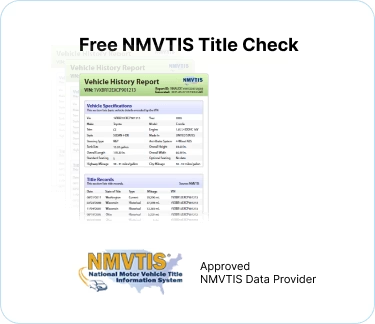
Vehicle History Report
Vehicle
Specifications
Specifications
Ownership
History
History
All History
Events
Events
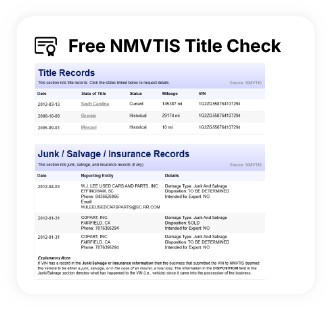
NMVTIS Title
History Check
History Check
Salvage/Rebuilt
Check
Check
Accident
Check
Check
Theft
Check
Check
Open Lien
Check
Check
Past Sale
Listings
Listings
Safety
Recalls
Recalls
Odometer
Check
Check
Market Price
Analysis
Analysis
What Problems Does the 2002 Mazda Truck Have?
The 2002 Mazda Truck (B-Series) shares many components with its Ford Ranger sibling, meaning some common issues are also shared. One of the most frequently reported concerns is the potential for frame rust, especially in regions with harsh winters or where salt is used on roads. This rust can compromise the structural integrity of the vehicle and is a significant concern for safety and longevity. Another area to watch is the suspension system; owners have sometimes reported premature wear on ball joints, tie rods, and bushings, leading to clunking noises or uneven tire wear.
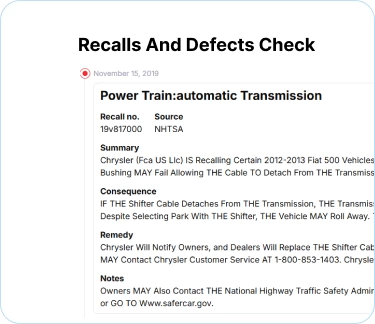
The cooling system can also be a source of trouble, with occasional reports of radiator leaks or thermostat issues. Some electrical gremlins have been noted, though they are not usually widespread. This could manifest as minor issues with power windows, door locks, or dashboard lights. Regarding recalls, while specific major recalls for the 2002 model year are not overwhelmingly numerous, it's always prudent for potential buyers to check with the NHTSA database for any outstanding recalls associated with the VIN.
Long-term reliability is generally considered decent for the Mazda B-Series, especially if well-maintained. The engines, particularly the V6, are known to be robust. However, the rust issue is a critical factor that can significantly shorten the vehicle's useful life if not addressed proactively. The 4-cylinder engine is also reliable but might feel underpowered for certain tasks, leading to increased strain if consistently pushed hard.
The cooling system can also be a source of trouble, with occasional reports of radiator leaks or thermostat issues. Some electrical gremlins have been noted, though they are not usually widespread. This could manifest as minor issues with power windows, door locks, or dashboard lights. Regarding recalls, while specific major recalls for the 2002 model year are not overwhelmingly numerous, it's always prudent for potential buyers to check with the NHTSA database for any outstanding recalls associated with the VIN.
Long-term reliability is generally considered decent for the Mazda B-Series, especially if well-maintained. The engines, particularly the V6, are known to be robust. However, the rust issue is a critical factor that can significantly shorten the vehicle's useful life if not addressed proactively. The 4-cylinder engine is also reliable but might feel underpowered for certain tasks, leading to increased strain if consistently pushed hard.
How long will the 2002 Mazda Truck last?
Based on owner data and anecdotal evidence, the 2002 Mazda Truck can achieve an average of 200,000 to 250,000 miles with regular and diligent maintenance. Some well-cared-for examples have surpassed 300,000 miles. Long-term durability is strongly tied to preventing and addressing rust, as frame degradation is its primary weakness. Engine and transmission components, particularly the V6 powertrain, are generally durable. However, suspension parts and exhaust systems may require more frequent attention over the years. Proactive maintenance, including regular fluid changes, rustproofing, and prompt repair of minor issues, is key to maximizing its lifespan and retaining its value over time.

What Technology & Safety Features are Included?
The 2002 Mazda Truck reflects the technology standards of its era, focusing on core functionality rather than advanced digital integration. For built-in tech and entertainment, most models came standard with an AM/FM radio and a single-disc CD player. Higher trims or optional packages might have included upgraded speaker systems for better audio quality. Bluetooth connectivity and complex infotainment systems were not available, as these were not common in compact trucks at the time.
Driver-assistance features were very basic. The primary safety focus was on passive systems. Standard safety equipment included front airbags for the driver and passenger. Anti-lock braking system (ABS) was often an optional feature, particularly on higher trims or V6 models, providing enhanced stopping power in critical situations. Stability control and traction control were not offered.
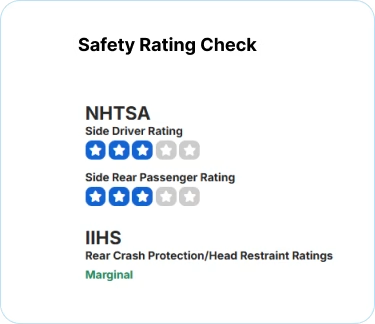
Regarding optional features, buyers could equip their Mazda Truck with air conditioning, cruise control, and power windows and door locks, especially on extended cab models. The Troy Lee Designs trim often came with more of these convenience features as standard. Crash-test ratings for this generation of the Mazda B-Series (and its Ford Ranger counterpart) were generally mixed by modern standards. While front-impact tests showed decent protection, side-impact performance could be a concern, and the lack of advanced safety features meant that overall safety ratings were not as high as contemporary vehicles with more sophisticated safety suites. It's recommended to check NHTSA or IIHS archives for specific model year ratings, though detailed data for this specific year might be limited.
Driver-assistance features were very basic. The primary safety focus was on passive systems. Standard safety equipment included front airbags for the driver and passenger. Anti-lock braking system (ABS) was often an optional feature, particularly on higher trims or V6 models, providing enhanced stopping power in critical situations. Stability control and traction control were not offered.
Regarding optional features, buyers could equip their Mazda Truck with air conditioning, cruise control, and power windows and door locks, especially on extended cab models. The Troy Lee Designs trim often came with more of these convenience features as standard. Crash-test ratings for this generation of the Mazda B-Series (and its Ford Ranger counterpart) were generally mixed by modern standards. While front-impact tests showed decent protection, side-impact performance could be a concern, and the lack of advanced safety features meant that overall safety ratings were not as high as contemporary vehicles with more sophisticated safety suites. It's recommended to check NHTSA or IIHS archives for specific model year ratings, though detailed data for this specific year might be limited.
What Colors Options are Available?
2002 Mazda Truck Prices and Market Value
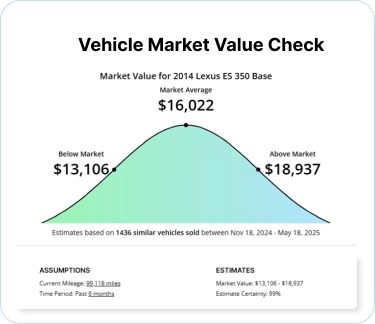
When new, the 2002 Mazda Truck had an MSRP that typically ranged from approximately $16,000 for base models to around $23,000 for well-equipped trims like the Troy Lee Designs. As with most trucks, it experienced depreciation, but compact trucks of this era tend to hold their value relatively well due to their utility. Current used market prices vary significantly, often falling between $2,000 and $7,000, depending heavily on mileage, condition, and the presence of rust. Factors significantly affecting resale value include the overall mechanical condition, the extent of rust (especially frame rust), tire condition, and whether maintenance records are available. Lower mileage and desirable configurations like the V6 engine or 4x4 (if available) will command higher prices. A clean title and a well-maintained history are crucial for maximizing its resale value.
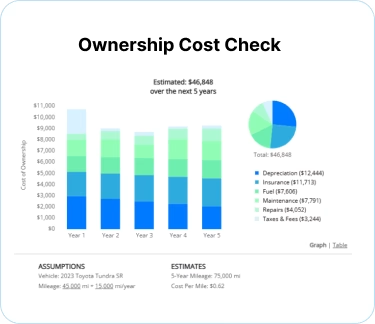
2002 Mazda Truck Cost of Ownership
The 2002 Mazda Truck is generally economical to own. Insurance costs are typically low due to its age and classification as a compact truck. Fuel costs are reasonable, especially with the 4-cylinder engine, making it a budget-friendly daily driver. Routine maintenance is straightforward and affordable, with parts readily available and mechanical work generally not being overly complex. Repair costs are moderate; while common wear-and-tear items might need replacement, major repairs are infrequent if the truck is well-maintained. The biggest potential long-term cost can arise from significant rust repair. Overall, it offers cost-effective ownership, especially when purchased at a good price.
2002 Mazda Truck Fuel Efficiency
Fuel Type
Gasoline
Fuel Capacity
19.50 gallons
City Mileage
-
Highway Mileage
-
2002 Mazda Truck Warranty
Basic
Original warranty
36 months / 50,000 miles
Estimated remaining
Expired
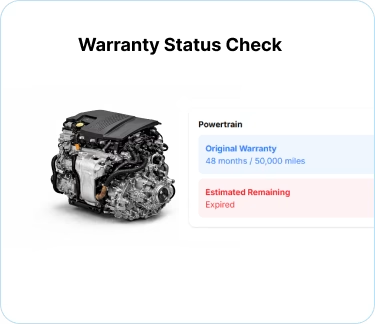
Powertrain
Original warranty
36 months / 50,000 miles
Estimated remaining
Expired
Rust
Original warranty
60 months / unlimited miles
Estimated remaining
Expired
2002 Mazda Truck Insurance
Insurance for a 2002 Mazda Truck is moderately priced, reflecting its status as a Pickup Truck with strong safety ratings and
reasonable repair costs.
How Does the 2002 Mazda Truck Compare to Other Pickup Truck?
The 2002 Mazda Truck competed in the highly popular compact pickup segment against strong rivals such as the Ford Ranger, Toyota Tacoma, and Nissan Frontier. In terms of performance, the Mazda B-Series (especially with the V6 engine) offered decent power for its class, often comparable to the Ford Ranger. However, the Toyota Tacoma was generally considered to have superior engine refinement and off-road capability, while the Nissan Frontier offered a good balance of utility and features.
When it came to features, the 2002 Mazda Truck was somewhat basic, aligning with its utilitarian nature. Higher trims offered some creature comforts, but it generally lagged behind the Toyota Tacoma and Nissan Frontier in terms of available modern features and available advanced safety systems. The Ford Ranger shared many of these characteristics, often being seen as a direct competitor with similar feature sets.
Reliability is a mixed bag. While the Mazda B-Series is generally reliable mechanically, the significant concern for frame rust is a substantial weakness compared to the Toyota Tacoma, which is renowned for its exceptional long-term durability and rust resistance. The Ford Ranger shares some of the same rust concerns, while the Nissan Frontier generally performs well in terms of reliability.
In terms of price, the Mazda Truck was typically positioned as a value-oriented option, often slightly more affordable than a comparable Toyota Tacoma. The Ford Ranger was often in a similar price bracket.
Similar Alternatives: The 2002 Ford Ranger is the most direct alternative, sharing much of its mechanical DNA and offering a similar experience, though rust can also be a concern. The 2002 Nissan Frontier offers a more refined ride and potentially better interior features.
Better Alternatives: If long-term reliability and rust resistance are top priorities, the 2002 Toyota Tacoma is the benchmark. Despite potentially higher used prices, its durability and resale value are exceptional. For those seeking a more rugged, off-road capable truck, the Tacoma or Frontier might be preferable.
When it came to features, the 2002 Mazda Truck was somewhat basic, aligning with its utilitarian nature. Higher trims offered some creature comforts, but it generally lagged behind the Toyota Tacoma and Nissan Frontier in terms of available modern features and available advanced safety systems. The Ford Ranger shared many of these characteristics, often being seen as a direct competitor with similar feature sets.
Reliability is a mixed bag. While the Mazda B-Series is generally reliable mechanically, the significant concern for frame rust is a substantial weakness compared to the Toyota Tacoma, which is renowned for its exceptional long-term durability and rust resistance. The Ford Ranger shares some of the same rust concerns, while the Nissan Frontier generally performs well in terms of reliability.
In terms of price, the Mazda Truck was typically positioned as a value-oriented option, often slightly more affordable than a comparable Toyota Tacoma. The Ford Ranger was often in a similar price bracket.
Similar Alternatives: The 2002 Ford Ranger is the most direct alternative, sharing much of its mechanical DNA and offering a similar experience, though rust can also be a concern. The 2002 Nissan Frontier offers a more refined ride and potentially better interior features.
Better Alternatives: If long-term reliability and rust resistance are top priorities, the 2002 Toyota Tacoma is the benchmark. Despite potentially higher used prices, its durability and resale value are exceptional. For those seeking a more rugged, off-road capable truck, the Tacoma or Frontier might be preferable.
Final Verdict: Is the 2002 Mazda Truck a Good Pickup Truck?
The 2002 Mazda Truck is ideal for budget-conscious buyers seeking a compact pickup for light-duty tasks, occasional hauling, or as a practical, agile daily driver. It's best suited for those who value simplicity, decent fuel economy, and maneuverability over advanced technology or extreme off-road prowess.

Whether it's worth buying hinges significantly on its condition, especially the absence of significant frame rust. If a well-maintained example with minimal rust can be found at an attractive price, it represents good value. It is definitely a used vehicle purchase, as new models are no longer available. The V6 engine trims offer more capable performance for those who need it. For buyers prioritizing long-term, trouble-free ownership above all else, a Toyota Tacoma from the same era might be a wiser, albeit often more expensive, investment due to its superior rust resistance and legendary reliability.