by VIN, Year, Make, Model by License Plate

2016 Kawasaki Ninja ZX-10R Overview, Reviews, Ratings & Specs

Rating: 0.00
Based on 0 Owner Reviews
Simon A | October 10, 2025
The 2016 Kawasaki Ninja ZX-10R is a flagship sportbike, part of a lineage dating back to 2004. Known for its aggressive, aerodynamic body style, this model represents a significant leap in performance. The ZX-10R typically comes in a single, high-performance trim. It was renowned for its cutting-edge technology and race-bred performance, making it a favorite among track enthusiasts and demanding riders seeking exhilarating speed and handling. Its popularity stems from its powerful engine and sophisticated chassis.
The Good

The 2016 ZX-10R excels in raw performance, boasting incredible acceleration and track-ready handling. Its sophisticated electronics offer rider confidence. The aggressive design appeals emotionally to sportbike lovers, while its proven Kawasaki reliability offers practical reassurance for long-term ownership. Though not built for comfort, its efficient engine provides respectable fuel economy for its class.

The Bad

Potential owners should watch out for a firm suspension that can be harsh on rough roads, limited passenger comfort, and a thirst for premium fuel. High-performance components can also mean higher maintenance costs. Some riders might find the electronics complex initially, and the aggressive riding position is not suited for touring.

2016 Kawasaki Ninja ZX-10R: Quick Overview

  • Engine: 998cc, Liquid-cooled, 4-stroke, DOHC, four valves per cylinder, inline-four engine.
  • Horsepower: Approximately 207 hp (154.4 kW) at 13,000 rpm (with RAM air).
  • Torque: Approximately 82.6 lb-ft (112 Nm) at 11,500 rpm.
  • Fuel Economy: Estimated around 30-35 MPG (miles per gallon), though this can vary significantly with riding style.
  • 0-60 mph: Typically in the low 3-second range, often around 2.9-3.1 seconds.
  • Towing Capacity: Not applicable. This is a sportbike designed for solo riding and high performance, not towing.
  • Transmission: 6-speed, constant mesh, return shift.
  • Brakes: Dual semi-floating 310 mm discs with dual radial-mount, monobloc opposed 4-piston calipers (front); Single 220 mm disc with opposed 2-piston caliper (rear). ABS was available.
  • Suspension: Showa Big Piston Fork (BPF) front suspension with adjustable preload, stepless rebound and compression damping; Horizontal Back-link Gas-charged shock with preload, stepless rebound and compression damping, and stepless adjustable ride height (rear).
  • Electronics Suite (S-KTRC): Kawasaki Traction Control System with multiple modes, Kawasaki Intelligent Anti-lock Brake System (KIBS) available on ABS models, Kawasaki Engine Brake Control (KEBC), Kawasaki Launch Control Mode (KLCM), Kawasaki Quick Shifter (KQS) for upshifts on some variations, and electronic throttle valves (ETV) for precise engine management.
  • Weight: Curb weight around 430 lbs (195 kg).
  • Frame: Twin-spar aluminum frame.
  • Design: Aerodynamic fairings, aggressive rider ergonomics, LED taillight.
  • Model Year Specifics: The 2016 model year saw a significant update, introducing a new chassis, more advanced electronics, and a more powerful engine, making it a highly competitive offering in the superbikes category.

2016 Kawasaki Ninja ZX-10R Specifications

Vehicle Information
Year 2016
Make Kawasaki
Model Ninja ZX-10R
Trim -
Style -
Type Motorcycle
Category Motorcycle
Manufacturing Details
Made In Japan
Manufacturing City AKASHI
Dimensions
Doors -
Curb Weight -
Gross Vehicle Weight Rating -
Overall Height -
Overall Length -
Overall Width -
Wheelbase Length -
Standard Seating -
Engine & Performance
Engine 998CC
Engine Size 998L
Engine Cylinders 4
Transmission -
Transmission Type -
Transmission Speeds -
Drivetrain -
Additional Features
Anti-Brake System Standard
Steering Type -
Pricing
Manufacturer Suggested Retail Price (MSRP) -
Invoice Price -
Delivery Charges -

Vehicle History Report

Vehicle
Specifications
Ownership
History
All History
Events
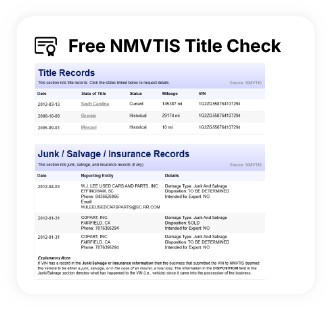
NMVTIS Title
History Check
Salvage/Rebuilt
Check
Accident
Check
Theft
Check
Open Lien
Check
Past Sale
Listings
Safety
Recalls
Odometer
Check
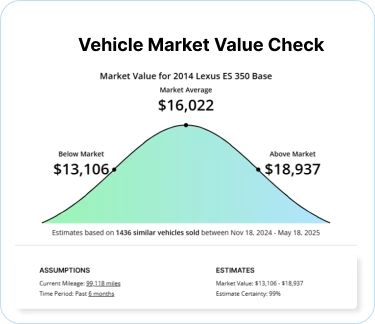
Market Price
Analysis

What Problems Does the 2016 Kawasaki Ninja ZX-10R Have?

The 2016 Kawasaki Ninja ZX-10R, being a relatively new model year at the time of its release, generally enjoys a reputation for solid reliability, typical of Kawasaki's sportbike offerings. However, like any high-performance machine, there are aspects owners should be aware of.

One area that sometimes arises in owner discussions is the heat generated by the engine, which can be noticeable during slow-speed riding or in hot weather. This is common in many liter-class sportbikes and is more of a characteristic than a defect.

Another point often mentioned is the sensitivity of the electronics, particularly the traction control and ABS. While these systems are designed to enhance safety and performance, some riders may need time to adjust to their intervention, especially when pushing the bike to its limits. Proper setup and understanding of these systems are key.

Regarding specific mechanical issues, the 2016 ZX-10R did not have widespread, recurring problems that would suggest a major design flaw. The engine is a robust unit, and the chassis and suspension components are high-quality. However, as with any performance motorcycle, consistent and meticulous maintenance is paramount for long-term reliability. This includes regular oil changes, chain maintenance, and checking fluid levels and brake pads.

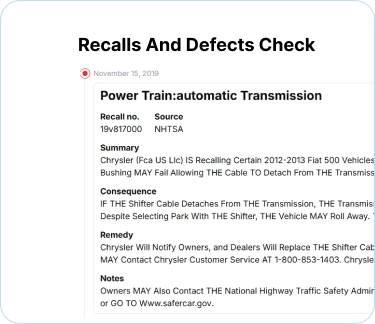
Recalls for this model year were not exceptionally numerous or indicative of systemic failures. Typically, recalls on such bikes address minor issues or updates to safety systems, such as software updates for the ECU or minor adjustments to electrical components. Owners are advised to check with Kawasaki or relevant authorities for any outstanding recalls specific to their VIN.

Long-term reliability heavily depends on how the bike was used and maintained. A bike used primarily for track days, especially with aggressive riding, might show more wear on components like the clutch, tires, and brake pads compared to a bike used for occasional spirited street riding. Owners who follow the manufacturer's service intervals and use quality parts will likely experience fewer issues. The sophisticated electronic aids, while beneficial, do represent more complex systems that could potentially require specialized diagnostics if issues arise later in the bike's life.

How long will the 2016 Kawasaki Ninja ZX-10R last?

Estimating average mileage for a 2016 Kawasaki Ninja ZX-10R is challenging as usage varies greatly. Many owners use them as weekend or track-day machines, accumulating perhaps 3,000-7,000 miles per year. However, some enthusiasts might rack up significantly more. With diligent maintenance (following service intervals, using quality fluids and parts), these bikes are built for durability. A well-maintained ZX-10R can realistically serve for 50,000 miles or more. Weaknesses that might emerge over time relate more to wear-and-tear on high-performance components like the clutch, suspension seals, and potentially the exhaust system, rather than fundamental engine or structural failures. Regular cleaning and protection against elements can also extend its cosmetic and mechanical longevity.

What Technology & Safety Features are Included?

The 2016 Kawasaki Ninja ZX-10R was a significant leap forward in terms of technology for its time, heavily influenced by Kawasaki Racing Team's (KRT) MotoGP success. It wasn't designed for 'entertainment' in the automotive sense, focusing purely on performance and rider control.

Driver-Assistance Features:
The centerpiece of its technological suite was the advanced electronic rider aids package, largely driven by the Inertial Measurement Unit (IMU). This sophisticated system provided 6-axis motion sensing, enabling features such as:
  • Kawasaki Traction Control System (S-KTRC): Offered multiple modes allowing riders to select the level of intervention based on their skill and riding conditions. It analyzed data from wheel speed sensors and the IMU to optimize traction.
  • Kawasaki Intelligent Anti-lock Brake System (KIBS): Available on ABS-equipped models, KIBS was a sportbike-specific ABS that minimized hydraulic pressure fluctuations for less intrusive intervention and better feedback, especially during aggressive braking.
  • Kawasaki Engine Brake Control (KEBC): Allowed riders to select engine braking levels, providing more stability during deceleration.
  • Kawasaki Launch Control Mode (KLCM): Enabled optimal acceleration from a standstill by managing engine output to prevent wheelies and maintain traction.
  • Electronic Throttle Valves (ETV): These advanced throttle bodies provided precise control over intake air, allowing for smoother throttle response and enabling sophisticated engine management strategies.
  • Digital TFT Color Instrumentation: A fully digital, multi-mode instrument panel provided clear readouts of speed, RPM, gear position, fuel level, trip meters, and access to adjust electronic settings. The display could be customized to rider preference.

Safety Features:
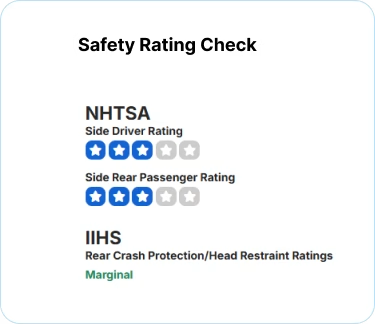
While crash-test ratings are not typically issued for high-performance sportbikes in the same way they are for cars, the ZX-10R incorporated safety through its advanced braking systems (ABS on certain models) and traction control. The chassis and suspension were designed for stability and rider confidence, crucial safety elements at high speeds. The aggressive fairing design also contributes to aerodynamics and rider protection from wind blast.

Optional Features:
The primary optional feature was the inclusion of the ABS system. Some markets might have offered accessories like different exhaust systems or cosmetic enhancements from Kawasaki or aftermarket manufacturers. The KQS (Kawasaki Quick Shifter) was also a notable feature, allowing for clutchless upshifts, which enhances performance and rider focus during spirited riding.

What Colors Options are Available?

We’re working on this section!
In the meantime, feel free to explore the other sections for more content.

2016 Kawasaki Ninja ZX-10R Prices and Market Value

When new, the 2016 Kawasaki Ninja ZX-10R had an MSRP typically ranging from around $15,500 to $16,500 USD, depending on ABS options and any dealer fees.

Currently, the used market for a 2016 ZX-10R can vary significantly based on mileage, condition, maintenance history, and location. You can expect to find them generally priced between $9,000 and $13,000. Bikes with very low mileage and excellent condition will command higher prices.

Depreciation on high-performance sportbikes like the ZX-10R is relatively steep in the first few years but tends to level out. Factors affecting resale value include:
  • Condition: Meticulous care and low mileage are key.
  • Maintenance Records: Proof of regular servicing adds significant value.
  • Original Parts: Modifications can decrease value for some buyers unless they are performance-enhancing and well-executed.
  • Accident History: Any signs of damage or accidents will drastically reduce resale value.
  • ABS Option: Models with ABS often retain slightly higher value.

2016 Kawasaki Ninja ZX-10R Cost of Ownership

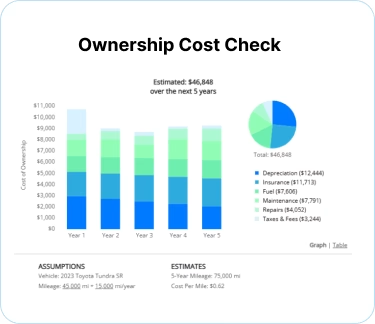
Owning a 2016 Kawasaki Ninja ZX-10R is generally considered costly. Insurance premiums for superbikes are high due to their performance and theft risk. It requires premium unleaded fuel, adding to running costs. Maintenance is also frequent and can be expensive, with specialized parts and labor for performance components. Repairs, especially after a fall or component failure, can be significant. While not economical, its thrilling performance and advanced technology offer a high value proposition for riders prioritizing exhilaration over budget-friendly operation. Regular, proactive maintenance is key to minimizing costly unexpected repairs.

2016 Kawasaki Ninja ZX-10R Fuel Efficiency

Fuel Type Gasoline
Fuel Capacity -
City Mileage -
Highway Mileage -

2016 Kawasaki Ninja ZX-10R Warranty

Basic
Original warranty 0 months / No data
Estimated remaining Expired
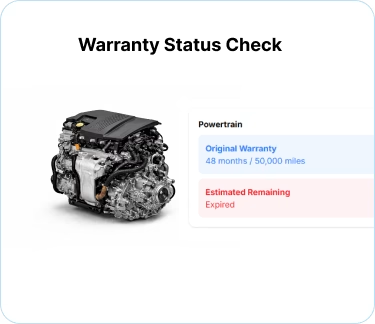
Powertrain
Original warranty 0 months / No data
Estimated remaining Expired
Rust
Original warranty 0 months / No data
Estimated remaining Expired

2016 Kawasaki Ninja ZX-10R Insurance

Insurance for a 2016 Kawasaki Ninja ZX-10R is moderately priced, reflecting its status as a Motorcycle with strong safety ratings and
reasonable repair costs.

How Does the 2016 Kawasaki Ninja ZX-10R Compare to Other Motorcycle?

The 2016 Kawasaki Ninja ZX-10R was a fierce competitor in the hyper-sport class, facing off against titans like the Yamaha YZF-R1, Honda CBR1000RR, Suzuki GSX-R1000, and BMW S1000RR.

Performance: In terms of raw power and acceleration, the 2016 ZX-10R was exceptionally potent, often matching or exceeding its rivals. Its refined engine and chassis dynamics, heavily influenced by its World Superbike success, provided sublime handling and track capability. The Yamaha R1, with its crossplane crank, offered a unique torque delivery and character, while the BMW S1000RR was known for its blistering speed and sophisticated electronics.

Features: The 2016 ZX-10R was at the forefront of electronic rider aids, boasting a 6-axis IMU for sophisticated traction control, cornering ABS (on ABS models), launch control, and engine braking control. This electronic package was highly competitive, with BMW often considered the benchmark in this area, but Kawasaki closed the gap significantly with this update.

Reliability: Kawasaki generally holds a strong reputation for reliability, and the ZX-10R is no exception when properly maintained. While all superbikes demand diligent upkeep, Kawasaki’s engineering is often praised for robustness. The Japanese rivals (Yamaha, Honda, Suzuki) also have excellent track records for dependability in this segment. The BMW, while incredibly fast and technologically advanced, sometimes faced more varied opinions on long-term reliability compared to its Japanese counterparts.
Price: The 2016 ZX-10R was priced competitively within the segment, often positioned slightly below the premium offerings from BMW or Yamaha upon release. Its used market value also reflects this, offering strong performance for the price.

Alternatives:
  • Yamaha YZF-R1: If you prefer a more characterful engine feel and a slightly more exotic aesthetic, the R1 is a superb alternative.
  • BMW S1000RR: For those prioritizing the absolute cutting edge in electronics and sheer top-end power, the S1000RR is a strong contender, though potentially pricier.
  • Honda CBR1000RR: Often lauded for its user-friendliness and balanced nature, the CBR1000RR is a reliable and capable machine, though it might not have the same raw edge as the ZX-10R for 2016.
  • Suzuki GSX-R1000: The GSX-R has a legendary reputation for being an incredibly competent and user-friendly sportbike. The 2016 model might be slightly less advanced in electronics than the ZX-10R but offers excellent value and reliability.

Overall, the 2016 ZX-10R stands as an excellent choice, offering a fantastic blend of raw performance, advanced technology, and proven Kawasaki reliability, often at a slightly more accessible price point than some competitors.

Final Verdict: Is the 2016 Kawasaki Ninja ZX-10R a Good Motorcycle?

The 2016 Kawasaki Ninja ZX-10R is ideal for experienced sportbike riders, track day enthusiasts, and performance-oriented individuals seeking exhilarating speed and razor-sharp handling. It's a machine built for those who appreciate advanced technology and race-bred performance.

It is definitely worth buying, especially on the used market, as it offers incredible performance for its price point. Buying used is the most practical route, as new examples are long out of production. Look for well-maintained models with a documented service history. The ABS version is recommended for added safety and potentially better resale value. It represents a fantastic value for a motorcycle that was at the pinnacle of sportbike technology when new and remains highly capable today for riders who can harness its power.

2016 Kawasaki Ninja ZX-10R Owner Reviews

0.00
Consumer Rating, Based on 0 Consumer Reviews
Overall rating
Cancel
Thank You for Your Review!

We truly appreciate the time and effort you took to share your experience with us.

Uh oh!

Something went wrong, please try again later.

Author Image
Simon A

Simon is a contributor to VinCheck, where he provides articles and reviews on various automotive topics. His work focuses on delivering accurate and up-to-date information about used cars, helping readers make informed decisions.