
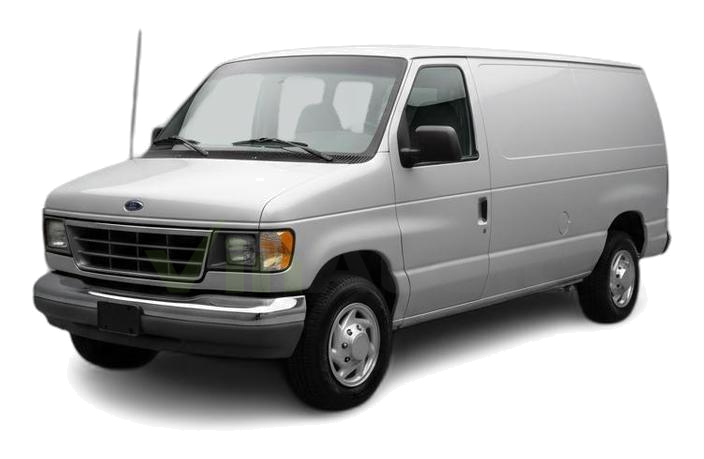
The 1995 Ford E-250 is part of Ford's long-running E-Series van lineup, a staple in the commercial and personal transportation sectors since the 1960s. Available as a full-size van, it came in various body styles including passenger and cargo configurations. Key trims typically included the base model and the more feature-rich Chateau. Popularity stemmed from its robust construction, versatile utility, and extensive aftermarket support. Its enduring design and capability made it a go-to choice for businesses and families alike.
The Good
The 1995 E-250 offers impressive towing and hauling capabilities, a legendary reputation for reliability, and a spacious, adaptable interior. Its rugged build appeals to practical needs, while its dependable nature provides peace of mind and a sense of enduring value for emotional connection.
The Bad
Potential weaknesses for the 1995 E-250 include aging interior materials, susceptibility to rust in certain climates, and the possibility of wear and tear on older powertrain components. Braking performance and fuel economy can also be areas to scrutinize on well-used examples.
1995 Ford E-250: Quick Overview
- Engine Options: The 1995 Ford E-250 was offered with a choice of robust gasoline engines. Standard was typically a 4.9L inline-6 cylinder engine. An optional upgrade was a 5.0L V8 engine, and for those needing more power, a larger 5.8L V8 was also available. Diesel engine options were less common in this specific model year but were part of the broader E-Series history.
- Horsepower:
- 4.9L I6: Approximately 150-160 horsepower.
- 5.0L V8: Around 170-185 horsepower.
- 5.8L V8: Approximately 210-225 horsepower. - Fuel Economy: Fuel economy for the 1995 E-250 was not a strong suit, typical for heavy-duty vans of its era. Expect figures in the range of 10-14 MPG city and 14-18 MPG highway, varying significantly based on engine choice, load, and driving conditions.
- 0-60 Times: Specific 0-60 mph times are rarely documented for commercial vans like the E-250 as performance was secondary to utility. However, with the larger V8 engines, it would likely range from 9-12 seconds when unladen.
- Towing Capacity: The E-250, especially when optioned with the V8 engines and appropriate towing packages, offered substantial towing capacities. Depending on configuration, it could comfortably tow between 7,500 lbs to over 10,000 lbs.
- Trim-Level Features:
- Base Model: Focused on functionality with basic amenities, vinyl flooring, manual windows and locks, and utilitarian seating. Often equipped with essential work features.
- Chateau (or similar upscale trims): Offered more creature comforts such as upgraded interior upholstery, carpeting, power windows and locks, cruise control, improved sound systems, and often captain's chairs for passenger comfort.
1995 Ford E-250 Specifications
Vehicle Information
| Year | 1995 |
| Make | Ford |
| Model | E-250 |
| Trim | - |
| Style | - |
| Type | Van |
| Category | Cargo Van |
Manufacturing Details
| Made In | United States |
| Manufacturing City | LORAIN |
Dimensions
| Doors | 3-Door |
| Curb Weight | 5218 pounds |
| Gross Vehicle Weight Rating | 9000 pounds |
| Overall Height | 83.40 inches |
| Overall Length | 231.80 inches |
| Overall Width | 79.30 inches |
| Wheelbase Length | 138.00 inches |
| Standard Seating | 2 |
Engine & Performance
| Engine | 5.8L V8 |
| Engine Size | 5.8L |
| Engine Cylinders | 8 |
| Transmission | 3-Speed Automatic |
| Transmission Type | Automatic |
| Transmission Speeds | 3-Speed |
| Drivetrain | Rear-Wheel Drive |
Additional Features
| Anti-Brake System | 2-Wheel ABS |
| Steering Type | Recirculating |
Pricing
| Manufacturer Suggested Retail Price (MSRP) | $18,738 |
| Invoice Price | - |
| Delivery Charges | - |
Vehicle History Report
Vehicle
Specifications
Specifications
Ownership
History
History
All History
Events
Events
NMVTIS Title
History Check
History Check
Salvage/Rebuilt
Check
Check
Accident
Check
Check
Theft
Check
Check
Open Lien
Check
Check
Past Sale
Listings
Listings
Safety
Recalls
Recalls
Odometer
Check
Check
Market Price
Analysis
Analysis
What Problems Does the 1995 Ford E-250 Have?
The 1995 Ford E-250, like many vehicles of its age, can exhibit common issues related to wear and tear. One frequently reported concern revolves around the powertrain, particularly the transmission. Automatic transmissions, if not properly maintained, can develop slipping issues or fail to shift correctly. The cooling system is another area to monitor, with potential for radiator leaks, hose failures, and water pump issues, especially on higher-mileage units. Electrical gremlins, though not overwhelmingly common, can manifest as intermittent issues with power windows, door locks, or dashboard warning lights. Ford's older inline-six engines are generally robust, but spark plug blowouts could occur. V8 engines might experience intake manifold gasket leaks. On the chassis side, suspension components like ball joints and tie rods can wear out, leading to steering looseness and uneven tire wear. Brake systems, including rotors and calipers, will also require regular maintenance and potential replacement. Rust is a significant concern for E-250s, particularly those that have lived in areas with heavy road salt usage. Frame rust, rocker panel deterioration, and wheel well corrosion are common visual indicators. Recalls for the 1995 E-250 were typically minor and related to specific component issues such as potential fuel line leaks or minor steering system adjustments. However, it's always advisable to check the National Highway Traffic Safety Administration (NHTSA) database for any outstanding recalls applicable to this specific VIN. Long-term reliability is generally strong if the vehicle has been consistently maintained. Many E-250s have exceeded 200,000 miles with proper care, attesting to their durable construction. However, owners should be prepared for ongoing maintenance and potential repairs as the vehicle ages.
How long will the 1995 Ford E-250 last?
Based on owner data and typical usage, a well-maintained 1995 Ford E-250 can realistically achieve 200,000 to 300,000 miles or more. Many of these vans were used for commercial purposes, leading to higher average mileage over fewer years, while others served as family vehicles or RV conversions, accumulating miles more gradually. The long-term durability of the E-250 is a strong point, stemming from its robust chassis and drivetrain components. However, weaknesses emerge over time. Rust is a primary concern, especially in salt-belt regions, significantly impacting structural integrity. Powertrain components, while durable, will eventually require attention, particularly transmissions and suspension elements. Regular fluid changes and proactive maintenance are crucial to extending its service life and mitigating common aging issues.
What Technology & Safety Features are Included?
The 1995 Ford E-250 was designed with practicality and utility as its primary focus, meaning its technology, entertainment, and driver-assistance features were relatively basic by modern standards.
Technology & Entertainment: Standard equipment was limited. Most models came with an AM/FM radio. Optional upgrades often included a cassette player, and in higher trims, a more sophisticated AM/FM stereo system with upgraded speakers. Features like CD players were not common in this model year. Power windows and door locks were available as optional equipment, particularly in the passenger van variants or higher trim levels like the Chateau. Cruise control was also a popular option for highway driving comfort. There were no integrated navigation systems or advanced infotainment screens.
Driver-Assistance Features: Driver-assistance features were virtually non-existent. The E-250 relied on the driver's skill and attention. Features like anti-lock braking system (ABS) were available, and a highly recommended option, particularly for a vehicle of this size and weight, to aid in emergency stops. Rear parking sensors or backup cameras were not offered.
Safety Features: Standard safety features included seat belts for all occupants. Airbags for the driver and front passenger were standard. The robust body-on-frame construction provided a degree of passive safety. However, crash-test ratings for commercial vans from this era are not as readily available or standardized as they are for passenger cars today. Ford typically conducted internal testing, but public ratings from organizations like the IIHS or NHTSA are scarce for specific model years of the E-Series. The primary safety advantage was the sheer mass and sturdiness of the vehicle.
Optional Features: Beyond those mentioned, options could include heavy-duty alternators and batteries for work applications, trailer towing packages, rear climate control for passenger versions, and various upfitter packages for custom modifications in cargo vans.
Technology & Entertainment: Standard equipment was limited. Most models came with an AM/FM radio. Optional upgrades often included a cassette player, and in higher trims, a more sophisticated AM/FM stereo system with upgraded speakers. Features like CD players were not common in this model year. Power windows and door locks were available as optional equipment, particularly in the passenger van variants or higher trim levels like the Chateau. Cruise control was also a popular option for highway driving comfort. There were no integrated navigation systems or advanced infotainment screens.
Driver-Assistance Features: Driver-assistance features were virtually non-existent. The E-250 relied on the driver's skill and attention. Features like anti-lock braking system (ABS) were available, and a highly recommended option, particularly for a vehicle of this size and weight, to aid in emergency stops. Rear parking sensors or backup cameras were not offered.
Safety Features: Standard safety features included seat belts for all occupants. Airbags for the driver and front passenger were standard. The robust body-on-frame construction provided a degree of passive safety. However, crash-test ratings for commercial vans from this era are not as readily available or standardized as they are for passenger cars today. Ford typically conducted internal testing, but public ratings from organizations like the IIHS or NHTSA are scarce for specific model years of the E-Series. The primary safety advantage was the sheer mass and sturdiness of the vehicle.
Optional Features: Beyond those mentioned, options could include heavy-duty alternators and batteries for work applications, trailer towing packages, rear climate control for passenger versions, and various upfitter packages for custom modifications in cargo vans.
What Colors Options are Available?
1995 Ford E-250 Prices and Market Value
When new, the 1995 Ford E-250 had a base MSRP that typically ranged from approximately $20,000 to $25,000, with higher trims and optional equipment pushing the price closer to $30,000 or more. The E-250 has experienced significant depreciation over the years, as is typical for most vehicles. Current used market prices vary widely, often falling between $3,000 and $8,000, depending heavily on condition, mileage, and whether it's a cargo or passenger version. Factors affecting resale value include the presence of rust, mechanical condition, interior wear, and documented maintenance history. Vans that have been meticulously cared for and have lower mileage tend to command higher prices, while heavily used or neglected examples will be at the lower end of the spectrum. Modifications, especially those related to camper conversions, can also significantly influence value.
1995 Ford E-250 Cost of Ownership
Owning a 1995 Ford E-250 presents moderate long-term costs. Insurance premiums are generally reasonable, especially for liability-only coverage on older vehicles. Fuel costs are a significant factor due to its less-than-stellar fuel economy, especially with V8 engines. Maintenance is straightforward and parts are widely available, keeping routine servicing costs manageable. However, repairs for significant issues like transmission problems or rust remediation can be substantial. Overall, while not the most economical vehicle to fuel, its durable nature and relatively inexpensive parts can make it a cost-effective choice for those prioritizing utility and willing to invest in its upkeep.
1995 Ford E-250 Fuel Efficiency
Fuel Type
Gasoline
Fuel Capacity
35.00 gallons
City Mileage
13 miles/gallon
Highway Mileage
14 miles/gallon
1995 Ford E-250 Safety Rating
NHTSA
IIHS
1995 Ford E-250 Warranty
Basic
Original warranty
0 months / No data
Estimated remaining
Expired
Powertrain
Original warranty
0 months / No data
Estimated remaining
Expired
Rust
Original warranty
0 months / No data
Estimated remaining
Expired
1995 Ford E-250 Insurance
Insurance for a 1995 Ford E-250 is moderately priced, reflecting its status as a Van with strong safety ratings and
reasonable repair costs.
How Does the 1995 Ford E-250 Compare to Other Van?
The 1995 Ford E-250 competed in the full-size van segment primarily against rivals like the Chevrolet Express/GMC Savana and the Dodge Ram Van.
Performance: The E-250, especially with its optional V8 engines, offered competitive power and towing capability for its class. Its performance was generally on par with or slightly better than its direct competitors, providing robust hauling and towing for commercial or recreational use.
Features: In terms of features, the E-250 was typical for its era, offering basic amenities with optional upgrades. The Chevrolet/GMC twins and the Dodge Ram Van offered similar levels of standard and optional equipment. None of these vehicles were known for cutting-edge technology in 1995; comfort and utility were prioritized.
Reliability: The Ford E-Series has a strong reputation for reliability and durability, often considered one of its main strengths. While all vehicles from this period can have issues, the E-250 is generally considered a solid workhorse. The Chevrolet/GMC vans also have a good reliability record, while the Dodge Ram Van sometimes faced more concerns, particularly with its transmission and powertrain.
Price: When new, prices were competitive across all these models. In the used market today, the E-250, due to its popularity and perceived durability, can sometimes hold its value slightly better than some competitors, especially well-maintained examples.
Alternatives: Similar alternatives include the Chevrolet Express and GMC Savana. They offer comparable utility and often similar engine choices. The Dodge Ram Van is another option, though potentially less reliable in the long term. For those prioritizing modern features and safety, looking at newer models from any of these lines would be advisable, but for a capable, older workhorse, the 1995 E-250 remains a strong contender.
Performance: The E-250, especially with its optional V8 engines, offered competitive power and towing capability for its class. Its performance was generally on par with or slightly better than its direct competitors, providing robust hauling and towing for commercial or recreational use.
Features: In terms of features, the E-250 was typical for its era, offering basic amenities with optional upgrades. The Chevrolet/GMC twins and the Dodge Ram Van offered similar levels of standard and optional equipment. None of these vehicles were known for cutting-edge technology in 1995; comfort and utility were prioritized.
Reliability: The Ford E-Series has a strong reputation for reliability and durability, often considered one of its main strengths. While all vehicles from this period can have issues, the E-250 is generally considered a solid workhorse. The Chevrolet/GMC vans also have a good reliability record, while the Dodge Ram Van sometimes faced more concerns, particularly with its transmission and powertrain.
Price: When new, prices were competitive across all these models. In the used market today, the E-250, due to its popularity and perceived durability, can sometimes hold its value slightly better than some competitors, especially well-maintained examples.
Alternatives: Similar alternatives include the Chevrolet Express and GMC Savana. They offer comparable utility and often similar engine choices. The Dodge Ram Van is another option, though potentially less reliable in the long term. For those prioritizing modern features and safety, looking at newer models from any of these lines would be advisable, but for a capable, older workhorse, the 1995 E-250 remains a strong contender.
Final Verdict: Is the 1995 Ford E-250 a Good Van?

The 1995 Ford E-250 is ideal for tradespeople needing a reliable work van, DIY enthusiasts seeking a robust platform for customization (like camper conversions), or families requiring a spacious hauler for large gear. It is absolutely worth buying if you prioritize sheer utility, durability, and a solid, no-frills transportation solution over modern amenities. Buying used is the only option. Focus on examples with thorough maintenance records and minimal rust. Cargo van configurations are generally more plentiful and often better value for conversion projects, while passenger variants are better for large families. Avoid models with significant mechanical issues, as repairs can become costly. With careful inspection and realistic expectations, the 1995 E-250 can still be a highly capable and economical choice.