
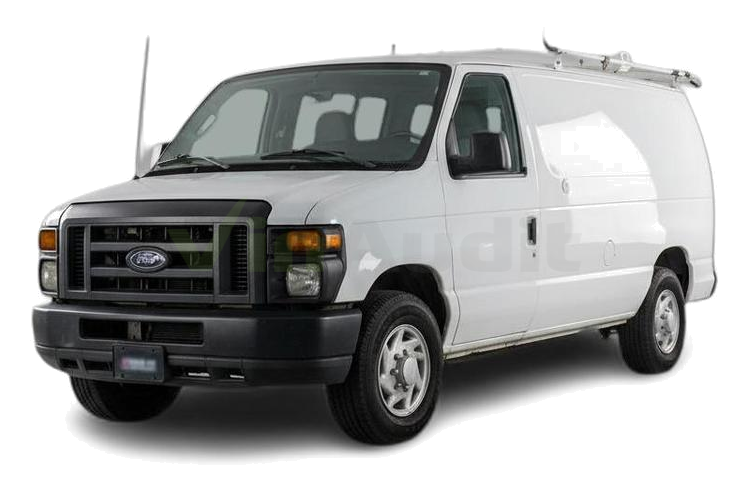
The Good
The 2010 Ford E-250 offers substantial towing and hauling capabilities, coupled with a reputation for rugged reliability. Its spacious interior appeals to practical needs for cargo or passengers, while its commanding presence can evoke a sense of capability and dependability for buyers. The value proposition lies in its durability and utility.
The Bad
Potential owners of the 2010 Ford E-250 should be aware of common issues like aging suspension components, potential for rust in certain climates, and the dated interior design and technology. Fuel economy is also a significant drawback for daily driving.
2010 Ford E-250: Quick Overview
- Engine Options: The 2010 Ford E-250 was primarily offered with two robust V8 engine choices.
- 4.6L Triton V8
- 5.4L Triton V8
- Horsepower:
- The 4.6L V8 typically produced around 225 horsepower.
The more powerful 5.4L V8 offered approximately 255 horsepower.
- The 4.6L V8 typically produced around 225 horsepower.
- Fuel Economy: Fuel economy is a notable weakness for the E-250, particularly in city driving. Expect figures in the range of:
- City: 11-13 MPG
- Highway: 15-18 MPG
These figures vary based on engine, drivetrain (RWD/4WD), and load. - 0-60 Times: Official 0-60 mph times are rarely published for commercial vans like the E-250, as it's not a performance metric. However, due to its size and weight, expect acceleration to be leisurely, likely in the 9-11 second range when unladen.
- Towing Capacity: The E-250 is built for towing. Its capacity varied based on configuration (wheelbase, engine, axle ratio), but typically ranged from:
- Around 7,000 lbs to over 10,000 lbs when properly equipped with the available towing packages.
- Trim-Level Features: The E-250 was less about distinct trims and more about configuration options. Key features and options included:
- Body Styles: Cargo Van and Passenger Wagon.
Wheelbases: Short-wheelbase and long-wheelbase options were available, affecting cargo volume.
Drivetrain: Rear-wheel drive (RWD) was standard; four-wheel drive (4WD) was an option on some configurations.
Interior: Basic vinyl or cloth seating for driver and passengers. Passenger models could seat up to 15.
HVAC: Air conditioning was standard on most models.
Infotainment: Basic AM/FM radio, optional CD player.
Convenience: Power windows and locks were often optional.
Towing Packages: Essential for maximizing towing capacity, often including upgraded cooling, trailer brake controller wiring, and a more robust hitch receiver.
Limited-Slip Differential: An option for improved traction.
- Body Styles: Cargo Van and Passenger Wagon.
2010 Ford E-250 Specifications
Vehicle Information
| Year | 2010 |
| Make | Ford |
| Model | E-250 |
| Trim | - |
| Style | - |
| Type | Van |
| Category | Cargo Van |
Manufacturing Details
| Made In | United States |
| Manufacturing City | AVON LAKE |
Dimensions
| Doors | 3-Door |
| Curb Weight | 5225 pounds |
| Gross Vehicle Weight Rating | 8900 pounds |
| Overall Height | 84.10 inches |
| Overall Length | 237.00 inches |
| Overall Width | 79.30 inches |
| Wheelbase Length | 138.00 inches |
| Standard Seating | 2 |
Engine & Performance
| Engine | 4.6L V8 |
| Engine Size | 4.6L |
| Engine Cylinders | 8 |
| Transmission | 4-Speed Automatic |
| Transmission Type | Automatic |
| Transmission Speeds | 4-Speed |
| Drivetrain | Rear-Wheel Drive |
Additional Features
| Anti-Brake System | 4-Wheel ABS |
| Steering Type | Recirculating |
Pricing
| Manufacturer Suggested Retail Price (MSRP) | $27,860 |
| Invoice Price | $25,654 |
| Delivery Charges | $980 |
Vehicle History Report
Specifications
History
Events
History Check
Check
Check
Check
Check
Listings
Recalls
Check
Analysis
What Problems Does the 2010 Ford E-250 Have?
One frequently reported concern revolves around the powertrain, specifically the transmission. Issues such as slipping gears, delayed engagement, or complete transmission failure have been noted, particularly on higher-mileage vehicles or those that have been heavily used for towing or hauling. Regular fluid changes and proper maintenance are crucial to prolonging transmission life.
Suspension and steering components are another area of common complaints. Worn ball joints, tie rod ends, and wheel bearings can lead to clunking noises, steering wander, and premature tire wear. Given the E-250's substantial weight, these components are under constant stress.
Rust and corrosion can be a significant problem, especially for E-250s used in areas with harsh winters or coastal environments. Frame rust, body panel corrosion around wheel wells, and exhaust system decay are common findings. Thorough inspections for rust are highly recommended before purchasing a used E-250.
Cooling system issues, including radiator leaks and coolant hose deterioration, have also been reported. Overheating can lead to more serious engine problems, so it's important to keep an eye on the temperature gauge and ensure the cooling system is in good condition.
Regarding recalls, specific to the 2010 model year, owners should check the NHTSA website for any outstanding campaigns. Common recall areas for E-Series vans across various years have included issues with airbags, fuel systems, and braking components. While no widespread, model-defining recalls are heavily associated with the 2010 E-250, individual units could be affected by specific safety campaigns.
Long-term reliability is generally good if the vehicle has been well-maintained. The robust construction and simpler mechanicals of the E-250 contribute to its longevity. However, the age of a 2010 model means that owners should anticipate needing to address age-related wear and tear on components like seals, gaskets, and rubber hoses. The electronic systems, while not overly complex, can also develop issues over time.
How long will the 2010 Ford E-250 last?
What Technology & Safety Features are Included?
Driver-assistance features were virtually nonexistent on the 2010 E-250. This era of commercial van was not equipped with the advanced electronic aids found in passenger vehicles today. Parking assistance, such as rear parking sensors, may have been available as an optional add-on for some models, but forward-looking technologies like adaptive cruise control, lane departure warning, or blind-spot monitoring were not offered.
Safety features were primarily focused on passive safety and structural integrity. Standard safety equipment typically included front airbags for the driver and front passenger. Antilock Braking System (ABS) was also standard, providing improved stopping control. For passenger wagon configurations, seatbelt reminders and child seat anchors (LATCH) would have been included. However, electronic stability control was not a standard feature on all E-250 models for 2010 and may have been optional or absent depending on the specific configuration and market.
Crash-test ratings for commercial vans like the E-250 are not typically conducted by organizations like the NHTSA or IIHS in the same rigorous manner as passenger cars and SUVs. Ford's focus was on meeting commercial vehicle safety standards, which emphasize structural integrity, occupant protection in frontal and side impacts, and rollover resistance. While specific ratings are scarce, the E-250's robust body-on-frame construction and extensive use of steel provided a strong foundation for occupant protection.
What Colors Options are Available?
2010 Ford E-250 Prices and Market Value
2010 Ford E-250 Cost of Ownership
2010 Ford E-250 Fuel Efficiency
2010 Ford E-250 Safety Rating
NHTSA
IIHS
2010 Ford E-250 Recalls & Defects
Fuel System, Other:fuel Injection System
Fuel System, Other:delivery:hoses, Lines/Piping, and Fittings
Fuel System, Other:fuel Injection System
Equipment
Equipment Adaptive/Mobility
Equipment Adaptive/Mobility
Fuel System, Other:delivery:hoses, Lines/Piping, and Fittings
Equipment Adaptive/Mobility
Equipment Adaptive/Mobility
Equipment Adaptive/Mobility
Equipment Adaptive/Mobility
Equipment Adaptive/Mobility
Equipment Adaptive/Mobility
2010 Ford E-250 Warranty
Basic
Powertrain
Rust
2010 Ford E-250 Insurance
reasonable repair costs.
How Does the 2010 Ford E-250 Compare to Other Van?
Feature-wise, the 2010 E-250 was decidedly utilitarian. While offering basic comforts, it lacked the more refined interiors or advanced tech that some newer competitors might have been starting to introduce. The Express/Savana twins were similarly focused on practicality over luxury. In terms of price, both the E-250 and its GM rivals offered competitive new pricing, and their used market values often reflect their age and mileage similarly, though condition and specific configurations play a huge role.
Alternatives to consider:
- Chevrolet Express 2500 / GMC Savana 2500: These are arguably the closest direct competitors. They offer similar V8 power options, robust construction, and excellent towing capacity. Reliability is generally on par with the E-250, and they are widely available on the used market.
- Dodge Ram Van (if a very early 2000s model is considered): Though production ended earlier, older Ram Vans offered a different flavor of utility. However, they are generally less common and may not have the same long-term parts availability or perceived reliability as the Ford or GM vans.
- Mercedes-Benz Sprinter (if cargo volume is paramount): For those prioritizing maximum cargo space and a more modern feel, a used Sprinter might be an option, though it typically comes at a higher purchase price and potentially higher repair costs. Its fuel efficiency is generally better.
For buyers seeking a straightforward, capable, and durable van for work or conversion purposes, the 2010 E-250 remains a viable option, especially when compared to its direct contemporaries. Its strong resale value, relative to its utility, is a testament to its enduring appeal.
Final Verdict: Is the 2010 Ford E-250 a Good Van?

Eugene S
Eugene is an automotive enthusiast with over 15 years of experience in the used car market. As a writer at VINCheck.info, he brings deep industry insight and a passion for cars, helping readers make smart, informed decisions. Eugene has written hundreds of used car reviews and is known for breaking down complex automotive topics into clear, actionable advice. Over the years, he has driven and worked on a wide range of vehicles—starting with tuning street cars in his early days and eventually focusing on performance upgrades and reliability improvements. Today, he specializes in evaluating used vehicles through the lens of real-world ownership and enthusiast needs. A longtime fan of Porsche, Eugene especially appreciates vehicles that blend durability with driving enjoyment.