
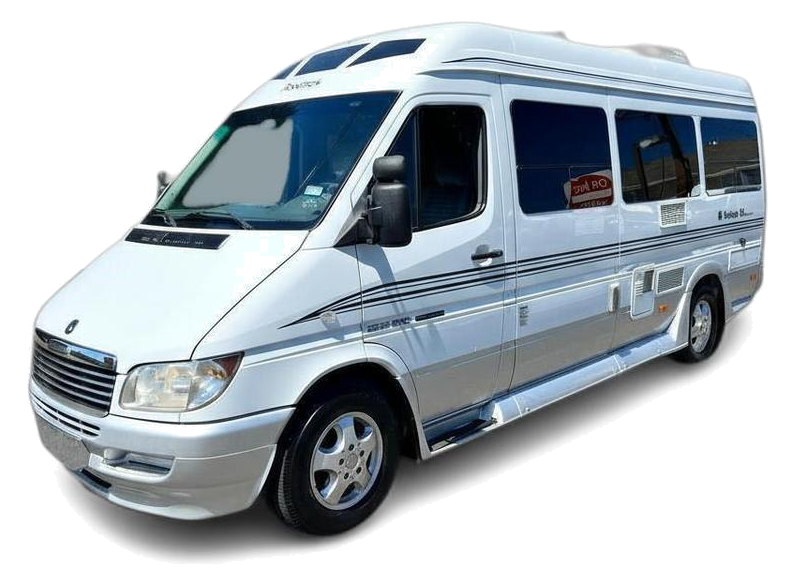
The Good
The 2005 Sprinter excels in its class-leading cargo space and versatile design, appealing to practical needs. Its efficient diesel engines offer impressive fuel economy for its size, while the comfortable, car-like cabin and smooth ride delight drivers and passengers alike. This blend of utility, efficiency, and comfort provides exceptional value for diverse applications.
The Bad
Potential buyers of the 2005 Freightliner Sprinter should be aware of rust issues, particularly around wheel arches, door sills, and the undercarriage. Electrical gremlins can also surface, and some owners report premature wear on suspension components and exhaust systems. Diesel particulate filter (DPF) issues, if equipped, can also be a concern.
2005 Freightliner Sprinter: Quick Overview
- Engine Options: The 2005 Freightliner Sprinter primarily offered a 2.7-liter, 5-cylinder turbo-diesel engine (OM612 DE 27 LA).
- Horsepower: This diesel engine typically produced around 154 horsepower.
- Torque: Torque figures were robust, often in the range of 243 lb-ft, providing excellent pulling power.
- Fuel Economy: Official EPA estimates for the 2005 Sprinter are not readily available, but anecdotal evidence and owner reports suggest figures in the range of 18-22 MPG combined for highway use, depending on load and driving conditions.
- 0-60 Times: As a commercial-oriented vehicle, 0-60 MPH times were not a primary focus. Expect times to be in the 12-15 second range for a loaded van, prioritizing torque over acceleration.
- Towing Capacity: Towing capacity varied based on the specific configuration (GVWR) but generally ranged from 5,000 to 7,500 lbs, making it suitable for moderate towing needs.
- Trim-Level Features: Trims were often distinguished by wheelbase (e.g., 118-inch, 140-inch, 158-inch) and roof height (standard, high). Key features could include:
- Panel Van configurations with extensive cargo space and upfitting options.
- Passenger Van configurations seating up to 9 or 12 occupants with multiple rows.
- Chassis Cab models designed for custom bodywork (e.g., dump trucks, box trucks).
- Standard equipment often included power steering, power brakes, ABS, and a basic AM/FM radio.
- Optional features could encompass air conditioning, cruise control, power windows and locks, heated mirrors, and upgraded audio systems.
- Some models might have offered different axle ratios for specific load requirements.
2005 Freightliner Sprinter Specifications
Vehicle Information
| Year | 2005 |
| Make | Freightliner |
| Model | Sprinter |
| Trim | - |
| Style | - |
| Type | Truck |
| Category | Medium Truck |
Manufacturing Details
| Made In | Germany |
| Manufacturing City | DUESSELDORF |
Dimensions
| Doors | 4-Door |
| Curb Weight | - |
| Gross Vehicle Weight Rating | - |
| Overall Height | - |
| Overall Length | - |
| Overall Width | - |
| Wheelbase Length | - |
| Standard Seating | - |
Engine & Performance
| Engine | MB OM647LA |
| Engine Size | 2.7L |
| Engine Cylinders | 5 |
| Transmission | - |
| Transmission Type | - |
| Transmission Speeds | - |
| Drivetrain | Rear-Wheel Drive |
Additional Features
| Anti-Brake System | - |
| Steering Type | - |
Pricing
| Manufacturer Suggested Retail Price (MSRP) | - |
| Invoice Price | - |
| Delivery Charges | - |
Vehicle History Report
Specifications
History
Events
History Check
Check
Check
Check
Check
Listings
Recalls
Check
Analysis
What Problems Does the 2005 Freightliner Sprinter Have?
Another prevalent issue revolves around the diesel engine's fuel injection system and emissions components. While the 2.7L CDI engine is known for its longevity, issues with glow plugs, fuel injectors, and the Diesel Particulate Filter (DPF), if equipped, can arise. These can lead to rough idling, poor performance, and illuminated check engine lights. Oil cooler seals are also a known weak point, potentially leading to coolant leaks into the oil.
The transmission, typically an automatic, can sometimes develop issues with shifting or torque converter problems, especially with higher mileage vehicles or those that have been heavily used. Electrical gremlins are also occasionally reported, including issues with the instrument cluster, door locks, and lighting systems. The complex wiring harness can be prone to corrosion or damage over time.
Regarding recalls, specific to the 2005 model year, some involved potential issues with the parking brake system, airbags, or fuel system components. It is always advisable to check the NHTSA website for any outstanding recalls associated with a specific VIN. Long-term reliability hinges heavily on consistent and thorough maintenance, especially fluid changes and preventative checks for rust. While many Sprinters achieve high mileage, neglected maintenance can accelerate wear and lead to more costly repairs, particularly with the specialized nature of diesel components.
How long will the 2005 Freightliner Sprinter last?
What Technology & Safety Features are Included?
Driver-assistance features were very limited for the 2005 model year. Standard safety equipment included Anti-lock Braking System (ABS) for improved stopping control and power-assisted steering for easier maneuverability. Depending on the configuration, it might have also come equipped with front airbags. Features like stability control, traction control, or advanced driver aids were largely absent or only available on very specific, later configurations or as expensive aftermarket additions.
Optional features could include air conditioning, cruise control, power windows, power door locks, and heated mirrors, enhancing driver comfort and convenience for long hauls. For passenger van variants, additional features might have included more robust climate control systems for the rear occupants and upgraded interior trim.
Crash-test ratings for commercial vehicles like the Sprinter from this era are not as extensively documented or comparable to passenger car ratings by agencies like the NHTSA or IIHS. However, its robust body-on-frame construction provided a strong inherent structure. The focus was on providing a safe platform for its intended commercial or cargo-carrying purposes. Given its age and design intent, it's crucial to rely on its standard safety features and exercise caution when driving, as it lacks the sophisticated safety nets of modern vehicles.
What Colors Options are Available?
2005 Freightliner Sprinter Prices and Market Value
2005 Freightliner Sprinter Cost of Ownership
2005 Freightliner Sprinter Fuel Efficiency
2005 Freightliner Sprinter Insurance
reasonable repair costs.
How Does the 2005 Freightliner Sprinter Compare to Other Truck?
In terms of features, the Sprinter generally offered a more modern and European-influenced interior design, with a more upright driving position and better visibility. However, the Ford and GM vans often had more straightforward, albeit older, technology and a wider array of readily available aftermarket parts. Reliability is a mixed bag. The Sprinter's diesel powertrain is known for longevity if well-maintained, but potential rust issues and more complex European-specific components could lead to higher repair costs than the simpler, more common American vans.
Price-wise, the Sprinter was typically positioned at a higher price point when new, reflecting its advanced engineering and diesel powertrain. Used, their prices can vary significantly. The Ford E-Series and Chevy/GMC Express are often more affordable to purchase and maintain due to their widespread availability and simpler mechanicals. For those prioritizing maximum cargo volume, exceptional fuel efficiency in a large van, and a more refined driving experience, the 2005 Sprinter remains a strong contender. However, if budget and ease of maintenance are paramount, a well-maintained Ford E-Series or Chevrolet Express would be a more practical choice. Alternatively, newer generations of the Mercedes-Benz Sprinter (which replaced the Freightliner badging) or Ram ProMaster offer updated technology and features but come at a higher price point.
Final Verdict: Is the 2005 Freightliner Sprinter a Good Truck?

Eugene S
Eugene is an automotive enthusiast with over 15 years of experience in the used car market. As a writer at VINCheck.info, he brings deep industry insight and a passion for cars, helping readers make smart, informed decisions. Eugene has written hundreds of used car reviews and is known for breaking down complex automotive topics into clear, actionable advice. Over the years, he has driven and worked on a wide range of vehicles—starting with tuning street cars in his early days and eventually focusing on performance upgrades and reliability improvements. Today, he specializes in evaluating used vehicles through the lens of real-world ownership and enthusiast needs. A longtime fan of Porsche, Eugene especially appreciates vehicles that blend durability with driving enjoyment.