
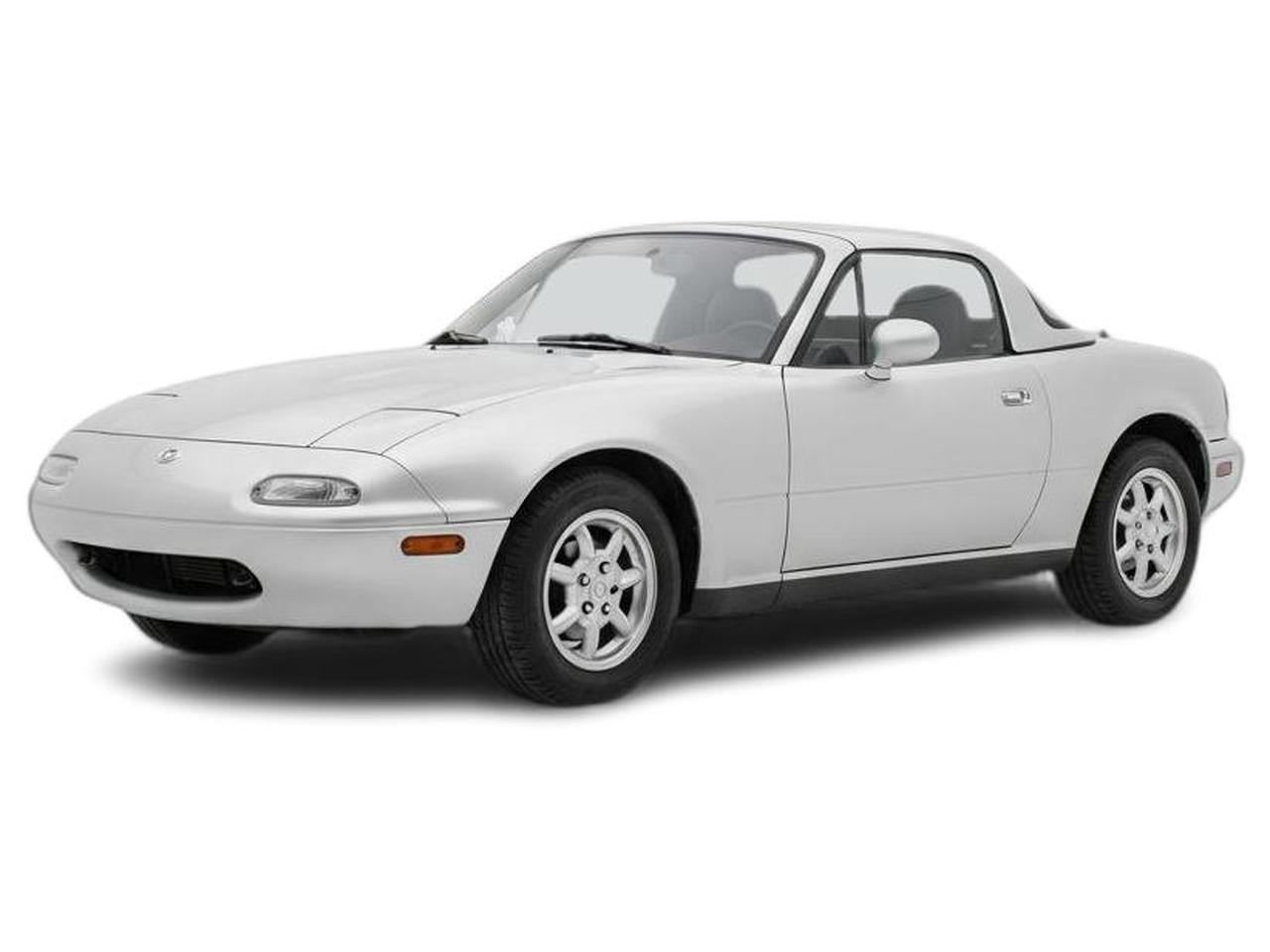
The Good
The 1993 MX-5 excels with its exhilarating performance, nimble handling, and a reliable, simple mechanical design. Its iconic, timeless styling and convertible top offer pure driving pleasure, appealing to emotional desires, while its fuel efficiency and accessible parts contribute to practical value for owners.
The Bad
Common weaknesses for the 1993 MX-5 include potential rust issues, especially on rocker panels and rear quarter panels. Oil leaks from the camshaft seals and crankshaft seals are also frequent. Early models may have issues with the power steering pump, and the convertible top can wear over time.
1993 Mazda MX-5: Quick Overview
- Engine Options: A single engine was available for the 1993 model year.
- 1.6-liter DOHC 16-valve inline-4
- Horsepower:
- 1.6L I4: 116 hp @ 6500 rpm
- Fuel Economy (EPA Estimated):
- Manual Transmission: Approximately 22 mpg city / 26 mpg highway
- Automatic Transmission: Approximately 21 mpg city / 25 mpg highway
- 0-60 Times:
- Manual Transmission: Approximately 8.5 to 9.0 seconds
- Automatic Transmission: Approximately 9.5 to 10.0 seconds
- Towing Capacity: The 1993 Mazda MX-5 is not designed or intended for towing. It does not have a specified towing capacity.
- Key Trim-Level Features: While specific trim packages were less distinct than in later years, the 1993 MX-5 primarily came in a single configuration with optional packages. Standard features often included:
- Power windows
- Power mirrors
- Tilt steering wheel
- AM/FM stereo with cassette player
- Cloth bucket seats
- Pop-up headlights
- Limited-slip differential (often part of an optional package or specific editions)
- Optional Air Conditioning
- Optional Power Steering (standard on some)
- Optional Hardtop
- Optional Leather Seats
1993 Mazda MX-5 Specifications
Vehicle Information
| Year | 1993 |
| Make | Mazda |
| Model | MX-5 |
| Trim | - |
| Style | Sport Convertible RWD 5MT 1.6L I4 |
| Type | Convertible |
| Category | passenger |
Manufacturing Details
| Made In | Japan |
| Manufacturing City | HIROSHIMA |
Dimensions
| Doors | 2-Door |
| Curb Weight | 2200 pounds |
| Gross Vehicle Weight Rating | - |
| Overall Height | 48 inches |
| Overall Length | 157.1 inches |
| Overall Width | 66.5 inches |
| Wheelbase Length | 89.2 inches |
| Standard Seating | 2 |
Engine & Performance
| Engine | 1.6L I4 |
| Engine Size | 1.6L |
| Engine Cylinders | 4 |
| Transmission | 5-Speed Manual |
| Transmission Type | Manual |
| Transmission Speeds | 5-Speed |
| Drivetrain | Rear-Wheel Drive |
Additional Features
| Anti-Brake System | 4-Wheel ABS |
| Steering Type | Rack & Pinion |
Pricing
| Manufacturer Suggested Retail Price (MSRP) | $19,500 |
| Invoice Price | - |
| Delivery Charges | - |
Vehicle History Report
Specifications
History
Events
History Check
Check
Check
Check
Check
Listings
Recalls
Check
Analysis
What Problems Does the 1993 Mazda MX-5 Have?
Another commonly reported mechanical issue relates to the **engine's oil seals**. Leaks from the crankshaft seal and camshaft seals are not uncommon. This can lead to oil consumption and potentially more significant engine problems if left unaddressed. The cooling system can also be a source of concern, with radiators and hoses degrading over time.
The **clutch and transmission** can experience wear, particularly on higher-mileage examples. Clutch chatter and stiff shifting can be indicators of wear. Power steering pumps have also been known to fail, leading to heavy steering, although many models had power steering as standard or optional, and some owners prefer the feel of manual steering.
The **convertible top** is another area to inspect. The fabric can become brittle, tear, or the seals can degrade, leading to leaks. Power windows can also become slow or inoperable.
Regarding recalls, the 1993 model year did not have widespread, catastrophic recalls that are still highly relevant for current owners. However, it is always advisable to check for any outstanding recalls through Mazda's official channels or a VIN decoder.
Overall, the 1993 MX-5 is considered quite reliable for its age, provided it has been maintained. Its simplicity is a strength; fewer complex electronics mean fewer things to go wrong. However, the aforementioned wear-and-tear items require attention and regular maintenance to ensure continued longevity and enjoyment.
How long will the 1993 Mazda MX-5 last?
What Technology & Safety Features are Included?
Entertainment: Standard equipment typically included an AM/FM stereo radio with a cassette player. Higher trim levels or optional packages might have offered a slightly upgraded sound system, potentially with more speakers. There were no CD players or digital connectivity options like Bluetooth or USB ports.
Technology: The focus was on the driving experience, not advanced tech. Features were limited to essentials like power windows and power mirrors, which were often optional on base models. A tilt steering wheel was also a common feature. The iconic pop-up headlights were a defining technological and aesthetic element of the era.
Driver-Assistance Features: Driver-assistance systems as we know them today did not exist. The primary focus was on the driver's direct connection to the road. Features like anti-lock braking systems (ABS) were not standard and were rarely, if ever, offered on the 1993 model year. Traction control was also absent.
Safety Features: Standard safety features were limited to seat belts and the car's basic structural integrity. Side airbags were not available. The car was designed to be light and nimble, which can be a double-edged sword in a collision.
Crash-Test Ratings: Specific, publicly available crash-test ratings for the 1993 Mazda MX-5 from organizations like the NHTSA or IIHS are scarce and not comparable to modern testing protocols. The vehicle was designed before many of today's stringent safety regulations and testing methodologies were in place. Its small size and lack of advanced safety equipment mean it would likely perform poorly in contemporary crash tests compared to modern vehicles.
Optional Features: Key optional features included air conditioning, power steering, a limited-slip differential (highly desirable for performance driving), and a removable hardtop for year-round driving. Leather seat trim was also an option on some models.
What Colors Options are Available?
1993 Mazda MX-5 Prices and Market Value
1993 Mazda MX-5 Cost of Ownership
1993 Mazda MX-5 Fuel Efficiency
1993 Mazda MX-5 Insurance
reasonable repair costs.
How Does the 1993 Mazda MX-5 Compare to Other Convertible?
Performance: The MX-5's 1.6L engine produced 116 hp, making it modest in straight-line speed. Its true performance advantage lay in its exceptional handling, balance, and steering feel. The MR2 offered a mid-engine layout, often with more power and sharper handling, but lacked the open-air experience. The larger American muscle cars offered significantly more power but were heavier and less agile.
Features: The MX-5 was deliberately spartan to keep weight down and costs low. Features like power windows and AC were often optional. Rivals like the 300ZX offered more luxury, technology, and power but at a much higher cost. The MR2 also offered a more enclosed, focused driving experience with a hatchback design.
Reliability: Mazda's reputation for reliability was strong, and the MX-5, with its relatively simple mechanicals, generally lived up to this. The MR2 was also known for its reliability. The American V6/V8 cars, while simpler in some ways, could be less refined and sometimes had more electrical gremlins.
Price: The MX-5 was significantly more affordable than the 300ZX and often competitive with the MR2, especially when factoring in the convertible experience.
Alternatives:
- Similar: For a similar experience in terms of lightweight, agile handling and RWD convertible fun, later generations of the Mazda MX-5 (NB, NC, ND) are excellent successors. A used **Toyota MR2** (SW20 generation) offers a mid-engine alternative with more power and a focus on sharp handling, though it's not a convertible.
- Different but appealing: If open-air driving is the priority but RWD isn't essential, a used **Honda S2000** (later model) offers significantly more power and razor-sharp handling, albeit at a higher price point. A **BMW Z3** offers a more luxurious European convertible experience, though potentially with higher maintenance costs.
Final Verdict: Is the 1993 Mazda MX-5 a Good Convertible?
Whether it's worth buying hinges heavily on condition. A well-maintained 1993 MX-5 is absolutely worth buying as a classic sports car offering exceptional value and fun. However, potential buyers must be vigilant about rust, a common issue that can quickly escalate repair costs.
It is only available on the used market. Focus on examples with a documented maintenance history and minimal rust. Any trim with a limited-slip differential is highly desirable for spirited driving. With careful inspection and reasonable expectations, the 1993 MX-5 remains a fantastic entry into affordable classic sports car ownership.

Eugene S
Eugene is an automotive enthusiast with over 15 years of experience in the used car market. As a writer at VINCheck.info, he brings deep industry insight and a passion for cars, helping readers make smart, informed decisions. Eugene has written hundreds of used car reviews and is known for breaking down complex automotive topics into clear, actionable advice. Over the years, he has driven and worked on a wide range of vehicles—starting with tuning street cars in his early days and eventually focusing on performance upgrades and reliability improvements. Today, he specializes in evaluating used vehicles through the lens of real-world ownership and enthusiast needs. A longtime fan of Porsche, Eugene especially appreciates vehicles that blend durability with driving enjoyment.