
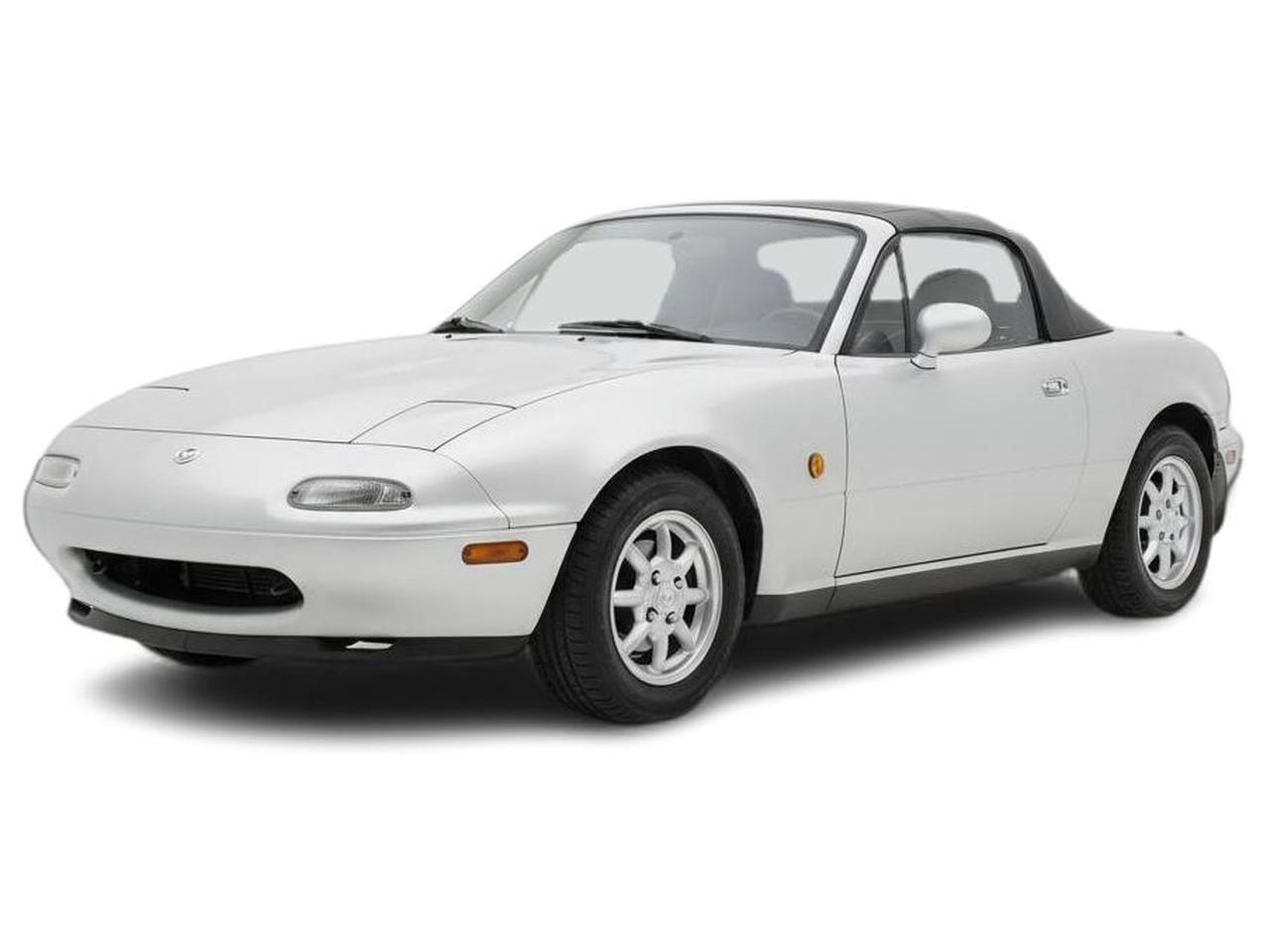
The 1994 Mazda MX-5, also known as the Miata in North America, is a compact, rear-wheel-drive sports car that revitalized the roadster segment. Part of the first generation (NA), it was produced from 1989 to 1997. Key trims for 1994 included the base model and the more equipped M Edition. Renowned for its lightweight chassis, exceptional handling, and affordable price, the MX-5 is celebrated for its pure, unadulterated driving fun and accessibility, making it incredibly popular among enthusiasts.
The Good
The 1994 MX-5 offers exhilarating performance through its agile handling and responsive steering, appealing to driving purists. Its legendary reliability and excellent fuel efficiency satisfy practical buyers, while its timeless, cheerful design and affordable value proposition make it an emotional and sensible choice for open-top motoring.
The Bad
Owners should watch for potential rust, especially on rocker panels, rear quarter panels, and subframes. Early models can have issues with the power steering pump and seals. Window seals and the soft-top can degrade over time, requiring replacement. Clutch wear is also a consideration on higher-mileage examples.
1994 Mazda MX-5: Quick Overview
- Engine Options: The 1994 Mazda MX-5 was primarily equipped with a 1.8-liter inline-4 cylinder engine.
- Horsepower: This engine produced approximately 125 horsepower.
- Fuel Economy: Expect an EPA-estimated fuel economy of around 22 MPG in the city and 26 MPG on the highway, though real-world figures can vary based on driving style and maintenance.
- 0-60 Times: Acceleration from 0 to 60 mph typically ranged from about 8.5 to 9.0 seconds, depending on the transmission and driver.
- Towing Capacity: The 1994 Mazda MX-5 is a lightweight sports car and is not designed for towing. Towing capacity is not applicable.
- Trim-Level Features:
Base Model: Included manual windows, manual locks, a basic sound system, and a manual convertible top. It emphasized lightweight construction and a no-frills driving experience.
M Edition: This special edition often featured enhancements such as power windows, power steering, power mirrors, air conditioning, a limited-slip differential, unique interior trim, a premium stereo system, and special badging. It offered a more comfortable and refined experience while retaining the core performance characteristics of the MX-5. - Transmission: Available with either a 5-speed manual transmission or an optional 4-speed automatic transmission.
- Drivetrain: Rear-wheel drive.
- Suspension: Independent front and rear suspension designed for agile handling.
- Brakes: Front disc brakes and rear drum brakes (or optional four-wheel disc brakes on some higher trims/packages).
1994 Mazda MX-5 Specifications
Vehicle Information
| Year | 1994 |
| Make | Mazda |
| Model | MX-5 |
| Trim | - |
| Style | M Edition Convertible RWD 5MT 1.8L I4 |
| Type | Convertible |
| Category | passenger |
Manufacturing Details
| Made In | United States |
| Manufacturing City | FLAT ROCK |
Dimensions
| Doors | 2-Door |
| Curb Weight | 2200 pounds |
| Gross Vehicle Weight Rating | - |
| Overall Height | 48 inches |
| Overall Length | 157.1 inches |
| Overall Width | 66.5 inches |
| Wheelbase Length | 89.2 inches |
| Standard Seating | 2 |
Engine & Performance
| Engine | 1.8L I4 |
| Engine Size | 1.8L |
| Engine Cylinders | 4 |
| Transmission | 5-Speed Manual |
| Transmission Type | Manual |
| Transmission Speeds | 5-Speed |
| Drivetrain | Rear-Wheel Drive |
Additional Features
| Anti-Brake System | 4-Wheel ABS |
| Steering Type | Rack & Pinion |
Pricing
| Manufacturer Suggested Retail Price (MSRP) | $23,900 |
| Invoice Price | - |
| Delivery Charges | - |
Vehicle History Report
Vehicle
Specifications
Specifications
Ownership
History
History
All History
Events
Events
NMVTIS Title
History Check
History Check
Salvage/Rebuilt
Check
Check
Accident
Check
Check
Theft
Check
Check
Open Lien
Check
Check
Past Sale
Listings
Listings
Safety
Recalls
Recalls
Odometer
Check
Check
Market Price
Analysis
Analysis
What Problems Does the 1994 Mazda MX-5 Have?
The 1994 Mazda MX-5, like many vehicles of its era, has some common issues that owners should be aware of. A significant concern is the potential for rust, particularly in the rocker panels, rear quarter panels, and around the wheel wells. This is a common problem for many older convertibles, and it's crucial to inspect any used MX-5 thoroughly for corrosion, as it can compromise structural integrity and become expensive to repair. Another area to watch is the cooling system; radiators can develop leaks, and hoses may degrade over time. Overheating can lead to more serious engine damage. The power steering system, while generally reliable, can sometimes develop leaks from the pump or hoses. Transmission issues are relatively rare, but clutch wear is a normal maintenance item, especially on cars that have seen spirited driving. The soft-top convertible roof, while durable, can eventually develop tears or leaks, and the seals can degrade, leading to wind noise and water ingress. Window regulators can also become sticky or fail. Electrical gremlins are not rampant but can occur, often related to aging wiring or grounds. Specific to the 1994 model year, there weren't major widespread recalls that fundamentally altered its reliability. However, Mazda did issue recalls for various smaller issues over the NA generation's production run, which would have been addressed on individual vehicles. Long-term reliability is generally excellent if the vehicle has been well-maintained, with many owners reporting hundreds of thousands of miles. The powertrain is robust, but routine maintenance is key to longevity. Neglected maintenance, especially coolant changes and rust prevention, is the biggest threat to a 1994 MX-5's long-term health.
How long will the 1994 Mazda MX-5 last?
Based on owner data and typical maintenance habits, a well-maintained 1994 Mazda MX-5 can reliably serve its owner for well over 200,000 miles, and many have surpassed 300,000 miles. The engine and drivetrain are renowned for their durability. However, long-term weaknesses that emerge over time are primarily related to the chassis and body due to rust, especially in areas with harsh climates or poor corrosion protection. The soft-top will likely need replacement after 15-20 years of use. Suspension components and rubber bushings will also wear over time, affecting handling. Regular fluid changes, timely repairs, and diligent rust prevention are key to maximizing its service life.
What Technology & Safety Features are Included?
The 1994 Mazda MX-5 was designed with a focus on driving dynamics rather than cutting-edge technology, so its feature set reflects the automotive landscape of the mid-1990s. Standard tech and entertainment features were relatively basic. This included an analog gauge cluster, a radio with AM/FM and cassette player, and manual climate controls. Power windows and power mirrors were often available as optional upgrades or standard on higher trim levels like the M Edition. There were no integrated navigation systems or advanced infotainment screens as we know them today. Driver-assistance features were virtually non-existent in the 1994 MX-5; this was a period before the widespread adoption of electronic aids. Things like ABS (Anti-lock Braking System) were optional on some models and highly recommended for safety. Safety features included standard seatbelts and airbags (driver and passenger). Crash-test ratings for vehicles of this era are not as comprehensive or standardized as modern NHTSA or IIHS tests. However, the MX-5's lightweight construction and compact size meant it wasn't designed to be a segment leader in crash survivability compared to larger sedans. Its primary safety advantage lay in its agile handling, which allowed drivers to potentially avoid accidents through evasive maneuvers. Optional features were limited, often revolving around creature comforts like air conditioning, a hardtop for winter use, and upgraded sound systems. The charm of the 1994 MX-5 lies in its simplicity and direct connection to the driving experience, not its technological prowess.
What Colors Options are Available?
1994 Mazda MX-5 Prices and Market Value
When new, the 1994 Mazda MX-5 typically ranged from around $17,000 to $21,000, depending on the trim level and options. The MX-5 has defied typical depreciation trends for sports cars. While it did depreciate significantly in its early years, it has since stabilized and, in many cases, has seen its value increase, especially for well-maintained, rust-free examples in desirable colors or special editions. Factors affecting resale value include mileage, condition (particularly the absence of rust), originality of parts, maintenance history, and the presence of desirable factory options or modifications. Low mileage, original paint, and a clean interior can command premium prices.
1994 Mazda MX-5 Cost of Ownership
The 1994 Mazda MX-5 is generally considered economical to own. Insurance costs are typically moderate, especially for younger drivers, though rates can vary. Fuel economy is good, averaging in the low-to-mid 20s MPG. Maintenance costs are reasonable, as it uses common parts, and many repairs are DIY-friendly. However, rust repair can be a significant expense. Routine maintenance includes oil changes, filter replacements, and checking fluid levels. Long-term ownership costs are kept low by its reliability, but be prepared for potential soft-top replacement and age-related component wear. Overall, it's an affordable sports car to keep running.
1994 Mazda MX-5 Fuel Efficiency
Fuel Type
Gasoline
Fuel Capacity
11.9 gallons
City Mileage
19 miles/gallon
Highway Mileage
25 miles/gallon
1994 Mazda MX-5 Insurance
Insurance for a 1994 Mazda MX-5 is moderately priced, reflecting its status as a Convertible with strong safety ratings and
reasonable repair costs.
How Does the 1994 Mazda MX-5 Compare to Other Convertible?
In its era, the 1994 Mazda MX-5 competed against cars like the Toyota MR2, Nissan 300ZX (though more of a grand tourer), and potentially entry-level Porsches for a more affluent buyer. Performance-wise, the MX-5 excelled in agility and driver feedback due to its light weight and balanced chassis, often out-handling more powerful but heavier rivals in twisty conditions. The Toyota MR2 offered a mid-engine layout, providing different handling characteristics and often more power, but could be less practical and more expensive to maintain. The 300ZX was a much more powerful and luxurious coupe, but also significantly heavier, more complex, and pricier. In terms of features, the MX-5 was intentionally minimalist, prioritizing driving feel over creature comforts. Rivals often offered more premium interiors and advanced technology for their time. Reliability is where the MX-5 truly shines. Its simple mechanicals and robust engineering, especially compared to the more complex MR2 or 300ZX, have made it a long-term favorite for durability. Price was a major selling point for the MX-5; it offered accessible sports car thrills at a fraction of the cost of many competitors. Similar alternatives that offer a comparable driving experience, albeit with different characteristics, include later generations of the MX-5 itself, the Honda S2000 (more powerful but pricier and with a higher-revving engine), or the later generation Toyota MR2 Spyder. For those seeking a similar lightweight roadster experience with a touch more power and refinement, a well-maintained Miata from a slightly later generation (NB) could be considered, though the NA's charm is unique. For pure driving engagement at a similar price point and similar reliability, the NA MX-5 remains a benchmark.
Final Verdict: Is the 1994 Mazda MX-5 a Good Convertible?
The 1994 Mazda MX-5 is ideal for driving enthusiasts who prioritize pure, unadulterated fun, sharp handling, and an engaging driving experience over raw power or luxury. It's perfect for weekend drives, spirited runs on back roads, and anyone seeking an affordable entry into the world of classic sports cars. It is absolutely worth buying, especially in the used market, provided it has been well-maintained and is free of significant rust. Condition is paramount; a slightly higher mileage, well-cared-for example is far better than a low-mileage car with neglected maintenance or corrosion. Special editions like the M Edition offer added comfort and features, making them appealing, but the core driving experience remains consistent across trims. It's a car to be driven and enjoyed, offering timeless appeal and significant bang for your buck.