
by VIN, Year, Make, Model by License Plate

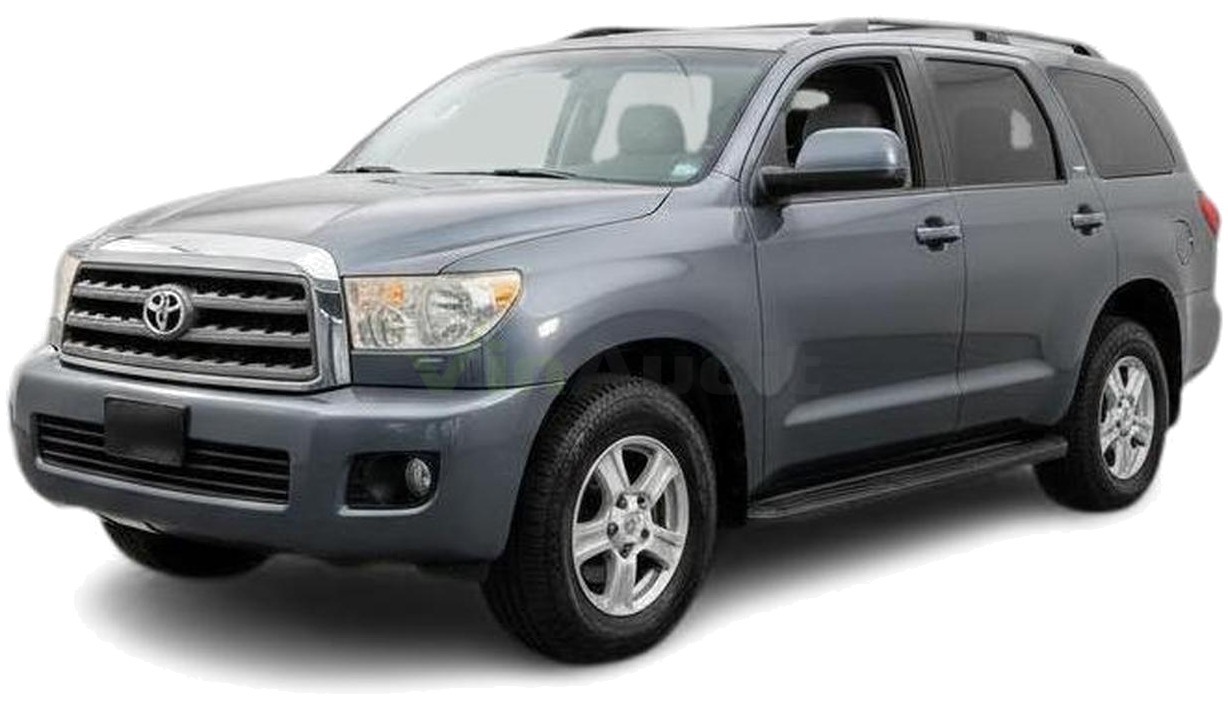
2009 Toyota Sequoia Overview, Reviews, Ratings & Specs

Rating: 0.00
Based on 0 Owner Reviews
Drew B | October 13, 2025
The 2009 Toyota Sequoia is a full-size SUV that belongs to the second generation of the model, produced from 2008 to 2022. As a body-on-frame SUV, it shares its platform with the Toyota Tundra pickup truck. Key trims for 2009 included the SR5 and the more upscale Limited. Initially, new pricing ranged from around $40,000 to over $55,000. Its popularity stems from Toyota's reputation for reliability, robust capability, and a spacious, comfortable interior, making it a strong contender for families needing substantial cargo and towing space.
The Good

The 2009 Toyota Sequoia boasts impressive performance with its powerful V8 engines, legendary Toyota reliability, and a supremely comfortable, quiet ride. Its substantial size and towing capacity offer practical utility for families, while its robust build and smooth handling provide emotional confidence on the road.

The Bad

When considering the 2009 Toyota Sequoia, potential buyers should be aware of its relatively poor fuel economy, especially for the era. Some owners have reported issues with the transmission and potential for brake wear, which are common concerns for heavy SUVs.

2009 Toyota Sequoia: Quick Overview

  • Engine Options: The 2009 Toyota Sequoia came standard with a 4.7-liter V8 engine, and an optional larger 5.7-liter V8 engine was available.
  • Horsepower: The 4.7-liter V8 produced approximately 276 horsepower, while the 5.7-liter V8 offered a more robust 381 horsepower.
  • Fuel Economy: Fuel economy was not a strong suit. For the 4.7L V8, expect around 14 mpg city / 19 mpg highway (2WD) and 13 mpg city / 18 mpg highway (4WD). The 5.7L V8 dropped this further to approximately 13 mpg city / 17 mpg highway (2WD) and 13 mpg city / 17 mpg highway (4WD).
  • 0-60 Times: With the larger 5.7-liter V8, the Sequoia could accelerate from 0 to 60 mph in roughly 6.7 to 7.1 seconds, which is impressive for its size. The 4.7-liter V8 would be considerably slower.
  • Towing Capacity: The Sequoia was built for towing. With the 5.7-liter V8 and the available Towing Package, its maximum towing capacity reached up to 10,000 pounds. The 4.7-liter V8 offered a lower capacity.
  • Key Trim-Level Features:
    • SR5: Standard features often included three-row seating, power accessories, cruise control, a multi-information display, and a six-speaker audio system. Optional packages could add features like a power liftgate, a sunroof, and a rearview camera.
    • Limited: The Limited trim built upon the SR5 with upgrades such as leather upholstery, heated front seats, a premium JBL audio system, dual-zone automatic climate control, and more sophisticated exterior trim. Optional features on the Limited could include a rear-seat entertainment system, a navigation system, and adaptive variable suspension.

2009 Toyota Sequoia Specifications

Vehicle Information
Year 2009
Make Toyota
Model Sequoia
Trim -
Style -
Type Wagon
Category Minivan Medium Truck
Manufacturing Details
Made In United States
Manufacturing City -
Dimensions
Doors -
Curb Weight -
Gross Vehicle Weight Rating -
Overall Height -
Overall Length -
Overall Width -
Wheelbase Length -
Standard Seating -
Engine & Performance
Engine 4.7 L V-8
Engine Size 4.7L
Engine Cylinders 8
Transmission -
Transmission Type -
Transmission Speeds -
Drivetrain Rear-Wheel Drive
Additional Features
Anti-Brake System -
Steering Type -
Pricing
Manufacturer Suggested Retail Price (MSRP) -
Invoice Price -
Delivery Charges -

Vehicle History Report

Vehicle
Specifications
Ownership
History
All History
Events
NMVTIS Title
History Check
Salvage/Rebuilt
Check
Accident
Check
Theft
Check
Open Lien
Check
Past Sale
Listings
Safety
Recalls
Odometer
Check
Market Price
Analysis

What Problems Does the 2009 Toyota Sequoia Have?

The 2009 Toyota Sequoia generally enjoys a strong reputation for reliability, a hallmark of Toyota vehicles. However, like any vehicle, it has some commonly reported issues and areas to watch. One frequent concern reported by owners is related to the transmission. Some instances of transmission shudder or premature failure have been noted, particularly with higher mileage vehicles. While not a widespread epidemic for the 2009 model year specifically, it's something to be mindful of during a pre-purchase inspection. Another area that can require attention is the braking system. Given the Sequoia's substantial weight, owners sometimes report accelerated wear on brake pads and rotors, necessitating more frequent replacements than lighter vehicles. Some reports also mention issues with the power liftgate, which can become slow or inoperative over time, though this is often a repairable component. Recalls for the 2009 Sequoia are generally in line with broader Toyota recalls from that era. For instance, there were recalls related to the power window master switch potentially overheating, and some floor mat retention issues that could interfere with accelerator pedals. These were typically addressed by dealerships. Long-term reliability is generally excellent, with many owners reporting their Sequoias lasting well over 200,000 miles with proper maintenance. The robust construction and proven drivetrain components contribute to this longevity. However, owners should be diligent with maintenance, especially fluid changes for the transmission and differential, to ensure these critical components remain in good condition. The V8 engines, particularly the 5.7L, are known for their durability, but like any engine, they can develop minor leaks or require component replacements (like water pumps or alternators) over extended periods.

How long will the 2009 Toyota Sequoia last?

Based on owner data and common longevity expectations for Toyota vehicles, a well-maintained 2009 Toyota Sequoia can realistically be expected to provide 200,000 to 300,000 miles or more of service. Many owners report passing the 200,000-mile mark without major mechanical failures, especially with the powerful V8 engines. Long-term durability is a significant strength, attributed to Toyota's engineering and build quality. However, consistent and thorough maintenance is crucial. Neglecting transmission fluid changes or ignoring early signs of wear on brakes and suspension components can lead to more significant issues over time. While the core mechanicals are robust, wear-and-tear items like suspension bushings, exhaust components, and accessory belts will eventually need replacement as mileage accumulates.

What Technology & Safety Features are Included?

The 2009 Toyota Sequoia offered a respectable suite of technology, entertainment, and safety features for its time, with a significant number of optional upgrades available. Standard tech on most models included power windows, power locks, cruise control, and a multi-information display. For entertainment, a standard six-speaker audio system with an AM/FM/CD player was common. Higher trims, like the Limited, often featured a premium JBL audio system with more speakers and a subwoofer, enhancing the listening experience. Optional entertainment features were quite advanced for 2009, including a rear-seat DVD entertainment system with a flip-down screen, which was a significant draw for families on long trips. Navigation systems were also optional, typically integrated into the dashboard display, offering GPS guidance. Driver-assistance features were less prevalent by modern standards but included options like a rearview camera system (often integrated with the navigation or rearview mirror display) to aid in parking and maneuvering. Antilock brakes (ABS), electronic brake-force distribution (EBD), and brake assist were standard safety features, providing crucial stopping power. Stability control and traction control systems were also included to help maintain control in slippery conditions. For safety, the Sequoia was equipped with multiple airbags, including front, front-side, and side-curtain airbags. Crash-test ratings from organizations like the National Highway Traffic Safety Administration (NHTSA) and the Insurance Institute for Highway Safety (IIHS) for this generation of Sequoia were generally good. NHTSA ratings typically showed 4 or 5 stars in various impact categories, and IIHS awarded it with "Good" ratings in frontal and side-impact tests, highlighting its structural integrity and occupant protection.

What Colors Options are Available?

We’re working on this section!
In the meantime, feel free to explore the other sections for more content.

2009 Toyota Sequoia Prices and Market Value

When new, the 2009 Toyota Sequoia had an MSRP that typically ranged from approximately $40,000 for the base SR5 model to over $55,000 for a fully equipped Limited trim with the 5.7L V8 and optional features. As of late 2023/early 2024, used market prices for a 2009 Toyota Sequoia can vary significantly based on mileage, condition, trim level, and location. Expect prices to generally fall between $8,000 and $18,000. The Sequoia depreciates at a moderate pace compared to some luxury SUVs, but faster than smaller, more fuel-efficient vehicles. Factors affecting resale value include Toyota's strong reputation for reliability, the vehicle's towing capacity, and its large interior space. Models with lower mileage, complete service records, and desirable options like the premium audio or rear-seat entertainment system tend to hold their value better.

2009 Toyota Sequoia Cost of Ownership

Owning a 2009 Toyota Sequoia is generally considered moderately costly, primarily due to its fuel consumption and larger component sizes. Insurance premiums can be higher than for smaller vehicles due to its size, safety features, and repair costs. Fuel is a significant ongoing expense; the V8 engines, while powerful, are thirsty, averaging between 13-17 mpg combined. Maintenance costs are typical for a full-size SUV, with routine services like oil changes, tire rotations, and fluid flushes. Repair costs for parts and labor can be higher than for smaller cars, especially for specialized components or engine/transmission work. Overall, it is not an economical vehicle to own but offers substantial value in terms of capability and durability for its price point.

2009 Toyota Sequoia Fuel Efficiency

Fuel Type Gasoline
Fuel Capacity -
City Mileage -
Highway Mileage -

2009 Toyota Sequoia Safety Rating

NHTSA
Overall Rating Not Tested
Overall Frontal Star Rating Not Tested
Side Overall Star Rating Not Tested
Overall Rollover Star Rating
Combined Front Seat Rating Not Tested
Combined Rear Seat Rating Not Tested
Overall Frontal Star Rating Not Tested
Frontal Barrier Star Ratings Not Tested
Side Barrier Star Ratings Not Tested
Rollover Resistance Star Rating

2009 Toyota Sequoia Insurance

Insurance for a 2009 Toyota Sequoia is moderately priced, reflecting its status as a Wagon with strong safety ratings and
reasonable repair costs.

How Does the 2009 Toyota Sequoia Compare to Other Wagon?

The 2009 Toyota Sequoia competed directly with other large, body-on-frame SUVs such as the Chevrolet Tahoe/Suburban, Ford Expedition, GMC Yukon, and Nissan Armada. In terms of performance, the Sequoia's available 5.7L V8 engine offered competitive, if not class-leading, horsepower and acceleration, especially when equipped with the towing package that allowed for up to 10,000 lbs of towing capacity. The Chevrolet Tahoe and GMC Yukon also offered strong V8 options with comparable towing capabilities. The Ford Expedition, with its EcoBoost V6 option (introduced later, but its V8 predecessors also competed), offered a blend of power and potentially better fuel economy than the Sequoia's naturally aspirated V8s. Reliability is where the Sequoia typically shines brightest. Toyota's reputation for long-term durability is generally superior to its American counterparts, which historically have had more reported issues with transmissions and electronics. The Nissan Armada was also a capable competitor, but often trailed the Sequoia in overall perceived reliability and interior refinement. Features-wise, the 2009 Sequoia offered many of the expected conveniences like available navigation, rear-seat entertainment, and premium audio, often matching or exceeding what its rivals offered, especially in its Limited trim. Price-wise, the Sequoia was often positioned at a slight premium compared to similarly equipped domestic rivals when new, reflecting its Toyota badge and expected longevity. On the used market, its strong reliability can help it hold its value relatively well. Alternatives to consider would include the Chevrolet Tahoe or Suburban if towing capacity and sheer size are paramount, and if a slightly lower purchase price is a priority, though be prepared for potentially higher maintenance costs. The Ford Expedition offers a comfortable ride and strong performance. If prioritizing ultimate reliability and a quieter, more refined on-road experience without needing extreme towing, a large crossover SUV like the Toyota Highlander or Honda Pilot might be considered, though they lack the ruggedness and towing prowess of the Sequoia.

Final Verdict: Is the 2009 Toyota Sequoia a Good Wagon?

The 2009 Toyota Sequoia is ideal for families or individuals who require substantial passenger and cargo space, significant towing capability, and value Toyota's renowned reliability. It's a strong choice for those who frequently tow boats, campers, or trailers, or who need a robust vehicle for long road trips. Given its age, buying new is not an option. It is definitely worth considering on the used market, provided it has been well-maintained. Buyers should prioritize models with the 5.7-liter V8 engine for optimal performance and towing. Thorough pre-purchase inspections are crucial, focusing on the transmission and any signs of wear. The Limited trim offers a more luxurious experience, while the SR5 provides core functionality. For those who can overlook its poor fuel economy and find a well-cared-for example, the 2009 Sequoia remains a capable and durable large SUV.

2009 Toyota Sequoia Owner Reviews

0.00
Consumer Rating, Based on 0 Consumer Reviews
Overall rating
Cancel
Thank You for Your Review!

We truly appreciate the time and effort you took to share your experience with us.

Uh oh!

Something went wrong, please try again later.

Author Image
Drew B

Drew is a seasoned automotive expert and contributor to VinCheck.info. With nearly 15 years of experience as a former Porsche technician, he brings a wealth of hands-on knowledge to his writing. Born in North Carolina, a region renowned for its deep-rooted NASCAR culture, Drew developed a passion for cars early in life, often building and working on vehicles from a young age. At VINCheck, Drew leverages his extensive technical background to provide in-depth analyses of various vehicles. His articles often focus on engine performance, reliability, and maintenance insights, offering readers practical information grounded in real-world experience. Some of his notable contributions include reviews on the Mazda CX-5's longevity and detailed examinations of engine options for models like the 2011 Toyota Camry and Tacoma