
Free Hawaii License Plate Lookup
Enter a Hawaii license plate number to search for the associated VIN and review available vehicle specifications, title brands, theft, salvage, mileage, recalls, sales, value, and other history.
It uses the plate number and Hawaii as the issuing state to identify an associated VIN when matching data is available. The VIN then becomes the basis for the vehicle report.
Check a Hawaii Plate
Enter the plate number exactly as shown and select Hawaii.
Plate-to-VIN matching and report contents vary by plate, VIN availability, reporting history, county records, and source coverage. Confirm the VIN on the vehicle and official documents.
On This Page
- What a Hawaii Plate Lookup Is
- How the Free Lookup Works
- What the Report May Show
- Plate Lookup vs VIN vs County Records
- Latest Hawaii Statistics
- County System and Plate Rules
- Seller and Buyer Transfer Duties
- Replacement and Personalized Plates
- Temporary Plates and Out-of-State Permits
- Private Sales and New Residents
- Titles, Liens and Official Records
- Current Hawaii Vehicle Fees
- Hawaii Auto Insurance
- Annual Safety Inspection
- Salvage and Rebuilt Vehicles
- Inter-Island and Out-of-State Shipping
- Salt, Flood, Sun and Volcanic Risks
- Theft, VIN Cloning and Fraud
- Owner Privacy and Record Access
- Plate and VIN Red Flags
- Hawaii Used-Car Checklist
- Official Hawaii Resources
- Other State Plate Lookups
- Related Vehicle Research Tools
- Report Limitations
- Frequently Asked Questions
- Run a Free Hawaii Plate Check
What Is a Hawaii License Plate Lookup?
A Hawaii license plate lookup is a plate-to-VIN search. Enter the complete plate number and select Hawaii as the issuing state. When a matching VIN is available, that VIN is used to retrieve available vehicle identity and history information.
The lookup is useful when a private-sale listing, dealership page, auction post, or vehicle photo shows a Hawaii plate but not the VIN. It can help you compare the advertised year, make, model, body style, engine, and vehicle type with available records.
A consumer lookup does not prove current ownership, active county registration, lien release, completed title transfer, insurance coverage, safety-inspection status, or mechanical condition. Verify those matters through county records, original documents, and an independent inspection.
How to Run a Free Hawaii License Plate Check
Enter the Plate
Type the Hawaii plate number exactly as shown on the vehicle, listing, or seller photo.
Select Hawaii
The issuing state matters because the same combination may exist in another state.
Match the VIN
The system attempts to identify the VIN associated with the plate from available records.
Review and Verify
Compare the returned VIN with the dashboard, door label, title, registration, safety certificate, and seller records.
No result does not mean the vehicle is problem-free. Ask for the complete VIN and run a direct VIN check when a plate-to-VIN match is unavailable.
What a Hawaii Plate Lookup Report May Show
Vehicle Identity
Associated VIN, model year, make, model, body, engine, drivetrain, colors, equipment, and decoded specifications.
Title and Brand Records
Available title states, title dates, salvage, rebuilt, flood, junk, nonrepairable, or other brand records.
Theft and Damage Signals
Available theft, recovery, accident, junk, salvage, total-loss, and insurance-related records.
Mileage, Sales and Value
Reported odometer entries, sales, listings, auctions, recalls, market value, and ownership-cost information.
| Report Section | What It May Include | How to Use It |
|---|---|---|
| VIN and Specifications | Year, make, model, trim, engine, transmission, drivetrain, body style, fuel type, colors, and factory details. | Confirm the plate result matches the advertised vehicle. |
| Title and Brand History | Reported title states, dates, salvage, rebuilt, flood, junk, nonrepairable, or other brands. | Investigate branding and mainland-to-island title movement. |
| Theft and Recovery | Available stolen-vehicle and recovery records tied to the VIN. | Verify the physical VIN, seller, title, and official theft status. |
| Accident and Salvage | Reported collisions, insurers, recyclers, salvage yards, total losses, or auctions. | Assess repair quality, safety, value, and insurability. |
| Odometer and Sale History | Mileage readings, sale dates, listing history, auction events, and possible inconsistencies. | Compare mileage and the seller’s story against the timeline. |
| Recalls, Value and Warranty | Open recalls, estimated market value, warranty information, safety ratings, and ownership-cost context. | Plan safety repairs, shipping, negotiation, insurance, and ownership costs. |
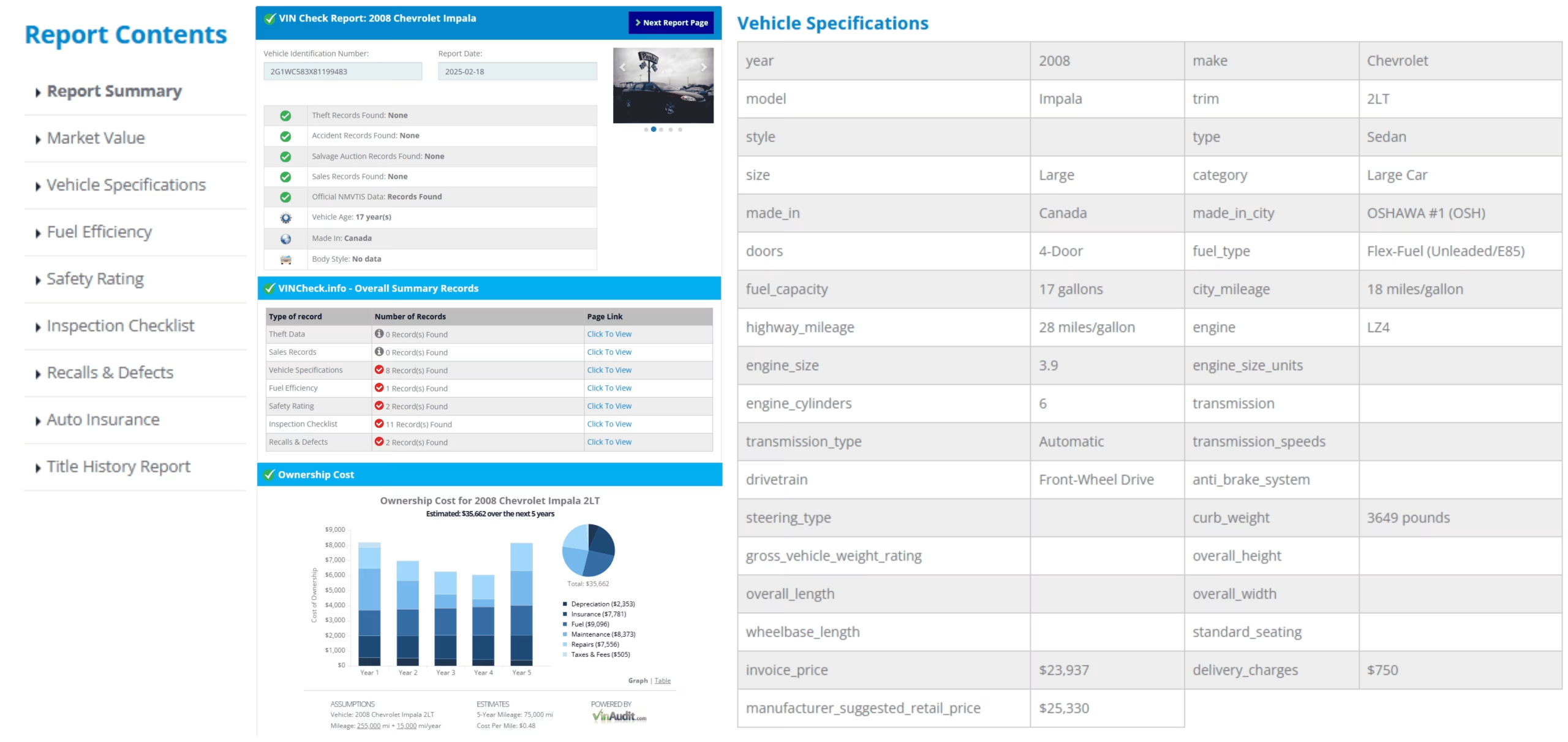
Sample report layout. Available sections vary by vehicle, VIN, reporting history, and source coverage.
Hawaii Plate Lookup, VIN Check, County Records, and NMVTIS
| Search Type | Best Used For | What It Does Not Confirm |
|---|---|---|
| Hawaii License Plate Lookup | Finding an associated VIN and starting vehicle-history research when the VIN is not shown. | Current owner identity, official registration validity, safety-inspection status, or completed title transfer. |
| Direct VIN Check | Researching the exact vehicle after confirming the complete VIN on the vehicle and documents. | Every unreported accident, repair, lien, corrosion issue, or ownership dispute. |
| County Title and Registration Records | Official title, registration, lien, transfer, replacement, and county-specific transaction information. | That protected personal information will be released without consent or a permitted purpose. |
| NMVTIS Report | Reviewing state title, brand, odometer, and selected theft information from participating sources. | Every accident, repair, safety check, or mechanical problem. |
| NHTSA and NICB | Checking open recalls and participating insurer theft or salvage records using the verified VIN. | A complete title, lien, accident, sale, shipping, or ownership history. |
Latest Hawaii Vehicle Registration and Traffic-Safety Statistics
FHWA’s 2024 standardized table reports 1,270,153 Hawaii motor vehicles. HDOT reported 129 statewide traffic fatalities in 2025, the state’s deadliest year since 2007. Preliminary HDOT data records 53 roadway deaths from January 1 through July 22, 2026.
| Hawaii Measure | Latest Figure | Source Context |
|---|---|---|
| FHWA all motor vehicles | 1,270,153 | Federal calendar-year 2024 standardized total, modified February 2026 |
| FHWA automobiles | 422,292 | Private, commercial, taxi, and publicly owned automobiles |
| FHWA buses | 1,795 | Private, commercial, and publicly owned buses |
| FHWA trucks | 821,511 | FHWA truck category, including pickups and many SUVs |
| FHWA motorcycles | 24,555 | FHWA motorcycle category |
| 2025 traffic fatalities | 129 | HDOT year-end statewide figure |
| Preliminary 2026 fatalities | 53 | HDOT count through July 22, 2026 |
| 2026 Honolulu County fatalities | 25 | Preliminary count through July 22, 2026 |
Sources: FHWA Highway Statistics 2024, HDOT 2025 year-end summary, and HDOT preliminary 2026 data.
Hawaii’s County Vehicle System and Current License Plate Rules
Hawaii does not operate one statewide DMV for ordinary vehicle registration. Honolulu, Hawaii, Maui, and Kauai Counties administer title, registration, plate, transfer, and replacement services.
Four County Systems
Use the county where the vehicle is registered or physically located. County procedures, forms, fees, and appointment rules can differ.
Front and Rear Plates
Most passenger vehicles display one plate at the front and one at the rear. Trailers, semitrailers, mopeds, and motorcycles generally use one rear plate.
HAWAIʻI Spelling
Newly issued plates must use the ʻokina in HAWAIʻI beginning January 1, 2025. Older plates remain valid until replacement.
Rainbow Design
The familiar white plate with rainbow arch remains the standard visual identity, although specialty designs and older spellings remain in circulation.
Plate Must Be Unobscured
Plates must be securely fastened, reasonably clean, and fully visible. Covers, frames, or damage must not obscure the characters or validation emblem.
Annual Validation
A registration emblem is placed on the rear plate to show the registration expiration month and year.

The saved site image may show the former HAWAII spelling. Newly issued plates use HAWAIʻI with the ʻokina beginning January 1, 2025.
Official references: HDOT motor-vehicle registration overview and Honolulu license-plate information.
Hawaii Seller and Buyer Duties After a Vehicle Sale
Unlike many states, ordinary Hawaii standard plates and the current registration generally remain with the vehicle during an in-state ownership transfer. Personalized plates require a separate transfer, storage, or retirement process.
Buyer: Transfer Within 30 Days
Submit the properly endorsed title, current registration, current safety certificate, lien release when applicable, and county fees.
Seller: Report Within 10 Days
Submit the Notice of Transfer to the county where the vehicle was last registered. Keeping a copy helps document the sale.
Complete the Title Carefully
Enter the date, odometer disclosure, buyer, seller, and lien information without erasures, white-out, or missing signatures.
Provide the Safety Certificate
The seller should give the buyer the current Hawaii Safety Inspection Certificate with the title and registration.
County Fees Differ
Honolulu currently lists a $10 timely transfer fee, while Hawaii County lists $5 for an in-county transfer.
Late Penalties Apply
Honolulu adds a $50 penalty when the transfer is completed after 30 days. Other county penalties and procedures may differ.
Official references: Honolulu ownership transfer and Hawaii County ownership transfer.
Replacement, Personalized, Stored, and Retired Hawaii Plates
Replacement Plate and Emblem
Honolulu and Hawaii County currently list $5.50 to replace the plates and emblem. An emblem-only replacement is generally $0.50.
Personalized Annual Fee
The current annual personalized-plate fee is $60 in addition to regular registration fees and taxes.
Six Characters
Honolulu’s current online personalized-plate portal allows combinations of up to six alphanumeric characters.
Sixty to Ninety Days
Manufacturing and county pickup instructions for personalized plates generally take about 60 to 90 days.
Personalized Plates Do Not Stay Automatically
Before selling the vehicle, the registered owner must transfer, store, or retire personalized plates through the county process.
Report Theft
Report stolen plates to law enforcement and the county office, especially when cloning or misuse is suspected.
Official references: Honolulu special plates, Personalized plate transfer, and Hawaii County replacements.
Hawaii Temporary Plates and Out-of-State Vehicle Permits
New-Vehicle Dealer Plate
A dealer temporary plate is generally dated 30 working days after the buyer takes possession and is attached at the rear.
Register Before Expiration
The buyer should complete registration before the printed temporary-plate expiration date.
Vehicle Arrival Deadline
A vehicle shipped from another state generally must obtain a Hawaii registration or qualifying out-of-state permit within 30 days of arrival.
Out-of-State Permit
County offices currently list a $5 out-of-state permit for qualifying vehicles that retain their mainland registration.
Shipping Evidence
Keep the bill of lading or shipping receipt because the county uses the arrival date to determine compliance.
Temporary Plates Have Lookup Gaps
Paper or dealer plates may not resolve reliably through consumer databases. Use the physical VIN.
Official references: HRS §286-53, Honolulu vehicle arrival guidance, and Hawaii County out-of-state permit.
Hawaii Private-Sale and New-Resident Registration Checklist
Thirty-Day Transfer
A buyer generally submits the title and registration transfer within 30 days of the seller’s transfer date.
Thirty Days After Arrival
A newly arrived vehicle generally must obtain county registration or a qualifying permit within 30 days.
Current Safety Inspection
A current Hawaii safety certificate is required for ownership transfer and registration. A temporary failed inspection for registration may support an out-of-state transfer.
Proof of Hawaii Insurance
Carry a current Hawaii insurance identification card and meet the 2026 minimum coverage requirements.
Title, Registration, and Shipping Documents
Bring the ownership document, former registration, bill of lading, lienholder information, and county application forms.
Weight-Based Fees
Registration totals depend heavily on vehicle weight, use, county taxes, state fees, and any road-usage charge.
Do not accept a blank, altered, erased, unsigned, or incomplete title. Stop when the seller, VIN, title, lien, plate, safety certificate, or vehicle identity cannot be verified.
Hawaii Titles, Liens, County Records, and NMVTIS
County Title Record
The county maintains the official title and registration record for vehicles registered in its jurisdiction.
Release Every Lien
The lienholder must endorse the title or provide an accepted lien satisfaction document before ownership transfer.
Duplicate Title
The legal owner on record applies through the county when the certificate is lost, stolen, damaged, or mutilated.
Inter-County Transfer
Moving or selling a vehicle across counties can require a county application, title, registration, safety certificate, and county-specific processing.
Certified Verification
A county may issue certified title or registration verification for qualifying legal, lender, or out-of-state transactions.
NMVTIS
Use NMVTIS to review available state title, brand, odometer, and selected theft information from participating sources.
Current Hawaii Title, Plate, Permit, and Inspection Fees
| Transaction | Current Published Amount | Important Detail |
|---|---|---|
| Honolulu timely ownership transfer | $10 | Complete within 30 days; Honolulu adds a $50 late penalty |
| Hawaii County in-county ownership transfer | $5 | County procedures and penalties differ |
| Out-of-state vehicle permit | $5 | For qualifying vehicles that retain out-of-state registration |
| Replacement plates and emblem | $5.50 | An emblem-only replacement is generally $0.50 |
| Personalized plate annual fee | $60 | Added to regular registration fees and taxes |
| Automobile or truck safety inspection | $25.75 | Effective July 1, 2025 |
| Motorcycle or trailer safety inspection | $17.75 | Effective July 1, 2025 |
| Replacement inspection sticker or certificate | $7.09 | Valid certificate and sticker must not be expired |
| Eligible EV flat annual road-usage charge | $50 | Eligible owners may choose the state flat RUC or per-mile option |
Hawaii registration totals are county- and vehicle-specific. Annual charges can include a state registration fee, state and county weight taxes, county fees, emblem charges, specialty-plate charges, delinquent taxes, and road-usage charges.
Official references: Honolulu fee table, Honolulu transfer fees, Hawaii County transfer fee, and HDOT inspection fees.
Hawaii Auto Insurance Requirements for 2026
For new and renewal policies effective on or after January 1, 2026, Hawaii increased its minimum liability limits to 40/80/20 and continues to require at least $10,000 in personal injury protection.
$40,000 Per Person
Minimum bodily-injury liability for one injured person.
$80,000 Per Accident
Minimum bodily-injury liability for multiple people injured in one accident.
$20,000 Property Damage
Minimum property-damage liability for one accident.
$10,000 PIP
Minimum personal injury protection for medical and rehabilitation costs regardless of fault.
Insurance Throughout Registration
The vehicle must remain insured throughout its registration period, and proof should be carried in the vehicle.
A Plate Check Is Not Proof
A consumer lookup cannot confirm that a policy is active or will cover the buyer after the sale.
Official reference: Hawaii DCCA 2026 minimum limits FAQ.
Hawaii Annual Safety Inspection Requirements
Hawaii requires a periodic motor-vehicle safety inspection. Most vehicles are inspected every 12 months, while a new vehicle generally receives an initial two-year inspection period.
Annual After the Initial Period
Most passenger vehicles, motorcycles, trailers, and mopeds require renewal of the safety certificate every year.
New Vehicle: Initial Two Years
A qualifying new vehicle does not require another inspection within two years of first sale.
Current Car and Truck Fee
The inspection fee is $25.75 for automobiles and trucks.
Current Motorcycle and Trailer Fee
The inspection fee is $17.75 for motorcycles and trailers.
Registration, VIN, Plate, and Insurance
The inspection checks the vehicle identity, registration, license plate, and insurance information in addition to safety equipment.
No Recurring Emissions Test
Hawaii does not use a recurring passenger-vehicle emissions test as part of ordinary registration.
Official references: HDOT inspection fee update and Honolulu safety-inspection requirements.
Hawaii Salvage and Rebuilt Vehicle Requirements
A Hawaii salvage certificate permits possession, transport, and ownership transfer, but it does not authorize the vehicle to be driven on a public highway.
Ten-Day Salvage Filing
After a qualifying salvage purchase or total-loss settlement, the endorsed title, registration, plates, and application are forwarded to the county finance director within 10 days.
Salvage Cannot Be Driven
The salvage certificate authorizes possession and transport, not highway operation.
Rebuilt Documentation
Road-use registration requires the salvage certificate, bill of sale, application, repair-dealer certification, and other county documents and fees.
Repair Standards
The bonded repair dealer certifies that recognized manufacturer repair procedures, specifications, and tolerances were followed.
Rebuilt Brand
The new title and registration must bear the words “Rebuilt Vehicle” and be visually distinguishable from ordinary certificates.
Inspect Saltwater and Flood Damage
Review electronics, connectors, restraints, corrosion, structural repair, donor parts, and insurance eligibility.
Official references: HRS §286-44.5 and HRS §286-48.
Inter-Island and Mainland Vehicle Shipping Checks
Keep the Bill of Lading
The shipping document proves the vehicle’s arrival date and supports county registration or out-of-state permit processing.
Check Mainland Title History
Review prior-state title brands, auctions, rental use, floods, theft, and odometer records before island delivery.
Confirm County Jurisdiction
Inter-island moves may require registration processing in the destination county.
Inspect Shipping Damage
Review paint, glass, underbody, wheels, suspension, tie-down points, and fresh repairs after delivery.
Verify Federal Compliance
Imported, military, kit, modified, and off-road vehicles may face federal-safety or county-registration barriers.
Budget Transport and Delays
Account for port scheduling, shipping, county appointments, safety inspection, registration, and repair access.
Hawaii Salt Air, Flood, Sun, Volcanic, and Island-Use Risks
A plate lookup can reveal reported history, but Hawaii’s salt air, coastal flooding, heavy rain, intense sun, volcanic ash and vog, steep roads, limited trip distances, and island shipping make a physical inspection essential.
Salt-Air Corrosion
Inspect the frame, subframes, brake and fuel lines, suspension mounts, exhaust, wheel wells, fasteners, electrical grounds, and battery area.
Flood and Water Intrusion
Check carpets, seat tracks, connectors, modules, lights, spare-tire wells, seams, and drainage channels for moisture, silt, mold, or corrosion.
Sun and Heat Exposure
Review paint, dashboard, seals, tires, battery, cooling system, air conditioning, upholstery, and exterior plastics.
Volcanic Ash and Vog
Inspect filters, cooling fins, paint, glass, seals, air-intake components, and corrosion-prone areas after prolonged exposure.
Steep and Winding Roads
Check brakes, tires, steering, suspension, transmission behavior, cooling, and signs of repeated downhill braking.
Low Mileage Is Not Always Light Use
Short trips, idling, humidity, stop-and-go driving, and long storage periods can create wear despite low odometer readings.
Hawaii Vehicle Theft, VIN Cloning, Plate Swapping, and Title Fraud
A plate result should be treated as an identity check, not proof that the seller legally owns the vehicle. Compare the plate, VIN, title, seller, lien, safety certificate, and registration documents before payment.
Theft and Recovery Records
Review available theft signals, then verify concerns through law enforcement or NICB VINCheck.
VIN Cloning
A stolen vehicle may use a copied VIN, counterfeit label, false title, or plate from a similar legitimate vehicle.
Plate Swapping
A plate attached to the wrong vehicle can create a make, model, year, body, or VIN mismatch.
Shipping and Listing Fraud
Do not send irreversible payment for a mainland or inter-island vehicle before verifying the VIN, title, port documents, and seller.
Title Washing
Interstate transfers may be used to obscure salvage, rebuilt, flood, junk, nonrepairable, or odometer history.
Fake Safety Certificates
Verify suspicious inspection stickers, certificates, plate emblems, or registration documents through the county or inspection station.
Hawaii License Plate Owner Lookup and Privacy
VinCheck.info’s Hawaii plate lookup is for vehicle research. It does not reveal a private owner’s name, home address, phone number, driver-license information, or other protected personal data.
Official county motor-vehicle records contain personal and confidential information. Access depends on identity, authorization, court process, law-enforcement need, or another legally permitted purpose under the Driver’s Privacy Protection Act and Hawaii law.
Use the lookup to research the vehicle, not to identify, locate, contact, follow, or confront a private person.
Hawaii Plate and VIN Red Flags
- The lookup returns a different make, model, year, body style, or VIN from the vehicle shown.
- The seller refuses to provide the complete VIN, assigned title, current registration, safety certificate, or lien release.
- The dashboard VIN, door label, title, registration, insurance card, and lookup result do not match.
- The title or history shows salvage, rebuilt, flood, junk, nonrepairable, or odometer branding that was not disclosed.
- The personalized plates are being left on the vehicle without a documented county transfer or retirement process.
- The safety certificate, registration emblem, plate, or title appears altered, copied, expired, or inconsistent.
- The shipping receipt or bill of lading does not match the VIN, arrival date, seller, or vehicle.
- The seller demands payment before allowing title, lien, VIN, safety, and physical-condition verification.
Stop the transaction when the vehicle identity, title, lien, seller, plate, shipping record, safety certificate, or VIN cannot be verified.
Hawaii Used-Car Checklist After a Plate Lookup
- Confirm the plate and issuing state. Recheck every character before searching.
- Match the returned VIN. Compare it with every VIN location and document.
- Review mainland and Hawaii title history. Check brands, transfers, salvage, flood, theft, and mileage.
- Verify the seller and lien. Require a properly endorsed title and valid lien release.
- Check the safety certificate. Confirm the inspection is current and consistent with the VIN and registration.
- Handle personalized plates correctly. Confirm whether they will be transferred, stored, or retired.
- Meet the deadlines. The buyer generally transfers within 30 days, while the seller reports the sale within 10 days.
- Verify 2026 insurance. Confirm active 40/80/20 liability and at least $10,000 PIP before driving.
- Keep shipping records. Save the bill of lading and arrival date for mainland or inter-island vehicles.
- Get an independent inspection. Focus on salt corrosion, flood clues, structure, brakes, tires, cooling, electronics, and restraints.
Official Hawaii County Vehicle Resources
City and County of Honolulu
Review Oahu title transfers, registration, plates, safety inspections, fees, permits, and appointments.
Hawaii County
Review Big Island registration, title transfer, permits, replacement plates, specialty plates, and office locations.
Maui County
Review Maui, Molokai, and Lanai motor-vehicle licensing, registration, title, and appointment information.
Kauai County
Review Kauai title, registration, license plate, safety, and motor-vehicle transaction information.
License Plate Lookup by State
Select the actual issuing state shown on the plate. The same letter and number combination may exist in multiple states.
Hawaii Plate Lookup Limitations
- A plate may not match a VIN when it is new, temporary, personalized, transferred, replaced, expired, removed, reassigned, entered incorrectly, or absent from available sources.
- A result may reflect older plate-to-vehicle data after a recent county transfer or replacement. Always compare the returned VIN and vehicle description.
- Not every accident, flood event, shipping event, repair, lien, title event, theft, mileage entry, safety inspection, service visit, or sale is reported to every database.
- A clean report does not guarantee mechanical condition, legal ownership, completed title transfer, insurance coverage, current safety inspection, or freedom from hidden saltwater damage.
- The report does not replace a county motor-vehicle office, lienholder, law enforcement agency, insurer, safety-inspection station, recall database, or qualified mechanic.
Hawaii License Plate Lookup Frequently Asked Questions
What is a Hawaii license plate lookup?
A Hawaii license plate lookup uses the plate number and Hawaii as the issuing state to search for an associated VIN when matching data is available. The VIN can then be used to review available vehicle identity and history information.
Is the Hawaii license plate lookup free?
The VinCheck.info lookup can be started without a fee or account. Results depend on plate-to-VIN matching, reporting history, county records, and source coverage.
Can I search a Hawaii plate without knowing the VIN?
Yes. Enter the complete Hawaii plate number and select Hawaii. When a matching VIN is available, the lookup can continue with VIN-based vehicle research.
What can a free Hawaii license plate check show?
Depending on available data, it may show the associated VIN, vehicle specifications, title brands, theft or salvage signals, accident records, odometer entries, recalls, sales, market value, and other vehicle-history details.
Can a Hawaii plate lookup show the owner’s name or address?
No. VinCheck.info does not display protected owner names, home addresses, phone numbers, driver-license details, or other restricted personal information.
Is a Hawaii reverse license plate lookup legal?
A consumer lookup may be used for lawful vehicle research. Access to protected information in official county motor-vehicle records is restricted by the Driver’s Privacy Protection Act and Hawaii law and requires authorization or a permitted purpose.
Is a plate lookup the same as an official Hawaii title or registration record?
No. A consumer plate lookup is designed for vehicle research. Official title, registration, lien, transfer, and owner records are handled through the appropriate county motor-vehicle office.
What should I do if the lookup returns the wrong vehicle?
Stop and verify the plate number, issuing state, physical VIN, title, registration, safety inspection, and seller information. A mismatch may result from a typo, recent transfer, stale data, reassignment, or fraud.
What should I do if no VIN is found?
Recheck every plate character and confirm that Hawaii is selected. If no match is available, ask the seller for the complete 17-character VIN and run a direct VIN check.
Does Hawaii require front and rear license plates?
Most Hawaii passenger vehicles display plates at both the front and rear. Trailers, semitrailers, mopeds, and motorcycles generally display one plate at the rear.
What changed on Hawaii license plates in 2025?
Beginning January 1, 2025, newly issued plates must spell HAWAIʻI with the ʻokina diacritical mark. Older plates without the ʻokina can remain valid until replacement.
Do Hawaii plates stay with the vehicle when it is sold?
Standard Hawaii plates and the current registration generally remain with the vehicle during an ordinary Hawaii ownership transfer. Personalized plates must be transferred, stored, or retired through a separate county process.
How long does a buyer have to transfer a Hawaii title?
A buyer generally has 30 days from the seller’s transfer date to submit the endorsed title, registration, current safety inspection, and applicable fees to the correct county office.
How soon must a Hawaii seller report the sale?
The seller generally must submit a completed Notice of Transfer to the county where the vehicle was last registered within 10 days. Failure to comply may result in a fine of up to $100.
How long is a Hawaii dealer temporary plate valid?
A new-vehicle dealer temporary plate is generally dated 30 working days after the buyer takes possession and remains valid until the vehicle is registered or the printed expiration date, whichever occurs first.
How long does a newly arrived vehicle have to register in Hawaii?
A vehicle arriving from another state generally must obtain a Hawaii registration or qualifying out-of-state permit within 30 days of arrival. Exact documents and fees depend on the county.
What are Hawaii’s current insurance minimums?
For new and renewal policies effective on or after January 1, 2026, Hawaii requires 40/80/20 liability limits and at least $10,000 in personal injury protection.
How often is a Hawaii safety inspection required?
Most vehicles require a safety inspection every 12 months. A new vehicle generally receives an initial two-year inspection period and then requires annual inspections.
How much does a Hawaii safety inspection cost?
Since July 1, 2025, the fee is $25.75 for automobiles and trucks and $17.75 for motorcycles and trailers. Replacement of a lost or destroyed inspection sticker or certificate costs $7.09.
Does a Hawaii plate report replace county records or an inspection?
No. Plate-to-VIN matching and vehicle reports depend on available data. Verify the title, registration, lien, seller, insurance, safety inspection, recalls, and physical condition before buying.
Run a Free Hawaii License Plate Lookup
Enter the complete Hawaii plate number, select Hawaii, and verify any returned VIN against the vehicle and documents.
Check a Hawaii PlateVinCheck.info is an independent vehicle information website and is not affiliated with or operated by the State of Hawaii Department of Transportation, Hawaii Department of Commerce and Consumer Affairs, City and County of Honolulu, Hawaii County, Maui County, Kauai County, a safety-inspection station, an insurer, a lienholder, or a shipping company. A Hawaii license plate lookup is a vehicle-research tool, not an official title, registration, lien, owner-record, insurance, safety-inspection, theft, salvage, or mechanical-inspection service. Results vary by plate, VIN availability, county records, reporting history, and source coverage. Confirm important details with the appropriate county office, the seller, lienholder, insurer, shipping provider, official documents, and an independent inspector.