
Free Indiana License Plate Lookup
Enter an Indiana license plate number to search for the associated VIN and review available vehicle specifications, title brands, theft, salvage, mileage, emissions, recalls, sales, value, and other history.
It uses the plate number and Indiana as the issuing state to identify an associated VIN when matching data is available. The VIN then becomes the basis for the vehicle report.
Check an Indiana Plate
Enter the plate number exactly as shown and select Indiana.
Plate-to-VIN matching and report contents vary by plate, VIN availability, reporting history, and source coverage. Confirm the VIN on the vehicle and official documents.
On This Page
- What an Indiana Plate Lookup Is
- How the Free Lookup Works
- What the Report May Show
- Plate Lookup vs VIN vs BMV Records
- Latest Indiana Statistics
- Rear Plate and Sticker Rules
- Standard, Specialty and Blackout Plates
- Seller Plate Removal and Transfer
- Lost, Stolen and Damaged Plates
- 30-Day and 96-Hour Permits
- Private-Sale Title and Registration
- New Resident Registration
- Title, Lien and Certified Records
- Lake and Porter County Emissions
- Safety Inspection and VIN Verification
- Salvage and Rebuilt Vehicles
- Flood, Salt, Winter and Storm Risks
- Theft, VIN Cloning and Fraud
- Indiana Auto Insurance
- Owner Privacy and Record Access
- Plate and VIN Red Flags
- Indiana Used-Car Checklist
- Official Indiana Resources
- Other State Plate Lookups
- Related Vehicle Research Tools
- Report Limitations
- Frequently Asked Questions
- Run a Free Indiana Plate Check
What Is an Indiana License Plate Lookup?
An Indiana license plate lookup is a plate-to-VIN search. Enter the complete plate number and select Indiana as the issuing state. When a matching VIN is available, that VIN is used to retrieve available vehicle identity and history information.
The search is useful when a private-sale listing, dealer page, auction post, or vehicle photo shows an Indiana plate but not the VIN. It can help you compare the advertised year, make, model, body style, engine, and vehicle type with available records.
A consumer lookup does not prove current ownership, active registration, lien release, completed title transfer, insurance coverage, emissions compliance, or mechanical condition. Verify those matters through official records, original documents, and an independent inspection.
How to Run a Free Indiana License Plate Check
Enter the Plate
Type the Indiana plate number exactly as shown on the vehicle, listing, or seller photo.
Select Indiana
The issuing state matters because the same plate combination may exist in another state.
Match the VIN
The system attempts to identify the VIN associated with the plate from available records.
Review and Verify
Compare the returned VIN with the dashboard, door label, title, registration, insurance documents, and seller records.
No result does not mean the vehicle is safe or problem-free. Ask for the complete VIN and run a direct VIN check when a plate-to-VIN match is unavailable.
What an Indiana Plate Lookup Report May Show
Vehicle Identity
Associated VIN, model year, make, model, body, engine, drivetrain, colors, equipment, and decoded specifications.
Title and Brand Records
Available title states, title dates, salvage, rebuilt, flood, junk, lemon, or other brand records.
Theft and Damage Signals
Available stolen-vehicle, recovery, accident, junk, salvage, total-loss, and insurance-related records.
Mileage, Sales and Value
Reported odometer entries, sales, listings, auctions, recalls, market value, and ownership-cost information.
| Report Section | What It May Include | How to Use It |
|---|---|---|
| VIN and Specifications | Year, make, model, trim, engine, transmission, drivetrain, body style, fuel type, colors, and factory details. | Confirm that the plate result matches the advertised vehicle. |
| Title and Brand History | Reported title states, dates, salvage, rebuilt, flood, junk, lemon, or other brands. | Investigate branding and interstate title movement before paying. |
| Theft and Recovery | Available stolen-vehicle and recovery records tied to the VIN. | Verify the physical VIN, seller, title, and official theft status. |
| Accident, Junk and Salvage | Reported collisions, insurers, recyclers, junk yards, salvage yards, total losses, or auctions. | Assess repair quality, safety, value, and insurability. |
| Odometer and Sale History | Mileage readings, sale dates, listing history, auction events, and possible mileage inconsistencies. | Compare mileage and the seller’s story against the available timeline. |
| Recalls, Value and Warranty | Open recalls, estimated market value, warranty information, safety ratings, and ownership-cost context. | Plan safety repairs, negotiation, insurance, and ownership costs. |
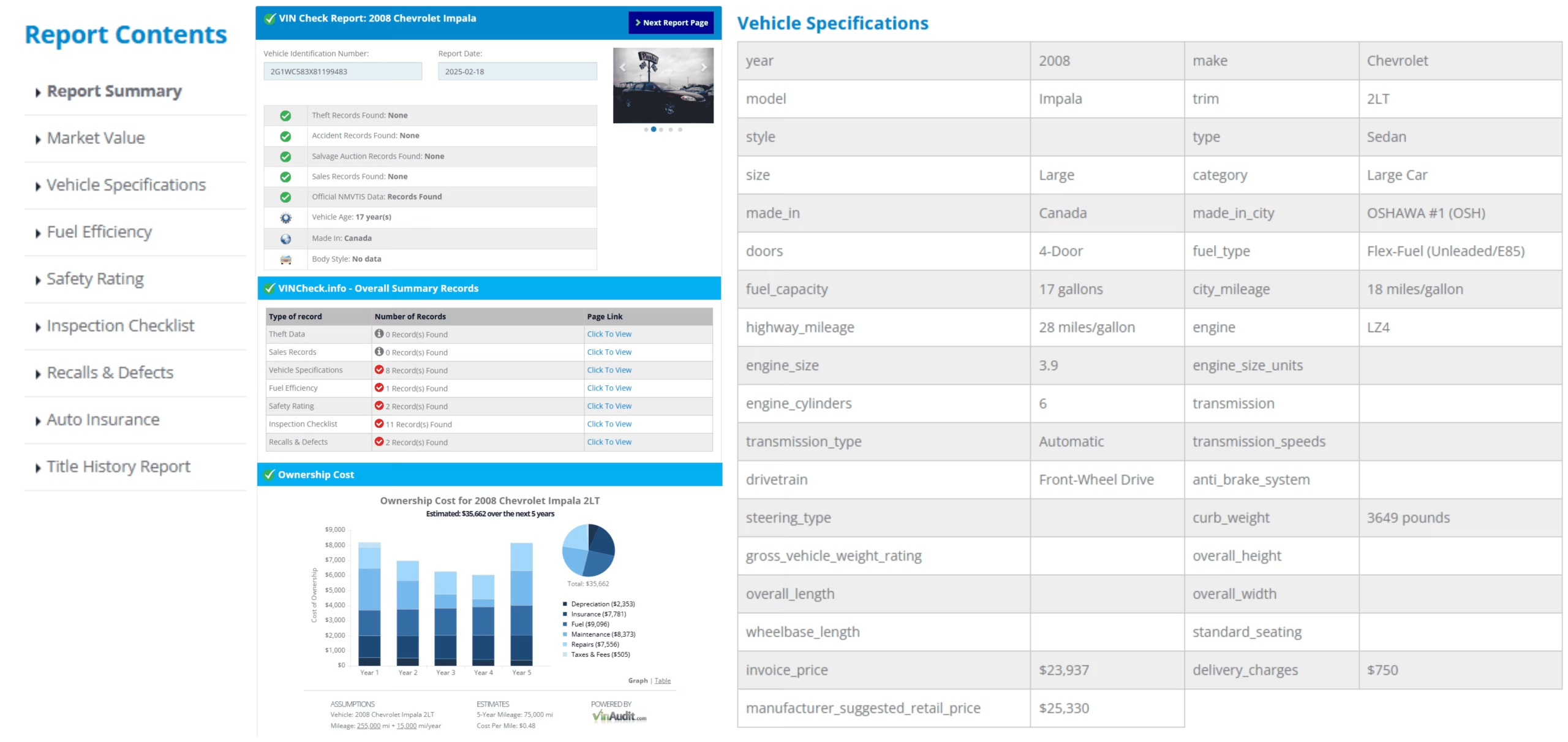
Sample report layout. Available sections vary by vehicle, VIN, reporting history, and source coverage.
Indiana Plate Lookup, VIN Check, and Official BMV Records
| Search Type | Best Used For | What It Does Not Confirm |
|---|---|---|
| Indiana License Plate Lookup | Finding an associated VIN and starting vehicle-history research when the VIN is not shown. | Current owner identity, official registration validity, or completed title transfer. |
| Direct VIN Check | Researching the exact vehicle after confirming the complete VIN on the vehicle and documents. | Every unreported accident, repair, lien, mechanical problem, or ownership dispute. |
| BMV Registration Record Search | Requesting official vehicle-registration information through an authorized Indiana process. | That protected personal information is available for an unrelated purpose. |
| Certified Vehicle Record | Obtaining a certified BMV record with supporting documentation when required. | Every out-of-state title event, unreported repair, or current mechanical condition. |
| Personalized Plate Application | Requesting an eligible personalized plate through myBMV, a kiosk, or a branch. | That a third-party vehicle lookup reserves or approves the combination. |
Latest Indiana Vehicle Registration and Traffic-Safety Statistics
FHWA’s latest standardized table reports 6,100,731 registered motor vehicles in Indiana for calendar year 2024. Indiana’s FFY 2025 Traffic Safety Annual Report recorded 797 roadway fatalities, a 6.46% decrease from 852 in FFY 2024. The observed seat-belt usage rate reached a record 94.10%.
| Indiana Measure | Latest Figure | Source Context |
|---|---|---|
| All registered motor vehicles | 6,100,731 | FHWA calendar-year 2024 total, published in January 2026 |
| Automobiles | 1,791,108 | Private, commercial, taxi, and publicly owned automobiles |
| Buses | 32,361 | Private, commercial, and publicly owned buses |
| Trucks | 4,073,391 | FHWA truck category, including pickups and many SUVs |
| Motorcycles | 203,871 | FHWA motorcycle category |
| Roadway fatalities | 797 | Indiana FFY 2025 Traffic Safety Annual Report |
| Fatality rate | 0.89 | Fatalities per 100 million vehicle miles traveled in FFY 2025 |
| Observed seat-belt use | 94.10% | Record statewide rate reported for FFY 2025 |
Sources: FHWA Highway Statistics 2024 and Indiana FFY 2025 Traffic Safety Annual Report.
Indiana Rear License Plate and Sticker Display Rules
Rear Plate Display
Indiana generally requires the license plate to be displayed on the rear of the vehicle.
Special Front-Plate Exception
A tractor, dump truck, or truck with specified rear-mounted equipment must display the plate at the front.
At Least 12 Inches High
The plate must be securely mounted horizontally with the bottom at least 12 inches above the ground.
Keep Everything Visible
Frames, covers, cargo, mud, snow, or damage must not obscure the plate text, numbers, or stickers.
Three Registration Stickers
The plate displays the expiration year, expiration month and day, and the county of registration.
Interim Plate Placement
An interim plate is displayed at the rear or on the left side of a rear-facing window where it remains visible and unobstructed.
Official reference: Indiana Plate Frame and Sticker Requirements.
Indiana Standard, Specialty, Personalized, and Blackout Plates
Standard Passenger Plate
The standard plate is available for passenger vehicles and other eligible vehicle classes.
In God We Trust
Indiana offers an alternate standard-style plate displaying “In God We Trust.”
Blackout Plate
Indiana launched its black-background plate on August 8, 2025. The current additional plate fee is $45.
Personalized Plates
Many designs can be personalized for an additional $45, subject to character limits and approval.
Special Group Plates
College, university, military, organizational, environmental, historic, and other distinctive designs are available.
Mail Delivery
BMV advises allowing up to 21 business days to receive a registration or plate by mail.
Official references: Indiana License Plates Overview, Indiana Standard Plates, and Personalized Plates.
Seller Plate Removal, Transfer, and Disposal in Indiana
The seller should remove the Indiana plate from the vehicle at the time of sale. The purchaser is responsible for obtaining a new title, registration, and plate.
Remove the Plate
Do not leave the plate on a sold vehicle or allow the buyer to continue using the seller’s registration.
Transfer to Another Owned Vehicle
The plate may be transferred to another vehicle owned by the same person when the transaction qualifies.
No Mandatory Surrender
Indiana does not require the plate from a sold vehicle to be returned to the BMV.
Destroy Unused Plates
Expired or unused plates should be cut, shredded, defaced, or otherwise made permanently unreadable before disposal.
Keep Sale Records
Retain a copy of the completed title assignment, bill of sale, and buyer information.
Buyer Gets a Separate Plate
The purchaser must complete the required title and registration process and obtain a properly issued plate or permit.
Official references: Indiana Buying and Selling Guidance and Expired Plate Disposal.
Replacing Lost, Stolen, Damaged, or Missing Indiana Plates
Replacement Plate
A lost, stolen, damaged, or illegible plate may be replaced through eligible BMV channels.
Replacement Fee
The current BMV fee chart lists $9.50 for a transfer, duplicate, or replacement plate, decal, or registration certificate.
Non-Receipt
Follow BMV instructions promptly when a mailed plate or sticker does not arrive.
Police Report
Report suspected theft or fraudulent use to law enforcement and keep the report number.
Update Your Records
Keep copies of the replacement transaction, new registration, insurance update, and police report.
Lookup Delay
A newly replaced plate may not immediately match older third-party plate-to-VIN records.
Official reference: Indiana BMV Fee Chart, revised January 1, 2026.
Indiana 30-Day and 96-Hour Temporary Permits
Indiana BMV offers temporary permits for specific situations. A 30-day temporary registration permit is not a general substitute for completing title and registration.
30-Day Permit
The permit is valid for 30 days from issuance and applies only when one of the listed statutory conditions is met.
Out-of-State Titling
One eligible use is transporting an Indiana-purchased vehicle that will be titled or registered in another state or country.
Emissions Repair
A qualifying owner may obtain a permit when a Lake or Porter County vehicle failed emissions testing and needs additional repairs.
96-Hour Delivery Permit
This permit allows limited travel to storage, an emissions station, a BMV branch, a service provider, or an approved impound-related destination.
Proof Required
Proof of ownership and financial responsibility is required, along with documents supporting the permit category.
Current Permit Fee
The January 2026 BMV fee chart lists the temporary permit fee at $18.
Official references: Indiana Temporary Permits and Indiana BMV Fee Chart.
Indiana Private-Sale Title and Registration Checks
Apply Within 45 Days
The buyer generally must apply for an Indiana title within 45 days after purchase or acquisition.
Complete Both Title Sections
The seller and purchaser sections must be completed in full before the buyer visits a branch.
Do Not Accept a Blank Assignment
Verify the buyer name, seller signature, sale date, price, odometer disclosure, and VIN before payment.
Sales Tax
A private-sale buyer pays applicable Indiana sales tax when applying for title at a BMV branch.
Bill of Sale Is Limited
A bill of sale usually cannot replace a title when Indiana law requires a certificate of title.
Buyer Gets the New Plate
The purchaser obtains a new registration and plate rather than using the seller’s plate.
Official references: Buying and Selling a Vehicle and Indiana Bill of Sale Guidance.
Indiana Vehicle Registration for New Residents
A new resident generally must title and register vehicles within 60 days after becoming an Indiana resident.
Out-of-State Title
Provide the prior title and registration documents required by the BMV.
VIN Inspection
An out-of-state vehicle being titled in Indiana must receive a physical inspection confirming the VIN.
Indiana Insurance
Maintain qualifying financial responsibility before driving and registering the vehicle.
Emissions May Apply
Vehicles registered in Lake or Porter County may require emissions testing based on model year, weight, and exemption status.
Out-of-State Lien
When the lender holds the title, the BMV may use State Form 1014 to request it from the lienholder.
No Sales Tax on Residency Transfer
New residents are not charged Indiana sales tax merely for transferring their existing vehicle title from the prior state.
Official references: New Indiana Residents and Out-of-State Vehicle Title Requirements.
Indiana Title, Lien, and Certified Vehicle Record Verification
Match the VIN Everywhere
Compare the dashboard VIN, door label, title, registration, insurance card, emissions records, and lookup result.
Review the Lienholder
Check the title and BMV record for a secured party or lender.
Confirm the Release
Require an acceptable lien release and verify payoff directly with the lender using independently confirmed contact information.
Certified Record Request
Indiana provides State Form 53789 for an official certified vehicle or watercraft record request.
Electronic Titles
Indiana’s electronic title system records ownership and lien interests, and some transactions require the electronic title to be printed.
Do Not Rely on a Bill of Sale Alone
A bill of sale supports the transaction but does not replace a transferable title when a title is required.
Official references: Indiana Vehicle Titles, Title and Certified Record Forms, and Electronic Titles Overview.
Indiana Emissions Testing in Lake and Porter Counties
Qualifying vehicles registered in Lake or Porter County require emissions testing and tampering inspection every two years.
After Model Year 1975
The program applies to qualifying vehicles manufactured after 1975.
9,000 Pounds or Less
The vehicle must have a gross vehicle weight rating of 9,000 pounds or less.
Odd and Even Year Cycle
Odd-model-year vehicles test in odd years, and even-model-year vehicles test in even years.
Four Latest Model Years
Vehicles from the four latest model years are exempt, subject to the current program rules.
Antique Vehicle Exemption
Qualifying antique vehicles are exempt under the applicable state rule.
Inspection Mileage
Available emissions records may add mileage readings to a vehicle-history timeline.
Official reference: Indiana Vehicle Emissions Testing Program.
Indiana Safety Inspection and VIN Verification
Indiana does not operate a general statewide annual mechanical safety inspection for ordinary passenger vehicles. That makes an independent pre-purchase inspection especially important.
Out-of-State VIN Inspection
Any out-of-state vehicle being titled in Indiana must receive an inspection confirming the VIN.
BMV or Service Provider
The VIN inspection may be completed at a BMV branch or certified service provider without charge.
Law Enforcement Inspection
A law enforcement officer may complete State Form 39530 and may charge up to $5.
Emissions Is Not Safety
A passing emissions test does not verify brakes, tires, steering, suspension, airbags, lighting, structure, or repair quality.
Independent Inspection
Use a mechanic with no financial connection to the seller and request a written report.
Inspect Before Payment
Complete the test drive, scan, lift inspection, fluid check, tire review, and document verification before final payment.
Indiana Salvage and Rebuilt Vehicle Risks
Indiana requires a salvage title for qualifying recently manufactured vehicles that have been wrecked or damaged. A vehicle previously branded salvage must complete the restoration process to receive a rebuilt title brand.
Seven Model Years
A salvage title is required for qualifying vehicles manufactured within the last seven model years.
Older Vehicles
A salvage title may also be issued for an older vehicle when requested.
Salvage Restoration Title
A vehicle returning to road use must complete the restoration title process and receive the rebuilt brand.
MVIN for Altered Identification
A vehicle with a missing, altered, or defaced VIN requires a special identification number before title or registration.
Repair Documentation
Review parts receipts, donor VINs, repair invoices, photographs, inspection documents, and title forms.
Inspection Is Not a Warranty
A title or inspection does not guarantee repair quality, crashworthiness, reliability, or freedom from hidden defects.
Official reference: Indiana Special Titling Circumstances.
Indiana Flood, Road-Salt, Winter, Hail, and Storm Risks
A plate lookup can reveal reported history, but Indiana weather and road conditions make a physical inspection essential.
Flood and Water Intrusion
Look for silt, corrosion, musty odors, fogged lights, wet carpeting, mold, damaged connectors, and mismatched interior materials.
Road-Salt Corrosion
Inspect the frame, subframes, rocker panels, brake and fuel lines, suspension mounts, exhaust, and body seams.
Lake-Effect Winter Exposure
Northern Indiana vehicles may experience heavier snow, repeated deicing treatment, and freeze-thaw damage.
Hail and Storm Damage
Check the roof, hood, glass, weather seals, paint depth, repaired panels, and drainage channels.
Pothole and Suspension Damage
Inspect wheels, tires, bearings, alignment, steering, control arms, struts, and uneven tire wear.
Heat and Cold Systems
Test the battery, cooling system, air conditioning, heater, defrosters, wipers, washers, and warning lights.
Indiana Vehicle Theft, VIN Cloning, and Title Fraud
Vehicle theft and title fraud can involve copied VINs, switched plates, false titles, altered temporary tags, odometer fraud, or vehicles rebuilt after severe damage. Verify the vehicle’s identity before payment.
Theft and Recovery Records
Review available theft and recovery signals, then verify concerns through law enforcement or NICB VINCheck.
VIN Cloning
A stolen vehicle may use a copied VIN, counterfeit label, false title, or plate from a similar legitimate vehicle.
Plate Swapping
A plate attached to the wrong vehicle can create a make, model, year, or VIN mismatch and may indicate fraud.
Title Washing
Moving a damaged vehicle between states may be used to obscure salvage, flood, junk, or rebuilt history.
Odometer Fraud
Compare displayed mileage with title, emissions, auction, service, sale, and registration records.
Online-Sale Fraud
Avoid sellers who hide the VIN, refuse an inspection, cannot produce the title, or demand irreversible payment before verification.
Consumer references: Indiana BMV Consumer Scam Alerts and NICB VINCheck.
Indiana Auto Insurance Requirements
Indiana requires minimum liability coverage of $25,000 per person, $50,000 per accident for bodily injury, and $25,000 per accident for property damage.
$25,000 Per Person
The minimum bodily-injury liability limit applies to injury or death of one person.
$50,000 Per Accident
The minimum bodily-injury liability limit applies when two or more people are injured or killed in one accident.
$25,000 Property Damage
The minimum applies to damage to another person’s vehicle or property.
Uninsured and Underinsured Coverage
New policies include uninsured and underinsured motorist coverage unless the policyholder rejects it in writing.
A Lookup Does Not Verify Coverage
Confirm active insurance directly with the policyholder, insurer, and official registration documents.
Consider Higher Limits
The statutory minimums may not cover a serious crash. Financed vehicles may also require collision and comprehensive coverage.
Official references: Indiana Proof of Financial Responsibility and Indiana Department of Insurance Auto Guide.
Indiana License Plate Owner Lookup and Privacy
VinCheck.info’s Indiana plate lookup is for vehicle research. It does not reveal a private owner’s name, home address, phone number, driver-license information, or other protected personal data.
Indiana BMV records involving personal information are protected by Indiana law and the federal Driver’s Privacy Protection Act. Official registration or certified-record access must follow the authorized process and may require a permitted use.
Use the lookup to research the vehicle, not to identify, locate, contact, follow, or confront a private person.
Official references: Indiana BMV Registration Record Search and Certified Vehicle Record Request.
Indiana Plate and VIN Red Flags
- The lookup returns a different make, model, year, body style, or VIN from the vehicle shown.
- The seller refuses to provide the complete VIN, original title, identification, insurance, or lien-release documents.
- The dashboard VIN, door label, title, registration, insurance paperwork, emissions records, and report do not match.
- The VIN plate appears loose, scratched, repainted, replaced, covered, or altered.
- The title shows salvage, rebuilt, flood, junk, lemon, or odometer branding that was not disclosed.
- The seller leaves the Indiana plate on the sold vehicle or tells the buyer to use the seller’s registration.
- A temporary or interim plate is expired, altered, copied, unreadable, assigned to another vehicle, or unsupported by transaction documents.
- The seller demands a deposit or remote payment before allowing VIN, title, lien, emissions, and vehicle-condition verification.
Stop the transaction when the vehicle identity, title, lien, seller, plate, or VIN cannot be verified.
Indiana Used-Car Checklist After a Plate Lookup
- Confirm the plate and issuing state. Recheck every character before searching.
- Match the returned VIN. Compare it with every VIN location and document.
- Decode the vehicle. Verify the year, make, model, engine, body, and factory identity.
- Review title brands. Check salvage, rebuilt, flood, junk, lemon, theft, and odometer history.
- Check theft, mileage, and sale records. Investigate theft signals, mileage gaps, auction events, or inconsistent listings.
- Confirm the seller and lien. Require a transferable title and valid payoff or lien release.
- Handle the plate correctly. The seller removes the plate, and the buyer obtains a properly issued registration or permit.
- Verify insurance and emissions. Confirm 25/50/25 coverage and Lake or Porter County testing requirements.
- Meet the deadlines. Apply for title within 45 days or title and register as a new resident within 60 days.
- Get an independent inspection. Focus on flood clues, corrosion, structure, brakes, cooling, tires, electronics, and repair quality.
Official Indiana Vehicle and Plate Resources
Buying and Selling
Review title assignment, seller plate removal, sales tax, out-of-state vehicles, and lien requirements.
Registration and Plates
Review registration, plate designs, replacement, stickers, temporary permits, and fee information.
Titles and Certified Records
Review titles, liens, duplicate titles, electronic titles, salvage, forms, and certified record requests.
Emissions Testing
Review Lake and Porter County testing schedules, exemptions, stations, and temporary permits.
License Plate Lookup by State
Select the actual issuing state shown on the plate. The same letter and number combination may exist in multiple states.
Indiana Plate Lookup Limitations
- A plate may not match a VIN when it is new, temporary, transferred, replaced, expired, destroyed, entered incorrectly, or absent from available sources.
- A result may reflect older plate-to-vehicle data after a recent transfer or replacement. Always compare the returned VIN and vehicle description.
- Not every accident, repair, lien, title event, theft, mileage entry, service visit, emissions test, or sale is reported to every database.
- A clean report does not guarantee mechanical condition, legal ownership, completed title transfer, insurance coverage, emissions compliance, or freedom from undisclosed damage.
- The report does not replace Indiana BMV, a lienholder, law enforcement, an insurer, an emissions station, a recall database, or a qualified mechanic.
Indiana License Plate Lookup Frequently Asked Questions
What is an Indiana license plate lookup?
An Indiana license plate lookup uses the plate number and Indiana as the issuing state to search for an associated VIN when matching data is available. The VIN can then be used to review available vehicle identity and history information.
Is the Indiana license plate lookup free?
The VinCheck.info lookup can be started without a fee or account. Results depend on plate-to-VIN matching, reporting history, and source coverage.
Can I search an Indiana plate without knowing the VIN?
Yes. Enter the complete Indiana plate number and select Indiana. When a matching VIN is available, the lookup can continue with VIN-based vehicle research.
What can a free Indiana license plate check show?
Depending on available data, it may show the associated VIN, vehicle specifications, title brands, theft or salvage signals, accident records, odometer entries, recalls, sales, market value, and other vehicle-history details.
Can an Indiana plate lookup show the owner’s name or address?
No. VinCheck.info does not display protected owner names, home addresses, phone numbers, driver-license details, or other restricted personal information.
Is a plate lookup the same as an official Indiana BMV record?
No. A consumer plate lookup is designed for vehicle research. Official Indiana vehicle, title, registration, and lien records are requested through the BMV and are subject to identification, fees, privacy restrictions, and permitted-use requirements.
What should I do if the lookup returns the wrong vehicle?
Stop and verify the plate number, issuing state, physical VIN, title, registration, and seller information. A mismatch may result from a typo, recent plate transfer, stale data, reassignment, or fraud.
What should I do if no VIN is found?
Recheck every plate character and confirm that Indiana is selected. If no match is available, ask the seller for the complete 17-character VIN and run a direct VIN check.
Does Indiana require a front license plate?
Indiana generally requires one license plate on the rear of the vehicle. Certain trucks with rear-mounted equipment must display a plate at the front.
How high must an Indiana license plate be mounted?
Indiana BMV guidance requires the plate to be mounted horizontally with the bottom at least 12 inches above the ground, while keeping all numbers, text, and stickers visible.
Do Indiana plates stay with the seller?
Yes. The seller should remove the plate when the vehicle is sold. The plate may be transferred to another vehicle owned by the same person, and Indiana does not require the old plate to be returned.
How long does an Indiana buyer have to apply for title?
The buyer generally must apply for an Indiana certificate of title within 45 days after purchasing or acquiring the vehicle. A late application can trigger an administrative penalty.
How long does a new Indiana resident have to title and register a vehicle?
A new resident generally must title and register vehicles within 60 days after becoming an Indiana resident.
How long is an Indiana 30-day temporary permit valid?
A qualifying Indiana BMV temporary registration permit is valid for 30 days from issuance. It is available only for specific circumstances listed by the BMV.
What is Indiana’s 96-hour temporary delivery permit?
A qualifying 96-hour permit allows limited travel to a storage location, emissions station, BMV branch, service provider, or an approved destination for an impounded vehicle.
Which Indiana vehicles require emissions testing?
Qualifying vehicles registered in Lake or Porter County require emissions and tampering inspections every two years when they were manufactured after 1975 and have a gross vehicle weight rating of 9,000 pounds or less, subject to exemptions.
Does Indiana require a statewide annual safety inspection?
Indiana does not operate a general statewide annual mechanical safety inspection for ordinary passenger vehicles. VIN verification, emissions testing, and special inspections may still apply.
How can I verify an Indiana lien or title record?
Review the original title, require a valid lien release, confirm payoff directly with the lender, and request an official certified vehicle record from the Indiana BMV when appropriate.
What auto insurance is required in Indiana?
Indiana requires minimum liability coverage of $25,000 per person, $50,000 per accident for bodily injury, and $25,000 per accident for property damage.
Does an Indiana plate report replace official records or an inspection?
No. Plate-to-VIN matching and vehicle reports depend on available data. Verify the title, registration, lien, seller, insurance, emissions status, recalls, and physical condition, and obtain an independent inspection before buying.
Run a Free Indiana License Plate Lookup
Enter the complete Indiana plate number, select Indiana, and verify any returned VIN against the vehicle and documents.
Check an Indiana PlateVinCheck.info is an independent vehicle information website and is not affiliated with or operated by the Indiana Bureau of Motor Vehicles, Indiana Criminal Justice Institute, Indiana Department of Insurance, or any emissions testing station. An Indiana license plate lookup is a vehicle-research tool, not an official title, registration, lien, owner-record, insurance, emissions, theft, or salvage-inspection service. Results vary by plate, VIN availability, reporting history, and source coverage. Confirm important details with Indiana BMV, the seller, the lienholder, official documents, relevant agencies, and an independent inspector.