
Free New Jersey License Plate Lookup
Enter a New Jersey license plate number to search for the associated VIN and review available vehicle specifications, title brands, theft, salvage, mileage, inspections, recalls, sales, value, and other history.
It uses the plate number and New Jersey as the issuing state to identify an associated VIN when matching data is available. The VIN then becomes the basis for the vehicle report.
Check a New Jersey Plate
Enter the plate number exactly as shown and select New Jersey.
Plate-to-VIN matching and report contents vary by plate, VIN availability, reporting history, and source coverage. Confirm the VIN on the vehicle and official documents.
On This Page
- What a New Jersey Plate Lookup Is
- How the Free Lookup Works
- What the Report May Show
- Plate Lookup vs VIN vs MVC Records
- Latest New Jersey Statistics
- Plate Display and Plate Types
- Plate Surrender and Transfer
- Lost, Stolen and Damaged Plates
- 30-Day Temporary Registrations
- Private-Sale Title and Registration
- New Resident Registration
- Title, Lien and Official Records
- Current Inspection Requirements
- Failed Inspection and Reinspection
- Salvage and Rebuilt Vehicles
- Flood, Coastal Salt and Winter Risks
- Theft, VIN Cloning and Fraud
- New Jersey Auto Insurance
- Owner Privacy and Record Access
- Plate and VIN Red Flags
- New Jersey Used-Car Checklist
- Official New Jersey Resources
- Other State Plate Lookups
- Related Vehicle Research Tools
- Report Limitations
- Frequently Asked Questions
- Run a Free New Jersey Plate Check
What Is a New Jersey License Plate Lookup?
A New Jersey license plate lookup is a plate-to-VIN search. Enter the complete plate number and select New Jersey as the issuing state. When a matching VIN is available, that VIN is used to retrieve available vehicle identity and history information.
This search is useful when a private-sale listing, dealer page, auction post, or vehicle photo shows the New Jersey plate but not the VIN. The result can help you compare the advertised year, make, model, body style, engine, and vehicle type with available records.
A consumer plate lookup does not prove current ownership, active registration, lien release, completed title transfer, insurance coverage, inspection compliance, or mechanical condition. Verify those matters through official records, original documents, and an independent inspection.
How to Run a Free New Jersey License Plate Check
Enter the Plate
Type the New Jersey plate number exactly as shown on the vehicle, listing, or seller photo.
Select New Jersey
The issuing state matters because the same plate combination may exist in another state.
Match the VIN
The system attempts to identify the VIN associated with the plate from available records.
Review and Verify
Compare the returned VIN with the dashboard, door label, title, registration, insurance documents, and seller records.
No result does not mean the vehicle is safe or problem-free. Ask for the complete VIN and run a direct VIN check when a plate-to-VIN match is unavailable.
What a New Jersey Plate Lookup Report May Show
Vehicle Identity
Associated VIN, model year, make, model, body, engine, drivetrain, colors, equipment, and decoded specifications.
Title and Brand Records
Available title states, title dates, salvage, rebuilt, flood, junk, lemon, or other brand records.
Theft and Damage Signals
Available stolen-vehicle, recovery, accident, junk, salvage, total-loss, and insurance-related records.
Mileage, Sales and Value
Reported odometer entries, inspection mileage, sales, listings, auctions, recalls, and value information.
| Report Section | What It May Include | How to Use It |
|---|---|---|
| VIN and Specifications | Year, make, model, trim, engine, transmission, drivetrain, body style, fuel type, colors, and factory details. | Confirm that the plate result matches the advertised vehicle. |
| Title and Brand History | Reported title states, dates, salvage, rebuilt, flood, junk, lemon, or other brands. | Investigate branding and interstate title movement before paying. |
| Theft and Recovery | Available stolen-vehicle and recovery records tied to the VIN. | Verify the physical VIN, seller, title, and official theft status. |
| Accident, Junk and Salvage | Reported collisions, insurers, recyclers, junk yards, salvage yards, total losses, or auctions. | Assess repair quality, safety, value, and insurability. |
| Odometer and Inspection History | Mileage readings, inspection events, sale dates, listing history, and possible mileage inconsistencies. | Compare mileage and the seller’s story against the available timeline. |
| Recalls, Value and Warranty | Open recalls, estimated market value, warranty information, safety ratings, and ownership-cost context. | Plan safety repairs, negotiation, insurance, and ownership costs. |
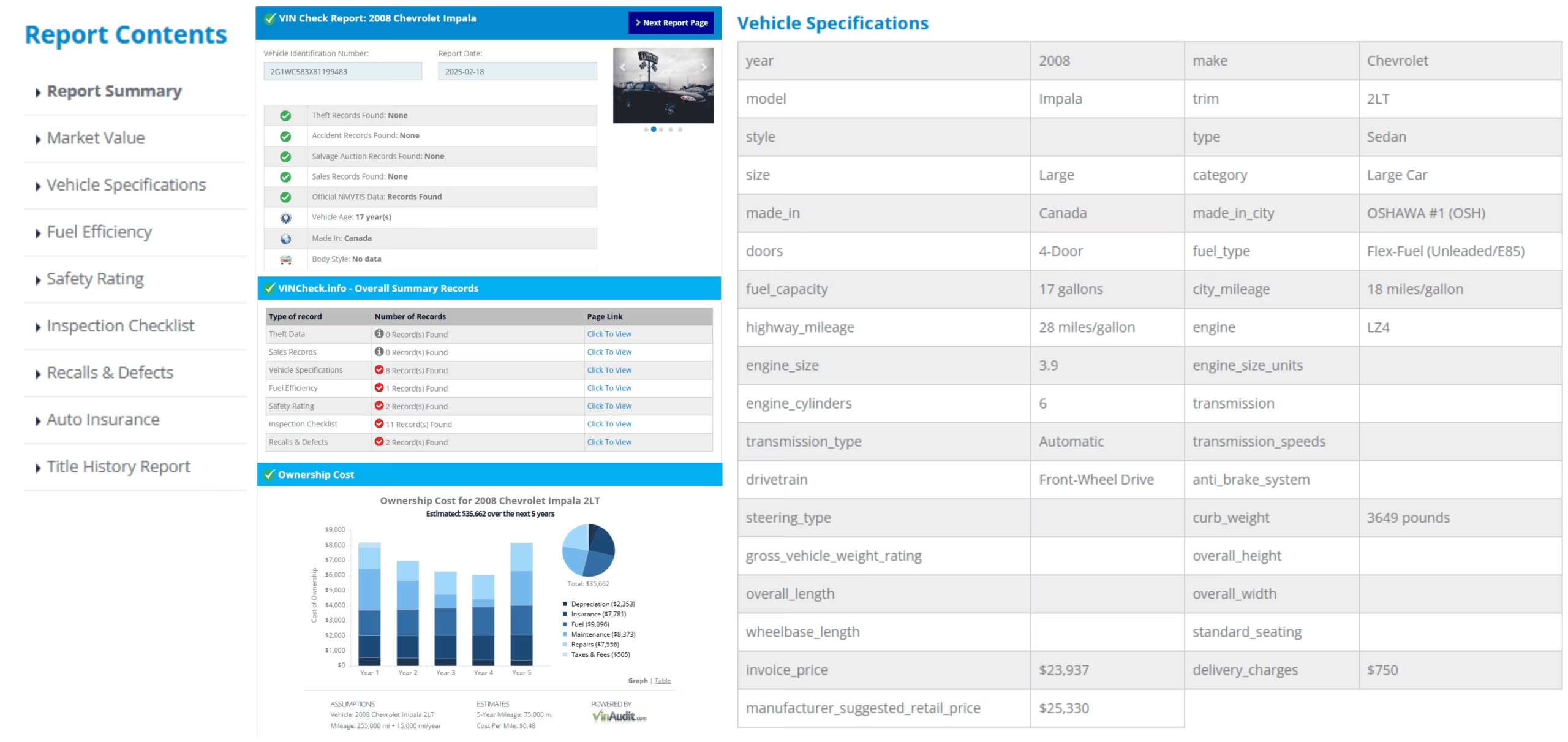
Sample report layout. Available sections vary by vehicle, VIN, reporting history, and source coverage.
New Jersey Plate Lookup, VIN Check, and Official MVC Records
| Search Type | Best Used For | What It Does Not Confirm |
|---|---|---|
| New Jersey License Plate Lookup | Finding an associated VIN and starting vehicle-history research when the VIN is not shown. | Current owner identity, official registration validity, or completed title transfer. |
| Direct VIN Check | Researching the exact vehicle after confirming the complete VIN on the vehicle and documents. | Every unreported accident, repair, lien, mechanical problem, or ownership dispute. |
| MVC Title and Registration Service | Completing a title, registration, plate transfer, lien, temporary registration, or ownership transaction. | A complete accident, auction, repair, or mechanical-condition history. |
| Official Title or Lien Search | Checking official current title, owner, and lienholder information through the authorized MVC process. | That protected information can be used for an unrelated or impermissible purpose. |
| Personalized Plate Service | Checking and applying for an eligible custom New Jersey plate configuration. | That a third-party vehicle lookup reserves or approves the plate. |
Latest New Jersey Vehicle Registration and Theft Statistics
The New Jersey Motor Vehicle Commission reported 6.4 million registered vehicles in 2025 and more than 7 million licensed drivers. FHWA’s standardized 2024 table counted 6,256,097 New Jersey motor vehicles. New Jersey’s Office of the Attorney General reported that auto thefts fell from 16,694 in 2023 to 14,755 in 2024.
| New Jersey Measure | Latest Figure | Source Context |
|---|---|---|
| MVC registered vehicles | 6.4 million | New Jersey MVC calendar-year 2025 annual report |
| Licensed drivers | More than 7 million | First time MVC exceeded 7 million licensed drivers |
| FHWA all motor vehicles | 6,256,097 | Calendar-year 2024 standardized total, published in 2026 |
| FHWA automobiles | 2,275,055 | Private, commercial, taxi, and publicly owned automobiles |
| FHWA trucks | 3,809,822 | FHWA truck category, including pickups and many SUVs |
| FHWA motorcycles | 146,003 | FHWA motorcycle category |
| New Jersey auto thefts | 14,755 | Calendar-year 2024 state total, down from 16,694 in 2023 |
| New York-Newark-Jersey City metro thefts | 27,138 | NICB 2025 multi-state metropolitan total |
| Philadelphia-Camden-Wilmington metro thefts | 19,117 | NICB 2025 multi-state metropolitan total |
Sources: New Jersey MVC 2025 Annual Report, FHWA Highway Statistics 2024, New Jersey OAG 2024 Year in Review, and NICB 2025 Vehicle Theft Analysis.
New Jersey License Plate Display Rules and Plate Types
Front and Rear Plates
Most passenger vehicles receive two plates and must display one at the front and one at the rear.
Single Rear Plate Classes
Motorcycles and trailers generally receive one plate for rear display.
Keep Plates Legible
Plates should remain secure, visible, clean, and free from frames, covers, or damage that obstructs the characters.
Garden State Design
The familiar standard plate uses dark characters on a pale yellow gradient and displays “New Jersey” and “Garden State.”
Specialized Plates
MVC offers personalized, dedicated, organizational, sports, historic, hot rod, disability, military, and other specialty plates.
Format Is Not Proof
A plausible New Jersey plate sequence does not prove ownership, current registration, title quality, insurance, or vehicle condition.

New Jersey plate formats vary by issuance series, registration class, specialty program, vehicle type, and personalization.
Official references: New Jersey MVC Plates and New Jersey Plate Types.
New Jersey Plate Surrender and Transfer Rules
Transfer in the Same Name
Eligible plates may be transferred when the replacement vehicle is registered in the same name as the previous vehicle.
Same Registration Class
The vehicles must be in the same class, such as car to car or truck to truck.
Surrender Unused Plates
If the seller does not transfer the plates to another vehicle, the old plates must be surrendered to MVC.
In Person or by Mail
Unused plates may be surrendered at an MVC agency or mailed to an approved MVC agency address.
Keep the Receipt
Retain the surrender receipt in case tolls, tickets, insurance issues, or other charges are later linked to the plate.
Not at Inspection Stations
MVC inspection stations do not accept surrendered license plates.
Official reference: New Jersey MVC Plate Surrender and Transfer.
Replacing Lost, Stolen, or Damaged New Jersey Plates
Stolen Plates
File a police report with the municipality where the theft occurred and keep a copy for MVC and insurance records.
Lost or Stolen Replacement
Visit an MVC agency with the current registration and identification to obtain a replacement set.
Damaged Plates
Bring the damaged plates, current registration, and identification to an MVC agency and surrender the old set.
Current Replacement Fees
The current fee is $6 for standard plates and $11 for non-personalized special-interest or dedicated plates.
Same-Number Duplicates
Reflectorized duplicate plates with the same number may be ordered using the appropriate application and an $11 fee.
Allow Processing Time
Same-number duplicate plates may take approximately 10 to 12 weeks to arrive.
Official reference: New Jersey MVC Replacement Plates.
New Jersey 30-Day Temporary Registrations
New Jersey dealer-issued electronic temporary registrations for residents and nonresidents generally expire 30 days after issuance. A separate MVC temporary nonresident registration is also valid for 30 days.
Resident Dealer E-Temp
A licensed dealer may issue a 30-day electronic temporary registration while the permanent registration is processed.
Limited Extension
The original e-temp may be extended only in qualifying situations such as a lost or stolen title or a lienholder delay.
Nonresident Dealer E-Temp
A nonresident e-temp also generally expires 30 days after issuance and has limited extension rules.
MVC Nonresident Registration
A qualifying out-of-state buyer may receive a 30-day temporary nonresident registration for transport to the home state.
Current Nonresident Fee
The MVC temporary nonresident registration currently costs $5 and cannot be renewed.
Lookup Limitation
A recently issued temporary plate may not produce a reliable plate-to-VIN match. Use the physical VIN, title, bill of sale, and dealer documents.
Official references: MVC Dealer E-Temp FAQs and Temporary Nonresident Registration.
New Jersey Private-Sale Title and Registration Checks
Require the Original Title
Confirm that the seller is named on the title and has authority to transfer the vehicle.
Complete the Assignment
The title should include buyer and seller information, signatures, sale date, purchase price, and the buyer’s identification number.
Use Form BA-49
The buyer completes the Vehicle Registration Application when registering the vehicle.
Pay Title and Registration Charges
A standard title currently costs $60, while financed titles cost more depending on the number of liens.
Sales Tax Applies
New Jersey sales tax generally applies to a private vehicle purchase unless a specific exemption applies.
Reject Altered Documents
Do not accept erasures, white-out, overwritten buyer information, missing signatures, or unsupported lien releases.
Official references: Pre-Owned Vehicle Title and Transferring Vehicle Ownership.
New Jersey Vehicle Registration for New Residents
A new resident generally must transfer the out-of-state driver license and vehicle title and registration within 60 days of moving to New Jersey or before the existing documents expire, whichever occurs first.
Schedule the Required Transactions
License and vehicle transactions may require separate appointments and supporting documents.
Bring Ownership Documents
Provide the out-of-state title, current registration, identification, and other required ownership records.
Provide New Jersey Insurance
Present proof of qualifying New Jersey auto insurance for the vehicle.
Handle Existing Liens
Follow MVC instructions when the out-of-state title is held electronically or by a lender.
Complete Inspection
Follow the inspection instructions included with the registration transaction and inspect the vehicle within the required period.
Keep the VIN Consistent
Compare the VIN on every document with the dashboard, door label, and plate lookup result.
Official reference: Moving to New Jersey.
New Jersey Title, Lien, and Official Record Verification
Match the VIN Everywhere
Compare the dashboard VIN, door label, title, registration, insurance documents, inspection records, and lookup result.
Review the Lienholder
Check whether a lender or secured party is listed on the title or MVC record.
Confirm the Release
Require an acceptable lien-satisfaction document and verify payoff directly with the lender using independently confirmed contact information.
Official Lien Search
MVC offers an official title and lien search that can identify the current lienholder and owner information in its database.
Current Search Fee
The official lien-search request currently requires a $15 fee and supporting identification.
Do Not Rely on a Bill of Sale Alone
A bill of sale supports the transaction but does not replace a transferable title when a title is required.
Official reference: New Jersey MVC Liens and Lien Search.
Current New Jersey Vehicle Inspection Requirements
Most qualifying basic noncommercial vehicles require emissions inspection once every two years. New vehicles generally receive a five-year inspection period.
Biennial Inspection
Check the windshield sticker to determine the due date. The inspection may be completed up to two months early.
New-Vehicle Period
Qualifying new vehicles generally receive a five-year inspection before beginning the normal cycle.
Emissions Focus
For most basic passenger vehicles, the current test focuses on emissions and onboard diagnostic components rather than a full mechanical safety inspection.
Vehicle Eligibility Varies
Model year, fuel, registration class, gross vehicle weight, and vehicle use determine whether and how a vehicle is inspected.
Exempt Vehicles
Certain older vehicles, electric vehicles, motorcycles, historic vehicles, collector vehicles, and other listed classes are exempt.
Program Changes Are Pending
MVC has announced future changes, but the current inspection process remains in effect until the state implements the new program.
Official references: New Jersey Vehicle Inspections, Vehicle Inspection FAQs, and Inspection Program Changes.
What Happens After a New Jersey Vehicle Fails Inspection?
A failed vehicle receives a Vehicle Inspection Report explaining the emissions problem and the reinspection deadline. The owner generally has until one month after the last day of the inspection-sticker month to repair and return for reinspection.
Review the Inspection Report
Use the report to identify the failed component, fault code, repair requirement, and deadline.
Registered Repair Facility or Self-Repair
Emissions repairs may be completed by a registered Emissions Repair Facility or by the owner, subject to state requirements.
Return for Reinspection
Bring the vehicle and required repair documentation to a state or licensed private inspection facility.
Overdue Vehicles Get No Extra Time
A vehicle already overdue for inspection does not receive an additional repair period.
Official reference: New Jersey Failed Inspection Guidance.
New Jersey Salvage and Rebuilt Vehicle Risks
A salvage vehicle must complete New Jersey MVC’s salvage and rebuilt-vehicle process before receiving the appropriate title and registration for road use.
Salvage Inspection
The process reviews vehicle identity, major components, ownership documents, photographs, and repair information.
Before-and-After Evidence
Keep clear photographs showing the vehicle before repair and after reconstruction.
Parts Documentation
Review receipts, donor-vehicle VINs, invoices, and proof that major parts were lawfully acquired.
Title Brand Remains Important
Salvage and rebuilt history can affect insurance, financing, market value, warranties, and resale.
Inspection Is Not a Warranty
MVC inspection does not guarantee repair quality, crashworthiness, reliability, or freedom from hidden defects.
Independent Inspection
Check the frame, unibody, airbags, restraints, corrosion, wiring, alignment, brakes, and repair quality.
Official reference: New Jersey MVC Salvage and Rebuilt Vehicles.
New Jersey Flood, Coastal Salt, Winter, and Rust Risks
A plate lookup can reveal reported history, but coastal flooding, storm surge, road salt, potholes, and dense urban driving make a physical inspection essential.
Flood and Storm-Surge Damage
Look for silt, corrosion, musty odors, fogged lights, wet carpeting, mold, damaged connectors, and mismatched interior materials.
Coastal Salt Exposure
Inspect brake and fuel lines, fasteners, suspension parts, electrical grounds, body seams, exhaust, and underbody components.
Winter Road Salt
Check the frame, subframes, rocker panels, suspension mounts, brake lines, and wheel wells for corrosion.
Pothole and Curb Damage
Inspect wheels, tires, bearings, alignment, steering, control arms, struts, and uneven tire wear.
Urban and Fleet Wear
Frequent idling, short trips, stop-and-go use, delivery work, rideshare use, and parking impacts can accelerate wear.
Cooling and Electrical Systems
Test the battery, charging system, cooling system, air conditioning, warning lights, sensors, and water-sensitive electronics.
New Jersey Vehicle Theft, VIN Cloning, and Title Fraud
New Jersey reported 14,755 auto thefts in 2024, down from 16,694 in 2023. NICB’s 2025 metro data also shows that the New York-Newark-Jersey City and Philadelphia-Camden-Wilmington regions remained among the country’s highest-volume theft areas.
Theft and Recovery Records
Review available theft and recovery signals, then verify concerns through law enforcement or NICB VINCheck.
VIN Cloning
A stolen vehicle may use a copied VIN, counterfeit label, false title, or plate from a similar legitimate vehicle.
Plate Swapping
A plate attached to the wrong vehicle can create a make, model, year, or VIN mismatch and may indicate fraud.
Title Washing
Moving a damaged vehicle between states may be used to obscure salvage, flood, junk, or rebuilt history.
Odometer Fraud
Compare displayed mileage with title, inspection, auction, service, sale, and registration records.
Online-Sale Fraud
Avoid sellers who hide the VIN, refuse an inspection, cannot produce the title, or demand irreversible payment before verification.
New Jersey Auto Insurance Requirements
New Jersey offers Standard and Basic auto policies. The Standard Policy is selected by most drivers and provides broader protection, while the Basic Policy satisfies minimum legal requirements with sharply reduced coverage.
Standard Bodily Injury
Current minimum selections begin at $35,000 per person and $70,000 per accident.
Standard Property Damage
The current minimum selection is $25,000 per accident.
Standard Personal Injury Protection
PIP selections begin at $15,000 per person or accident, with higher coverage available.
Basic Policy
The Basic Policy includes $5,000 in property-damage liability and $15,000 in PIP. Bodily injury is not included unless the optional $10,000 per-accident coverage is selected.
Uninsured and Underinsured Coverage
This coverage is available with the Standard Policy up to selected liability limits but is not included in the Basic Policy.
A Lookup Does Not Verify Coverage
Confirm active insurance directly with the policyholder, insurer, and official registration documents.
Official references: New Jersey Standard Auto Insurance Policy and New Jersey Basic Auto Insurance Policy.
New Jersey License Plate Owner Lookup and Privacy
VinCheck.info’s New Jersey plate lookup is for vehicle research. It does not reveal a private owner’s name, home address, phone number, driver-license information, or other protected personal data.
Official MVC title or lien searches can return current owner and lienholder information, but access, identification, fees, use, and disclosure remain subject to federal and state privacy rules.
Use the lookup to research the vehicle, not to identify, locate, contact, follow, or confront a private person.
New Jersey Plate and VIN Red Flags
- The lookup returns a different make, model, year, body style, or VIN from the vehicle shown.
- The seller refuses to provide the complete VIN, original title, identification, insurance, or lien-release documents.
- The dashboard VIN, door label, title, registration, insurance paperwork, inspection records, and report do not match.
- The VIN plate appears loose, scratched, repainted, replaced, covered, or altered.
- The title shows salvage, rebuilt, flood, junk, lemon, or odometer branding that was not disclosed.
- The seller leaves New Jersey plates on the sold vehicle or tells the buyer to use the seller’s registration.
- A temporary plate is expired, altered, copied, unreadable, assigned to another vehicle, or unsupported by dealer or MVC documents.
- The seller demands a deposit or remote payment before allowing VIN, title, lien, inspection, and vehicle-condition verification.
Stop the transaction when the vehicle identity, title, lien, seller, plate, or VIN cannot be verified.
New Jersey Used-Car Checklist After a Plate Lookup
- Confirm the plate and issuing state. Recheck every character before searching.
- Match the returned VIN. Compare it with every VIN location and document.
- Decode the vehicle. Verify the year, make, model, engine, body, and factory identity.
- Review title brands. Check salvage, rebuilt, flood, junk, lemon, theft, and odometer history.
- Check theft, mileage, and inspections. Investigate theft signals, mileage gaps, or inconsistent inspection readings.
- Confirm the seller and lien. Require a transferable title and valid payoff or lien release.
- Handle the plates correctly. The seller transfers or surrenders the plates, and the buyer receives a properly issued registration.
- Verify insurance. Confirm active New Jersey coverage and the correct policy type and limits.
- Confirm inspection status. Check the windshield sticker, inspection eligibility, recent failures, and repair records.
- Get an independent inspection. Focus on flood clues, corrosion, structure, airbags, tires, brakes, electronics, cooling, and repair quality.
Official New Jersey Vehicle and Plate Resources
License Plates
Review transfer, surrender, replacement, lost or stolen plate, and duplicate-plate requirements.
Pre-Owned Vehicle Title
Review private-sale title, registration, identification, tax, lien, and document requirements.
Vehicle Inspections
Review current inspection cycles, eligible vehicles, exemptions, failures, and future program changes.
Title and Lien Search
Request official owner and lienholder information through the authorized MVC process.
License Plate Lookup by State
Select the actual issuing state shown on the plate. The same letter and number combination may exist in multiple states.
New Jersey Plate Lookup Limitations
- A plate may not match a VIN when it is new, temporary, transferred, replaced, expired, surrendered, reassigned, entered incorrectly, or absent from available sources.
- A result may reflect older plate-to-vehicle data after a recent transfer. Always compare the returned VIN and vehicle description.
- Not every accident, repair, lien, title event, theft, mileage entry, service visit, inspection, or sale is reported to every database.
- A clean report does not guarantee mechanical condition, legal ownership, completed title transfer, insurance coverage, inspection compliance, or freedom from undisclosed damage.
- The report does not replace the New Jersey MVC, a lienholder, law enforcement, an insurer, an inspection facility, a recall database, or a qualified mechanic.
New Jersey License Plate Lookup Frequently Asked Questions
What is a New Jersey license plate lookup?
A New Jersey license plate lookup uses the plate number and New Jersey as the issuing state to search for an associated VIN when matching data is available. The VIN can then be used to review available vehicle identity and history information.
Is the New Jersey license plate lookup free?
The VinCheck.info lookup can be started without a fee or account. Results depend on plate-to-VIN matching, reporting history, and source coverage.
Can I search a New Jersey plate without knowing the VIN?
Yes. Enter the complete New Jersey plate number and select New Jersey. When a matching VIN is available, the lookup can continue with VIN-based vehicle research.
What can a free New Jersey license plate check show?
Depending on available data, it may show the associated VIN, vehicle specifications, title brands, theft or salvage signals, accident records, odometer entries, recalls, sales, market value, and other vehicle-history details.
Can a New Jersey plate lookup show the owner’s name or address?
No. VinCheck.info does not display protected owner names, home addresses, phone numbers, driver-license details, or other restricted personal information.
Is a plate lookup the same as an official New Jersey MVC record?
No. A consumer plate lookup is designed for vehicle research. Official title, registration, lien, and personal-information records are handled through the New Jersey Motor Vehicle Commission and may require identification, authorization, fees, or a legally permitted purpose.
What should I do if the lookup returns the wrong vehicle?
Stop and verify the plate number, issuing state, physical VIN, title, registration, and seller information. A mismatch may result from a typo, recent plate transfer, stale data, reassignment, or fraud.
What should I do if no VIN is found?
Recheck every plate character and confirm that New Jersey is selected. If no match is available, ask the seller for the complete 17-character VIN and run a direct VIN check.
Does New Jersey require front and rear license plates?
Yes. Most New Jersey passenger vehicles receive two plates and must display one at the front and one at the rear. Motorcycles and trailers generally receive one rear plate.
Do New Jersey plates stay with the seller?
Yes. A seller may transfer eligible plates to another vehicle registered in the same name and class. When the plates will not be transferred, they must be surrendered to the MVC.
Can I transfer New Jersey plates to another vehicle?
Yes, when the new vehicle is registered in the same name and is in the same registration class, such as car to car or truck to truck. The transfer must be completed through an MVC vehicle transaction.
How long is a New Jersey dealer temporary plate valid?
A resident or nonresident electronic temporary registration issued by a licensed dealer generally expires 30 days after issuance. Extensions are allowed only in limited title-delay situations.
How long is a New Jersey temporary nonresident registration valid?
A qualifying nonresident buyer may receive a 30-day temporary registration for transporting a vehicle to the buyer’s home state. The current fee is $5, and the registration cannot be renewed.
How long does a new resident have to register a vehicle in New Jersey?
A new resident generally must transfer the out-of-state license and vehicle title and registration within 60 days of moving or before the current documents expire, whichever occurs first.
How often must a New Jersey passenger vehicle be inspected?
Most qualifying basic noncommercial vehicles require emissions inspection once every two years. New vehicles generally receive a five-year inspection period.
Is New Jersey’s passenger vehicle inspection a full safety inspection?
For most basic noncommercial passenger vehicles, the current inspection is primarily an emissions test. It does not replace a comprehensive pre-purchase mechanical and safety inspection.
How can I check a lien on a New Jersey vehicle?
Review the original title, require a valid lien-satisfaction document, verify payoff directly with the lender, and use the official MVC title or lien search when appropriate.
Can a salvage vehicle be registered in New Jersey?
A salvage vehicle must complete the MVC salvage and rebuilt-vehicle process, including required documentation and inspection, before it can receive the appropriate title and registration for road use.
What are New Jersey’s current standard auto insurance minimums?
For a Standard Policy, current minimum selections begin at $35,000 per person and $70,000 per accident for bodily injury, $25,000 for property damage, and $15,000 in personal injury protection. New Jersey also permits a more limited Basic Policy.
Does a New Jersey plate report replace official records or an inspection?
No. Plate-to-VIN matching and vehicle reports depend on available data. Verify the title, registration, lien, seller, insurance, inspection, recalls, and physical condition, and obtain an independent inspection before buying.
Run a Free New Jersey License Plate Lookup
Enter the complete New Jersey plate number, select New Jersey, and verify any returned VIN against the vehicle and documents.
Check a New Jersey PlateVinCheck.info is an independent vehicle information website and is not affiliated with or operated by the New Jersey Motor Vehicle Commission, New Jersey Department of Banking and Insurance, New Jersey Department of Environmental Protection, or any inspection facility. A New Jersey license plate lookup is a vehicle-research tool, not an official title, registration, lien, owner-record, insurance, inspection, theft, or salvage-inspection service. Results vary by plate, VIN availability, reporting history, and source coverage. Confirm important details with the MVC, the seller, the lienholder, official documents, relevant agencies, and an independent inspector.