
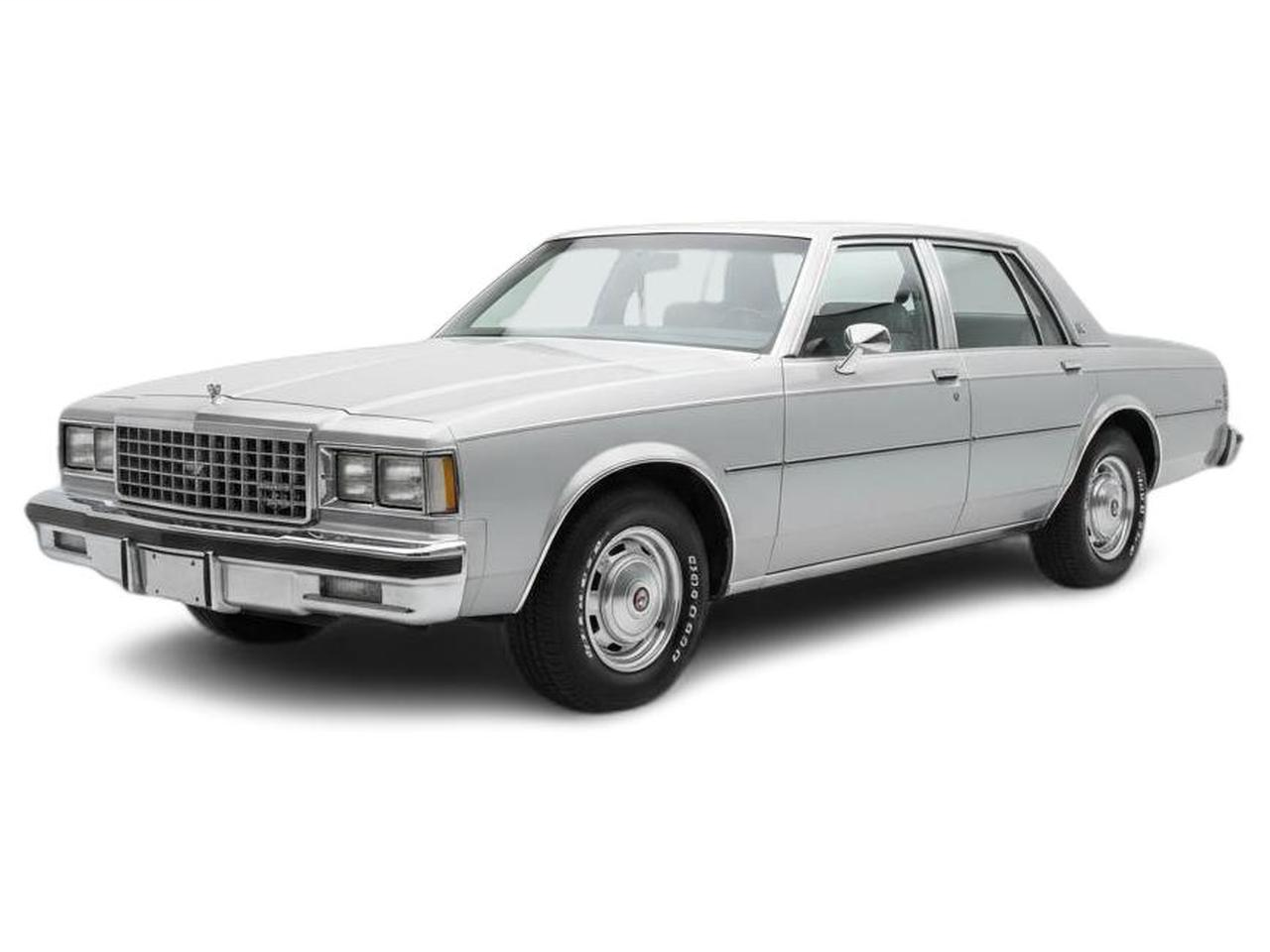
The 1983 Chevrolet Caprice, part of the iconic RWD Caprice lineage spanning 1977-1996, was a quintessential American full-size sedan. Available predominantly as a 4-door sedan and a station wagon, it represented the pinnacle of comfortable, spacious motoring. Key trims included the standard Caprice and the more upscale Caprice Classic. Its enduring popularity stemmed from its imposing presence, plush ride, and excellent value proposition for families and highway cruising.
The Good
The 1983 Caprice offered a supremely comfortable ride, ample interior space, and a smooth, powerful engine. Its classic, dignified design appeals to nostalgia, while its robust build and straightforward mechanics make it a practical and reliable choice for daily driving or long trips.
The Bad
Potential weaknesses include rust, particularly in the lower body panels and wheel wells. Older examples may suffer from aging fuel systems, carburetor issues, and worn suspension components. The V8 engines, while generally robust, can develop oil leaks and exhaust manifold problems.
1983 Chevrolet Caprice: Quick Overview
- Engine Options: The 1983 Chevrolet Caprice was primarily offered with two V8 engine options.
- Base Engine: A 305 cubic inch (5.0L) V8 engine was standard.
- Optional Engine: A larger 350 cubic inch (5.7L) V8 engine was available, particularly for the station wagon models, often designated as the 'Z' engine for police/heavy-duty use.
- Horsepower: The 305 V8 typically produced around 140-150 horsepower, while the 350 V8 offered a bit more, in the vicinity of 160-170 horsepower. Exact figures varied slightly depending on emissions equipment and specific tuning for the year.
- Fuel Economy: Fuel economy was not a strong suit of these vehicles, as expected for a large, RWD American car of this era. Owners typically reported city mileage in the range of 14-17 MPG and highway mileage around 18-22 MPG.
- 0-60 Times: Acceleration was leisurely rather than sporty. A 0-60 mph time would likely be in the 10-13 second range, depending on the engine, rear axle ratio, and vehicle load.
- Towing Capacity: While not explicitly advertised for general consumer use, Caprice wagons equipped with the optional towing package and the 350 V8 could handle moderate towing duties, likely in the range of 3,500 to 5,000 pounds, but this was not a primary design focus.
- Trim-Level Features (Caprice Classic): The Caprice Classic typically included a higher level of standard equipment than the base Caprice. Features often included upgraded upholstery (plaid or velour), more extensive exterior chrome trim, a padded vinyl roof, power windows and locks (often standard on higher trims), automatic climate control, upgraded sound systems with more speakers, and a more luxurious dashboard layout. Both sedan and wagon body styles were available in the Classic trim.
1983 Chevrolet Caprice Specifications
Vehicle Information
| Year | 1983 |
| Make | Chevrolet |
| Model | Caprice |
| Trim | - |
| Style | - |
| Type | Sedan |
| Category | Compact Car |
Manufacturing Details
| Made In | Canada |
| Manufacturing City | OSHAWA |
Dimensions
| Doors | 4-Door |
| Curb Weight | - |
| Gross Vehicle Weight Rating | - |
| Overall Height | - |
| Overall Length | - |
| Overall Width | - |
| Wheelbase Length | - |
| Standard Seating | - |
Engine & Performance
| Engine | 3.8 L V-6 |
| Engine Size | 3.8L |
| Engine Cylinders | 6 |
| Transmission | - |
| Transmission Type | - |
| Transmission Speeds | - |
| Drivetrain | Rear-Wheel Drive |
Additional Features
| Anti-Brake System | - |
| Steering Type | - |
Pricing
| Manufacturer Suggested Retail Price (MSRP) | - |
| Invoice Price | - |
| Delivery Charges | - |
Vehicle History Report
Vehicle
Specifications
Specifications
Ownership
History
History
All History
Events
Events
NMVTIS Title
History Check
History Check
Salvage/Rebuilt
Check
Check
Accident
Check
Check
Theft
Check
Check
Open Lien
Check
Check
Past Sale
Listings
Listings
Safety
Recalls
Recalls
Odometer
Check
Check
Market Price
Analysis
Analysis
What Problems Does the 1983 Chevrolet Caprice Have?
The 1983 Chevrolet Caprice, like many vehicles of its era, is susceptible to certain age-related issues. One of the most common problems is rust, especially in areas with harsh winters. The rocker panels, rear quarter panels, door bottoms, and floor pans are prime locations for corrosion. Owners should thoroughly inspect these areas. The fuel system can also be a source of trouble; fuel pumps, sending units, and carburetor issues are not uncommon as components age and degrade. The Rochester Quadrajet carburetor, while generally reliable, can become finicky and require rebuilding or tuning.
Electrical issues can also arise, particularly with wiring harnesses that have become brittle or corroded over time. Headlight switches, turn signal assemblies, and dashboard warning lights are common culprits. The cooling system, including radiators, water pumps, and heater cores, may need attention, especially if maintenance has been neglected.
Suspension and steering components, such as ball joints, tie rod ends, and bushings, will eventually wear out, leading to sloppy handling and potential safety concerns. The rear axle, while generally robust, can develop leaks from the axle seals.
While specific recalls for the 1983 model year are not extensively documented in readily available databases, general recalls for the B-body platform of that era might have included issues like potential brake system problems or minor electrical faults. Long-term reliability is highly dependent on the vehicle's maintenance history. A well-maintained 1983 Caprice can be surprisingly dependable, but neglected examples will likely require significant investment to bring them up to par. Specific to the 1983 model year, there were no major widespread mechanical overhauls or significant departures from preceding years that would indicate unique widespread failures for that specific year compared to its immediate neighbors in the Caprice lineage.
Electrical issues can also arise, particularly with wiring harnesses that have become brittle or corroded over time. Headlight switches, turn signal assemblies, and dashboard warning lights are common culprits. The cooling system, including radiators, water pumps, and heater cores, may need attention, especially if maintenance has been neglected.
Suspension and steering components, such as ball joints, tie rod ends, and bushings, will eventually wear out, leading to sloppy handling and potential safety concerns. The rear axle, while generally robust, can develop leaks from the axle seals.
While specific recalls for the 1983 model year are not extensively documented in readily available databases, general recalls for the B-body platform of that era might have included issues like potential brake system problems or minor electrical faults. Long-term reliability is highly dependent on the vehicle's maintenance history. A well-maintained 1983 Caprice can be surprisingly dependable, but neglected examples will likely require significant investment to bring them up to par. Specific to the 1983 model year, there were no major widespread mechanical overhauls or significant departures from preceding years that would indicate unique widespread failures for that specific year compared to its immediate neighbors in the Caprice lineage.
How long will the 1983 Chevrolet Caprice last?
With diligent maintenance, a 1983 Chevrolet Caprice can comfortably exceed 200,000 miles and potentially reach 250,000 miles or more. The V8 engines, especially the 305 and 350 cubic inch units, are known for their durability and can last for hundreds of thousands of miles if oil changes are regular and cooling systems are maintained. Body-on-frame construction contributes to overall longevity. However, rust remains the primary nemesis of long-term survival, often dictating the vehicle's lifespan more than mechanical wear. Neglected maintenance, particularly concerning the transmission and cooling system, can lead to premature component failure, significantly shortening its service life. Properly cared-for examples demonstrate remarkable longevity.
What Technology & Safety Features are Included?
The 1983 Chevrolet Caprice was designed with comfort and practicality in mind, so its technology and safety features reflected the standards of the early 1980s. Built-in tech was relatively rudimentary by today's standards. Entertainment typically consisted of an AM/FM radio, with an optional cassette tape player being a significant upgrade. Some models might have featured power windows and power door locks as optional equipment, adding a touch of convenience.
Driver-assistance features were virtually nonexistent. There were no electronic aids like ABS (Anti-lock Braking System), traction control, or cruise control was a common, but not universal, option. The primary focus was on mechanical systems.
Safety features were basic but important for the time. Standard safety equipment included seat belts (lap and shoulder belts for front passengers, lap belts for rear), padded dashboards, collapsible steering columns, and a strong steel frame construction. Side-impact door beams were becoming more common in vehicles of this era, contributing to occupant protection in side collisions.
Crash-test ratings for vehicles of this vintage are not directly comparable to modern standards and were often less stringent. While specific official crash-test data for the 1983 Caprice might be scarce or incomplete by current NHTSA (National Highway Traffic Safety Administration) metrics, it was built to meet the safety regulations of its time, which emphasized structural integrity and occupant restraint systems. The sheer mass and robust construction of the Caprice offered a degree of passive safety through its size and inherent strength, though active safety systems were minimal.
Driver-assistance features were virtually nonexistent. There were no electronic aids like ABS (Anti-lock Braking System), traction control, or cruise control was a common, but not universal, option. The primary focus was on mechanical systems.
Safety features were basic but important for the time. Standard safety equipment included seat belts (lap and shoulder belts for front passengers, lap belts for rear), padded dashboards, collapsible steering columns, and a strong steel frame construction. Side-impact door beams were becoming more common in vehicles of this era, contributing to occupant protection in side collisions.
Crash-test ratings for vehicles of this vintage are not directly comparable to modern standards and were often less stringent. While specific official crash-test data for the 1983 Caprice might be scarce or incomplete by current NHTSA (National Highway Traffic Safety Administration) metrics, it was built to meet the safety regulations of its time, which emphasized structural integrity and occupant restraint systems. The sheer mass and robust construction of the Caprice offered a degree of passive safety through its size and inherent strength, though active safety systems were minimal.
What Colors Options are Available?
1983 Chevrolet Caprice Prices and Market Value
When new in 1983, the Chevrolet Caprice carried a sticker price that typically ranged from approximately $10,000 to $13,000, depending on body style (sedan or wagon) and trim level (Caprice vs. Caprice Classic) and optional features. Today, the used market for a 1983 Caprice varies widely. Well-maintained, low-mileage examples in excellent condition can fetch anywhere from $5,000 to $10,000 or even more for show-quality vehicles. More common, driver-quality cars with average mileage and some wear might be found for $2,000 to $4,000. Factors significantly affecting resale value include rust, originality, maintenance history, and overall condition. Survivors in their original state are highly prized by collectors, while heavily modified or neglected examples will depreciate significantly from their original value.
1983 Chevrolet Caprice Cost of Ownership
Owning a 1983 Chevrolet Caprice is generally economical for those who can perform some maintenance themselves. Insurance costs are typically very low due to its age and status as a classic/older vehicle, often qualifying for antique or classic car policies. Fuel costs will be moderate to high, given the V8 engines and average fuel economy. Routine maintenance, such as oil changes and tune-ups, is straightforward and affordable. However, repairs for rust, transmission issues, or older electrical components can become costly. Overall, it's not an economical car in terms of fuel consumption, but its low initial purchase price and reasonable parts availability make its long-term ownership manageable for enthusiasts.
1983 Chevrolet Caprice Fuel Efficiency
Fuel Type
Gasoline
Fuel Capacity
-
City Mileage
-
Highway Mileage
-
1983 Chevrolet Caprice Recalls & Defects
Equipment
Recall date
2007-10-24
Recall no.
07e088000
Source
NHTSA
Summary
Certain Honeywell Fram Racing Brand HP4 and HP8 OIL Filters That Were Manufactured From MAY 25, 2006, Through September 14, 2007, and Sold FOR USE AS Replacement Equipment FOR Vehicles List Above. THE Affected Filters ARE Marked With A Date Code A61451 Through A72571 Sequentially. THE Date Code and Part Number Appear ON THE Filter Housing. Fram Racing HP4 and HP8 OIL Filters NOT Bearing A Date Code IN This Range ARE NOT Affected BY This Recall. THE Gasket OF THE OIL Filter Becomes More Pliable Under High Temperatures and Pressures.
Consequence
This Condition MAY Cause Inadequate Sealing and Loss OF Engine Oil, Possibly Resulting IN A Fire.
Remedy
Honeywell Will Replace THE Affected OIL Filters Free OF Charge. THE Recall Began During November 2007. Owners CAN Contact Fram Customer Service Toll-Free AT 1-800-890-2075.
Notes
Customers MAY Contact THE National Highway Traffic Safety Administration's Vehicle Safety Hotline AT 1-888-327-4236 (Tty: 1-800-424-9153); or GO TO Http://Www.safercar.gov.
1983 Chevrolet Caprice Insurance
Insurance for a 1983 Chevrolet Caprice is moderately priced, reflecting its status as a Sedan with strong safety ratings and
reasonable repair costs.
How Does the 1983 Chevrolet Caprice Compare to Other Sedan?
The 1983 Chevrolet Caprice competed in the full-size American sedan segment against rivals like the Ford Crown Victoria/LTD, Mercury Grand Marquis, and the Oldsmobile 88/98, Buick LeSabre/Electra, and Cadillac DeVille.
Performance: The Caprice, with its V8 engines, offered respectable but not thrilling performance, prioritizing smooth cruising over acceleration. Rivals like the Crown Victoria also offered V8 power, often with a slightly firmer suspension feel. Luxury brands like Cadillac offered more powerful engines but at a significantly higher price.
Features: The Caprice Classic aimed for a balance of comfort and available luxury features, comparable to the Grand Marquis and higher trims of its GM siblings. The Ford LTD offered similar amenities. For outright luxury, Cadillac DeVille was in a league of its own.
Reliability: The Caprice was generally considered reliable for its era, with robust mechanicals. However, like all cars from this period, rust was a significant concern, and electrical gremlins could appear. Ford’s Panther platform (Crown Vic/Grand Marquis) was known for its durability and longevity, often considered slightly more robust in terms of chassis and drivetrain longevity, though both brands had their quirks. GM's older, proven V8 engines were generally simpler to work on than some of the more complex systems appearing in luxury competitors.
Price: The Caprice offered excellent value for its size and comfort, positioning itself as a more affordable option than comparable luxury marques. The Ford Crown Victoria and LTD were similarly priced, offering a competitive alternative.
Alternatives: For a similar experience in terms of size and comfort, a Ford Crown Victoria or Mercury Grand Marquis would be very comparable. If seeking more luxury, a Buick LeSabre or Oldsmobile 88 offered a softer ride and more upscale interiors within GM. For a more budget-conscious, smaller but still comfortable option, a Chevrolet Celebrity or Ford Taurus might be considered, though they are a class below in terms of size and stature.
Performance: The Caprice, with its V8 engines, offered respectable but not thrilling performance, prioritizing smooth cruising over acceleration. Rivals like the Crown Victoria also offered V8 power, often with a slightly firmer suspension feel. Luxury brands like Cadillac offered more powerful engines but at a significantly higher price.
Features: The Caprice Classic aimed for a balance of comfort and available luxury features, comparable to the Grand Marquis and higher trims of its GM siblings. The Ford LTD offered similar amenities. For outright luxury, Cadillac DeVille was in a league of its own.
Reliability: The Caprice was generally considered reliable for its era, with robust mechanicals. However, like all cars from this period, rust was a significant concern, and electrical gremlins could appear. Ford’s Panther platform (Crown Vic/Grand Marquis) was known for its durability and longevity, often considered slightly more robust in terms of chassis and drivetrain longevity, though both brands had their quirks. GM's older, proven V8 engines were generally simpler to work on than some of the more complex systems appearing in luxury competitors.
Price: The Caprice offered excellent value for its size and comfort, positioning itself as a more affordable option than comparable luxury marques. The Ford Crown Victoria and LTD were similarly priced, offering a competitive alternative.
Alternatives: For a similar experience in terms of size and comfort, a Ford Crown Victoria or Mercury Grand Marquis would be very comparable. If seeking more luxury, a Buick LeSabre or Oldsmobile 88 offered a softer ride and more upscale interiors within GM. For a more budget-conscious, smaller but still comfortable option, a Chevrolet Celebrity or Ford Taurus might be considered, though they are a class below in terms of size and stature.
Final Verdict: Is the 1983 Chevrolet Caprice a Good Sedan?
The 1983 Chevrolet Caprice is ideal for individuals or families seeking a spacious, comfortable, and classic American cruiser. It's perfect for those who appreciate vintage styling, a smooth ride, and a straightforward mechanical layout. It is absolutely worth buying, but primarily as a used vehicle, given its age. Buyers should focus on well-maintained examples, prioritizing those with minimal rust and a documented maintenance history. The Caprice Classic trim offers a more luxurious experience and is generally the preferred choice for those seeking comfort. It is an excellent project car for restoration enthusiasts or a reliable daily driver for someone who values comfort and has a tolerance for older vehicle quirks and a less-than-stellar fuel economy.
