
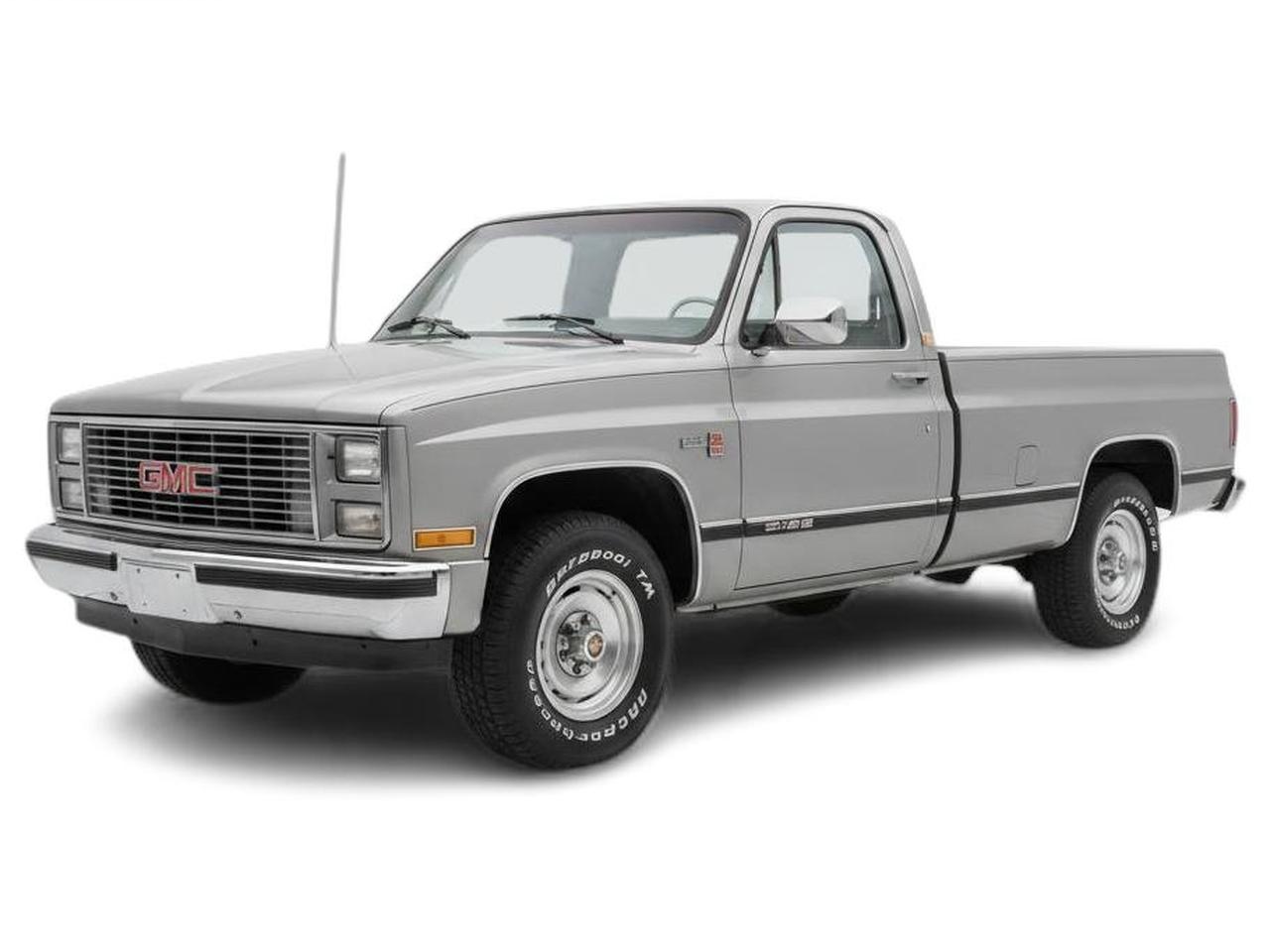
The Good
The 1988 GMC Sierra offers proven reliability and strong performance, especially with its V8 options. Its sturdy construction provides a sense of security, while the comfortable interior, improved over previous generations, appeals to everyday drivers. This truck represents excellent value, offering robust utility for practical needs and a classic, appealing design for emotional connection.
The Bad
Potential weaknesses for the 1988 GMC Sierra include rust, particularly around wheel wells and rocker panels, and aging electrical components. Transmission issues can arise with high mileage, and the braking system may require attention on older units. Interior wear and tear is also common, as are potential vacuum leaks affecting climate control.
1988 GMC Sierra: Quick Overview
- Engine Options: The 1988 GMC Sierra offered a range of engine choices to suit various needs:
- 4.3L V6 (VIN Z): 160 horsepower @ 4,000 rpm, 230 lb-ft of torque @ 2,400 rpm
- 5.0L V8 (VIN H): 155 horsepower @ 4,000 rpm, 240 lb-ft of torque @ 2,400 rpm (Throttle Body Injection)
- 5.7L V8 (VIN 7): 210 horsepower @ 4,400 rpm, 300 lb-ft of torque @ 2,800 rpm (Throttle Body Injection)
- 5.7L V8 (VIN 8 - Tuned Port Injection): 230 horsepower @ 4,400 rpm, 330 lb-ft of torque @ 2,800 rpm
- 7.4L V8 (VIN 1): 230 horsepower @ 4,000 rpm, 380 lb-ft of torque @ 2,400 rpm (Available on 3/4 ton and 1 ton models)
- Horsepower: Ranged from approximately 155 hp to 230 hp depending on the engine and fuel delivery system.
- Fuel Economy: Varies significantly based on engine, transmission, and drivetrain. For example, a 4.3L V6 might achieve around 15-17 mpg city and 18-20 mpg highway, while V8s would be lower. Official EPA ratings for this specific model year are scarce, but general estimates place them in this range.
- 0-60 Times: Again, highly dependent on configuration. A V8-equipped Sierra could achieve 0-60 mph in roughly 8-10 seconds, while V6 models would be slower, potentially in the 10-12 second range.
- Towing Capacity: Significant, especially on heavy-duty models. Properly equipped Sierras could tow well over 7,000 lbs, with some configurations rated for up to 10,000 lbs or more, depending on axle ratio, engine, and chassis.
- Trim-Level Features:
- Base/Work Truck: Minimalist interior, vinyl flooring, bench seat, basic AM/FM radio.
- Sierra SL: More amenities like cloth seating, carpeting, upgraded sound system, intermittent wipers, and power windows/locks on some models.
- Sierra SLE: Higher trim with features like cruise control, tilt steering wheel, upgraded interior trim, power mirrors, and often more advanced audio options.
- Optional Features: Air conditioning, anti-lock brakes (rear only initially), towing packages, limited-slip differential, upgraded suspension, power driver's seat, and more premium audio systems were available.
1988 GMC Sierra Specifications
Vehicle Information
| Year | 1988 |
| Make | GMC |
| Model | Sierra |
| Trim | - |
| Style | SLE Truck 4WD 4MT 5.7L V8 |
| Type | Pickup Truck |
| Category | passenger |
Manufacturing Details
| Made In | Canada |
| Manufacturing City | OSHAWA TRUCK |
Dimensions
| Doors | 2-Door |
| Curb Weight | - |
| Gross Vehicle Weight Rating | - |
| Overall Height | - |
| Overall Length | - |
| Overall Width | - |
| Wheelbase Length | - |
| Standard Seating | - |
Engine & Performance
| Engine | 5.7L V8 |
| Engine Size | 5.7L |
| Engine Cylinders | 8 |
| Transmission | 4-Speed Manual |
| Transmission Type | Manual |
| Transmission Speeds | 4-Speed |
| Drivetrain | Four-Wheel Drive |
Additional Features
| Anti-Brake System | - |
| Steering Type | - |
Pricing
| Manufacturer Suggested Retail Price (MSRP) | - |
| Invoice Price | - |
| Delivery Charges | - |
Vehicle History Report
Specifications
History
Events
History Check
Check
Check
Check
Check
Listings
Recalls
Check
Analysis
What Problems Does the 1988 GMC Sierra Have?
Electrical gremlins are also frequently reported. This can manifest as flickering dashboard lights, malfunctioning power windows and locks, or issues with the HVAC system controls. The complex wiring harnesses can degrade over time, leading to intermittent problems.
The automatic transmissions, particularly the 4L60 and 4L80E (though the latter was more prevalent in later years), can develop wear. Problems may include slipping gears, delayed engagement, or complete failure, often due to a lack of regular fluid changes or overheating.
Engine-wise, while generally robust, issues like intake manifold gasket leaks (on some Vortec engines, though less common in '88) and worn valve seals can lead to oil consumption or rough idling. The fuel injection systems, typically Throttle Body Injection (TBI) in '88, can sometimes experience clogged injectors or failing fuel pumps.
While there were recalls for the broader C/K truck line during this era, specific widespread, critical recalls for the 1988 model year that significantly impacted long-term reliability are not extensively documented beyond common safety issues like brake components or emissions system adjustments. However, it is always advisable to check VIN-specific recall information.
Long-term reliability is generally strong if the truck has been well-maintained. The robust V8 engines and sturdy chassis are built to last. However, neglecting maintenance, particularly fluid changes and addressing minor issues promptly, can accelerate wear and lead to more significant repairs. Many owners report these trucks exceeding 200,000 miles with proper care.
How long will the 1988 GMC Sierra last?
What Technology & Safety Features are Included?
Driver-assistance features were virtually non-existent in the modern sense. Cruise control was an available option on higher trim levels, providing a degree of convenience for highway driving.
Safety features were also basic. Standard equipment included lap and shoulder belts. For 1988, anti-lock braking systems (ABS) were becoming available, but typically only for the rear wheels, offering some enhancement to braking control, especially in emergency situations. Airbags were not yet standard or widely available on pickup trucks of this era.
Optional features that enhanced comfort and perceived safety included power windows and door locks, which were becoming more common, particularly on SL and SLE trims. A tilt steering wheel could also be found on some models.
Crash-test ratings for vehicles from 1988 are not directly comparable to modern NHTSA or IIHS standards. The Insurance Institute for Highway Safety (IIHS) did not begin its current testing regime until the early 2000s. The National Highway Traffic Safety Administration (NHTSA) conducted some crash testing, but data for specific 1988 pickup models is often limited or not publicly accessible in a standardized format. Generally, trucks of this era were built with body-on-frame construction, offering a degree of inherent structural integrity, but lacked the advanced crumple zones, side-impact protection, and airbag systems that define modern vehicle safety.
What Colors Options are Available?
1988 GMC Sierra Prices and Market Value
Currently, used market prices for a 1988 GMC Sierra can range from as low as $2,000 for a project truck needing extensive work, to $5,000-$10,000 for a well-maintained example in good condition, and upwards of $15,000+ for exceptionally pristine or highly sought-after trims.
The depreciation curve for the 1988 Sierra has long since plateaued. While most have depreciated significantly from their original MSRP, well-maintained examples, especially those with lower mileage and desirable V8 engines, are holding their value or even appreciating slightly as classic and reliable workhorses. Factors affecting resale value include rust (a major detractor), overall mechanical condition, mileage, original paint condition, interior wear, and the presence of desirable options like the 5.7L or 7.4L V8 engines.
1988 GMC Sierra Cost of Ownership
1988 GMC Sierra Fuel Efficiency
1988 GMC Sierra Warranty
Basic
Powertrain
Rust
1988 GMC Sierra Insurance
reasonable repair costs.
How Does the 1988 GMC Sierra Compare to Other Pickup Truck?
Performance: Compared to its rivals, the Sierra's V8 engine options provided competitive power and torque. The 5.7L and 7.4L V8s offered robust towing and hauling capabilities, matching or exceeding many F-150s and Rams of the time. Fuel economy was generally similar across comparable engine sizes, with V6 options offering slightly better efficiency.
Features: In 1988, features were largely comparable across the board. GMC and Chevrolet typically offered similar interior amenities and optional packages. Ford's F-150 often had a slight edge in available luxury features and engine options, particularly its larger V8s in higher trims. Dodge's offerings, while functional, were sometimes perceived as less refined or feature-rich than GM or Ford. The Sierra's introduction of the GMT400 platform also brought a more aerodynamic and modern design compared to some older Ford and Dodge designs.
Reliability: The 1988 GMC Sierra, and its GM siblings, built a reputation for robust mechanical reliability. While rust is a common concern for all trucks of this vintage, the powertrains themselves are generally very durable. Ford's F-Series of this era also boasted strong reliability, though specific transmission issues could sometimes arise. Dodge Rams were known for their solid construction, but sometimes faced more criticism regarding their interior materials and smaller engine options.
Price: Pricing was highly competitive. GMC Sierras were often priced very similarly to equivalent Chevrolet models. The F-150 could sometimes command a slightly higher price, especially in well-equipped trims. Dodge often positioned its trucks as a slightly more budget-friendly option.
Alternatives:
* Similar: 1988 Chevrolet C/K Pickup (virtually identical).
* Similar: 1988 Ford F-150. A very strong contender with excellent engines and a solid reputation for durability.
* Alternative: For those prioritizing a slightly different feel or brand loyalty, a 1988 Dodge Ram is a viable option, though often considered less refined.
Given the context of 1988, the Sierra was a top-tier choice, holding its own against the best. The primary differentiating factors often came down to brand preference, specific option availability, and local dealer relationships.
Final Verdict: Is the 1988 GMC Sierra a Good Pickup Truck?
Whether it's worth buying depends heavily on condition. A well-maintained 1988 Sierra, especially with a V8 engine, is an excellent value proposition in the used market. However, any truck showing significant rust, particularly on the frame or major body panels, should be approached with extreme caution or avoided, as repair costs can quickly outweigh the vehicle's worth.
It is worth buying as a used vehicle. Specific trims like the SLX or SLE offer more comfort and features, making them better daily drivers. For pure utility, a base Sierra remains highly capable. It is not a vehicle to buy new, given its age, but as a well-preserved used example, it offers a robust and often affordable path to truck ownership.

Jovan
Jovan specializes in interpreting vehicle records and making sense of VIN data. With over 10 years of experience in the automotive data industry, his work ensures that every report is clear, accurate, and useful for car buyers.