
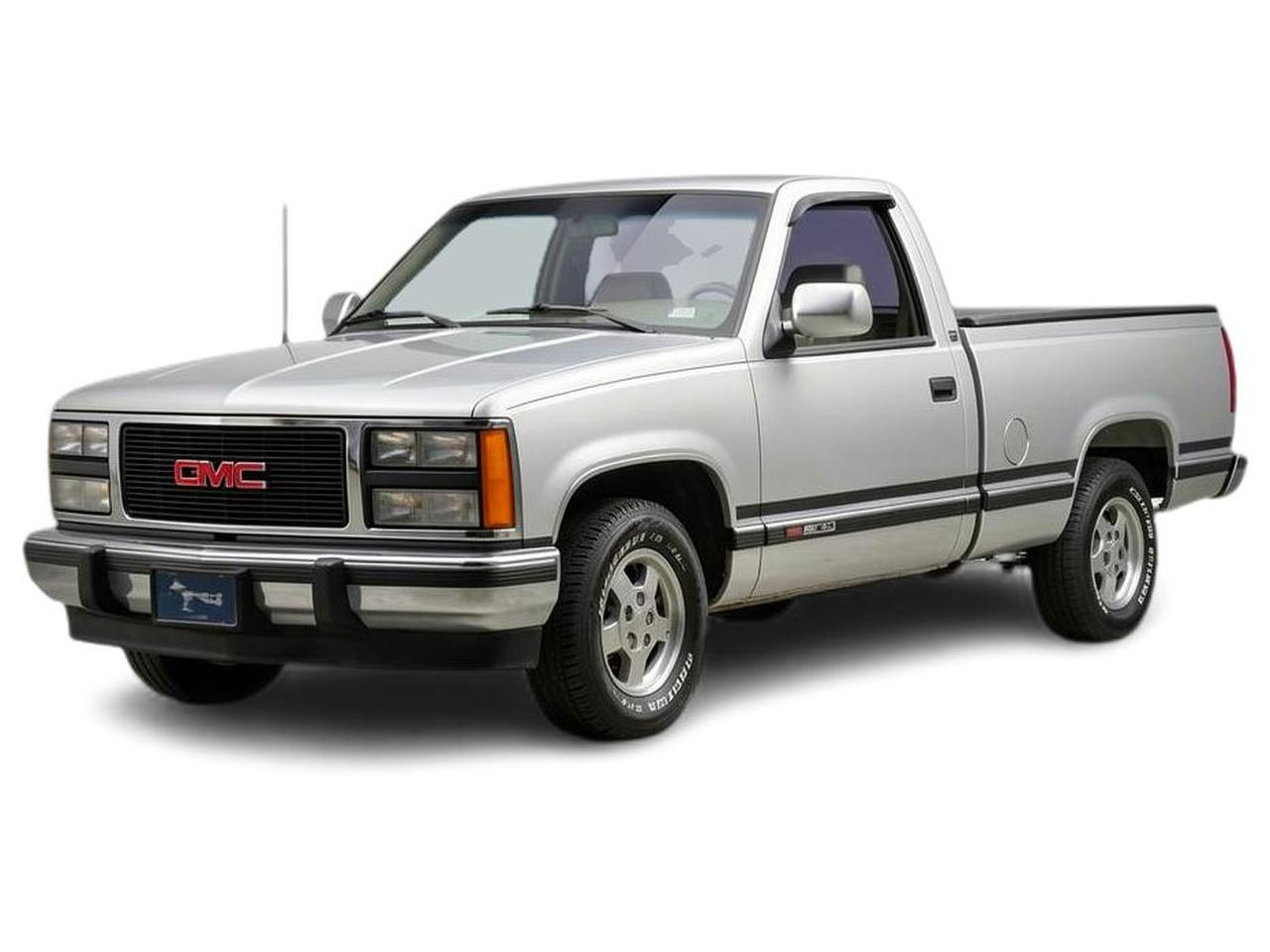
The Good
The 1992 GMC Sierra boasts impressive towing and hauling prowess, a reputation for rock-solid reliability, and a comfortable ride for its class. Its classic, muscular design appeals to traditional truck buyers, while its durable nature and strong value proposition satisfy the practical demands of owners looking for a dependable workhorse.
The Bad
Potential buyers should watch for rust, particularly on the rocker panels, cab corners, and rear wheel arches. Electrical gremlins, such as issues with the instrument cluster or power windows, can also surface. Older models may also exhibit wear and tear on suspension components and interior materials.
1992 GMC Sierra: Quick Overview
- Engine Options: The 1992 GMC Sierra was available with a range of robust gasoline engines. The standard engine was typically the 4.3L V6. For more power, buyers could opt for the 5.0L V8 or the larger 5.7L V8. A 6.5L V8 diesel engine was also an option for those prioritizing torque and fuel economy in heavy-duty applications.
- Horsepower: Horsepower figures varied depending on the engine and drivetrain. The 4.3L V6 generally produced around 160 horsepower. The 5.0L V8 offered approximately 175-180 horsepower, while the 5.7L V8 pushed out around 195-205 horsepower. The 6.5L V8 diesel typically delivered around 180-190 horsepower and significantly more torque.
- Fuel Economy: Fuel economy was not a primary strong suit for trucks of this era, especially V8-powered models. Expect figures in the range of 14-17 MPG city and 17-21 MPG highway for V6 models, with V8s often falling into the 12-15 MPG city and 16-19 MPG highway range. The diesel option offered slightly better mileage, particularly for highway cruising.
- 0-60 Times: Acceleration varied significantly with engine choice and configuration. A typical 4.3L V6 model might reach 60 mph in around 9-10 seconds. V8-powered Sierras, especially the 5.7L, could achieve this in the 8-9 second range. These figures are approximate and can be affected by factors like payload, towing, and transmission type.
- Towing Capacity: The 1992 GMC Sierra was built for towing and hauling. Depending on the configuration, axle ratio, and engine, towing capacities could range from around 5,000 lbs for lighter duty models up to 7,000-10,000+ lbs for properly equipped heavy-duty (2500/3500 series) trucks.
- Trim-Level Features:
- Sierra: Base models offered essential features like vinyl or cloth seats, a basic stereo, manual windows and locks, and a durable interior.
- SLE (Special Luxury Equipment): This trim typically added power windows and locks, upgraded interior fabrics, cruise control, a better sound system, and sometimes alloy wheels.
- Sierra GT (less common for 1992, more prominent in later years): Often featured sportier suspension, unique badging, and enhanced interior appointments.
Standard features across trims often included power steering, anti-lock brakes (ABS) on rear wheels, and a tilt steering wheel.
1992 GMC Sierra Specifications
Vehicle Information
| Year | 1992 |
| Make | GMC |
| Model | Sierra |
| Trim | - |
| Style | SLE Truck 4WD 4AT 4.3L V6 |
| Type | Pickup Truck |
| Category | passenger |
Manufacturing Details
| Made In | United States |
| Manufacturing City | PONTIAC |
Dimensions
| Doors | 2-Door |
| Curb Weight | 3800 pounds |
| Gross Vehicle Weight Rating | - |
| Overall Height | 70 inches |
| Overall Length | 194 inches |
| Overall Width | 79 inches |
| Wheelbase Length | 117.5 inches |
| Standard Seating | 2 |
Engine & Performance
| Engine | 4.3L V6 |
| Engine Size | 4.3L |
| Engine Cylinders | 6 |
| Transmission | 4-Speed Automatic |
| Transmission Type | Automatic |
| Transmission Speeds | 4-Speed |
| Drivetrain | Four-Wheel Drive |
Additional Features
| Anti-Brake System | 4-Wheel ABS |
| Steering Type | Recirculating Ball |
Pricing
| Manufacturer Suggested Retail Price (MSRP) | $20,000 |
| Invoice Price | $18,500 |
| Delivery Charges | $800 |
Vehicle History Report
Specifications
History
Events
History Check
Check
Check
Check
Check
Listings
Recalls
Check
Analysis
What Problems Does the 1992 GMC Sierra Have?
In terms of mechanicals, the engines themselves (particularly the V8s and the 4.3L V6) are typically very durable. However, issues can arise with specific components over time. Some owners report problems with the intake manifold gaskets, leading to coolant leaks. The fuel pump is another component that may require replacement due to age. The transmission, whether automatic or manual, is generally strong, but wear and tear can lead to shifting issues or failure in high-mileage or abused examples. For models equipped with the 6.5L diesel engine, issues can include injector pump failures and overheating if not properly maintained.
Electrical gremlins are not uncommon in vehicles of this vintage. The instrument cluster is a frequent culprit, with gauges failing or the entire cluster going dark. Issues with power windows, door locks, and the HVAC blower motor are also reported. The ABS system, particularly the rear-wheel-only ABS found on many early GMT400 trucks, can sometimes develop faults. While specific recalls for the 1992 model year are less common compared to newer vehicles, it's always advisable to check the National Highway Traffic Safety Administration (NHTSA) database for any applicable safety recalls. Long-term reliability hinges heavily on consistent maintenance. Regular fluid changes, a diligent approach to addressing rust when it appears, and proactive replacement of wear items will significantly extend the life of a 1992 Sierra.
How long will the 1992 GMC Sierra last?
What Technology & Safety Features are Included?
Driver-assistance features were virtually non-existent in the modern sense. Cruise control was an available option on many models. Rear-wheel anti-lock braking system (ABS) was a notable safety feature, primarily designed to prevent rear wheel lock-up during braking, enhancing stability. Standard safety equipment included three-point seatbelts for front occupants and a reinforced cab designed to offer occupant protection. Airbags were not standard equipment in 1992 for this vehicle; this feature became mandatory on passenger vehicles later.
Optional features could include air conditioning (a must-have for many), a tilt steering wheel for better driver ergonomics, and potentially a tachometer for performance-oriented buyers. Some models might have offered upgraded interior materials and seating options. Dedicated driver-assistance systems, such as lane departure warning, automatic emergency braking, or adaptive cruise control, were not available. Crash-test ratings for trucks of this period are not as comprehensive or standardized as they are for modern vehicles. However, the GMT400 platform was known for its strong frame and relatively robust construction for its time. While official NHTSA or IIHS ratings for this specific year and model might be limited or unavailable, general reviews of the platform often highlighted its substantial build quality.
What Colors Options are Available?
1992 GMC Sierra Prices and Market Value
1992 GMC Sierra Cost of Ownership
1992 GMC Sierra Fuel Efficiency
1992 GMC Sierra Warranty
Basic
Powertrain
Rust
1992 GMC Sierra Insurance
reasonable repair costs.
How Does the 1992 GMC Sierra Compare to Other Pickup Truck?
Features-wise, all these trucks offered similar levels of interior comfort and convenience for the early 90s, with higher trims providing power amenities and upgraded upholstery. However, none of them boasted the advanced technology found in modern trucks. Price-wise, they were all in a similar ballpark when new, with differences often coming down to specific packages and dealer incentives. In the used market, the Sierra and its Chevrolet counterpart often represent excellent value due to their strong reliability. Ford F-150s of this era are also popular and offer good performance and capability, though some owners report more electrical issues. The Dodge Ram, while stylish, historically had a reputation for being less reliable than its GM and Ford counterparts during this period.
Alternatives:
- Chevrolet C/K Pickup (Silverado): Essentially mechanically identical to the GMC Sierra, offering the same strengths in reliability and performance. Often a slightly more accessible price point in the used market.
- Ford F-150: A very strong competitor with potent engine options and good towing. Reliability is generally good, but some specific models or years might have more reported issues than the GMT400 trucks.
- Dodge Ram: While offering a distinct styling, earlier Rams from this generation often lagged behind GM and Ford in overall reliability and build quality.
For those prioritizing proven reliability and a solid work ethic, the 1992 GMC Sierra and its Chevrolet counterpart are excellent choices. The Ford F-150 is a very close second, offering comparable capability.
Final Verdict: Is the 1992 GMC Sierra a Good Pickup Truck?

Drew B
Drew is a seasoned automotive expert and contributor to VinCheck.info. With nearly 15 years of experience as a former Porsche technician, he brings a wealth of hands-on knowledge to his writing. Born in North Carolina, a region renowned for its deep-rooted NASCAR culture, Drew developed a passion for cars early in life, often building and working on vehicles from a young age. At VINCheck, Drew leverages his extensive technical background to provide in-depth analyses of various vehicles. His articles often focus on engine performance, reliability, and maintenance insights, offering readers practical information grounded in real-world experience. Some of his notable contributions include reviews on the Mazda CX-5's longevity and detailed examinations of engine options for models like the 2011 Toyota Camry and Tacoma