
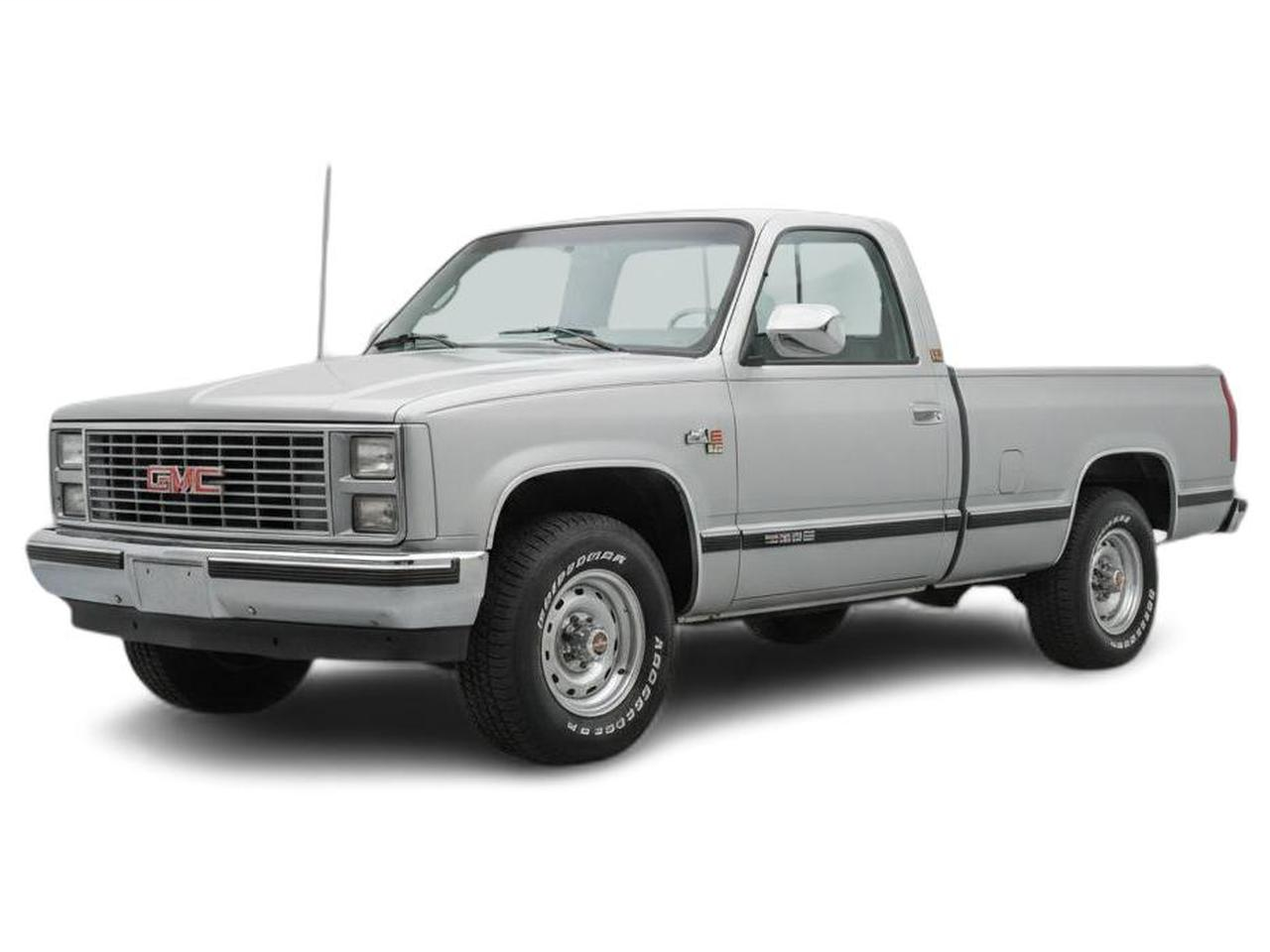
The 1989 GMC Sierra, part of the second generation of the C/K truck line (1988-1998), is a full-size pickup truck celebrated for its robust build and enduring utility. Available in Regular Cab, Extended Cab, and Crew Cab body styles, key trims included the base Sierra, SLE, and the off-road focused Sierra Classic. New pricing ranged from approximately $14,000 to $25,000. Its popularity stems from its reputation for reliability, strong V8 engine options, and a no-nonsense, functional design that appealed to both work and personal use.
The Good
The 1989 GMC Sierra excels in raw performance with potent V8s, legendary reliability, and a surprisingly comfortable ride for its era. Its classic, rugged design evokes a sense of dependability, offering immense practical value and emotional appeal for those who appreciate tough, honest trucks.
The Bad
Owners should watch out for potential rust issues, particularly on the body panels, frame, and exhaust system. Electrical gremlins, aging interior components, and wear on suspension parts are also common concerns for a vehicle of this age.
1989 GMC Sierra: Quick Overview
- Engine Options:
- 4.3L V6 (LB4): 160 horsepower @ 4000 rpm, 230 lb-ft torque @ 2800 rpm
- 5.0L V8 (LO3): 170 horsepower @ 4000 rpm, 255 lb-ft torque @ 2400 rpm
- 5.7L V8 (L05): 210 horsepower @ 4000 rpm, 300 lb-ft torque @ 2400 rpm
- 7.4L V8 (L19): (Optional in some configurations) Approximately 230 horsepower, 370 lb-ft torque
- Transmission:
- 4-speed manual
- 5-speed manual
- 4-speed automatic (TH400, 700R4/4L60)
- Fuel Economy (EPA estimates, highly variable):
- V6: Around 16-18 MPG city / 20-22 MPG highway
- 5.0L V8: Around 14-16 MPG city / 18-20 MPG highway
- 5.7L V8: Around 13-15 MPG city / 17-19 MPG highway
- 0-60 Times:
- Estimated between 8-11 seconds, depending heavily on engine, drivetrain (RWD/4WD), and configuration.
- Towing Capacity:
- Varies significantly by configuration, rear-end ratio, and engine. Can range from approximately 4,000 lbs for light-duty models up to over 10,000 lbs for heavy-duty configurations (often designated as 2500 or 3500 series).
- Trim-Level Features:
- Sierra: Base model with essential features, vinyl or cloth seating, manual windows/locks, AM/FM radio.
- SLE: Mid-level trim offering upgraded interior materials, power windows/locks, cruise control, better sound system, often chrome accents.
- Sierra Classic (often designated for certain configurations): May include specific styling cues or enhanced off-road packages, depending on the specific sub-model.
- Optional Features: Air conditioning, tilt steering wheel, rear step bumper, anti-lock brakes (ABS - typically rear-wheel only), upgraded sound systems, alloy wheels, bed liners.
1989 GMC Sierra Specifications
Vehicle Information
| Year | 1989 |
| Make | GMC |
| Model | Sierra |
| Trim | - |
| Style | SLE Truck 4WD 4AT 5.7L V8 |
| Type | Pickup Truck |
| Category | passenger |
Manufacturing Details
| Made In | United States |
| Manufacturing City | PONTIAC |
Dimensions
| Doors | 2-Door |
| Curb Weight | - |
| Gross Vehicle Weight Rating | - |
| Overall Height | - |
| Overall Length | - |
| Overall Width | - |
| Wheelbase Length | - |
| Standard Seating | 3 |
Engine & Performance
| Engine | 5.7L V8 |
| Engine Size | 5.7L |
| Engine Cylinders | 8 |
| Transmission | 4-Speed Automatic |
| Transmission Type | Automatic |
| Transmission Speeds | 4-Speed |
| Drivetrain | Four-Wheel Drive |
Additional Features
| Anti-Brake System | - |
| Steering Type | - |
Pricing
| Manufacturer Suggested Retail Price (MSRP) | - |
| Invoice Price | - |
| Delivery Charges | - |
Vehicle History Report
Vehicle
Specifications
Specifications
Ownership
History
History
All History
Events
Events
NMVTIS Title
History Check
History Check
Salvage/Rebuilt
Check
Check
Accident
Check
Check
Theft
Check
Check
Open Lien
Check
Check
Past Sale
Listings
Listings
Safety
Recalls
Recalls
Odometer
Check
Check
Market Price
Analysis
Analysis
What Problems Does the 1989 GMC Sierra Have?
The 1989 GMC Sierra, being part of the GMT400 platform, is generally known for its robust construction, but like any vehicle of this vintage, it has common issues to consider. One of the most prevalent concerns is rust. This can manifest on the rocker panels, cab corners, wheel arches, and the frame itself, especially in regions with harsh winters or high humidity. Thorough inspection of these areas is crucial. Electrical gremlins are also frequently reported. This can include issues with the gauge cluster malfunctioning, power windows and locks becoming slow or inoperative, and problems with the HVAC blower motor or controls. The complex wiring harnesses of the era can degrade over time, leading to intermittent faults. The Vortec V8 engines (like the 5.7L L05) are generally reliable, but issues such as intake manifold gasket leaks, worn valve seals leading to oil consumption, and problems with the cooling system (radiator, water pump, thermostat) can arise. Transmission issues, particularly with the 700R4/4L60 automatic, can include slipping gears, harsh shifting, or failure to engage drive, often due to wear on clutches or torque converter problems. While specific recalls for the 1989 model year might be limited, general maintenance and common wear items are the primary long-term reliability concerns. Early models of the GMT400 platform sometimes experienced issues with the dashboard cracking due to sun exposure, though this may be less pronounced by 1989. Overall, while the mechanical components are often durable, age-related wear on seals, rubber hoses, suspension components, and body integrity are the primary areas requiring attention for long-term reliability.
How long will the 1989 GMC Sierra last?
With proper and consistent maintenance, a 1989 GMC Sierra can reasonably be expected to reach or exceed 200,000 miles. Many well-maintained examples have surpassed 250,000 miles, showcasing their inherent durability. The long-term durability is largely dependent on the owner's commitment to preventative maintenance, such as regular oil changes, fluid flushes, and addressing minor issues promptly. However, the primary weaknesses that emerge over time are typically related to rust and electrical system degradation. These age-related factors can shorten the practical service life if not meticulously managed. Despite these potential issues, the core mechanicals, particularly the V8 engines and robust chassis, are known for their longevity, making them capable of years of continued service.
What Technology & Safety Features are Included?
The 1989 GMC Sierra represents the technology of its era, meaning features were functional rather than flashy. Standard entertainment typically consisted of an AM/FM radio, with optional upgrades including cassette tape players or more speakers. Air conditioning was a popular option, providing much-needed comfort. Power windows and door locks were also optional, becoming more common on higher trim levels like the SLE. Cruise control was another comfort-oriented option. Driver-assistance features were rudimentary by today's standards; anti-lock brakes (ABS) were available, primarily on rear-wheel-drive models, and primarily focused on improving braking stability, especially during emergency stops. Four-wheel-drive systems offered improved traction in adverse conditions. Safety features included seat belts (three-point belts for front occupants), padded dashboards, and energy-absorbing steering columns. Side-impact door beams were also becoming standard. Crash-test ratings for vehicles from this period are not directly comparable to modern NHTSA or IIHS tests. However, the Sierra's body-on-frame construction and relatively heavy curb weight provided a degree of inherent structural integrity. GMC, as a brand, focused on the core functionality and durability of its trucks, with technology and safety features evolving gradually throughout the model's generation. Advanced electronic systems, multiple airbags, and sophisticated driver aids were not present. The emphasis was on mechanical robustness and essential passenger protection for the time.
What Colors Options are Available?
1989 GMC Sierra Prices and Market Value
When new in 1989, the GMC Sierra had a price range typically from around $14,000 for a base model to upwards of $25,000 for a well-optioned Extended or Crew Cab version. Like most trucks, Sierras experienced significant depreciation in their early years. However, by this age, the depreciation curve has flattened considerably. Current used market prices for a 1989 GMC Sierra can vary widely, ranging from under $2,000 for project trucks needing extensive work to over $10,000 for exceptionally well-maintained, low-mileage examples, especially those with desirable V8 engines or rare trims. Factors significantly affecting resale value include the condition of the body (rust is a major detractor), mechanical condition, mileage, originality, and the presence of desirable factory options or modifications.
1989 GMC Sierra Cost of Ownership
Owning a 1989 GMC Sierra can be surprisingly economical for a full-size truck, especially if purchased at a low price point. Insurance costs are generally moderate, often falling into classic or collector vehicle categories for well-maintained examples. Fuel costs are its most significant ongoing expense, particularly with the V8 engines, averaging 15-20 MPG. Routine maintenance is straightforward and parts are widely available and affordable. Repair costs can escalate if significant rust or major mechanical failures occur, but for common wear items, it's quite manageable. Overall, it's a cost-effective vehicle to own for its utility, provided one is prepared for typical age-related maintenance and potential rust mitigation.
1989 GMC Sierra Fuel Efficiency
Fuel Type
Gasoline
Fuel Capacity
-
City Mileage
16 miles/gallon
Highway Mileage
20 miles/gallon
1989 GMC Sierra Warranty
Basic
Original warranty
0 months / No data
Estimated remaining
Expired
Powertrain
Original warranty
0 months / No data
Estimated remaining
Expired
Rust
Original warranty
0 months / No data
Estimated remaining
Expired
1989 GMC Sierra Insurance
Insurance for a 1989 GMC Sierra is moderately priced, reflecting its status as a Pickup Truck with strong safety ratings and
reasonable repair costs.
How Does the 1989 GMC Sierra Compare to Other Pickup Truck?
The 1989 GMC Sierra competed fiercely against its General Motors sibling, the Chevrolet C/K pickup, which shared most of its mechanicals and platform. Compared to the Ford F-150 and Dodge Ram of the same era, the Sierra often held an edge in perceived refinement and the availability of certain powertrain options.
Performance: GMC's V8 engines, particularly the 5.7L, offered strong towing and hauling capabilities, often rivaling or surpassing the Ford F-150. While horsepower figures might have been comparable across the board, the torque delivery from the GMC V8s was a strong point for practical use.
Features: In 1989, features were relatively similar across major manufacturers. GMC's higher trims like the SLE offered comfortable interiors and amenities that competed well with Ford's XLT and Dodge's LE trims. However, none offered the advanced technology found in modern trucks.
Reliability: The GMT400 platform (which this Sierra is part of) earned a reputation for solid mechanical reliability, particularly the V8 engines. While rust is a common concern for all trucks of this vintage, the Sierra and its Chevy counterpart were often seen as slightly more robust than some contemporary Dodge Rams in terms of long-term mechanical health, provided they were maintained. Ford's F-Series also boasted strong reliability.
Price: New pricing was competitive across the board. On the used market today, the 1989 Sierra offers excellent value, often being more affordable than comparable Ford F-150s or Dodge Rams in similar condition.
Alternatives:
For a buyer seeking a durable, functional full-size pickup from this era, the 1989 GMC Sierra remains a compelling option, offering a great balance of capability, reliability, and value, especially compared to its key rivals.
Performance: GMC's V8 engines, particularly the 5.7L, offered strong towing and hauling capabilities, often rivaling or surpassing the Ford F-150. While horsepower figures might have been comparable across the board, the torque delivery from the GMC V8s was a strong point for practical use.
Features: In 1989, features were relatively similar across major manufacturers. GMC's higher trims like the SLE offered comfortable interiors and amenities that competed well with Ford's XLT and Dodge's LE trims. However, none offered the advanced technology found in modern trucks.
Reliability: The GMT400 platform (which this Sierra is part of) earned a reputation for solid mechanical reliability, particularly the V8 engines. While rust is a common concern for all trucks of this vintage, the Sierra and its Chevy counterpart were often seen as slightly more robust than some contemporary Dodge Rams in terms of long-term mechanical health, provided they were maintained. Ford's F-Series also boasted strong reliability.
Price: New pricing was competitive across the board. On the used market today, the 1989 Sierra offers excellent value, often being more affordable than comparable Ford F-150s or Dodge Rams in similar condition.
Alternatives:
- Chevrolet C/K (1988-1998): Essentially the same truck, often available at slightly lower prices.
- Ford F-150 (1987-1996): A strong contender, known for its robust build and widely available parts.
- Dodge Ram (1981-1993): Offered strong styling and V8 power, though sometimes perceived as less refined or reliable than GM or Ford offerings of the same vintage.
For a buyer seeking a durable, functional full-size pickup from this era, the 1989 GMC Sierra remains a compelling option, offering a great balance of capability, reliability, and value, especially compared to its key rivals.
Final Verdict: Is the 1989 GMC Sierra a Good Pickup Truck?

The 1989 GMC Sierra is ideal for budget-conscious buyers seeking a robust, utilitarian full-size pickup for work, hauling, or as a reliable project vehicle. It's well-suited for individuals who prioritize mechanical durability and straightforward functionality over modern amenities. It is absolutely worth buying, particularly on the used market, if found in good condition. Buying used is the only option, as it's a classic vehicle. Look for examples with minimal rust, especially on the frame and body panels. Higher trim levels like the SLE offer more creature comforts, but the core utility is present across all trims. Prioritize well-maintained examples with documented service history. It represents excellent value for those needing a dependable workhorse or a classic truck to enjoy.