
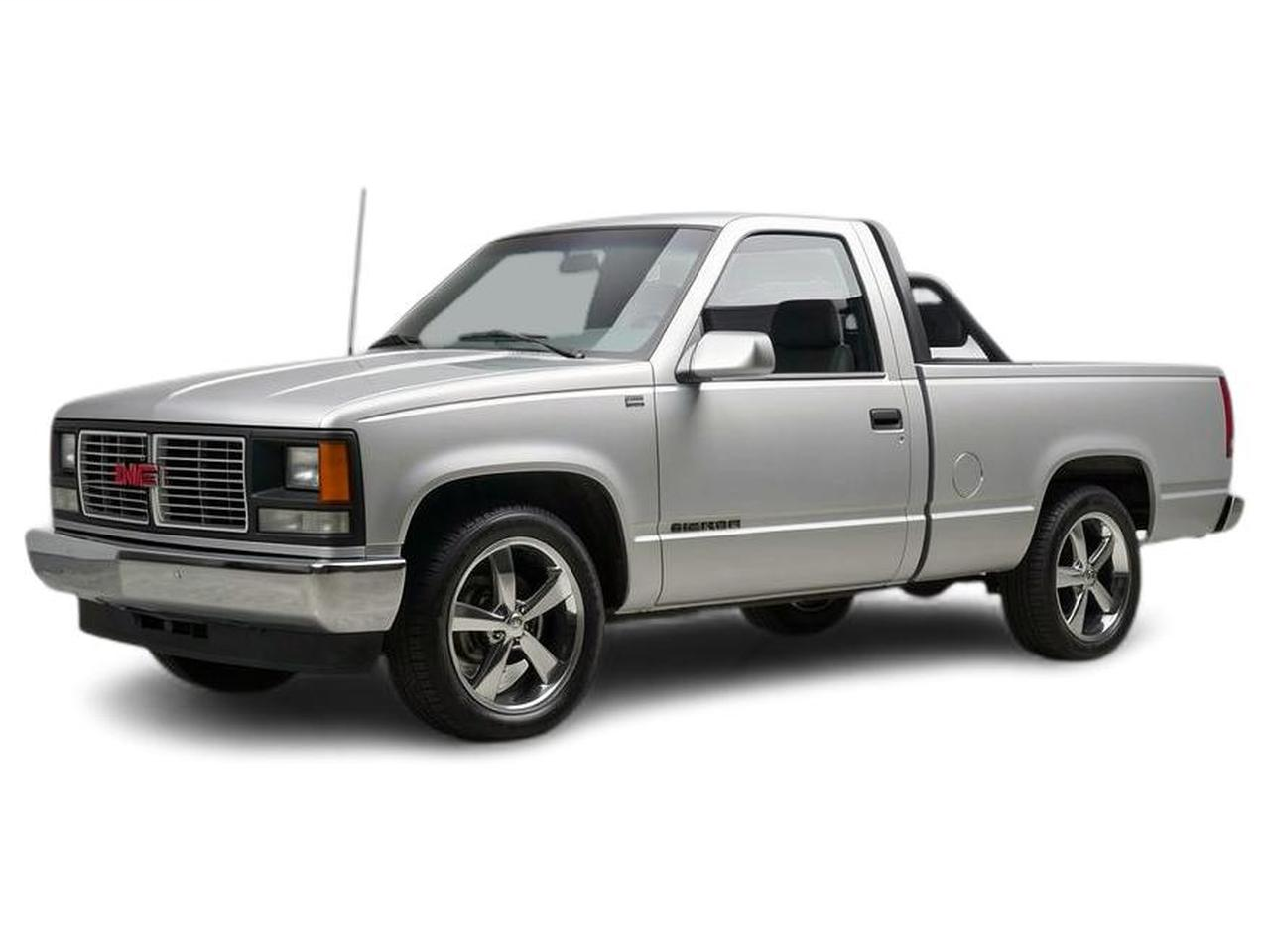
The Good
The 1990 Sierra offered strong V8 performance and legendary mechanical reliability, appealing to practical buyers. Its comfortable cabin and smooth ride provided surprising comfort. Emotionally, its classic, bold styling and go-anywhere capability evoke a sense of rugged independence and lasting value.
The Bad
Potential owners should watch for rust, particularly on the rocker panels, cab corners, and wheel arches. Electrical gremlins, especially related to the dashboard and fuel pump, are common. Aging suspension components and exhaust leaks also require attention.
1990 GMC Sierra: Quick Overview
- Engine Options: The 1990 GMC Sierra offered a range of gasoline engines. Standard on most models was the 4.3L V6, while optional V8s included the 5.0L (305 cubic inch) and the 5.7L (350 cubic inch). A more powerful 7.4L (454 cubic inch) V8 was available in heavy-duty configurations.
- Horsepower:
- 4.3L V6: Approximately 160 hp
- 5.0L V8: Approximately 170-180 hp
- 5.7L V8: Approximately 210-230 hp
- 7.4L V8: Approximately 230 hp
- Fuel Economy: Fuel economy varied significantly by engine and drivetrain. Expect figures in the range of 12-16 MPG city and 16-20 MPG highway for V8 configurations, with the V6 offering slightly better mileage.
- 0-60 Times: 0-60 mph times were generally in the 8-10 second range for V8 models, depending on the specific engine and configuration. V6 models were closer to 10-12 seconds.
- Towing Capacity: Towing capacity ranged widely based on the truck's configuration (e.g., engine, rear-end ratio, suspension). Light-duty models could tow around 5,000-7,000 lbs, while properly equipped heavy-duty models with the larger engines could handle 8,000 lbs and upwards, sometimes exceeding 10,000 lbs.
- Trim-Level Features:
- Base Sierra: Functional and durable, typically featuring vinyl seats, manual windows and locks, and a basic radio.
- Sierra SLE: Offered more comfort and convenience features, often including power windows and locks, upgraded cloth or velour seating, cruise control, and a better sound system.
- Sierra GT (if applicable for 1990): Focused on a sportier feel, potentially with upgraded suspension, wheels, and interior appointments.
- Heavy Duty (2500/3500): Designed for maximum payload and towing, often with beefier suspension, brakes, and the larger engine options.
1990 GMC Sierra Specifications
Vehicle Information
| Year | 1990 |
| Make | GMC |
| Model | Sierra |
| Trim | - |
| Style | SLE Truck 4WD 4AT 5.7L V8 |
| Type | Pickup Truck |
| Category | passenger |
Manufacturing Details
| Made In | Canada |
| Manufacturing City | OSHAWA TRUCK |
Dimensions
| Doors | 2-Door |
| Curb Weight | 4000 pounds |
| Gross Vehicle Weight Rating | - |
| Overall Height | 70 inches |
| Overall Length | 194 inches |
| Overall Width | 79 inches |
| Wheelbase Length | 117.5 inches |
| Standard Seating | 3 |
Engine & Performance
| Engine | 5.7L V8 |
| Engine Size | 5.7L |
| Engine Cylinders | 8 |
| Transmission | 4-Speed Automatic |
| Transmission Type | Automatic |
| Transmission Speeds | 4-Speed |
| Drivetrain | Four-Wheel Drive |
Additional Features
| Anti-Brake System | 4-Wheel ABS |
| Steering Type | Recirculating Ball |
Pricing
| Manufacturer Suggested Retail Price (MSRP) | $20,000 |
| Invoice Price | $18,500 |
| Delivery Charges | $500 |
Vehicle History Report
Specifications
History
Events
History Check
Check
Check
Check
Check
Listings
Recalls
Check
Analysis
What Problems Does the 1990 GMC Sierra Have?
Electrical issues are also quite common. Owners often report problems with the dashboard instruments, particularly the speedometer and fuel gauge, which can become erratic or stop working. The fuel pump is another component known to fail over time, leading to starting issues or stalling. The infamous heater core can also leak, requiring a costly repair that involves dismantling much of the dashboard.
In terms of mechanical components, the automatic transmission (TH700R4/4L60) can experience wear, especially if the truck has been used for heavy towing or hauling without proper maintenance. Transmission cooler lines can also corrode and leak. The exhaust system is prone to rust and leaks, which can affect performance and lead to increased noise. Suspension components, such as ball joints, tie rod ends, and shock absorbers, will likely need replacement due to wear and tear over the decades.
While specific model year recalls for 1990 are not extensive, general maintenance and addressing wear items are key to long-term reliability. The 5.7L V8 engine is particularly renowned for its durability if maintained. However, it's essential to check for a history of regular oil changes and fluid services, as neglecting these can accelerate wear on the engine and transmission.
How long will the 1990 GMC Sierra last?
What Technology & Safety Features are Included?
Entertainment: Standard audio systems typically consisted of an AM/FM radio, often with a cassette player. Optional upgrades could include a more advanced stereo system with more speakers, sometimes featuring graphic equalizers. Power antennas were an available luxury. While far from modern infotainment, these systems provided the essential function of audio playback.
Driver-Assistance Features: Advanced driver-assistance systems as we know them today were non-existent. Features were limited to practical aids like cruise control, which was often an optional extra on lower trims. Power steering was standard, and anti-lock braking systems (ABS) were becoming more common, often available as an option, particularly on rear-wheel-drive models. Some trucks may have been equipped with limited-slip differentials.
Safety Features: Standard safety features included seat belts and a robust, steel frame designed for durability. Side-impact door beams were also incorporated. Dual airbags were not standard in 1990; driver-side airbags began to appear more frequently in trucks around this time, but were not universally equipped. Some higher trims might have offered optional fog lights for improved visibility.
Crash-Test Ratings: Specific crash-test ratings for the 1990 GMC Sierra are difficult to find by modern standards like NHTSA's 5-star system, as testing methodologies and reporting were different in 1990. However, trucks of this era were generally built with durability and occupant protection in mind, relying heavily on their substantial construction. It's important to note that the safety technology and structural design are significantly less advanced than contemporary vehicles.
What Colors Options are Available?
1990 GMC Sierra Prices and Market Value
1990 GMC Sierra Cost of Ownership
1990 GMC Sierra Fuel Efficiency
1990 GMC Sierra Warranty
Basic
Powertrain
Rust
1990 GMC Sierra Insurance
reasonable repair costs.
How Does the 1990 GMC Sierra Compare to Other Pickup Truck?
Performance: The Sierra's optional V8 engines, particularly the 5.7L, offered competitive power and torque, rivaling the F-150's offerings. The Dodge Ram was also known for its robust engines. In terms of ride quality, the Sierra and the F-150 generally offered a more comfortable experience than the somewhat stiffer-riding Ram of that era.
Features: In 1990, features were fairly comparable across the board. The Sierra SLE trim often provided a good balance of comfort and utility, on par with comparable Ford XLT or Dodge Laramie trims. Amenities like power windows, locks, and upgraded interiors were available on all three, though their availability and sophistication varied by trim level. Modern tech was not a factor.
Reliability: GMC and Ford trucks of this period enjoyed a reputation for solid, dependable mechanicals. The Sierra's 5.7L V8, in particular, is legendary for its durability. The Ford F-150 also boasts strong reliability, though some Ford transmissions of the era had their quirks. The Dodge Ram was also a tough truck, but often perceived as slightly less refined in its early GMT400 competitor's era.
Price: Pricing was generally competitive, with each manufacturer offering various configurations to hit different price points. The Sierra often occupied a similar pricing bracket to the F-150, while the Ram might have offered slightly more aggressive pricing on certain models.
Alternatives:
- Similar: The 1990 Ford F-150 is a very close competitor, offering similar strengths in performance, reliability, and utility.
- Similar: The 1990 Chevrolet C/K 1500 (which shares much of its platform with the Sierra) is virtually identical mechanically and a strong alternative.
- Different Philosophy: For those seeking a slightly older, perhaps more utilitarian, but still capable truck, a well-maintained 1980s Ford F-150 or Chevrolet C/K could be considered, often at a lower entry price.
Final Verdict: Is the 1990 GMC Sierra a Good Pickup Truck?
Whether it's worth buying hinges on condition. A rust-free, well-maintained example, especially with the 5.7L V8, is an excellent value proposition. Avoid models with significant rust, transmission issues, or extensive electrical problems unless you're prepared for substantial restoration costs.
It's definitively a used-only purchase. Trims like the SLE offer a good balance of comfort and capability. For serious towing or heavy work, a heavy-duty variant is recommended. Ultimately, it's a solid choice for budget-conscious buyers prioritizing durability and utility over modern amenities.

Simon A
Simon is a contributor to VinCheck, where he provides articles and reviews on various automotive topics. His work focuses on delivering accurate and up-to-date information about used cars, helping readers make informed decisions.