
Free Kansas License Plate Lookup
Enter a Kansas license plate number to search for the associated VIN and review available vehicle specifications, title brands, theft, salvage, mileage, recalls, sales, value, and other history.
It uses the plate number and Kansas as the issuing state to identify an associated VIN when matching data is available. The VIN then becomes the basis for the vehicle report.
Check a Kansas Plate
Enter the plate number exactly as shown and select Kansas.
Plate-to-VIN matching and report contents vary by plate, VIN availability, reporting history, and source coverage. Confirm the VIN on the vehicle and official documents.
On This Page
- What a Kansas Plate Lookup Is
- How the Free Lookup Works
- What the Report May Show
- Plate Lookup vs VIN vs State Records
- Latest Kansas Statistics
- To the Stars Plate and Display Rules
- Seller Plate Removal and Transfer
- Lost, Stolen and Replacement Plates
- Kansas 60-Day Temporary Permits
- Private-Sale Title and Registration
- New Resident Registration
- Titles, Liens and Official Records
- Current Kansas Vehicle Fees
- Kansas Auto Insurance
- VIN, Safety and Emissions Inspections
- Salvage and Rebuilt Vehicles
- Hail, Flood, Winter and Rural Risks
- Theft, VIN Cloning and Fraud
- Owner Privacy and Record Access
- Plate and VIN Red Flags
- Kansas Used-Car Checklist
- Official Kansas Resources
- Other State Plate Lookups
- Related Vehicle Research Tools
- Report Limitations
- Frequently Asked Questions
- Run a Free Kansas Plate Check
What Is a Kansas License Plate Lookup?
A Kansas license plate lookup is a plate-to-VIN search. Enter the complete plate number and select Kansas as the issuing state. When a matching VIN is available, that VIN is used to retrieve available vehicle identity and history information.
The search is useful when a private-sale listing, dealership page, auction post, or vehicle photo shows a Kansas plate but not the VIN. It can help you compare the advertised year, make, model, body style, engine, and vehicle type with available records.
A consumer lookup does not prove current ownership, active registration, lien release, completed title transfer, insurance coverage, or mechanical condition. Verify those matters through official records, original documents, and an independent inspection.
How to Run a Free Kansas License Plate Check
Enter the Plate
Type the Kansas plate number exactly as shown on the vehicle, listing, or seller photo.
Select Kansas
The issuing state matters because the same plate combination may exist in another state.
Match the VIN
The system attempts to identify the VIN associated with the plate from available records.
Review and Verify
Compare the returned VIN with the dashboard, door label, title, registration, insurance documents, and seller records.
No result does not mean the vehicle is safe or problem-free. Ask for the complete VIN and run a direct VIN check when a plate-to-VIN match is unavailable.
What a Kansas Plate Lookup Report May Show
Vehicle Identity
Associated VIN, model year, make, model, body, engine, drivetrain, colors, equipment, and decoded specifications.
Title and Brand Records
Available title states, title dates, salvage, rebuilt salvage, flood, junk, nonrepairable, or other brand records.
Theft and Damage Signals
Available stolen-vehicle, recovery, accident, junk, salvage, total-loss, and insurance-related records.
Mileage, Sales and Value
Reported odometer entries, sales, listings, auctions, recalls, market value, and ownership-cost information.
| Report Section | What It May Include | How to Use It |
|---|---|---|
| VIN and Specifications | Year, make, model, trim, engine, transmission, drivetrain, body style, fuel type, colors, and factory details. | Confirm that the plate result matches the advertised vehicle. |
| Title and Brand History | Reported title states, dates, salvage, rebuilt salvage, flood, junk, nonrepairable, or other brands. | Investigate branding and interstate title movement before paying. |
| Theft and Recovery | Available stolen-vehicle and recovery records tied to the VIN. | Verify the physical VIN, seller, title, and official theft status. |
| Accident, Junk and Salvage | Reported collisions, insurers, recyclers, junk yards, salvage yards, total losses, or auctions. | Assess repair quality, safety, value, and insurability. |
| Odometer and Sale History | Mileage readings, sale dates, listing history, auction events, and possible mileage inconsistencies. | Compare mileage and the seller’s story against the available timeline. |
| Recalls, Value and Warranty | Open recalls, estimated market value, warranty information, safety ratings, and ownership-cost context. | Plan safety repairs, negotiation, insurance, and ownership costs. |
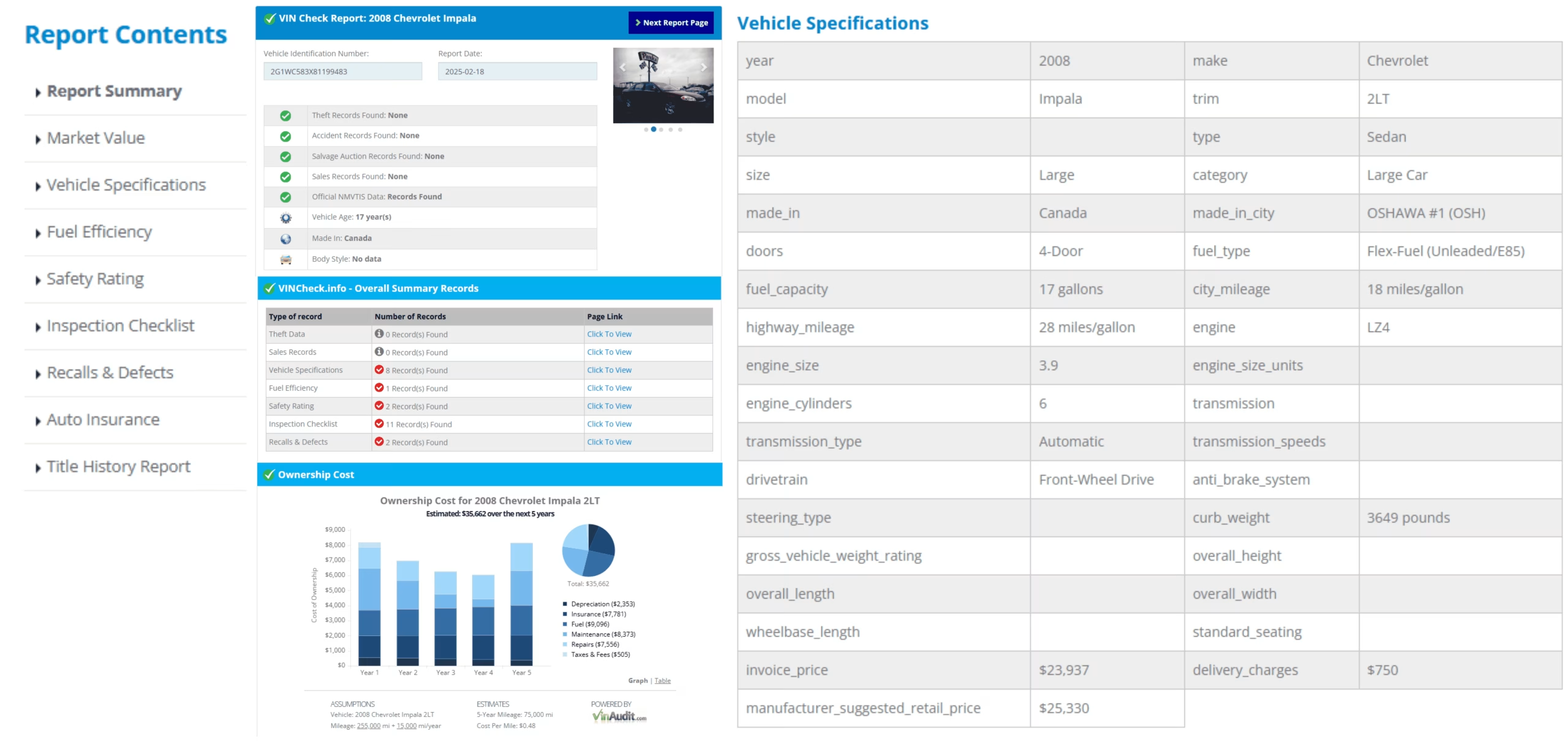
Sample report layout. Available sections vary by vehicle, VIN, reporting history, and source coverage.
Kansas Plate Lookup, VIN Check, State Records, and NMVTIS
| Search Type | Best Used For | What It Does Not Confirm |
|---|---|---|
| Kansas License Plate Lookup | Finding an associated VIN and starting vehicle-history research when the VIN is not shown. | Current owner identity, official registration validity, or completed title transfer. |
| Direct VIN Check | Researching the exact vehicle after confirming the complete VIN on the vehicle and documents. | Every unreported accident, repair, lien, mechanical problem, or ownership dispute. |
| Kansas TR/DL-302 Record Request | Requesting qualifying official title, registration, lien, or temporary-permit information under state access rules. | That protected owner information will be released without consent or a permitted purpose. |
| NMVTIS Report | Reviewing state title, brand, odometer, and selected theft information from participating sources. | Every accident, repair, inspection, or mechanical problem. |
| NHTSA and NICB | Checking open recalls and participating insurer theft or salvage records using the verified VIN. | A complete title, lien, accident, sale, or ownership history. |
Latest Kansas Vehicle Registration and Traffic-Safety Statistics
FHWA’s standardized 2024 table reports 2,007,586 Kansas motor vehicles. KDOT’s Drive to Zero page reported 172 preliminary traffic fatalities as of July 21, 2026, a 17.70% decrease from the same date in 2025.
| Kansas Measure | Latest Figure | Source Context |
|---|---|---|
| FHWA all motor vehicles | 2,007,586 | Federal calendar-year 2024 standardized total, published January 2026 |
| FHWA automobiles | 594,786 | Private, commercial, taxi, and publicly owned automobiles |
| FHWA buses | 1,434 | Private, commercial, and publicly owned buses |
| FHWA trucks | 1,316,870 | FHWA truck category, including pickups and many SUVs |
| FHWA motorcycles | 94,496 | FHWA motorcycle category |
| Preliminary 2026 traffic deaths | 172 | KDOT count as of July 21, 2026 |
| Change from same date in 2025 | −17.70% | KDOT date-matched preliminary comparison |
Sources: FHWA Highway Statistics 2024, Table MV-1 and KDOT Drive to Zero.
Preliminary safety data: KDOT updates the 2026 fatality count as crash reports are received and finalized.
Kansas “To the Stars” Plate and Display Rules
Current Standard Issue
Kansas now issues the digitally printed To the Stars standard plate.
One Rear Plate
Most ordinary Kansas passenger vehicles display one license plate at the rear.
Digitally Printed, Not Electronic
The current plate is a flat printed metal plate, not an electronic display or screen.
Replacement Program
Kansas began replacing older embossed standard plates in January 2024.
New Plate Sequence
Owners receiving a replacement standard plate receive a new number-and-letter sequence by mail.
Personalized Limits Vary
The official availability tool shows up to six letters, numbers, or spaces for the selected standard personalized plate type.
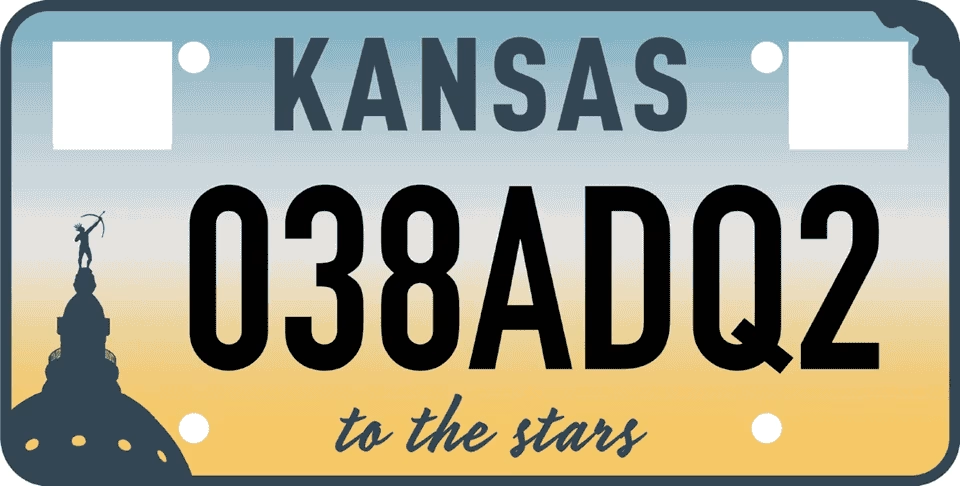
The saved site image may show an older design. The current standard issue is the digitally printed To the Stars plate.
Official references: Kansas Plate Replacement Information, Digital License Plate Production, and Personalized Plate Availability.
Seller Plate Removal, Notification of Sale, and Plate Transfer
Kansas plates stay with the seller rather than the sold vehicle. The seller should remove the plate, complete the title assignment, and keep proof of the transaction.
Remove the Plate
Do not allow the buyer to leave using the seller’s Kansas permanent plate.
Complete the Title Assignment
Enter the purchase price, sale date, odometer disclosure, buyer and seller names, and required signatures without alterations.
Optional Form TR-216
The seller may submit a Seller’s Notification of Sale to help document the transaction.
Transfer Eligibility
An eligible plate may be transferred to a replacement vehicle owned by the same person. Timing and ownership conditions should be confirmed with the county treasurer.
Keep Copies
Retain a copy of the assigned title, bill of sale, lien release, plate information, buyer details, and Form TR-216 when used.
Do Not Promise a Future Title
The buyer should receive the properly assigned ownership document rather than relying on a later promise.
Official reference: Kansas Titling a Vehicle FAQs.
Replacing Lost, Stolen, Damaged, or Unreadable Kansas Plates
Contact the County Treasurer
Replacement transactions are handled through the county motor-vehicle office.
Use Form TR-211
The replacement application covers lost, stolen, mutilated, or illegible plates and decals.
Report Suspected Theft
Contact law enforcement when the plate may be stolen, cloned, or displayed on another vehicle.
Fee Varies by Transaction
Replacement cost can depend on the county, plate type, registration status, and whether a new number is issued.
Bring Registration Information
Have the vehicle registration, VIN, plate number, identification, and insurance information available.
Expect Matching Delays
A replacement plate may not immediately match older third-party plate-to-VIN records.
Official references: Kansas Vehicle Forms and Kansas Plate Replacement Information.
Kansas 60-Day Temporary Permits
A Kansas 60-day permit allows a buyer to drive before permanent registration is completed. Once the vehicle is registered, the temporary permit is no longer valid.
Valid for 60 Days
The permit provides a limited registration period while the buyer completes title and registration requirements.
Dealer or County-Issued
A dealer may issue a qualifying permit, or the buyer may obtain one from a county treasurer when the required documents are available.
Electronic-Title Purchases
Form TR-39A and proof of insurance can support a 60-day permit when the vehicle has an electronic Kansas title.
Not Valid After Registration
Remove the permit once the vehicle has been permanently registered and the assigned plate is in use.
Verify the VIN and Dates
Compare the permit, buyer, dealer or seller, VIN, issue date, and expiration date.
Temporary Tags Have Lookup Gaps
Paper permits may not resolve reliably through plate-to-VIN databases. Use the physical VIN for vehicle-history research.
Official references: Kansas 60-Day Permit FAQ and Form TR-39A.
Kansas Private-Sale Title and Registration Checks
Apply Within 60 Days
The buyer generally titles and registers the vehicle through the county treasurer within 60 days of purchase.
Match the VIN
Confirm that the title VIN matches the dashboard, door label, plate result, and vehicle being sold.
Complete the Title
Verify the purchase price, sale date, mileage, printed names, signatures, and any required dealer or reassignment sections.
Release Every Lien
Require the lien release on the title, Form TR-150, or another accepted lienholder document.
Out-of-State Vehicle Inspection
An out-of-state title or qualifying out-of-state bill of sale generally requires an MVE-1 inspection.
Property Tax and Insurance
Bring proof of insurance and pay the applicable property tax unless the transaction qualifies for a temporary permit.
Do not accept a blank, altered, erased, unsigned, or incomplete title. Stop when the seller, VIN, title, lien, or vehicle identity cannot be verified.
Official reference: Kansas Titling a Used Vehicle.
Kansas Vehicle Registration for New Residents
A new Kansas resident generally has 90 days after establishing residency to title and register an out-of-state vehicle.
Out-of-State Title
Bring the original title or obtain the required title or registration copy from the lienholder when the title is held electronically.
Current Registration
Bring the registration receipt from the former state.
MVE-1 Inspection
Have the vehicle inspected at a Kansas Highway Patrol inspection station.
Kansas Insurance
Provide proof of insurance meeting Kansas requirements.
County Treasurer
Complete title, registration, plate, and property-tax transactions in the county where the vehicle is garaged.
Ninety-Day Deadline
Do not wait for the previous state’s registration to expire before starting the Kansas process.
Official references: Kansas Title FAQs and Johnson County New Resident Guidance.
Kansas Titles, Electronic Titles, Liens, and Official Records
Current Title Fee: $10
The standard Kansas title fee is currently $10.
Electronic Title Sales
Form TR-39A supports qualifying transfers when Kansas holds the title electronically.
Lien Release
Use the title, Form TR-150, or another accepted lienholder release to clear a recorded lien.
Official Record Requests
Form TR/DL-302 is used for qualifying title and registration record requests under Kansas privacy rules.
Pending Liens and Temporary Permits
An authorized title snapshot or registration inquiry may include pending liens and active temporary-permit information.
NMVTIS
Use NMVTIS for state title, brand, odometer, and selected theft information from participating sources.
Official references: Kansas Title FAQs, Electronic Title Sales Agreement, and Form TR/DL-302.
Current Kansas Title, Registration, Transfer, and Inspection Fees
| Transaction | Current Fee | Important Detail |
|---|---|---|
| Kansas title | $10 | Additional application or lien-related fees may apply |
| Plate transfer | $6.50 | Transfer eligibility and timing conditions apply |
| Modernization fee | $4 | Common statewide motor-vehicle fee |
| KHP staffing and training surcharge | $2 | Common motor-vehicle transaction surcharge |
| Law-enforcement training surcharge | $1.25 | Common motor-vehicle transaction surcharge |
| Automobile, 4,500 pounds or less | $42.50 | Annual registration before property tax and county fees |
| Automobile over 4,500 pounds | $52.25 | Annual registration before property tax and county fees |
| 12M truck | $52.25 | Annual registration before property tax and county fees |
| Motorcycle | $28.25 | Annual registration before property tax and county fees |
| Regular MVE-1 inspection | $20 | Kansas Highway Patrol inspection for qualifying transactions |
| Rebuilt-salvage inspection | $25 | Required before qualifying rebuilt salvage title issuance |
The registration charge is not the full amount due. Personal property tax, sales tax, specialty-plate charges, lien fees, county service charges, late penalties, and other transaction-specific amounts may apply.
Official or statewide references: Kansas County Treasurers Association Fees, Kansas Title Fee, and Kansas Highway Patrol Inspections.
Kansas Auto Insurance Requirements
Kansas requires liability insurance, personal injury protection, and uninsured or underinsured motorist coverage.
$25,000 Per Person
Minimum bodily-injury liability for one injured person.
$50,000 Per Accident
Minimum bodily-injury liability for multiple people injured in one accident.
$25,000 Property Damage
Minimum property-damage liability for one accident.
Personal Injury Protection
Kansas PIP includes minimum medical, disability-income, in-home, funeral, rehabilitation, and survivor benefits.
Uninsured/Underinsured Motorist
Minimum bodily-injury protection is generally $25,000 per person and $50,000 per accident.
A Plate Check Is Not Proof
A lookup cannot confirm that an insurance policy is active or will cover the buyer after the sale.
Official reference: Kansas Department of Insurance Auto Coverage Guide.
Kansas VIN, Safety, and Emissions Inspection Requirements
Kansas does not use a recurring statewide safety or emissions inspection program for ordinary passenger registration. It does require VIN and rebuilt-salvage inspections in qualifying transactions.
No Annual Safety Sticker
Ordinary passenger registration does not depend on a recurring statewide safety-inspection certificate.
No Registration Emissions Test
Kansas does not require an emissions inspection to register an ordinary passenger vehicle.
Out-of-State MVE-1
An out-of-state title or qualifying out-of-state bill of sale generally requires a VIN inspection.
Regular Inspection Fee: $20
Kansas Highway Patrol currently lists a $20 fee for a regular vehicle inspection.
Rebuilt-Salvage Inspection: $25
A rebuilt salvage vehicle completes a separate inspection before title issuance.
Independent Inspection
Have a qualified mechanic inspect structure, brakes, tires, steering, suspension, cooling, electronics, and restraints before purchase.
Official reference: Kansas Titling and Inspection FAQs.
Kansas Salvage, Rebuilt Salvage, and Nonrepairable Vehicle Risks
Kansas distinguishes salvage, rebuilt salvage, and nonrepairable vehicles. A nonrepairable vehicle can never be titled or registered for road use.
Salvage Title
A qualifying damaged or total-loss vehicle is issued a salvage title before road-use eligibility can be restored.
Rebuilt-Salvage Inspection
A repaired salvage vehicle must pass the required Kansas inspection before receiving a rebuilt-salvage title.
Nonrepairable Status
A nonrepairable vehicle cannot be retitled or registered for highway operation.
Review Repair Documentation
Inspect receipts, donor VINs, photographs, insurance estimates, structural measurements, and major-component records.
Insurance and Financing
Brand history can affect coverage, lender approval, market value, warranty, and resale.
Title Is Not a Warranty
A rebuilt-salvage title does not guarantee repair quality, crashworthiness, mechanical condition, or future reliability.
Official reference: Kansas Salvage and Rebuilt Vehicle FAQs.
Kansas Hail, Tornado, Flood, Winter, Farm, and Rural-Road Risks
A plate lookup can reveal reported history, but Kansas hail, severe wind, tornadoes, flash floods, winter road treatment, gravel travel, agricultural use, towing, and animal collisions make a physical inspection essential.
Hail and Wind Damage
Review the roof, hood, glass, paint depth, seals, repaired panels, drainage channels, and hidden structural areas.
Flash Flooding
Check carpets, seat tracks, connectors, modules, lights, spare-tire wells, and seams for silt, moisture, mold, or corrosion.
Winter Salt and Brine
Inspect brake and fuel lines, frame, subframes, suspension mounts, wheel wells, exhaust, fasteners, and electrical grounds.
Gravel and Farm Use
Check underbody impacts, suspension wear, wheel wells, dust ingestion, air filtration, seals, and drivetrain leaks.
Towing and Heat
Inspect brakes, transmission behavior, cooling, suspension, steering, hitch wear, tires, and wheel bearings.
Animal Collisions
Look for repaired front-end structure, cooling-system damage, replaced lamps, restraint deployment, and mismatched paint.
Kansas Vehicle Theft, VIN Cloning, Plate Swapping, and Title Fraud
A plate result should be treated as an identity check, not proof that the seller legally owns the vehicle. Compare the plate, VIN, title, seller, lien, temporary permit, and registration documents before payment.
Theft and Recovery Records
Review available theft signals, then verify concerns through law enforcement or NICB VINCheck.
VIN Cloning
A stolen vehicle may use a copied VIN, counterfeit label, false title, or plate from a similar legitimate vehicle.
Plate Swapping
A plate attached to the wrong vehicle can create a make, model, year, body, or VIN mismatch.
Temporary-Permit Fraud
An altered, expired, copied, or unsupported permit may conceal an unregistered, stolen, or improperly transferred vehicle.
Title Washing
Interstate transfers may be used to obscure salvage, rebuilt, flood, junk, nonrepairable, or odometer history.
Online-Sale Fraud
Avoid sellers who hide the VIN, refuse an inspection, cannot produce the title, or demand irreversible payment before verification.
Consumer references: NICB VINCheck and NHTSA Recall Lookup.
Kansas License Plate Owner Lookup and Privacy
VinCheck.info’s Kansas plate lookup is for vehicle research. It does not reveal a private owner’s name, home address, phone number, driver-license information, or other protected personal data.
Kansas motor-vehicle records are closed to general public access. Form TR/DL-302 requires the requester to identify the vehicle, provide the required authorization or permitted purpose, and comply with state and federal privacy rules.
Use the lookup to research the vehicle, not to identify, locate, contact, follow, or confront a private person.
Official reference: Kansas Form TR/DL-302.
Kansas Plate and VIN Red Flags
- The lookup returns a different make, model, year, body style, or VIN from the vehicle shown.
- The seller refuses to provide the complete VIN, assigned title, identification, bill of sale, or lien release.
- The dashboard VIN, door label, title, registration, insurance paperwork, and lookup result do not match.
- The VIN plate appears loose, scratched, repainted, replaced, covered, or altered.
- The title shows salvage, rebuilt salvage, flood, junk, nonrepairable, or odometer branding that was not disclosed.
- The seller leaves a Kansas permanent plate on the vehicle even though plates stay with the seller.
- A temporary permit is expired, altered, copied, unreadable, or unsupported by title and purchase documents.
- The seller demands a deposit or remote payment before allowing VIN, title, lien, insurance, and vehicle-condition verification.
Stop the transaction when the vehicle identity, title, lien, seller, plate, temporary permit, or VIN cannot be verified.
Kansas Used-Car Checklist After a Plate Lookup
- Confirm the plate and issuing state. Recheck every character before searching.
- Match the returned VIN. Compare it with every VIN location and document.
- Decode the vehicle. Verify the year, make, model, engine, body, and factory identity.
- Review title brands. Check salvage, rebuilt salvage, flood, junk, nonrepairable, theft, and odometer history.
- Check official and national records. Consider Kansas record access, NMVTIS, NICB, and NHTSA.
- Confirm the seller and lien. Require a properly assigned title and valid lien release.
- Remove the seller’s plate. Do not drive using the prior owner’s permanent Kansas plate.
- Complete the transaction on time. Apply for title and registration within 60 days.
- Verify insurance. Confirm active liability, PIP, and uninsured or underinsured motorist coverage before driving.
- Get an independent inspection. Focus on hail, flood, corrosion, structure, brakes, tires, cooling, electronics, restraints, and repair quality.
Official Kansas Vehicle and Plate Resources
Titles and Registration
Review title transfers, electronic titles, liens, temporary permits, new-resident requirements, and forms.
License Plates
Review the To the Stars replacement program, personalized availability, distinctive plates, and renewal services.
Vehicle Inspections
Review MVE-1 inspection locations, regular VIN inspections, rebuilt-salvage inspections, and required documents.
Protected Records
Review Form TR/DL-302, record types, consent, permitted uses, and privacy restrictions.
License Plate Lookup by State
Select the actual issuing state shown on the plate. The same letter and number combination may exist in multiple states.
Kansas Plate Lookup Limitations
- A plate may not match a VIN when it is new, temporary, transferred, retained by the seller, replaced, expired, removed, reassigned, entered incorrectly, or absent from available sources.
- A result may reflect older plate-to-vehicle data after a recent transfer or replacement. Always compare the returned VIN and vehicle description.
- Not every accident, flood event, repair, lien, title event, theft, mileage entry, service visit, or sale is reported to every database.
- A clean report does not guarantee mechanical condition, legal ownership, completed title transfer, insurance coverage, or freedom from undisclosed damage.
- The report does not replace Kansas DOV, a county treasurer, Kansas Highway Patrol, a lienholder, law enforcement, an insurer, a recall database, or a qualified mechanic.
Kansas License Plate Lookup Frequently Asked Questions
What is a Kansas license plate lookup?
A Kansas license plate lookup uses the plate number and Kansas as the issuing state to search for an associated VIN when matching data is available. The VIN can then be used to review available vehicle identity and history information.
Is the Kansas license plate lookup free?
The VinCheck.info lookup can be started without a fee or account. Results depend on plate-to-VIN matching, reporting history, and source coverage.
Can I search a Kansas plate without knowing the VIN?
Yes. Enter the complete Kansas plate number and select Kansas. When a matching VIN is available, the lookup can continue with VIN-based vehicle research.
What can a free Kansas license plate check show?
Depending on available data, it may show the associated VIN, vehicle specifications, title brands, theft or salvage signals, accident records, odometer entries, recalls, sales, market value, and other vehicle-history details.
Can a Kansas plate lookup show the owner’s name or address?
No. VinCheck.info does not display protected owner names, home addresses, phone numbers, driver-license details, or other restricted personal information.
Is a Kansas reverse license plate lookup legal?
A consumer lookup may be used for lawful vehicle research. Access to protected information in official Kansas motor-vehicle records is restricted by the Driver’s Privacy Protection Act and state rules and requires authorization or a permitted purpose.
Is a plate lookup the same as an official Kansas vehicle record?
No. A consumer plate lookup is designed for vehicle research. Kansas uses Form TR/DL-302 and separate identification, authorization, fee, and permitted-use requirements for official title and registration records.
What should I do if the lookup returns the wrong vehicle?
Stop and verify the plate number, issuing state, physical VIN, title, registration, and seller information. A mismatch may result from a typo, recent plate transfer, stale data, reassignment, or fraud.
What should I do if no VIN is found?
Recheck every plate character and confirm that Kansas is selected. If no match is available, ask the seller for the complete 17-character VIN and run a direct VIN check.
Does Kansas require front and rear license plates?
Most ordinary Kansas passenger vehicles display one license plate at the rear. Different rules can apply to certain commercial, apportioned, or specialty vehicle classes.
What is Kansas’s current standard license plate?
Kansas now issues the digitally printed To the Stars standard plate. The state began replacing older embossed standard plates in 2024, and replacement plates receive a new letter-and-number sequence.
Do Kansas plates stay with the seller?
Yes. The seller removes the Kansas plate when the vehicle is sold. An eligible plate may be transferred to another vehicle owned by the same person, subject to county treasurer requirements.
How long is a Kansas temporary permit valid?
A Kansas temporary permit is generally valid for 60 days. It allows the buyer to drive before permanent registration is completed, but it is no longer valid after the vehicle has been registered.
How long does a buyer have to title a vehicle in Kansas?
A buyer generally has 60 days from the purchase date to apply for Kansas title and registration through the county treasurer where the vehicle is garaged.
How long does a new resident have to register a vehicle in Kansas?
A new resident generally has 90 days after establishing Kansas residency to title and register an out-of-state vehicle.
When is a Kansas MVE-1 inspection required?
An MVE-1 inspection is generally required for vehicles with an out-of-state title, an out-of-state bill of sale, certain antique transactions, and rebuilt salvage or formerly nonhighway vehicles.
What are the common Kansas title and registration fees?
The Kansas title fee is currently $10. Common annual registration charges include $42.50 for automobiles weighing 4,500 pounds or less, $52.25 for heavier automobiles and 12M trucks, and $28.25 for motorcycles, before property tax and other applicable fees.
What are Kansas’s minimum auto insurance limits?
Kansas requires at least $25,000 per person and $50,000 per accident for bodily injury and $25,000 for property damage. Policies also include required personal injury protection and uninsured or underinsured motorist coverage.
Does Kansas require annual safety or emissions inspections?
No. Kansas does not use a recurring statewide safety or emissions inspection program for ordinary passenger registration. VIN and rebuilt-salvage inspections still apply in qualifying transactions.
Does a Kansas plate report replace official records or an inspection?
No. Plate-to-VIN matching and vehicle reports depend on available data. Verify the title, registration, lien, seller, insurance, recalls, and physical condition, and obtain an independent inspection before buying.
Run a Free Kansas License Plate Lookup
Enter the complete Kansas plate number, select Kansas, and verify any returned VIN against the vehicle and documents.
Check a Kansas PlateVinCheck.info is an independent vehicle information website and is not affiliated with or operated by the Kansas Department of Revenue Division of Vehicles, Kansas Highway Patrol, Kansas Department of Transportation, Kansas Department of Insurance, a county treasurer, an insurer, a lienholder, or an inspection facility. A Kansas license plate lookup is a vehicle-research tool, not an official title, registration, lien, owner-record, insurance, theft, salvage, or mechanical-inspection service. Results vary by plate, VIN availability, reporting history, and source coverage. Confirm important details with Kansas DOV, the county treasurer, the seller, the lienholder, official documents, relevant agencies, and an independent inspector.