
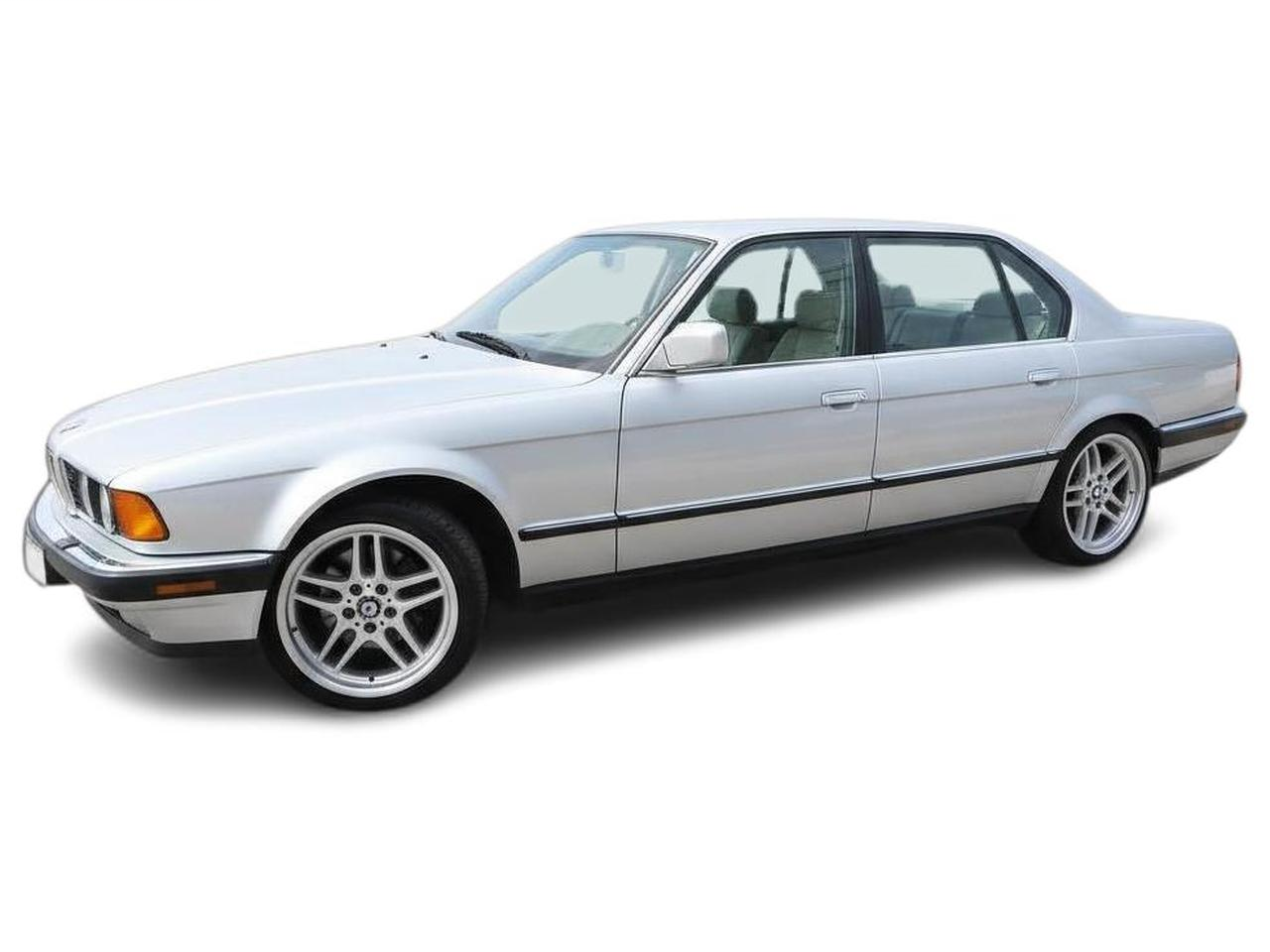
The Good
The 1992 7-Series offers potent performance with smooth, powerful engines, renowned BMW handling, and exceptional comfort for long journeys. Its timeless design appeals to emotional buyers, while its robust build and surprising longevity appeal to the practical owner seeking a luxurious yet dependable classic.
The Bad
Potential buyers should watch out for aging electronics, particularly the climate control system, window regulators, and the complex wiring harnesses. Suspension components can also wear out over time. Early signs of neglect in maintenance can lead to significant and costly repairs.
1992 BMW 7-Series: Quick Overview
- Engine Options:
- 3.0L M30B35 Inline-6
- 4.0L M60B40 V8
- 5.0L M70B50 V12
- Horsepower:
- Inline-6: Approximately 208 hp
- V8: Approximately 282 hp
- V12: Approximately 296 hp
- Fuel Economy (EPA Estimated, varies by engine and driving conditions):
- Inline-6: Around 15-17 MPG city / 20-23 MPG highway
- V8: Around 13-15 MPG city / 18-21 MPG highway
- V12: Around 11-13 MPG city / 17-19 MPG highway
- 0-60 Times (Approximate):
- Inline-6: Around 8.5 - 9.5 seconds
- V8: Around 6.5 - 7.5 seconds
- V12: Around 6.0 - 7.0 seconds
- Towing Capacity: Not applicable; this is a luxury sedan designed for passenger transport, not towing.
- Trim-Level Features:
All trims featured a high level of luxury. Key features available across the range, with some becoming standard on higher trims, include:- Leather upholstery
- Power-adjustable front seats with memory
- Dual-zone automatic climate control
- Power windows, mirrors, and sunroof
- Anti-lock Braking System (ABS)
- Driver and passenger airbags (driver-side standard, passenger optional/later standard)
- Premium sound system
- Cruise control
- Trip computer
- For the 750iL (long-wheelbase V12): Extended rear legroom, enhanced rear amenities (e.g., rear climate control, often rear heated seats), more luxurious interior appointments.
- Optional features could include heated seats, rear-seat entertainment systems (for the era), and more advanced sound systems.
1992 BMW 7-Series Specifications
Vehicle Information
| Year | 1992 |
| Make | BMW |
| Model | 7 Series |
| Trim | - |
| Style | 735i Sedan RWD 4AT 3.4L I6 |
| Type | Sedan |
| Category | passenger |
Manufacturing Details
| Made In | Germany |
| Manufacturing City | MUNICH |
Dimensions
| Doors | 4-Door |
| Curb Weight | 3600 pounds |
| Gross Vehicle Weight Rating | - |
| Overall Height | 56 inches |
| Overall Length | 197 inches |
| Overall Width | 72 inches |
| Wheelbase Length | 113 inches |
| Standard Seating | 5 |
Engine & Performance
| Engine | 3.4L I6 |
| Engine Size | 3.4L |
| Engine Cylinders | 6 |
| Transmission | 4-Speed Automatic |
| Transmission Type | Automatic |
| Transmission Speeds | 4-Speed |
| Drivetrain | Rear-Wheel Drive |
Additional Features
| Anti-Brake System | 4-Wheel ABS |
| Steering Type | Rack & Pinion |
Pricing
| Manufacturer Suggested Retail Price (MSRP) | $65,000 |
| Invoice Price | $60,000 |
| Delivery Charges | $800 |
Vehicle History Report
Specifications
History
Events
History Check
Check
Check
Check
Check
Listings
Recalls
Check
Analysis
What Problems Does the 1992 BMW 7-Series Have?
The M60 V8 engines, especially in earlier iterations (though the 1992 model year is within this range), can be susceptible to Nikasil cylinder liner degradation if the fuel quality is not consistently good and regular oil changes are not performed. While less common, some owners have reported issues with the VANOS system on the V8 and V12 engines, though this is more prevalent in later M60/M73 engines.
The automatic transmissions, typically the ZF 4HP24 or 5HP30, are generally reliable when properly maintained, but fluid flushes and regular checks are crucial. Neglect can lead to premature wear. Suspension components, such as bushings and shocks, will naturally wear out over time, leading to a less composed ride and potential clunking noises.
Regarding recalls, specific to the 1992 model year, it's essential to check with BMW or national highway traffic safety databases. However, general E32 7-Series concerns often included potential issues with airbag systems (early systems could be prone to malfunction) and certain engine components. Long-term reliability heavily depends on the quality of past maintenance. A well-maintained 1992 7-Series can still be a dependable luxury vehicle, but one that has been neglected will likely require significant investment to bring it up to par. No significant model year-specific widespread issues are typically highlighted for 1992 over other early E32 years, but rather a consistent set of aging vehicle concerns.
How long will the 1992 BMW 7-Series last?
Weaknesses that emerge over time are primarily related to the aging of complex systems. Electrical components, including sensors, control modules, and wiring, are prone to failure due to heat and age. The Nikasil cylinder liners in the V8 engines (M60) require consistent quality fuel and maintenance to avoid premature wear. Suspension components will also require periodic replacement. With diligent maintenance, including regular fluid changes, addressing minor issues promptly, and using quality parts, the 7-Series can remain a reliable and enjoyable vehicle for many years and miles. Neglect, however, will accelerate wear and increase the likelihood of costly repairs.
What Technology & Safety Features are Included?
Technology and Entertainment: Standard features included a premium analog or digital cassette stereo system, often with multiple speakers. Power amenities were abundant: power windows, power mirrors, power seats (often with memory function for the driver's seat), and a power sunroof were common. Dual-zone automatic climate control provided individual temperature settings for the driver and front passenger. A trip computer offered basic vehicle information, such as fuel economy and range.
Optional technology and entertainment features could include a more advanced sound system, possibly with an integrated CD player (a novelty then), and for the longer wheelbase variants (like the 750iL), rear-seat amenities such as separate climate controls or even rudimentary rear-seat entertainment options. Early forms of navigation systems were beginning to appear in luxury cars, and while less common on the 1992 7-Series, it was an emerging possibility.
Driver-Assistance and Safety Features: The 7-Series came standard with an Anti-lock Braking System (ABS), a significant safety advancement. Traction control (ASC) was available on some models, particularly the V8 and V12 variants, to help maintain stability during acceleration. The driver's airbag was standard, and a passenger-side airbag was often an optional upgrade, becoming more common as the model year progressed. The body structure was designed with safety in mind, offering good crash protection for its era.
Crash-Test Ratings: Official crash-test ratings from organizations like the NHTSA or IIHS from this period are less comprehensive and standardized than today's tests. However, BMW vehicles of this era were generally known for solid construction and safety performance for their time. Specific crash-test data for the 1992 7-Series may be difficult to find in modern databases, but its design was engineered to meet stringent safety standards of the early 1990s.
What Colors Options are Available?
1992 BMW 7-Series Prices and Market Value
Currently, the used market prices for a 1992 7-Series are significantly lower, reflecting substantial depreciation. Well-maintained examples in good condition can range from $4,000 to $10,000, with exceptional, low-mileage V12 models potentially fetching higher figures. Poorly maintained or high-mileage examples can be found for as little as $2,000-$3,000, often requiring extensive work.
Factors affecting resale value include: overall condition, maintenance history (documented service records are crucial), mileage, originality of parts, and the specific engine and trim level (V12 models often hold more desirability). These cars have largely depreciated to their lowest point and are now considered classic luxury cars; their value is more about condition and desirability than typical market depreciation curves.
1992 BMW 7-Series Cost of Ownership
1992 BMW 7-Series Fuel Efficiency
1992 BMW 7-Series Insurance
reasonable repair costs.
How Does the 1992 BMW 7-Series Compare to Other Sedan?
Performance: The 7-Series offered a range of potent engines, including the groundbreaking V12 in the 750iL, providing effortless power. The V8 models also offered strong performance. Compared to the Mercedes S-Class of the same era, the BMW often felt sportier and more driver-oriented, while the Mercedes prioritized supreme ride comfort. The Lexus LS 400 was lauded for its refined V8 engine and exceptionally smooth, quiet ride, often surpassing the BMW in outright quietness and perceived build quality for its early years. The Jaguar XJ offered a more traditional, elegant British luxury experience, often with more character but sometimes less cutting-edge technology.
Features: The 7-Series was packed with technology for its time, including advanced climate control, power amenities, and safety features. The LS 400 was also a technology leader, introducing features that would become industry standards. The S-Class was typically the benchmark for luxury features and build quality.
Reliability: Historically, the Lexus LS 400 gained a reputation for exceptional reliability, often exceeding that of its German counterparts, especially in the long term. The BMW 7-Series, while well-engineered, could be more prone to electrical gremlins and complex system failures as it aged. The Mercedes S-Class also faced some reliability challenges with its complex electronics in the early W140 generation.
Price: The 7-Series was competitively priced within the ultra-luxury segment, generally falling between the LS 400 and the S-Class, especially when comparing similarly equipped models.
Alternatives:
* Similar: Mercedes-Benz S-Class (W140) for ultimate luxury and presence.
* Better (for Reliability): Lexus LS 400 (UCF10) offers a strong case for superior long-term reliability and near-equivalent luxury.
* Different Flavor: Jaguar XJ (XJ40/X300) for a classic British luxury feel.
For those seeking a blend of potent performance, engaging driving dynamics, and sophisticated luxury, the 1992 7-Series is a compelling choice. However, if bulletproof reliability and minimal repair headaches are the absolute top priority, the Lexus LS 400 is a very strong alternative.
Final Verdict: Is the 1992 BMW 7-Series a Good Sedan?
This car is best purchased as a used vehicle. Specific trims to consider would be the 740i (if you can find a late E32 model, though the prompt specifies 1992) or the 750iL for the ultimate V12 experience, provided they have meticulous maintenance records. It is crucial to buy a well-maintained example with proof of regular servicing, especially for the V8 and V12 engines. Budgeting for potential repairs, particularly for the complex electronics and aging systems, is essential for a satisfying ownership experience. It's a car for a dedicated owner, not a casual commuter seeking low running costs.

Drew B
Drew is a seasoned automotive expert and contributor to VinCheck.info. With nearly 15 years of experience as a former Porsche technician, he brings a wealth of hands-on knowledge to his writing. Born in North Carolina, a region renowned for its deep-rooted NASCAR culture, Drew developed a passion for cars early in life, often building and working on vehicles from a young age. At VINCheck, Drew leverages his extensive technical background to provide in-depth analyses of various vehicles. His articles often focus on engine performance, reliability, and maintenance insights, offering readers practical information grounded in real-world experience. Some of his notable contributions include reviews on the Mazda CX-5's longevity and detailed examinations of engine options for models like the 2011 Toyota Camry and Tacoma