
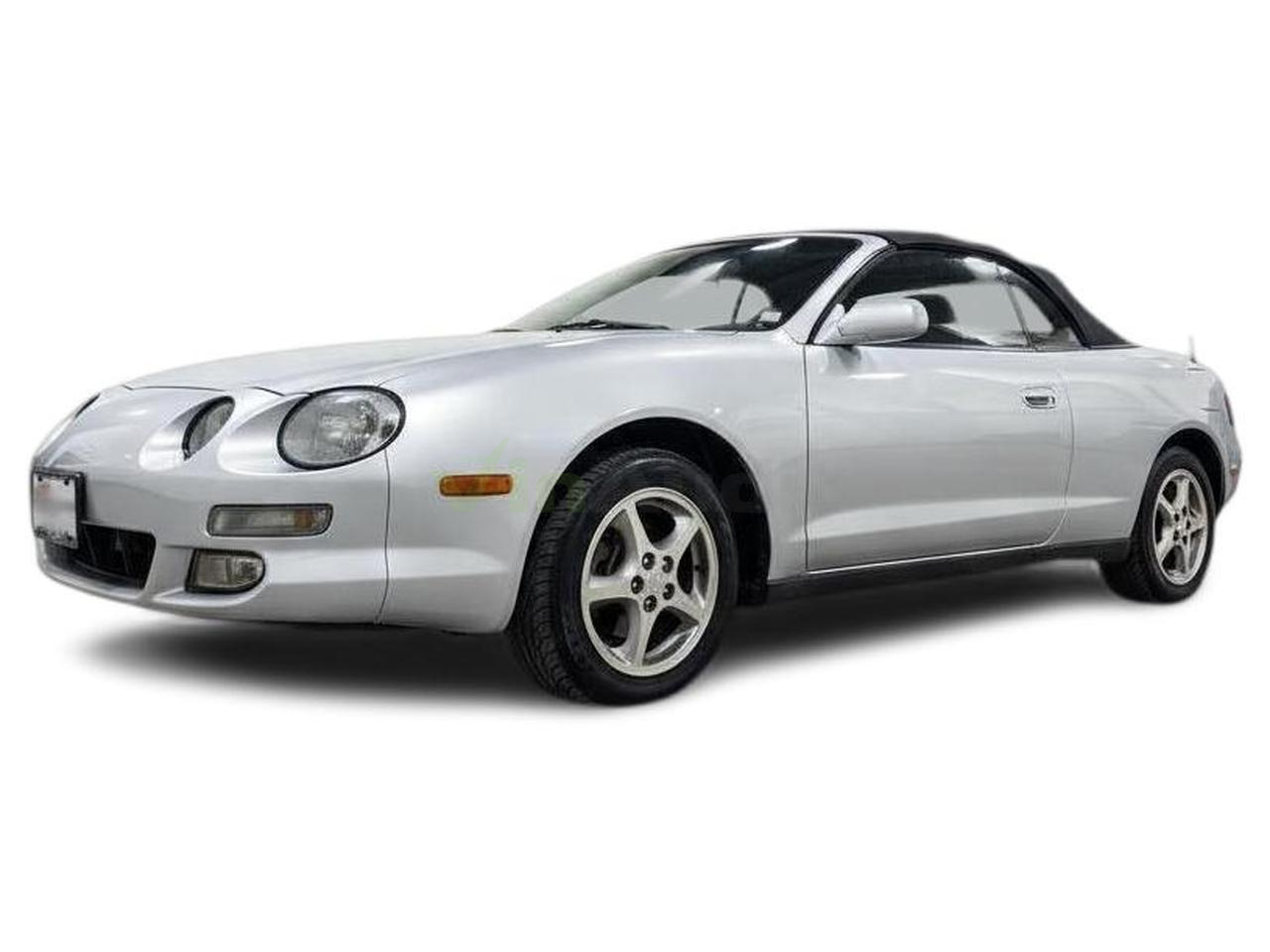
The Good
The 1998 Celica offers a compelling blend of sporty design and reliable Toyota engineering. Its agile handling and peppy engine satisfy driving enthusiasts, while its strong reputation for durability and good fuel economy appeal to practical buyers. It represents excellent value for a stylish, enjoyable coupe.
The Bad
Potential buyers should be aware of common issues like oil consumption in some engines, potential for rust in certain climates, and wear and tear on suspension components. The interior, while stylish, can also show its age with faded plastics and worn seat bolsters. Clutch wear is also a consideration on manual transmissions.
1998 Toyota Celica: Quick Overview
- Engine Options: The 1998 Toyota Celica primarily offered two engine choices:
- A 1.8-liter inline-4 cylinder engine (7A-FE).
- A more powerful 2.0-liter inline-4 cylinder engine (3S-FE) for higher trims.
- Horsepower:
- The 1.8-liter engine typically produced around 108-110 horsepower.
- The 2.0-liter engine generally offered around 125-135 horsepower.
- Fuel Economy:
- Fuel economy varied depending on the engine and transmission, but generally ranged from approximately 24-27 MPG in the city and 30-34 MPG on the highway.
- 0-60 Times:
- 0-60 mph times were competitive for the class, with most models accelerating in the 8-10 second range, depending on the engine and transmission.
- Towing Capacity:
- The Toyota Celica was not designed or equipped for towing, and therefore, has no official towing capacity.
- Trim-Level Features:
- ST Trim: Typically came with standard features such as power windows, power door locks, air conditioning, a tilt steering wheel, and an AM/FM stereo with cassette player. It utilized the smaller 1.8L engine.
- GT Trim: Built upon the ST features and often included upgrades like alloy wheels, a sunroof, cruise control, a more premium sound system (often with a CD player), and sometimes fog lights. This trim usually featured the more potent 2.0L engine, offering improved performance.
- Optional Features: Depending on the trim and dealer options, buyers could add features like anti-lock brakes (ABS), a rear spoiler, upgraded interior trim, and different audio system configurations.
1998 Toyota Celica Specifications
Vehicle Information
| Year | 1998 |
| Make | Toyota |
| Model | Celica |
| Trim | - |
| Style | - |
| Type | - |
| Category | - |
Manufacturing Details
| Made In | - |
| Manufacturing City | - |
Dimensions
| Doors | - |
| Curb Weight | - |
| Gross Vehicle Weight Rating | - |
| Overall Height | - |
| Overall Length | - |
| Overall Width | - |
| Wheelbase Length | - |
| Standard Seating | - |
Engine & Performance
| Engine | - |
| Engine Size | - |
| Engine Cylinders | - |
| Transmission | - |
| Transmission Type | - |
| Transmission Speeds | - |
| Drivetrain | - |
Additional Features
| Anti-Brake System | - |
| Steering Type | - |
Pricing
| Manufacturer Suggested Retail Price (MSRP) | - |
| Invoice Price | - |
| Delivery Charges | - |
Vehicle History Report
Specifications
History
Events
History Check
Check
Check
Check
Check
Listings
Recalls
Check
Analysis
What Problems Does the 1998 Toyota Celica Have?
How long will the 1998 Toyota Celica last?
What Technology & Safety Features are Included?
In terms of driver-assistance features, the 1998 Celica was quite basic. Anti-lock brakes (ABS) were an optional feature on many models, which would have been a significant safety upgrade, helping drivers maintain steering control during emergency braking. Traction control systems were not commonly offered or widely available.
Safety features were focused on passive protection. Standard equipment generally included airbags for the driver and front passenger. Seatbelt pretensioners were also standard, designed to tighten the seatbelts during a collision. The vehicle's structure was designed with occupant safety in mind, as was typical for Toyota vehicles of this era.
Regarding crash-test ratings, specific data for the 1998 model year might be harder to find compared to contemporary vehicles. However, the general reputation of Toyota vehicles from this period suggests a decent performance for its class. The National Highway Traffic Safety Administration (NHTSA) and the Insurance Institute for Highway Safety (IIHS) conducted tests on vehicles from this era, and while specific scores for the 1998 Celica are not readily at hand, Toyota typically aimed for competitive safety standards. Owners looking for advanced tech or extensive driver aids would find the 1998 Celica lacking compared to modern vehicles.
What Colors Options are Available?
1998 Toyota Celica Prices and Market Value
1998 Toyota Celica Cost of Ownership
1998 Toyota Celica Fuel Efficiency
1998 Toyota Celica Recalls & Defects
AIR Bags:frontal:driver Side:inflator Module
1998 Toyota Celica Insurance
reasonable repair costs.
How Does the 1998 Toyota Celica Compare to Other Vehicle?
Performance: The Celica offered a balanced performance, with its available 2.0-liter engine providing adequate acceleration for spirited driving. The Honda Civic Coupe, especially in VTEC trims, often offered a more exhilarating driving experience and superior handling. The Mitsubishi Eclipse, particularly the turbocharged GST and GSX models, significantly outperformed the Celica in terms of raw power and acceleration. The Ford Probe offered a more car-like ride and was available with a V6 engine that provided decent power, though often at the expense of fuel economy.
Features: In terms of features, the 1998 Celica was generally on par with its contemporaries. Standard features like power windows and locks were common. Higher trims offered extras like CD players and sunroofs. The Civic Coupe was known for its well-designed interior and often a good range of standard features for its price. The Eclipse and Probe could sometimes offer more upscale interior options or more advanced audio systems.
Reliability: This is where the Toyota Celica truly shone. Toyota has a legendary reputation for reliability, and the 1998 Celica is no exception. While rivals like the Mitsubishi Eclipse could be more performance-oriented, they sometimes came with more complex systems that could be prone to issues. The Honda Civic Coupe also boasts excellent reliability, making it a strong contender. The Ford Probe, while generally decent, did not always match the long-term durability of its Japanese counterparts.
Price: The 1998 Celica typically offered a competitive price point, striking a good balance between affordability and sporty appeal. It was often priced similarly to the Civic Coupe and Probe, while the Mitsubishi Eclipse, especially the turbocharged models, could command a higher price due to its performance capabilities.
Alternatives:
- Honda Civic Coupe (e.g., 1996-2000): Offers similar reliability, excellent fuel economy, and a more refined driving experience, especially in VTEC variants.
- Mitsubishi Eclipse (e.g., 1995-1999): For those prioritizing raw performance and turbo power, the Eclipse (especially the GSX) is a superior choice, though potentially less reliable and more expensive to maintain.
- Nissan 240SX (e.g., 1995-1998): A rear-wheel-drive option known for its enthusiast appeal and tuning potential, though often less common and can be more expensive to find in good condition.
Final Verdict: Is the 1998 Toyota Celica a Good Vehicle?
It is absolutely worth buying, especially on the used market, provided it has been well-maintained. Focus on models with a documented service history and minimal signs of rust. The GT trim offers a noticeable performance upgrade over the ST, making it a more engaging drive if budget allows. Avoid cars with a history of neglect or modifications that compromise its reliability. For its price and the Toyota dependability it offers, the 1998 Celica remains a sound and enjoyable used car purchase.

Cathleen V
Cathleen is an exceptional freelance writer covering hot topics in the automotive world from a gearhead's perspective. Her articles delve into various aspects of automotive technology and history, offering readers detailed insights into engine performance, reliability, and maintenance. Through her engaging and informative writing, Cathleen provides valuable information to automotive enthusiasts and consumers alike, helping them make informed decisions about vehicle maintenance and purchases.